 Lynden Siding
 Siding in Bellingham: A Climate That Doesn't Let Up
Bellingham sits close enough to the water and low enough in elevation that its homes take on a specific set of exterior challenges most of the country never deals with. Salt-laden air off the bay, wind-driven rain that hits siding sideways instead of straight down, and a wet season that stretches from fall through spring all combine to shorten the life of exterior materials that aren't built for it. Add in the shade cover common in a lot of Bellingham neighborhoods — big evergreens, tight lot spacing, hillside lots that stay damp longer than open ground — and you get conditions that are practically a laboratory for testing how siding holds up over time.
We're based just up the road in Lynden, and we've been doing exterior work throughout Whatcom County long enough to see the pattern play out again and again: siding that looks fine in a showroom or on a sunny install day starts showing its weaknesses two, five, ten years in, once it's had a few real Bellingham winters to work through. That's the timeline that actually matters to a homeowner, and it's the one we build around.
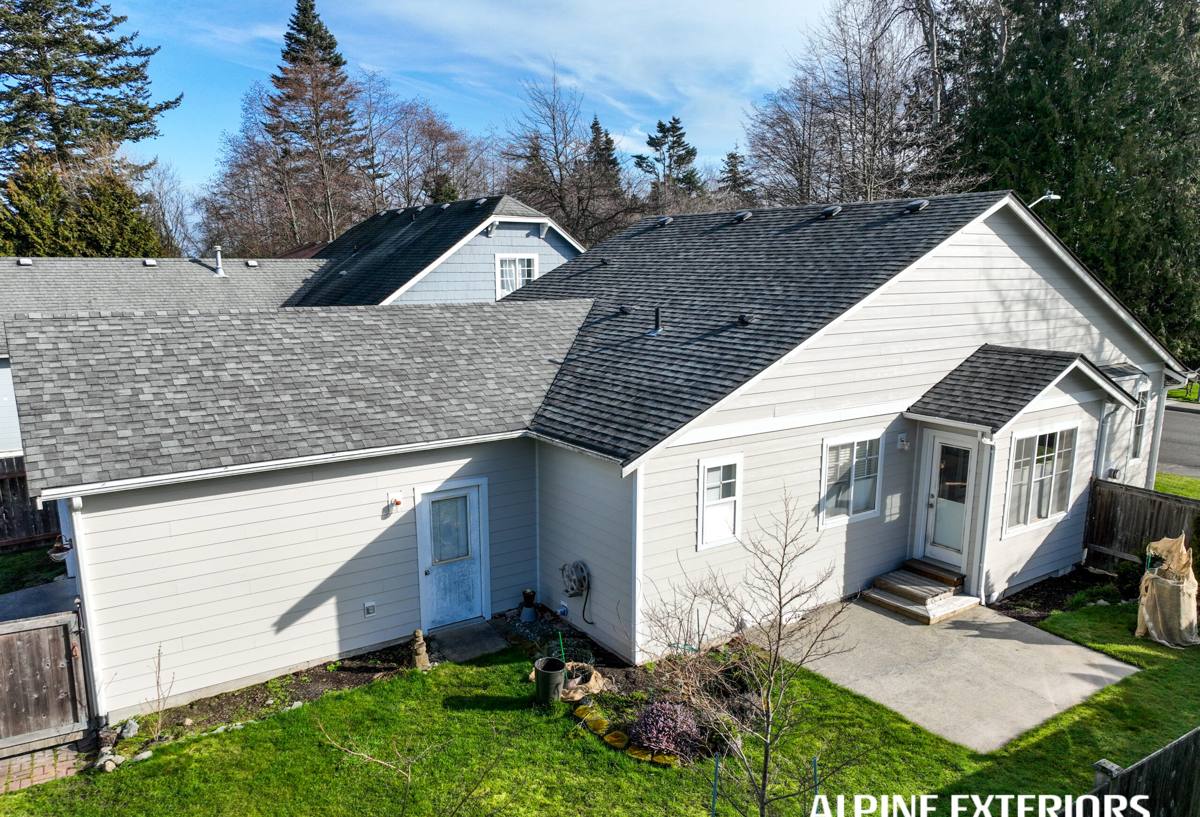
What Bellingham Homes Are Up Against
Salt Air and Moisture
Proximity to Bellingham Bay means airborne salt is a real factor for homes anywhere near the water, and even a few miles inland, the region's overall humidity keeps moisture in contact with exterior surfaces for longer stretches than drier climates ever see. Salt air accelerates corrosion on fasteners and trim, and it speeds up the breakdown of coatings and finishes that aren't formulated to resist it.
Driving Rain
Storms coming off the Strait of Georgia and Puget Sound don't always fall straight down. Wind-driven rain gets forced up under laps, around trim, and into any gap in the water-resistive barrier that a less careful install left behind. Siding systems and installation details that work fine in calmer climates can fail here simply because the rain doesn't behave the way it does elsewhere.
Moss and Prolonged Dampness
Whatcom County's moss season is long — shaded siding, north-facing walls, and areas under overhangs or tree cover can stay damp for weeks at a stretch. Moss and algae growth on siding isn't just cosmetic. It holds moisture against the surface, and materials that are vulnerable to swelling, delamination, or rot don't get much of a break to dry out before the next system moves through.
Why We Only Install James Hardie Fiber Cement
We get asked fairly often why we don't offer vinyl, LP SmartSide, or a lower-cost fiber cement alternative alongside Hardie. The honest answer is that we made a call, based on what we've seen hold up in this exact climate over the years, and we'd rather stand behind one product we trust completely than offer a menu of options where some of them are more likely to bring a homeowner a callback five or ten years down the line.
Vinyl Siding
Vinyl has a place — it's inexpensive and low-maintenance in mild, dry climates. But it's a petroleum-based product that expands and contracts significantly with temperature swings, and over time UV exposure and moisture cycling can cause it to warp, fade, or crack, especially at seams and corners where wind-driven rain likes to find a way in. In a marine climate like Bellingham's, those seams are doing a lot of work, and vinyl doesn't give you much margin for error in the installation.
LP SmartSide and Engineered Wood
Engineered wood products have improved a lot over the years, and LP SmartSide is a legitimate, well-engineered product. But it's still a wood-based substrate, which means its long-term performance depends heavily on the integrity of its factory treatment and on keeping cut edges, fastener penetrations, and joints properly sealed for the life of the siding. In a climate with this much sustained moisture and moss pressure, that's a maintenance commitment we don't think most homeowners want to sign up for, and any lapse in caulking or touch-up creates an entry point for exactly the kind of damp, prolonged exposure this area is known for.
Cemplank, Allura, and Primed Wood
Other fiber cement brands and primed spruce or cedar products can perform reasonably well, but we've standardized on one manufacturer so we can guarantee installation quality, warranty coverage, and finish consistency across every job. James Hardie's ColorPlus factory finish, HZ5 climate-engineered formulation for the Pacific Northwest, and transferable warranty structure are, in our judgment, the strongest combination available for what this specific region throws at a house.
James Hardie: Built for This Exact Climate
James Hardie makes a version of its siding specifically engineered for climates like ours — the HZ5 product line accounts for the freeze-thaw cycling, sustained moisture, and temperature swings common to the Pacific Northwest. Fiber cement itself is non-combustible, doesn't attract pests, and doesn't rot or delaminate the way wood-based products can when moisture gets past the surface.
The ColorPlus factory finish is baked on under controlled conditions rather than field-applied, which means better UV resistance, better color retention, and a finish that isn't dependent on weather conditions on install day. For a home in Bellingham that's going to sit under tree cover, catch salt air, and go through a genuinely long wet season every year, that kind of consistency matters more than it does in a drier, milder climate.
| Factor | James Hardie Fiber Cement | Vinyl / Engineered Wood |
|---|---|---|
| Moisture resistance | Non-combustible, doesn't rot or delaminate | Vulnerable to swelling, warping, or seam failure over time |
| Finish durability | Factory-baked ColorPlus finish | Field-applied or extruded color, more UV-dependent |
| Climate engineering | HZ5 line built for PNW moisture cycling | Generally not region-specific |
| Maintenance | Periodic cleaning, minimal upkeep | Caulk and seam maintenance often required |
| Warranty structure | Strong, transferable manufacturer warranty | Varies widely by brand and product |
What a Full Exterior Means for a Bellingham Home
Siding doesn't work in isolation — it's one piece of a home's overall weather envelope, and in a climate this wet, the other pieces matter just as much. We handle roofing, windows, and decks alongside siding because a house that's tight on siding but leaking at the roofline or losing seal around old windows is still going to have moisture problems.
Roofing
A roof in poor condition sends water down behind siding and trim long before it shows up as a visible leak inside. Keeping the roof and siding in sync, especially at flashing details and transitions, is one of the more overlooked parts of protecting a home here.
Windows
Old or poorly flashed windows are one of the most common points of water intrusion we find in this region. Replacing siding without addressing failing window flashing just moves the problem, it doesn't solve it.
Decks
Decks take the same driving rain and moss exposure as siding, often with less protection from overhangs. Materials and fastening choices matter just as much on a deck as they do on a wall.
What Correct Installation Actually Involves
James Hardie siding performs the way it's rated to only when it's installed to spec, and a lot of the products that develop problems in this climate didn't fail because of the material — they failed because of shortcuts in the install. A few things we hold to on every job:
- Proper water-resistive barrier and flashing details behind every board, not just at obvious joints
- Correct fastener type, spacing, and penetration depth per Hardie's installation specifications
- Manufacturer-specified gaps and clearances at trim, corners, and ground level to allow drainage and airflow
- Caulking only where Hardie's install guide calls for it — not as a substitute for proper flashing
- Attention to shaded and low-airflow wall sections where moss and moisture linger longest
Why a Local Crew Matters
We work in Whatcom County year-round, which means we're not guessing at how Bellingham's climate treats a house — we're re-visiting the same neighborhoods, the same wall orientations, and the same moss-prone shade patterns often enough to know what actually holds up. A crew that's only ever installed siding in a dry climate, or one that's never had to account for driving rain off the Strait, is going to make different judgment calls than one that deals with this weather every season. That local familiarity shows up in the small decisions — where extra flashing attention goes, which wall faces get prioritized for drainage, how a shaded north side gets detailed differently than a sun-exposed south wall.
Signs Your Current Siding Is Struggling
- Soft spots, bubbling, or visible swelling, especially near the bottom of walls or below windows
- Persistent moss or algae growth that returns quickly after cleaning
- Cracking, warping, or gaps opening up at seams and corners
- Peeling or fading paint that keeps coming back after repainting
- Interior signs like musty smells or discoloration on walls that back up to exterior siding
If you're noticing any of these on a Bellingham home, it's worth having someone take a look before the underlying structure is affected, not just the siding surface.
Get a Local, No-Pressure Estimate
If you're weighing siding options for a home in Bellingham, or dealing with an existing exterior that's showing wear from a few too many wet seasons, we're happy to come take a look. There's no obligation and no pressure — just an honest read on where your home stands and what it would take to get it protected for the long haul. Use the form below to request a free estimate.