 Lynden Siding
 Why Bellingham Siding Has to Work Harder
Bellingham sits close enough to the water that homes take on a different kind of weather load than siding built for a drier inland climate. Salt-laden air off the bay works into seams and fastener heads over time. Driving rain, pushed sideways by wind off the water, doesn't just fall on a wall — it gets driven into laps, corners, and trim joints that a calmer climate would never stress-test. And the long, wet moss season that Whatcom County shares with the rest of the Puget Sound region means anything organic-based on a wall — cedar, primed wood trim, even some engineered wood products — has months of damp, shaded conditions each year to grow something on.
None of that is exotic. It's just steady, cumulative wear. The problem is that a lot of siding products, and a lot of installations, are built to a national average, not to a marine climate with this much moisture exposure. On a Bellingham home, the gap between "looks fine going up" and "actually holds up" shows itself in five to ten years, not thirty.
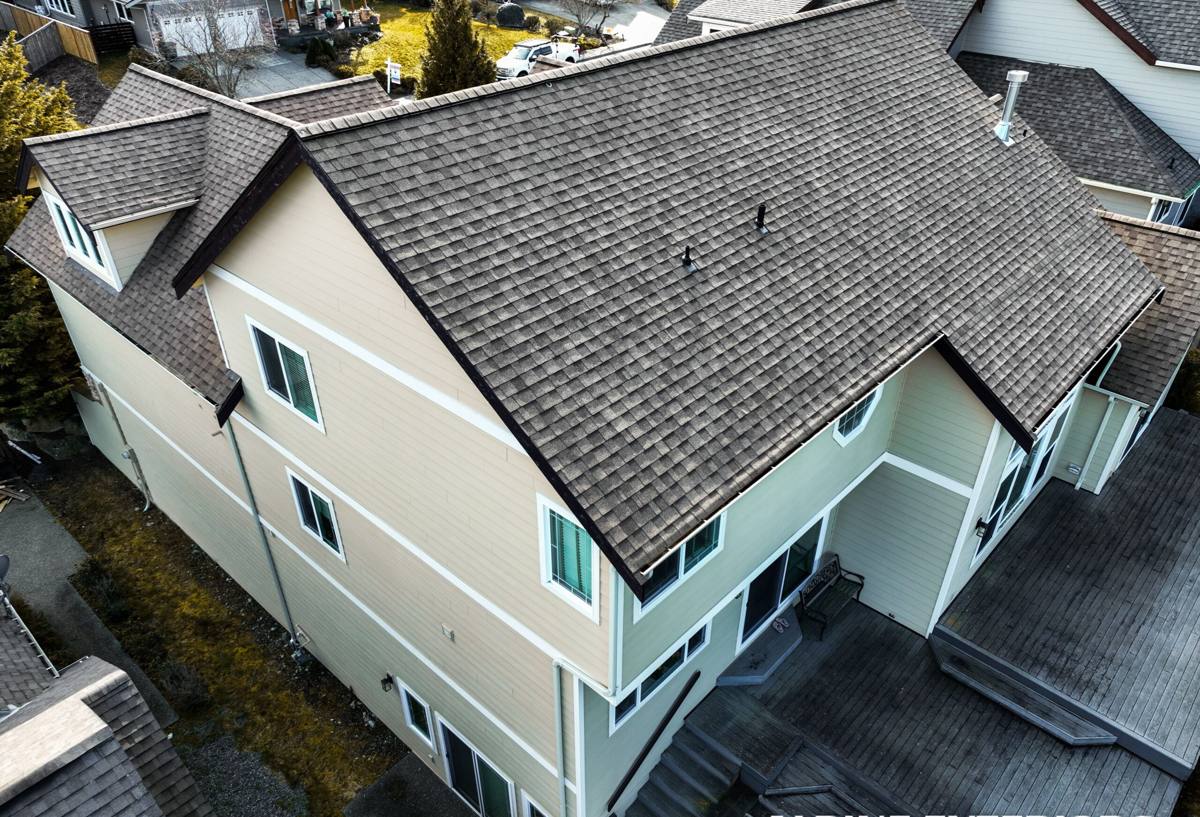
Why We Standardized on James Hardie
We install James Hardie fiber cement siding exclusively. We don't install vinyl, LP SmartSide, Cemplank, Allura, primed spruce, or cedar. That's not a marketing position — it's the result of watching how different siding materials actually perform in this climate over years, not just how they look on installation day.
Vinyl expands and contracts with temperature swings and can crack or warp under impact, and it isn't fire-resistant. Engineered wood products like LP SmartSide use wood strand cores that are more moisture-resistant than raw lumber but still rely on an engineered wood substrate — edges and cut ends need diligent sealing, and that diligence has to hold up for decades in a wet climate, not just at installation. Primed spruce and cedar are natural wood products: beautiful, but they need ongoing painting, caulking, and moisture management, and they're the most susceptible of all these options to the rot and moss growth that our wet season encourages. Other fiber cement brands compete on price but don't carry the same factory-finish warranty structure or the plant-specific climate engineering that James Hardie builds into its HardieZone system.
James Hardie is fiber cement — sand, cement, and cellulose fiber, cured into a dense, non-combustible board. It doesn't feed moss the way wood does, it doesn't warp or crack from temperature swings the way vinyl can, and it holds paint and factory-applied color far longer than primed wood siding. That combination is why it's the only product we put on a house.
The HardieZone System, Applied to Bellingham
James Hardie engineers its products by climate zone, and Whatcom County falls in the HZ5 zone — the wetter, more temperature-moderate zone that covers most of western Washington. HZ5 products are formulated with that moisture exposure in mind, which matters more here than in a drier region where the zone distinction barely shows up in real-world performance.
What a Correct Hardie Job Looks Like Here
James Hardie siding performs the way it's rated to perform only when it's installed to spec. Fiber cement is forgiving of Bellingham's weather in a way wood and vinyl aren't, but it is not forgiving of a rushed or shortcut installation — and in a marine climate, installation mistakes surface faster because there's more moisture around to find them.
| Detail | Correct Practice | Common Shortcut |
|---|---|---|
| Fastener placement | Corrosion-resistant fasteners at manufacturer-specified spacing and depth | Standard fasteners, overdriven or underdriven, inconsistent spacing |
| Board gapping | Manufacturer-specified gaps at butt joints and trim, caulked or flashed per spec | Boards butted tight or gapped without proper sealant |
| Flashing | Full flashing at windows, doors, and horizontal trim to shed wind-driven rain | Reliance on caulk alone in place of proper flashing |
| Moisture barrier | Weather-resistant barrier installed continuously behind the siding, with rainscreen where appropriate | Barrier gaps or siding installed directly against sheathing |
| Cut ends | Factory or field-primed cut edges sealed before installation | Raw cut edges left exposed to moisture |
Every one of those "common shortcut" items is invisible on the day the siding goes up. They only show up later — as a stain streak below a window, a soft spot at a butt joint, or moss taking hold where water has been sitting instead of shedding. A crew that's used to installing in a drier climate can do everything else right and still miss the details that matter most here.
Color, Texture, and Product Line Choices
James Hardie's ColorPlus factory finish is baked on in a controlled environment, which gives it better fade and moisture resistance than field-applied paint — and it comes backed by its own finish warranty separate from the product warranty. For a Bellingham home, that factory finish also means less exposed, unfinished substrate at the surface, which is one less place for salt air and moisture to start working on the material.
Common Product Choices for This Area
- HardiePlank lap siding — the most common choice for traditional and craftsman-style homes, available in several plank widths and textures.
- HardiePanel vertical siding — often used for board-and-batten looks or as an accent on gables and entries.
- HardieShingle siding — a straight-edge or staggered shingle profile for homes wanting a more traditional Pacific Northwest look without the maintenance of real cedar shingles.
- HardieTrim boards — used around windows, corners, and fascia to match the siding's finish and durability.
The right combination depends on the home's style and how much of its exterior is exposed to direct wind and rain versus more sheltered elevations — something we walk through during the estimate rather than defaulting to one look for every house.
Our Process, Start to Finish
- On-site assessment. We walk the exterior, check the condition of the existing siding and sheathing, and note problem areas — places with prior water intrusion, moss buildup, or damaged trim.
- Product and color selection. We go through HardiePlank, HardiePanel, and HardieShingle options along with ColorPlus finish choices, matched to the home's style and exposure.
- Written estimate. A clear scope of work and cost breakdown, with no pressure to sign on the spot.
- Tear-off and inspection. Old siding comes off and we inspect the sheathing underneath for rot or moisture damage before anything new goes up — a step that's easy to skip and expensive to skip on this coast.
- Weather barrier and flashing installation. This is the layer that does the real work of keeping wind-driven rain out, and it gets installed before a single piece of siding goes on.
- Hardie installation to manufacturer spec. Correct fastening, gapping, and trim detailing throughout, not just on the street-facing wall.
- Final walkthrough. We go over the finished job with the homeowner before calling it done.
Living With Hardie Siding in Bellingham
One of the practical advantages of fiber cement in this climate is how little upkeep it asks for compared to wood siding. It doesn't need repainting on the schedule that primed wood does, and it doesn't feed moss growth the way cedar can in a shaded, damp yard. That said, "low maintenance" isn't "no maintenance" — a little seasonal attention keeps a Hardie exterior looking and performing the way it should for the long run.
- Rinse the siding down once or twice a year to clear salt residue and organic buildup, especially on north- and west-facing walls that stay shaded and damp longer.
- Keep gutters clear so overflow doesn't run down the siding face repeatedly in one spot.
- Trim back vegetation and landscaping that keeps a wall shaded and damp — this is one of the biggest drivers of moss and mildew on any siding material.
- Check and re-caulk trim joints and penetrations (hose bibs, vents, light fixtures) every few years as part of routine home maintenance.
- Watch for any soft spots, staining, or paint failure at butt joints and corners, and have them looked at early rather than waiting.
What Affects the Cost of a Bellingham Siding Job
| Factor | Why It Matters |
|---|---|
| Home size and elevation complexity | More corners, dormers, and roof lines mean more cutting, trim, and flashing detail |
| Condition of existing sheathing | Rot or water damage found during tear-off adds repair scope before new siding goes on |
| Product line and profile | Plank width, shingle profile, and panel style vary in material cost |
| Color and finish | Factory ColorPlus finishes vary by product line and color selection |
| Site access | Tight lots, landscaping, or multi-story walls can affect labor and equipment needs |
We don't quote a job without seeing the house — broad cost ranges without an on-site look tend to be wrong in one direction or the other, and it's not useful to either of us.
Why Hiring Locally Experienced Installers Matters
Fiber cement installation quality depends heavily on whether a crew understands the specific weather conditions they're building against. A crew that mostly works drier inland climates can install Hardie siding competently on paper and still under-detail the flashing and gapping that matter most where wind-driven rain and long wet seasons are the norm. A crew that regularly works Whatcom County and the greater Bellingham area already knows which elevations take the worst of the weather, where moss tends to establish first, and where the old siding on a given home style typically failed — and builds the new installation to avoid repeating it.
That local pattern recognition doesn't replace following the manufacturer's installation spec — it adds to it. The spec tells you the minimum; the climate tells you where to be most careful about meeting it.
If you're weighing a siding replacement or repair on a Bellingham home, we're happy to walk the property, look at what you're working with, and give you a straight answer on what James Hardie siding would involve and cost — no pressure, no obligation. Use the form below to request a free estimate.