 Lynden Siding
 Everson and Lynden: Neighboring Communities, Same Weather to Fight
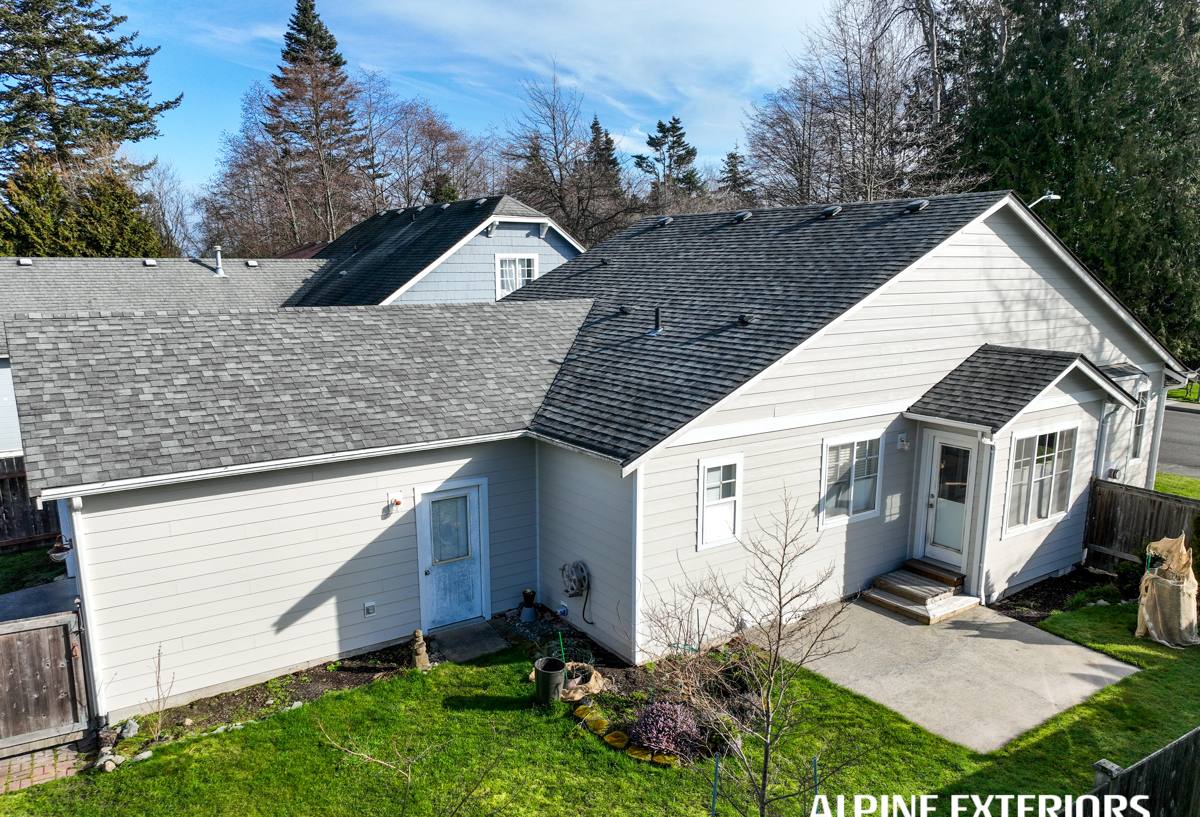
Everson sits just a few miles from Lynden along the Nooksack River, and the two communities share a lot: farmland turning into rooftops, older homes mixed with new construction, and a climate that doesn't care whether your address is in city limits or out on a county road. If you own a home in this part of Whatcom County, you already know the drill — wet falls, gray winters, a short dry summer window for exterior work, and siding that has to hold up to all of it without much of a break.
We work on homes throughout this stretch of the county, and the patterns repeat house after house: north-facing walls that never fully dry out, trim that's rotted out from the bottom up, and siding that looked fine from the street but was failing underneath. None of that is unusual for this area. It's just what happens when a building material isn't matched to the climate it's asked to survive in.
What Whatcom County Weather Actually Does to Siding
It's easy to think of "bad weather" as a single problem, but for exterior materials it's really three or four separate problems stacked on top of each other, month after month, year after year.
Driving Rain and Constant Moisture
Whatcom County doesn't get the heaviest rainfall totals in Western Washington, but it gets a lot of days where the air is simply wet — drizzle, fog, low clouds — and that persistent dampness is harder on siding than an occasional downpour. Wood-based products absorb that moisture slowly over time. Even when the surface looks dry, the substrate underneath can stay damp for days, which is exactly the condition mold, rot, and delamination need to take hold.
A Long Moss and Algae Season
Shaded, low-sun walls in this part of the county grow moss and green algae almost year-round, not just in winter. Moss holds moisture directly against the siding surface, which accelerates whatever damage the material is already prone to. On porous or absorbent siding, moss growth isn't just cosmetic — it's a moisture problem wearing a green coat.
Marine Air and Salt Influence
This stretch of the Pacific Northwest sits close enough to Puget Sound and the Salish Sea that homes here get some exposure to marine air moving inland — a mix of moisture and mild salt content that speeds up corrosion on fasteners, flashing, and any exterior material with metal components or poor moisture resistance. It's not the same as a beachfront property, but it's a real factor in how fast exteriors age here compared to drier inland climates.
Freeze-Thaw Swings
Whatcom County winters aren't brutally cold, but they do dip below freezing regularly, often right after a stretch of rain has saturated everything. Water that's soaked into a porous material and then freezes expands — and that cycle, repeated dozens of times a winter, is what turns small cracks into big ones.
Why We Only Install James Hardie Fiber Cement
We get asked fairly often why we don't offer vinyl, LP SmartSide, cedar, or other fiber cement brands like Cemplank or Allura. The honest answer is that we made a standard for ourselves based on what actually holds up in this climate over decades, not just what looks good on install day.
James Hardie fiber cement is engineered specifically for climate zones like ours. It's non-combustible, it doesn't absorb water the way wood-based products do, and it's manufactured with a factory-applied finish (ColorPlus Technology) that's baked on rather than field-painted — which matters a lot in a region where paint has very few dry days to properly cure. Hardie backs its products with a strong, transferable limited warranty, which tells you something about how confident the manufacturer is in long-term performance, not just first-year appearance.
That's not a knock on every alternative product in isolation — it's a statement about what we're willing to put our name behind when a homeowner in Everson or Lynden is going to be looking at this siding for the next 30-plus years.
Comparing Siding Options for This Climate
Homeowners doing their own research deserve a straight answer on trade-offs, not a sales pitch. Here's how the main options stack up for a wet, moss-prone, marine-influenced climate like ours.
| Material | Moisture Behavior | Moss/Algae Resistance | Long-Term Maintenance |
|---|---|---|---|
| James Hardie fiber cement | Does not absorb and swell like wood-based products; resists moisture-driven warping | Factory finish resists staining better than raw or primed wood surfaces | Occasional washing; no repainting for the life of the ColorPlus finish |
| Vinyl siding | Sheds water but can trap moisture behind panels if installed loosely; warps in heat, brittles in cold | Moss grows on the surface film in shaded areas like any material | Low, but panels crack, fade, and can't be easily color-matched when damaged |
| LP SmartSide / engineered wood | Wood-strand core is vulnerable at cut edges and seams if caulking fails | More absorbent surface can hold moss growth longer once established | Requires vigilant caulk and paint maintenance to keep the core protected |
| Cedar or primed spruce | Natural wood; absorbs and releases moisture with the seasons, prone to cupping | Highly susceptible without regular treatment | Frequent refinishing, sealing, and inspection for rot |
Every product on that list has a use case somewhere. In Everson and Lynden specifically, the combination of persistent moisture, shade-driven moss, and marine air is exactly the environment where the differences show up fastest — often within the first five to ten years, well before a 30-year mortgage is paid off.
The Right Hardie Product Line for This Area
Whatcom County falls within Hardie's HZ5 climate zone designation, meaning the product formulation is engineered for regions with real freeze-thaw cycles and sustained moisture exposure — as opposed to the HZ10 formulation built for hot, dry southern climates. That distinction matters more than most homeowners realize; it's the difference between a product tuned for our actual weather and one that just happens to be sold nationally.
- HardiePlank lap siding — the most common choice for both traditional farmhouse-style homes and newer construction around Lynden and Everson
- HardiePanel vertical siding — often used as an accent on gables, shop buildings, or modern-style new builds
- HardieShingle — a straight-edge or staggered shingle profile for homes wanting a more textured, traditional look
- HardieTrim — matched trim boards that hold paint and resist moisture the same way the field siding does, so trim isn't the weak point that fails first
ColorPlus finishes come in a range of regionally appropriate colors, and because the finish is factory-cured rather than field-applied, it holds color consistency far better through our gray winters and damp summers than a job-site paint job ever could.
Beyond Siding: Roofing, Windows, and Decks in a Wet Climate
Siding doesn't work in isolation — it's one part of a building envelope that includes roofing, windows, and any exterior decking, and in a climate like ours, gaps between those systems are where problems start. We handle all four (siding, roofing, windows, and decks) partly because they're genuinely connected: flashing details where a roofline meets siding, window integration that keeps water from tracking behind the wall assembly, and decks that need the same moss and moisture resistance as the house they're attached to.
A siding job that ignores a failing roof edge or poorly flashed window is just delaying the next repair. When one crew understands how all four systems interact, those transition points get built correctly the first time instead of becoming the callback six months later.
What Correct Installation Looks Like Here
Fiber cement siding is only as good as its installation. Hardie's own warranty terms require installation to their published specifications, and in a climate like Whatcom County's, a few details matter more than they would in a drier region.
- Proper rainscreen or drainage gap behind the siding so incidental moisture can escape rather than sit against the wall
- Correct fastener type and placement to avoid splitting and to keep water from wicking in at nail penetrations
- Factory-primed and sealed cut edges on every field cut, not just the factory edges
- Flashing integrated correctly at windows, doors, and roof-to-wall transitions — the most common failure point on any siding job
- Manufacturer-specified clearance from grade, decks, and roof lines to keep splash-back and standing moisture away from the bottom courses
- Caulking and joint treatment matched to Hardie's spec, not a generic all-purpose sealant
Skipping any one of these doesn't usually show up on day one. It shows up in year three or four, as moisture damage that's much more expensive to fix than it would have been to prevent.
Why a Local Crew Matters
Whatcom County has its own permitting processes, its own inspection expectations, and its own weather windows for exterior work. A crew that works this specific area regularly knows how to sequence a job around our rain patterns, knows which details tend to fail first on older Everson and Lynden homes, and can actually show up for a warranty question or a follow-up visit without a long drive. That local familiarity isn't a marketing point — it's the difference between a contractor who's guessing at regional conditions and one who deals with them every week.
Get a Free, No-Pressure Estimate
If your siding is showing moss buildup, soft spots, peeling paint, or you're just planning ahead for a home in Everson or Lynden, we're happy to take a look and give you an honest read on what your exterior actually needs. Use the form below to request a free estimate — no pressure, no obligation.