 Lynden Siding
 A Local Crew for the Abbotsford Area
Abbotsford sits just across the line from our home base in Lynden, and we've been doing exterior work in this stretch of the Pacific Northwest long enough to know that the border on a map doesn't change what the weather does to a house. Homes in the Abbotsford area deal with the same wet-season grind as everywhere else in the lower Fraser Valley and Whatcom County: long stretches of damp air, driving rain that comes in sideways off the coast, and short, gray winter days that never quite dry things out. Siding, roofing, trim, and decking all take that abuse whether the address is in Canada or the United States.
Because we're based so close by, we can keep an eye on Abbotsford-area jobs the same way we do our Lynden ones — regular site visits, materials staged and ready, and a crew that isn't driving in from three hours away. That matters more than people think. A lot of exterior problems come from small things getting missed over the life of a project: a flashing detail rushed at the end of the day, a delivery delay that leaves house wrap exposed too long, a punch-list item that never gets circled back to. Proximity is what keeps that from happening.
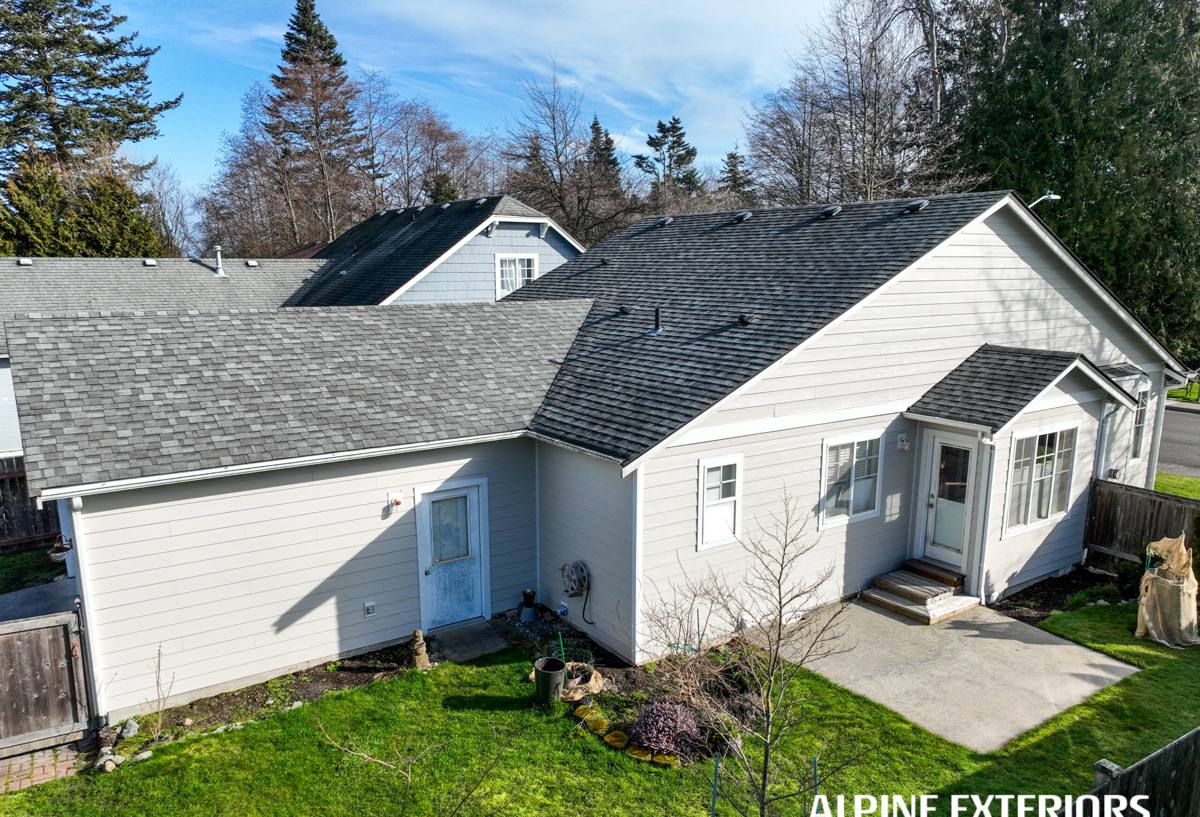
What This Climate Does to a House Over Time
The Fraser Valley and the northern Puget Sound lowlands share a marine-influenced climate: mild temperatures, a wet season that runs long, and enough moisture in the air year-round that anything organic on a north-facing wall or roofline is going to grow something eventually. A few specific patterns show up again and again on homes in this area:
- Driving rain, not just rainfall totals. Wind-driven rain during fall and winter storms pushes water sideways into joints, laps, and trim details that a calm, straight-down rain would never reach.
- Long moss and algae season. Shaded roof slopes, north walls, and anywhere air doesn't move freely stay damp for weeks at a stretch, which is exactly what moss and mildew need to take hold.
- Salt-influenced coastal air moving inland. Air coming off the Strait and the Sound carries moisture and mild corrosive elements well into the valley, which is part of why fasteners, flashing, and finish quality matter more here than in a drier climate.
- Freeze-thaw cycling, even if it's mild. It doesn't need to be a hard freeze to cause damage — a handful of freeze-thaw cycles each winter is enough to widen cracks and force water further into anything that's already compromised.
None of this is dramatic on its own. It's cumulative. A siding product or installation detail that would hold up fine in a drier region can fail here in half the time, simply because it never gets a real chance to dry out between weather events.
Why We Only Install James Hardie Fiber Cement
We made a deliberate decision as a company to install one siding system — James Hardie fiber cement — and to turn down jobs where a homeowner wants something else. That's not a marketing position, it's a practical one, and it comes directly from watching how different materials perform in exactly this kind of weather.
How the Common Options Actually Compare
| Material | How it handles sustained moisture | Where it tends to struggle here |
|---|---|---|
| Vinyl siding | Doesn't absorb water itself, but relies entirely on the panels and gaps to shed it | Panels warp and gap over time, seams open up, and it becomes brittle in cold snaps; color fades and can't be repainted without replacing it |
| Cedar / wood siding | Handles moisture reasonably when perfectly maintained | Constant repainting or restaining needed in this climate; rot at butt joints and end grain is common once maintenance lapses |
| Primed spruce / engineered wood (LP-type) | Wood-based core is vulnerable if the factory coating is ever breached | Edge and cut-end swelling if not field-treated correctly; failures concentrate at the details installers are most likely to rush |
| James Hardie fiber cement | Cement-based composition doesn't rot, doesn't support mold growth, and isn't a food source for moss or algae | Still requires correct flashing and gapping — performance depends on installation quality, not just the material |
Every one of those alternative products has legitimate strengths — vinyl is inexpensive and low-maintenance in mild climates, cedar has a warmth that's hard to replicate, engineered wood siding installs quickly and paints well. We're not telling homeowners those products are junk. We're telling them what happens to those products specifically in a climate like this one, over a 20- or 30-year ownership window, and why we'd rather not put our name on an installation we know is fighting an uphill battle against the weather.
What Hardie Gets Right for This Region
James Hardie's fiber cement is engineered from cement, sand, and cellulose fibers — there's no wood core to rot and nothing on the surface for moss or mildew to feed on. The ColorPlus factory finish is baked on under controlled conditions, which holds color and resists the fading and chalking that happens to field-painted siding exposed to this much damp weather. Hardie also makes climate-specific HZ product lines, engineered for the moisture and temperature patterns of different regions, which is relevant in a place that sits right at the edge of several climate zones.
Installation Is Where Performance Actually Gets Decided
Fiber cement siding is only as good as the details behind it. We pay particular attention to a handful of things that matter more in a wet climate than a dry one:
- Proper rain-screen gapping so water that gets behind the siding has somewhere to drain and air has a path to dry the wall assembly.
- Flashing at every horizontal transition — window heads, door tops, roof-to-wall intersections — since these are the spots driving rain finds first.
- Correct fastener placement and type, since a fastener that backs out or corrodes becomes a leak point years later.
- Factory-cut and factory-primed edges wherever possible, with field cuts sealed to manufacturer spec instead of left exposed.
These aren't exotic techniques. They're standard practice done consistently, which is exactly the part that gets skipped when a crew is moving fast or unfamiliar with fiber cement's requirements.
Beyond Siding: The Whole Exterior Envelope
Siding doesn't work in isolation — it's one piece of an exterior system that includes the roof, windows, and any attached structures like decks. We handle all four because they interact with each other:
- Roofing that's failing or poorly flashed sends water directly into wall assemblies below it, no matter how good the siding is.
- Windows are one of the most common leak points on any house — flashing and sealing them correctly during a siding project is far easier than retrofitting around old siding later.
- Decks attached to the house create their own set of flashing and ledger-board details that, done wrong, funnel water straight into the siding and framing behind them.
When we're on an Abbotsford-area property for a siding job, we're looking at the whole envelope, not just the walls.
What to Expect Working with Us
Homeowners near Abbotsford should expect the same process we run on every job, regardless of which side of the border it's on:
- A walk-around assessment of current siding, trim, roofing, and any visible moisture or moss issues before we talk about scope.
- A written estimate that spells out material, prep work, and what's included — no vague allowances.
- A clear explanation of why we're recommending James Hardie specifically for that house, not a generic pitch.
- Materials staged and scheduled so the job isn't sitting exposed to weather longer than necessary.
- A final walkthrough before we consider the job finished.
Questions Worth Asking Any Contractor Before You Sign
- How many fiber cement installations has your crew actually completed, not just siding jobs in general?
- Who is doing the flashing details — is it the lead crew, or subbed out?
- What's your plan for gapping and drainage behind the siding?
- What does the manufacturer's warranty actually cover, and what voids it?
- Can you walk me through why you're recommending this specific product for my house?
Cost Factors for Abbotsford-Area Projects
Every house is different, and we don't quote sight-unseen, but the factors that move a siding project's cost up or down are consistent:
| Factor | Why it matters |
|---|---|
| Amount of tear-off and prep | Removing failed siding, repairing sheathing, and addressing hidden moisture damage adds labor before new material even goes up |
| House complexity | Multiple stories, dormers, and cut-up rooflines mean more flashing details and more cutting |
| Trim and accessory choices | Hardie Trim boards, soffit work, and color/texture selections shift material cost |
| Access and staging | Tight lots, fencing, or landscaping that limits equipment access can add time |
| Scope beyond siding | Bundling roofing, window, or deck work into the same project can reduce redundant setup and staging costs |
Signs Your Siding Is Losing the Fight
A few things worth checking on an Abbotsford-area home, especially heading into another wet season:
- Persistent moss or dark streaking on north-facing walls that comes back soon after cleaning.
- Soft or spongy spots when you press on siding, especially near the bottom courses or around window trim.
- Paint that's peeling or bubbling in a pattern that follows seams and joints rather than sun exposure.
- Visible warping, cupping, or gaps between siding panels.
- Interior signs — musty smell, discoloration, or soft drywall — near an exterior wall.
Any one of these is worth a look before it turns into a bigger repair. Catching it early is almost always cheaper than waiting for it to show up as a structural issue.
If you're in the Abbotsford area and dealing with tired siding, a roof that's not keeping up, or you're just planning ahead for the next wet season, we're glad to come take a look. Estimates are free, there's no pressure, and we'll tell you honestly what your house actually needs.