 Lynden Siding
 Why Blaine's Exterior Wears Differently Than Inland Whatcom County
Blaine sits right against the water, at the northern edge of Whatcom County near the Strait of Georgia and Drayton Harbor. That location gives it a genuinely different exterior climate than towns just a few miles inland like Lynden or Ferndale. Homes here deal with salt-laden air moving off the water, wind-driven rain that hits siding at an angle instead of falling straight down, and long stretches of damp, low-light weather that keep north- and west-facing walls wet for days at a time. None of this is dramatic on any given day. It's the accumulation over years that separates siding systems that hold up from siding systems that don't.
We install and repair siding, roofing, windows, and decks throughout this part of Whatcom County, and Blaine is one of the areas where we're most deliberate about material choice and installation detail. A siding job that looks fine going up in August can start showing problems by the second or third wet season if the wrong product or the wrong technique was used. This page walks through what actually stresses a home's exterior near Blaine, and how we build for it.
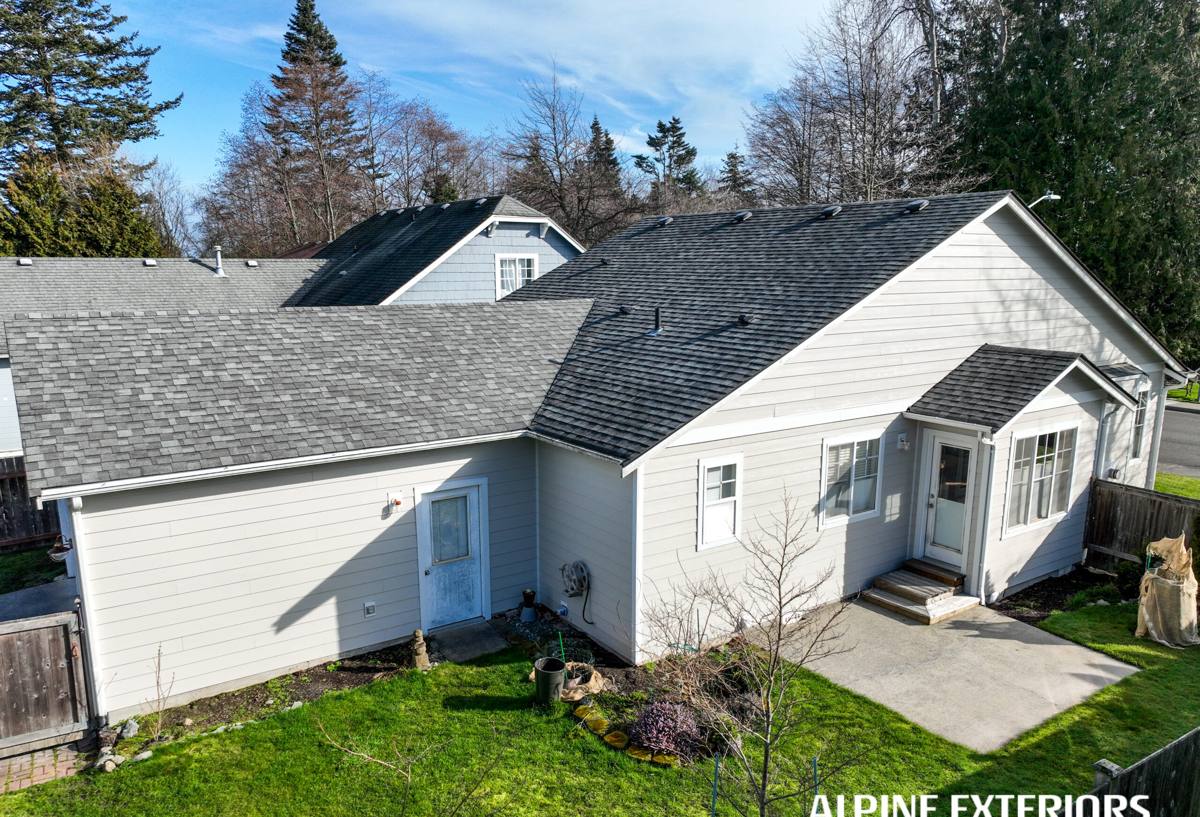
Salt Air: The Slow, Quiet Damage
Coastal salt air doesn't announce itself the way a storm does. It settles as a fine residue on siding, trim, fasteners, and hardware, and over time that residue accelerates corrosion in anything metal and breaks down finishes that weren't formulated to handle it. Homes a block or two from the water get more of this exposure than homes set back further, but even a mile or two inland, prevailing wind off Boundary Bay and the Strait carries salt further than most homeowners expect.
What salt exposure typically affects first
- Uncoated or poorly coated fasteners, which can bleed rust streaks down the face of siding
- Paint and factory finishes not engineered for coastal exposure, which chalk, fade, or lose adhesion faster
- Metal flashing, gutters, and trim details, where corrosion can quietly compromise water management
- Caulk and sealant joints, which dry out and crack sooner under salt and UV combined
This is one of the main reasons we standardized on James Hardie fiber cement rather than offering a mix of vinyl, wood, and composite products. Fiber cement itself doesn't corrode, and Hardie's factory-applied ColorPlus finish is baked on and warranted against fading and cracking in a way that field-applied paint on wood or trim boards generally isn't. We still pay close attention to the fasteners, flashing, and hardware that go with the siding, because those components matter just as much as the panels themselves.
Driving Rain and Moisture Management
Blaine gets plenty of rain, but the bigger issue for siding performance is wind-driven rain — water pushed sideways and upward into laps, joints, and penetrations rather than just running down a flat wall. This is common anywhere near open water in the Pacific Northwest, and it's a different engineering problem than simple rainfall volume. A siding system can be rated for a lot of annual precipitation and still fail locally if the laps, flashing, and drainage plane behind it weren't built to shed water that's coming in sideways.
Correct installation in this kind of climate depends on details that aren't visible once the job is finished: proper lap spacing and fastening, correctly flashed windows and doors, a functioning weather-resistant barrier behind the siding, and clearance at the bottom edge so water can drain rather than wick up into the material. We follow Hardie's published installation instructions closely because those specs exist for exactly this kind of exposure, and shortcuts here are the most common reason any siding — Hardie or otherwise — fails early on a coastal property.
Moss, Algae, and the Long Wet Season
North-facing walls, areas shaded by mature trees, and sections of a house that stay damp longest are where moss and algae growth shows up first. It's mostly a cosmetic issue in its early stages, but left alone it holds moisture against the wall surface and can accelerate wear on materials that are already vulnerable to moisture, particularly wood-based products. Fiber cement doesn't feed mold and mildew growth the way wood does, but any siding material in this climate benefits from occasional gentle cleaning and from landscaping that allows some airflow and light to reach shaded walls.
Where moss tends to establish first
- North and northwest-facing walls that get the least sun exposure
- Areas beneath overhanging trees or close to dense landscaping
- Low sections of siding near grade, where splash-back keeps material damp
- Roof valleys and edges, which shed spores and organic debris onto the siding below
Why We Only Install James Hardie
We get asked fairly often why we don't offer vinyl, LP SmartSide, cedar, or primed spruce alongside Hardie. The honest answer is that we looked at how each of those products performs specifically in a wet, coastal, moss-prone climate like Blaine's, and decided we'd rather stand behind one system we trust completely than offer a menu of products with real trade-offs we'd have to talk customers out of later.
| Material | Salt air / coastal exposure | Moisture and rot risk | Moss and algae behavior | Typical maintenance |
|---|---|---|---|---|
| Vinyl siding | Can become brittle and discolored over time; seams are a water-entry risk | Low rot risk itself, but traps moisture against sheathing if installed poorly | Surface growth is common and needs regular washing | Low effort, but limited repair options if damaged |
| Cedar / primed spruce | Natural material, needs ongoing finish maintenance near salt air | Highest risk; wood swells, cups, and rots if moisture gets behind the finish | Organic material feeds moss and mildew growth | Recoating and caulk maintenance every few years |
| LP SmartSide | Engineered wood strand product; performs reasonably well but is still wood-based | Cut edges and fastener penetrations need diligent sealing to prevent swelling | Better than raw wood, still an organic substrate | Moderate; edge sealing and finish upkeep matter |
| James Hardie fiber cement | Non-combustible, dimensionally stable, factory finish built for weather exposure | Doesn't rot or swell from moisture the way wood-based products do | Doesn't feed organic growth; surface growth washes off | Occasional gentle washing; finish holds up for years |
Hardie also offers climate-engineered product lines, including formulations developed specifically for wetter regions, which is relevant for a location like Blaine. We spec the products and installation details appropriate to a coastal, high-moisture environment rather than treating every job the same regardless of where the house sits.
How This Extends to Roofing, Windows, and Decks
Siding doesn't work in isolation. On a property exposed to salt air and driving rain, the roof, windows, and any exterior decking are dealing with the same conditions, and problems in one area often show up as damage in another. A roof with failing flashing can send water behind siding at a wall-roof intersection. Windows with degraded seals let moisture into the same wall cavities siding is trying to protect. Decks exposed to the same salt and rain cycle need materials and fasteners that won't corrode or delaminate.
Because we handle all four — siding, roofing, windows, and decks — we look at a Blaine property's exterior as one connected system rather than four separate trades. That matters most at transitions: where a roofline meets a wall, where a window is set into siding, where a deck ledger attaches to the house. Those transition points are where most real-world water damage actually starts.
Signs a Blaine Home's Siding Needs Attention
Because coastal wear is gradual, it helps to know what to look for before small issues become expensive ones.
- Rust streaking below fasteners, trim, or flashing
- Persistent moss or dark staining on north- or west-facing walls that doesn't wash off easily
- Caulk joints around windows, doors, or trim that have cracked, shrunk, or pulled away
- Soft spots, swelling, or visible warping, especially near the bottom of walls or around penetrations
- Paint or finish that's chalking, peeling, or fading unevenly compared to the rest of the house
- Any gap or separation at lap joints or corner boards where water could get behind the material
Any one of these on its own isn't necessarily urgent, but a few of them together, especially on the water-facing side of a house, is worth a professional look before the next wet season.
Why a Local Crew Matters Here
Installation technique matters more in a climate like Blaine's than it does in a drier, more moderate one, because there's less margin for error before moisture finds its way in. A crew that works throughout Whatcom County and understands the difference between an inland install in Lynden and a coastal install near Drayton Harbor is going to make different calls on flashing, fastener selection, and clearance details — not because the manufacturer's instructions change, but because judgment calls on real houses always come up, and local experience is what makes those calls correctly.
We're not a national franchise cycling crews through the region. We work these towns regularly, we've seen how different products and installation choices actually hold up a few winters later, and that's a large part of why we settled on one siding system rather than offering whatever's cheapest or most popular that month.
Getting Started
If you're noticing early wear on a Blaine home's siding, or you're planning ahead for a replacement before it becomes urgent, we're happy to take a look and give you a straightforward assessment. There's no pressure and no obligation — just an honest read on what your exterior actually needs, and what that would involve. Reach out using the form below to schedule a free estimate.