 Lynden Siding
 Exterior Work Built for Sumas Weather
Sumas sits at the far northern edge of Whatcom County, right up against the Canadian border, and it takes its own version of the punishment that western Washington dishes out to every exterior surface. The weather here isn't dramatic day to day, but it's relentless. Long stretches of drizzle, foggy mornings that never quite burn off, driving rain that comes sideways off the Nooksack valley, and a moss season that seems to start earlier every year and end later. None of that is unique to Sumas, but Sumas gets its own flavor of it, and homes built without that in mind tend to show the wear faster than homeowners expect.
We're based out of Lynden, just down the road, and we've worked on homes throughout the Sumas area long enough to know what holds up and what doesn't. This page walks through what local homes tend to face, how we approach siding, roofing, windows, and decks for this specific stretch of Whatcom County, and why we standardized on one siding product instead of offering a menu of options.
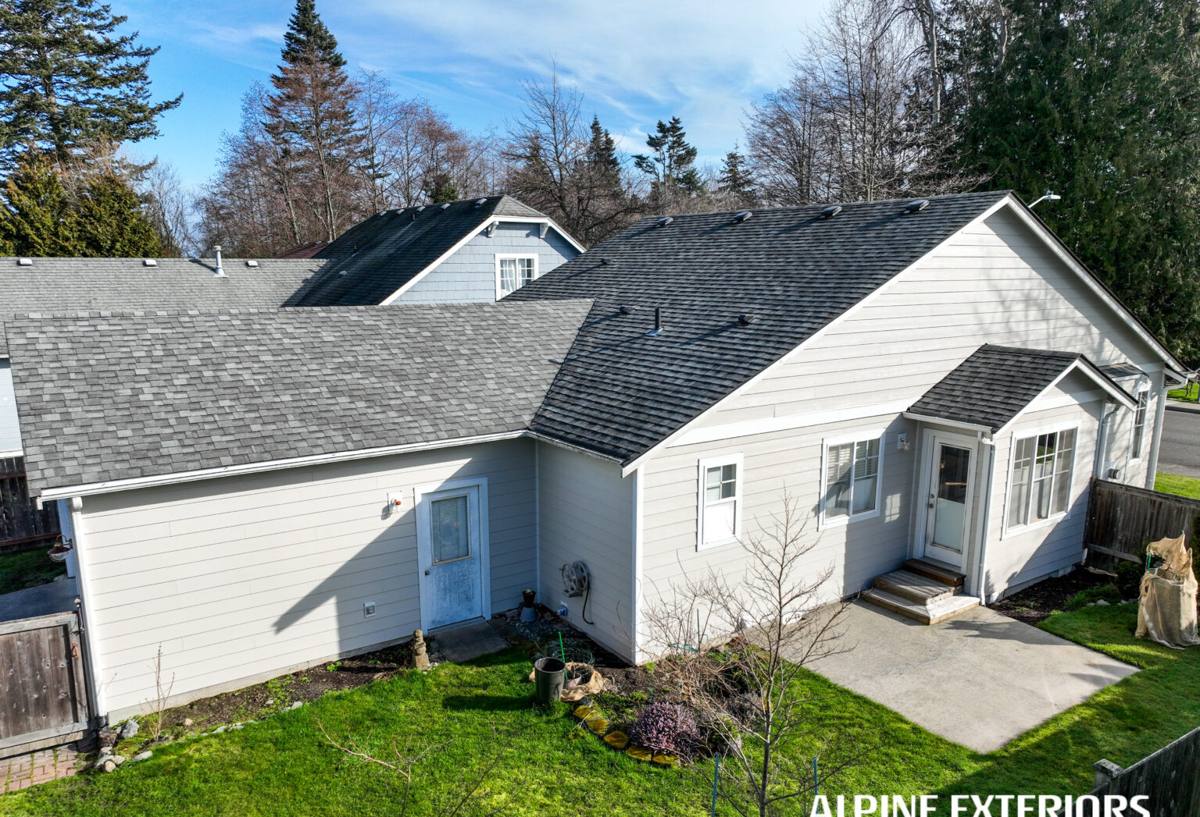
What the Local Climate Does to a House
Moisture That Doesn't Let Up
The Pacific Northwest doesn't get hit with violent storms very often, but it makes up for that with duration. Rain that falls steadily for days, combined with humidity that lingers in the air even between rain events, means exterior materials are almost never given a real chance to dry out completely during the fall, winter, and early spring months. Wood-based siding products absorb that moisture at the seams, at fastener points, and anywhere the factory finish has been compromised. Over years, that shows up as swelling, soft spots, and paint failure.
Moss, Algae, and Shade
Whatcom County's tree cover and cloudy stretches create ideal conditions for moss and algae growth on north-facing walls, rooflines, and anywhere sunlight doesn't reach consistently. Moss holds moisture against a surface far longer than open air would, which accelerates whatever damage the moisture itself would cause. Roofs are the most visible casualty, but siding and deck boards in shaded, damp corners of a property deal with the same issue.
Temperature Swings and Wind
Sumas, being closer to the interior than the coast, sees a bit more temperature swing than towns right on the water — colder snaps in winter, occasional wind events funneling down from the north. Materials that expand and contract with temperature changes are more prone to gapping, cracking, and fastener pop over time if they weren't installed with the right clearances and fastening schedule to begin with.
Siding: Why We Only Install James Hardie
We get asked fairly often why we don't offer vinyl, LP SmartSide, or other fiber cement brands like Allura or Cemplank. It's a fair question, and the honest answer is that we made a deliberate call after years of doing this work in exactly this climate.
Vinyl
Vinyl siding is inexpensive and low-maintenance in the sense that it doesn't need painting. But it's a thin product that can crack in hard freezes, warp under sustained heat exposure on sun-facing walls, and it doesn't hold up structurally the way a denser material does. It's also not a great match for a market where people expect an exterior to look good for decades, not just perform adequately.
LP SmartSide
LP SmartSide is an engineered wood product, and it's a reasonable option in a lot of climates. The issue for us is moisture. Engineered wood, no matter how well-treated, is still wood at its core, and wood swells when it takes on water at cut edges or fastener penetrations. In a climate that stays damp for months at a stretch, that's a real long-term liability, not a hypothetical one.
Other Fiber Cement Brands
Products like Allura and Cemplank are chemically similar to James Hardie's fiber cement — cement, sand, and cellulose fiber. The difference we care about is manufacturing consistency, factory-applied finish quality, and the strength of the warranty backing the product. We standardized on one brand so our crews are installing it correctly every single time, not switching specs between jobs.
James Hardie fiber cement is non-combustible, engineered specifically for regions like ours through its HZ5 product line, and finished at the factory with ColorPlus technology — a baked-on finish that resists fading and chipping far better than field-applied paint. It doesn't absorb water the way wood-based products do, it doesn't warp, and it comes with a strong transferable warranty that matters if the home ever sells.
Quick Comparison
| Material | Moisture Behavior | Maintenance | Typical Lifespan |
|---|---|---|---|
| Vinyl | Doesn't absorb, but cracks/warps | Low, but not repairable | 15-25 years |
| LP SmartSide | Wood core absorbs at edges/fasteners | Moderate, needs sealing/repainting | 15-25 years |
| Other fiber cement | Similar to Hardie, varies by finish quality | Low | 25-40 years |
| James Hardie | Does not absorb or swell | Low | 30-50 years with proper install |
Roofing for Border-Country Homes
Roofs in the Sumas area take on the same moss and moisture pressure siding does, but with more direct sun and wind exposure. We look at ventilation first — a roof system that can't breathe traps heat and moisture in the attic, which shortens the life of the roofing material from underneath as much as the weather shortens it from above. Proper underlayment, flashing at every valley and penetration, and a roofing material matched to the pitch and exposure of the specific home all matter more here than brand names do.
We also pay attention to moss prevention during installation — placement of zinc or copper strips where appropriate, and making sure valleys and low-slope sections shed water instead of holding it.
Windows: Sealing Out the Damp
Old, single-pane, or poorly flashed windows are one of the most common sources of hidden moisture damage we find when we open up a wall during a siding job. In a climate where it rains for days at a time, a poorly sealed window doesn't just cost energy — it lets water into the wall assembly where it can sit unnoticed for years. When we replace windows, we treat the flashing and sealing detail as seriously as the window unit itself, because the window is only as good as the install around it.
Decks Built to Handle Wet Winters
Decks in this part of Whatcom County spend a good chunk of the year wet, shaded, or both. That combination is hard on standard lumber and hardware. We build with the drainage, ventilation, and fastener choices that matter for a structure that's going to sit outside through repeated wet-dry cycles for years — proper joist spacing, flashing where the deck ties into the house, and hardware rated for the moisture exposure, not just what's cheapest at the yard.
What to Check on an Existing Deck
- Soft or spongy spots in decking boards, especially in shaded areas
- Rust staining or corrosion around fasteners and connectors
- Gaps or separation where the deck ledger meets the house
- Moss or algae buildup that stays damp for days after rain
- Any sagging or bounce when walking across the deck
Why a Local Crew Matters in Sumas
Sumas is a small community, and it doesn't always get the same attention from contractors based farther south or from out of the area entirely. Working out of Lynden means we're a short drive away, we know the microclimate quirks of this end of the county, and we're not treating a Sumas job as an afterthought squeezed between bigger contracts elsewhere. A local crew also means someone can come back easily if a question comes up after the work is done — that matters more than it sounds like it should.
How We Approach a Job
- Walk the property and assess existing siding, roofing, windows, and any deck structures for moisture damage or wear
- Identify problem areas specific to sun exposure, shade, and drainage on that particular lot
- Recommend a scope that solves the actual problem, not just the visible symptom
- Provide a clear, itemized estimate before any work begins
- Install to manufacturer specification, including proper flashing, clearances, and fastening schedules
What Affects Cost
| Factor | Why It Matters |
|---|---|
| Home size and wall complexity | More corners, dormers, and trim detail means more labor |
| Existing damage found during tear-off | Rotted sheathing or framing needs repair before new material goes on |
| Siding profile and color | Lap width, shingle-style panels, and custom ColorPlus finishes vary in price |
| Access and site conditions | Steep lots, limited access, or landscaping constraints affect labor time |
If your home in the Sumas area is due for new siding, a roof, windows, or deck work, we're happy to come take a look and give you a straightforward, no-pressure estimate. There's no obligation, and you'll get a clear answer about what your home actually needs.