 Lynden Siding
 Exterior Work Built for the Nooksack River Valley
Nooksack sits in the agricultural heart of Whatcom County, close enough to the river and the Canadian border that its weather carries the same demands you'll find across this part of northwest Washington: long wet winters, humid summers, and exterior surfaces that rarely get a real chance to dry out between storms. Homes here range from older farmhouses on acreage to newer construction on smaller lots, but they all face the same basic problem — siding, roofing, windows, and decks that sit outside year-round in a climate that doesn't do them any favors.
We're a Lynden-based crew that works throughout this stretch of Whatcom County, including Nooksack, and we handle the full exterior envelope: siding, roofing, windows, and decks. This page focuses mainly on siding, since it's the largest surface area on most homes and the one most affected by long-term moisture exposure, but the same climate logic applies to everything we install.
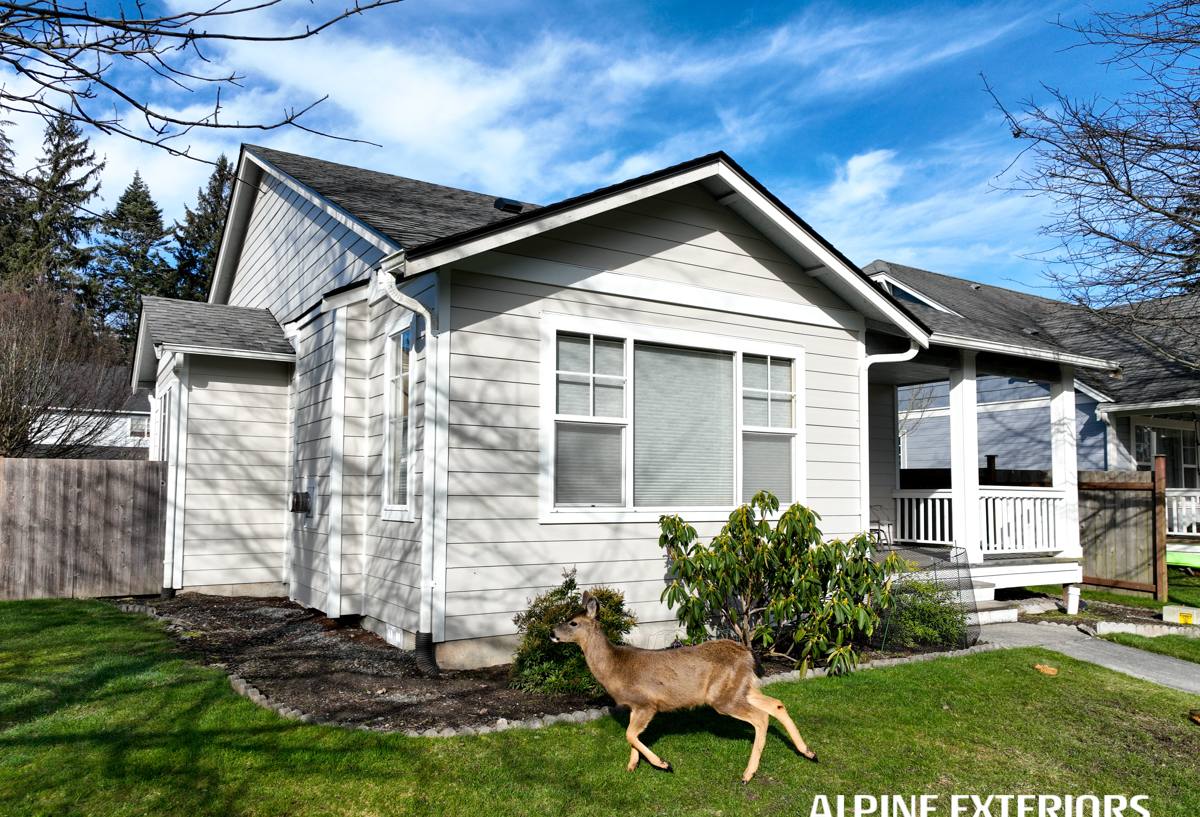
What This Climate Does to a Home's Exterior
Whatcom County's proximity to the Salish Sea means homes throughout the region deal with salt-laden air working its way inland on prevailing winds, on top of the driving rain that's typical of any Pacific Northwest winter. That combination is harder on building materials than rain alone. Salt air accelerates corrosion on fasteners and metal trim, and it can be part of why some painted or engineered wood products break down faster here than they would in a drier inland climate.
Then there's moss. Whatcom County's moss season isn't a few weeks — it's most of the year. Shaded north sides of homes, areas under tree cover, and anywhere airflow is limited will grow moss and algae on siding, roofing, and deck surfaces if those materials give it something to hold onto. Wood-based siding products are especially vulnerable, since moss and mildew feed on organic material and hold moisture directly against the surface, which is exactly what you don't want happening for months at a time.
Add in the freeze-thaw swings that happen even in a relatively mild maritime climate, and you get a clear picture of what siding has to survive here: constant dampness, organic growth, salt exposure, and enough temperature cycling to stress any seams, caulking, or fasteners that weren't installed correctly the first time.
Rural and Semi-Rural Considerations
A lot of homes in and around Nooksack sit on larger lots with more tree cover, more exposure to open fields and wind, or closer proximity to farmland and irrigation. That means more shade and moisture retention in some spots, and more direct wind-driven rain exposure in others. There's no single answer for every property — it depends on the site, the tree line, and which direction the home faces — but it's exactly the kind of thing a local contractor should be walking your property and evaluating in person, not guessing at from a truck.
Why We Install Only James Hardie Fiber Cement Siding
We made a decision a while back to standardize on James Hardie fiber cement siding and stop installing vinyl, LP SmartSide, Cemplank, Allura, primed spruce, or cedar. That's not a marketing angle — it's a professional call based on what we see hold up in this climate and what we see fail.
Vinyl siding is inexpensive and low-maintenance in the sense that it doesn't need painting, but it's a petroleum-based product that expands and contracts with temperature, can crack in impact-prone areas, and offers essentially no fire resistance. LP SmartSide, Cemplank, and Allura are engineered or fiber-cement-adjacent wood products that can perform well when installation and maintenance are done exactly right, but wood-based substrates are inherently more sensitive to the kind of sustained moisture exposure this region delivers. Primed spruce and cedar are traditional, attractive materials, but they require ongoing painting, caulking, and moisture vigilance that most homeowners don't have the time or budget to keep up with over decades — and in a climate with this much rain and this long a moss season, gaps in that maintenance show up as rot faster than they would somewhere drier.
James Hardie fiber cement is a cement-and-cellulose composite that doesn't rot, doesn't feed moss and mold the way wood-based products can, and is non-combustible — a real factor in wildfire-adjacent seasons that have become more common across Washington. Hardie's ColorPlus factory-applied finish is baked on under controlled conditions rather than painted on-site, which means better adhesion and a longer color life than field-applied paint typically delivers. Hardie also engineers different product lines for different climate zones (their HZ5 line is built for regions like ours), and backs installations with a strong transferable warranty when the work is done to their spec.
None of this means other products are junk — plenty of them are reasonable choices for the right budget and the right homeowner. It means that after years of doing exterior work in this specific climate, we decided fiber cement was the material we were willing to stand behind, and we stopped installing anything else.
How a Siding Project Works
Every project starts with a walk-through of the home, not a phone estimate. We look at the current siding condition, check for moisture damage or rot in the sheathing underneath, evaluate flashing and trim details around windows and doors, and talk through what's actually driving the replacement — age, damage, moss buildup, or just wanting something that will hold up better long-term.
From there, correct installation matters as much as the material itself. Fiber cement siding is only as good as its flashing, house wrap, fastener pattern, and joint treatment. We follow James Hardie's installation specifications closely, because deviating from them — wrong fastener spacing, missing flashing, improper clearance from grade or roof lines — is what causes warranty issues and premature failures on any fiber cement job, regardless of who installed it.
Signs Your Current Siding May Need Attention
- Visible moss or algae streaking that returns shortly after cleaning
- Soft or spongy spots when you press on the siding, especially near the bottom edges
- Paint that's peeling, bubbling, or needs repainting more often than every few years
- Warping, buckling, or gaps opening up between boards or panels
- Visible damage around window and door trim, or staining that suggests water intrusion
- Rising energy bills that may point to a compromised building envelope
Roofing, Windows, and Decks
Siding doesn't work in isolation — it's one part of an exterior system that includes the roof, windows, and any outdoor living spaces. We handle all four because they interact with each other. Poor roof flashing at a wall intersection can send water behind good siding. Old, leaky windows can rot the framing that new siding gets nailed to. A deck built without attention to ledger flashing can rot the rim joist and the wall siding around it.
When we're on a property for a siding project, we'll flag anything we see on the roof, windows, or deck that's contributing to moisture problems, even if it's outside the scope of that particular job. It's a more honest way to work, and it usually saves homeowners from paying to fix the same water intrusion problem twice.
James Hardie Product Lines
Hardie makes several siding profiles and product lines, and the right one depends on the look you want and the specifics of the home. This is a general comparison to help frame the conversation before we walk your property.
| Product | Look | Common Use |
|---|---|---|
| HardiePlank lap siding | Traditional horizontal lap, smooth or cedar-textured | Most common choice for full re-sides |
| HardiePanel vertical siding | Board-and-batten style | Accent walls, gables, farmhouse-style homes |
| HardieShingle siding | Staggered or straight-edge shingle profile | Accent areas, craftsman and cottage styles |
| HardieTrim boards | Smooth fiber cement trim | Window, door, and corner trim to match siding |
All of these come with the ColorPlus factory finish in a range of standard colors, which matters in a climate where field-applied paint has to fight moss growth and constant moisture just to hold its finish for a few years.
What to Expect: Process and Timeline
A full siding replacement on an average single-family home typically runs from a few days to a couple of weeks once material is on site, depending on square footage, trim detail, and weather windows — which in Whatcom County means scheduling around the wetter months as much as possible. We handle removal of old siding, inspection and repair of the sheathing underneath, proper house wrap and flashing installation, and the fiber cement installation itself, followed by cleanup. We'll walk you through the specific timeline for your home before work starts, not after.
Choosing a Local Contractor
Nooksack is a small enough community that word travels, and hiring local matters for more than convenience. A crew based in Lynden knows this region's weather patterns, knows what James Hardie's HZ5 climate specification actually requires here, and has a reputation in the area to protect — that's a different incentive structure than an out-of-town crew passing through on a broader regional route.
- Ask whether the contractor is a factory-certified James Hardie installer, not just someone who occasionally installs it
- Ask to see proof of licensing and insurance before any work begins
- Ask what warranty applies to both the material and the labor, and get it in writing
- Ask how they handle flashing and moisture barrier details specifically — this is where most siding failures actually originate
- Be cautious of bids far below others for the same scope of work; fiber cement installation done wrong costs more to fix later than doing it right the first time
Get a Free Estimate
If your home in Nooksack is due for new siding, a roof inspection, replacement windows, or deck work, we're happy to come take a look and give you an honest assessment — no pressure, no obligation. Use the form below to request a free estimate and we'll get in touch to schedule a time that works for you.