 Lynden Siding
 Allura Is a Real Fiber Cement Product — Let's Start There
Homeowners in Lynden sometimes come to us with a quote in hand that specs Allura fiber cement siding, and the first question is usually "why won't you install this if you'll install Hardie?" It's a fair question, and it deserves a straight answer rather than a sales pitch.
Allura is a legitimate fiber cement manufacturer. Fiber cement as a category — a blend of Portland cement, sand, and cellulose fiber pressed into board or lap siding — is a genuine step up from vinyl or untreated wood in a climate like ours. It doesn't warp, it resists insects, and it holds paint or factory finish far longer than raw wood siding. If a homeowner asked us "is fiber cement the right material class for a house in Whatcom County," the answer is yes, without hesitation.
Our issue isn't with fiber cement as a category. It's with the specific manufacturing, finishing, and warranty decisions Allura has made versus the ones James Hardie has made — and how those decisions play out over 20-30 years on a home that sits through driving rain, marine-influenced humidity, and a long moss season every single year.
Why the Local Climate Is the Deciding Factor
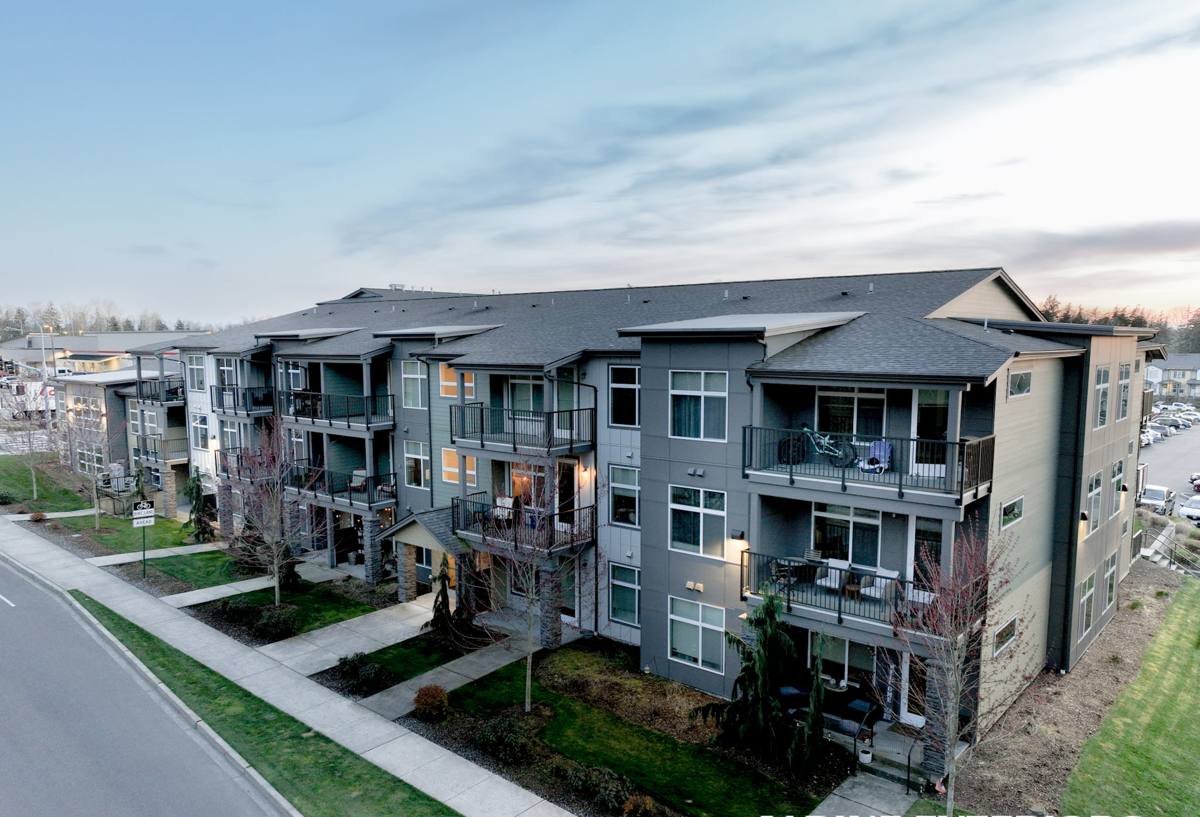
Lynden sits in the Nooksack River lowlands of Whatcom County, close enough to the Salish Sea that homes here deal with salt-tinged air, persistent moisture, and a mossy, algae-friendly climate for a good six to eight months out of the year. That combination is hard on any exterior building material, but it's especially unforgiving of siding products that don't manage water at the panel level.
Three climate factors drive nearly every decision we make on the exterior envelope here:
- Driving rain — wind-driven moisture off Georgia Strait and Bellingham Bay pushes water sideways into lap joints and butt seams, not just straight down.
- Sustained humidity and shade — tree cover and marine air keep north and east-facing walls damp for days after a storm, which is exactly the environment moss and algae need to take hold.
- Freeze-thaw cycling — Whatcom County gets enough cold snaps each winter that any siding holding moisture in its core will eventually show it, whether that's swelling, delamination, or finish failure.
Any fiber cement product can survive an occasional wet week. The question we ask about every material is what happens after the fortieth wet week, and the fifteenth winter.
Moisture Management at the Panel Level
This is where the two products diverge most. James Hardie's HZ5 product line is engineered specifically for cold, wet climates — it's formulated and rated for regions with more freeze-thaw cycling and moisture exposure, and Hardie publishes climate zone guidance that ties directly to installation requirements in the Pacific Northwest. Allura sells a general fiber cement product line without that same climate-zone engineering distinction built into the product itself. That doesn't mean Allura panels fall apart in the rain — it means the burden of managing moisture correctly falls more heavily on installation detailing (flashing, gapping, caulking) rather than being partly engineered into the product from the factory.
On a home in Lynden, where a wall assembly might see 60+ inches of annual rainfall combined with wind exposure, we'd rather not be the only line of defense against water intrusion. We want the product itself doing some of that work.
Factory Finish and Long-Term Color Performance
Both manufacturers offer factory-applied color finishes, but this is another area where we've seen a meaningful gap. Hardie's ColorPlus finish uses a baked-on, multi-coat process with a specific UV-cure technology and a documented 15-year finish warranty covering fading and peeling, backed by a company that has been refining that specific finish system for two decades. Allura offers factory-finished options as well, but the track record, warranty terms, and finish consistency we've evaluated haven't matched what we've come to expect and can stand behind with our own name on the invoice.
Color retention matters more here than it does in a drier climate. Sun exposure between rain events, combined with moisture cycling, is a harder test on a painted or coated surface than steady dry heat. We'd rather install a finish system we've watched hold up on real Whatcom County homes for years than one we're taking on faith.
Allura vs. James Hardie: Side-by-Side on What Actually Matters Here
| Factor | Allura Fiber Cement | James Hardie |
|---|---|---|
| Climate-zone engineered product line | General fiber cement formulation | HZ5 line engineered for cold/wet, high-moisture regions |
| Factory finish system | Factory-finish option available, shorter track record in our market | ColorPlus baked-on finish, 15-year finish warranty |
| Substrate warranty | Manufacturer-specific terms, less commonly transferable in our experience | Non-prorated substrate warranty, transferable to one subsequent owner |
| Regional installer familiarity | Fewer local crews trained on manufacturer-specific detailing | Widely installed in Whatcom County; deep local install experience |
| Fire performance | Non-combustible fiber cement | Non-combustible fiber cement |
| Availability of local warranty support | Limited regional presence | Established regional distribution and claims process |
Notice that fire performance is a wash — both are legitimate non-combustible fiber cement products, and we wouldn't claim otherwise. The real separation is in climate engineering, finish longevity, warranty structure, and how much local, provable installation history stands behind the product.
Installation Sensitivity Is Where Products Are Won or Lost
Every fiber cement product — Hardie included — is only as good as the installation. But some products are more forgiving of the real-world conditions a crew works in than others, and that matters a lot when you're installing siding on a Lynden home in October with rain in the forecast every other day.
Things we weigh heavily when choosing which fiber cement system to standardize on:
- How clearly the manufacturer documents fastener patterns, gapping, and flashing details for our specific climate zone
- Whether the caulking and joint-sealing requirements are realistic for a crew working in intermittent rain, which is most of the installation season here
- How the product behaves if it takes on moisture during the build before it's fully sealed — some fiber cement swells and delaminates faster than others if it gets wet before installation is complete
- Whether local lumberyards and suppliers stock the trim, starter strips, and touch-up materials, or whether we're special-ordering and waiting on a truck from out of state
We've built our installation process, our crew training, and our supplier relationships around one product line. That consistency is part of why our installations hold up — every crew member knows exactly how Hardie panels should be gapped, flashed, and fastened in this climate, because that's the only system they install. Splitting that expertise across multiple fiber cement brands means more room for the kind of small detailing mistakes that cause callbacks ten years down the road.
Warranty Structure: Read the Fine Print
A lot of homeowners assume all fiber cement warranties are roughly equivalent. They're not. The details that matter:
| Warranty Element | What to Look For |
|---|---|
| Coverage type | Non-prorated (full replacement value) vs. prorated (declining coverage over time) |
| Transferability | Can the warranty pass to a new owner if you sell the home? |
| Finish vs. substrate | Is the paint/color finish covered separately from the board itself, and for how long? |
| Labor coverage | Does the warranty cover removal and reinstallation labor, or materials only? |
| Regional claims support | Does the manufacturer have an established process and presence in the Pacific Northwest? |
James Hardie's warranty structure — non-prorated coverage, a separate long-term finish warranty, and transferability to one subsequent owner — is a big part of why we standardized on it. When we tell a homeowner in Lynden that their siding is backed for decades, we want that promise to hold up exactly the way it reads on paper, with a manufacturer that has a real regional footprint to back a claim if one is ever needed.
Why We Standardized on James Hardie
We made a business decision years ago to install one fiber cement system rather than offer a menu of comparable-sounding products. That's not because Hardie is flawless or the only fiber cement worth considering in general — it's because for the specific conditions we build in, we wanted:
- A product line engineered for our climate zone, not a general-purpose formulation
- A factory finish system with a long, provable local track record
- A warranty structure that's non-prorated and transferable, with real regional backing
- Crews with deep, singular expertise in one system's installation details, rather than divided attention across brands
- Reliable local material availability for trim, repairs, and touch-ups years after installation
That combination is what lets us stand behind a siding job on a home that will sit through 20+ more moss seasons and driving rainstorms after our crew leaves.
What This Means If You're Comparing Quotes
If another contractor has quoted you Allura, LP SmartSide, or another fiber cement or engineered wood alternative, that doesn't automatically mean it's a bad choice for your home — but it does mean you should ask pointed questions before deciding. A quick checklist:
- Is this product's line specifically rated or engineered for Pacific Northwest freeze-thaw and moisture exposure?
- What does the finish warranty cover, for how many years, and is it non-prorated?
- Is the substrate/board warranty transferable if you sell the home?
- How many jobs has this specific crew installed with this specific product, in this specific climate?
- Can you get touch-up paint, trim, and replacement panels locally if a panel is damaged years from now?
- Does the manufacturer have an established regional presence for warranty claims, or would you be dealing with a national call center with no local accountability?
Those answers matter more than the brand name on the quote.
What Standardizing on One Product Costs and Saves You
Homeowners sometimes assume that a contractor who only installs one brand is limiting their options or protecting a margin. In practice, it usually works the other way. Because we install Hardie exclusively, we buy in volume, our crews don't need retraining between jobs, and we're not learning a new manufacturer's detailing requirements on your house. That translates into fewer installation errors, faster jobs, and a warranty claims process we've actually used and understand — not a theoretical benefit we're describing from a brochure.
We'd rather turn down work that requires installing a product outside our expertise than install something we can't fully stand behind on a Whatcom County home.
If you're planning a siding project in Lynden or anywhere else in Whatcom County, we're happy to walk your home, look at your exposure to weather and moss, and give you a straightforward, no-pressure estimate for James Hardie siding — including an honest explanation of why we think it's the right call for your specific house.