 Lynden Siding
 Siding in Custer: A Different Set of Problems Than Inland Homes
Custer sits close enough to the water and open farmland that homes here take a different kind of beating than a house tucked into town in Lynden or Everson. The wind comes across open fields and off the Strait with little to slow it down, rain arrives sideways more often than straight down, and the growing season for moss and algae on a north-facing wall runs longer here than most homeowners expect. None of that is dramatic, day to day. It's the accumulation over years that shows up as soft trim, peeling paint, and siding that looks tired well before it should.
We've worked on homes throughout Whatcom County, and Custer's exposure profile is one we pay close attention to. It's not a coastal town in the postcard sense, but it's close enough to open water and flat farmland that wind-driven rain hits siding at angles that a lot of siding products simply weren't built to shed.
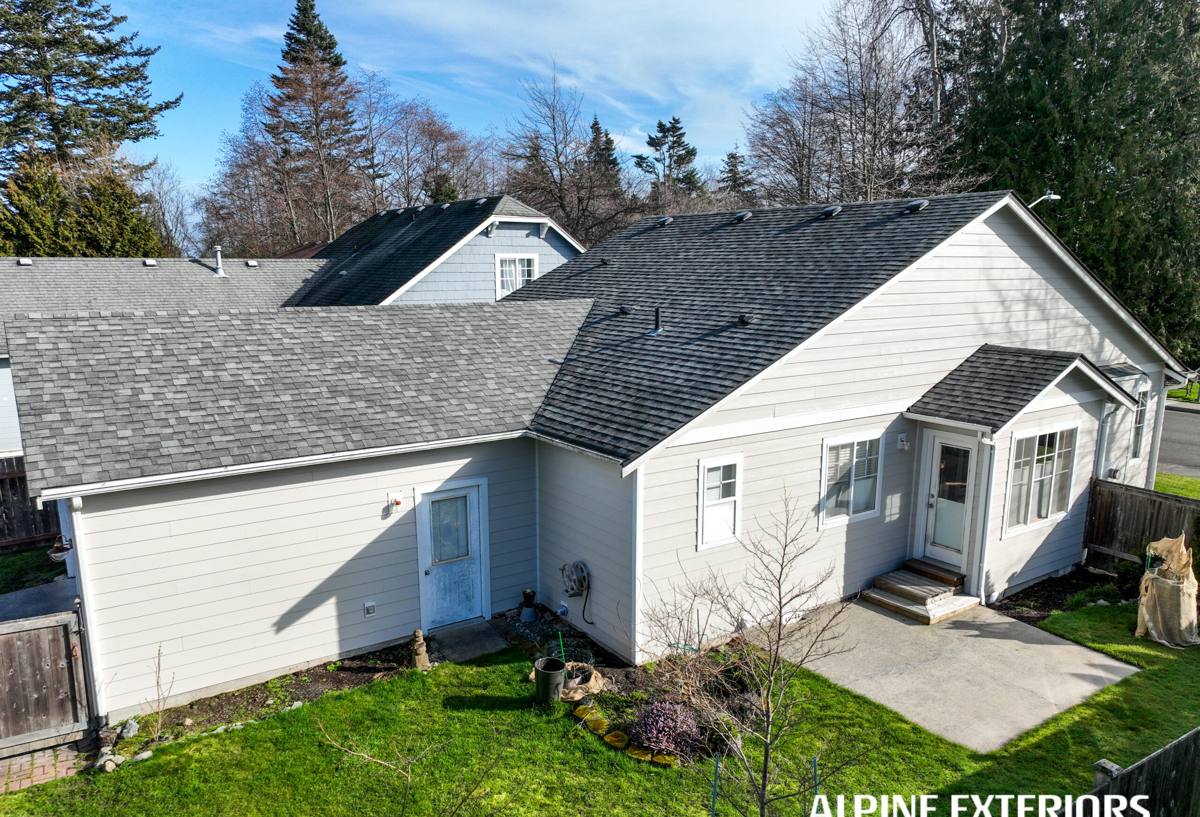
What Custer's Climate Actually Does to Siding
Salt Air and Moisture
Proximity to Birch Bay and the Strait of Georgia means a measurable amount of salt-laden air moves inland on windy days. Salt air accelerates corrosion on fasteners and metal flashing, and it interacts with moisture already sitting in porous siding materials to speed up breakdown at the surface. Wood-based products — cedar, primed spruce, LP SmartSide — absorb that moisture and salt combination at the fiber level, which is part of why they need more frequent recaulking and repainting in areas like this than they would twenty miles inland.
Driving Rain
Whatcom County gets a lot of rain, but it's the wind-driven rain that does the real damage. When rain hits siding at an angle instead of falling straight down, it finds every seam, lap joint, and fastener penetration a lot faster. That's a water-management problem as much as a material problem — flashing details, house wrap integration, and butt joint sealing matter just as much as what the siding itself is made of.
Moss and Algae
North and west-facing walls in Custer, especially ones shaded by trees or outbuildings, stay damp longer through fall, winter, and spring than most of the country ever sees. That extended damp season is exactly what moss and algae need to take hold. On porous or absorbent siding, that growth isn't just cosmetic — it holds moisture against the surface and speeds up decay underneath.
Why We Install James Hardie and Nothing Else
We made a decision as a company to install only James Hardie fiber cement siding. Not because every alternative is bad, but because in a climate like Whatcom County's, the trade-offs on other products stack up in ways that cost homeowners money and headaches down the road — and we'd rather stand behind one product we trust completely than offer several we have reservations about.
Why Not Vinyl
Vinyl is inexpensive and low-maintenance in mild climates, but it's a petroleum-based product that becomes brittle in cold snaps and can warp or buckle when wind gets behind a panel — a real risk in an open, windy area like Custer. Seams and laps also give wind-driven rain more opportunities to get behind the cladding.
Why Not LP SmartSide
LP SmartSide is an engineered wood product, and engineered wood is still wood at its core — it can swell, delaminate, or take on moisture at cut edges and fastener points if the installation isn't perfect and maintained consistently. In a climate with this much sustained rain and humidity, that margin for error is thinner than we're comfortable with.
Why Not Cedar or Primed Spruce
Cedar looks great and has real heritage in the Pacific Northwest, but it's a maintenance commitment — regular refinishing, vigilance against moss and rot, and a shorter realistic lifespan in wet, shaded conditions. Primed spruce carries similar risks with less of cedar's natural rot resistance. Both are honest, traditional materials; they just require more upkeep than most homeowners want to sign up for today.
Why James Hardie
Fiber cement doesn't absorb moisture the way wood-based products do, it doesn't corrode like metal, and it holds paint and factory finish far longer than wood substrates. James Hardie's ColorPlus finish is baked on at the factory under controlled conditions, which means better fade resistance and a warranty structure that follows the finish, not just the board. It's also non-combustible, which matters more each year as wildfire smoke seasons stretch further north.
Our Process on a Custer Job
- Walk-around assessment: we look at wall exposures, existing moisture damage, roofline transitions, and trim condition before quoting anything.
- Moisture and flashing check: since water intrusion is the real enemy here, we check window and door flashing, kick-out flashing at roof-wall intersections, and existing house wrap condition.
- Tear-off and substrate inspection: once old siding comes off, we can see sheathing condition directly — this is often where hidden rot from years of moisture gets found and addressed.
- Correct water-resistive barrier and flashing installation: this step matters as much as the siding itself, especially on wind-exposed walls.
- James Hardie installation to manufacturer spec: proper nailing patterns, clearances, and joint treatment — installation quality is what determines whether fiber cement performs the way it's designed to.
- Final walkthrough: we go over the finished work with the homeowner before calling the job done.
Beyond Siding: Roofing, Windows, and Decks
Siding rarely fails in isolation. A roof that's shedding water poorly onto a wall, windows with failing flashing, or a deck ledger board that's trapping moisture against the house all feed into the same problem — water finding its way in and staying there longer than it should. Because we handle roofing, windows, and decks in addition to siding, we can look at a Custer home as one connected system rather than patching one component while ignoring what's happening around it. If your roof's condition is contributing to premature siding wear, or a window is the actual source of a stain you're seeing on a wall, we'll tell you that directly rather than just quoting a siding replacement.
Cost Factors for a Custer Siding Project
| Factor | Why It Matters Here |
|---|---|
| Home size and wall complexity | More corners, gables, and trim details mean more labor and material |
| Existing damage found at tear-off | Rot or compromised sheathing found during removal adds repair scope |
| Wall exposure | Wind-facing and north walls often need extra flashing attention |
| Trim and accessory choices | Hardie trim boards, soffit, and fascia add cost but match performance |
| Access and site conditions | Rural lots, fencing, landscaping, or septic layouts can affect staging |
We won't throw out a number without seeing the home — too many of these factors are specific to the property. What we can promise is a written estimate that breaks down materials and labor so you know exactly what you're paying for.
Why a Local Crew Matters
A contractor who works Whatcom County regularly already knows what a Custer wall exposure looks like versus a sheltered lot in town, knows the difference driving rain makes to flashing details, and has seen how moss behaves on siding through a full Pacific Northwest year — not just a dry season. That familiarity shows up in fewer surprises during the job and a finished result that's built for the conditions it'll actually face, not a generic install.
We're not a national franchise cycling crews through the region for a season. We live and work here, which means if something needs a follow-up look years down the road, we're not hard to find.
Signs It's Time to Look at Your Siding
- Paint that's peeling, bubbling, or chalking faster than it used to
- Soft spots when you press on siding, especially near the bottom courses or under windows
- Persistent moss or algae staining that comes back soon after cleaning
- Visible gaps at seams, corners, or trim joints
- Warping, cupping, or panels that look wavy from an angle
- Rising energy bills that might point to compromised insulation behind failing siding
Get an Honest Look at Your Home
If you're in Custer and noticing any of the signs above, or you're just planning ahead for a home that's due for new siding, we're happy to come take a look. No pressure, no scare tactics — just a straightforward assessment of what your home actually needs and what it would cost to do it right. Request a free estimate using the form below.