 Lynden Siding
 Two Very Different Materials Wearing the Same Job Title
"Siding" gets used as if it's one product category, but James Hardie fiber cement and vinyl siding have almost nothing in common once you look past the fact that both cover a wall. Vinyl is an extruded PVC plastic panel, formed thin and hung loosely on the wall to allow for expansion and contraction. Fiber cement is a rigid composite of Portland cement, sand, and cellulose fibers, cured into a dense board that's fastened solidly to the wall like a structural material, because in practice it behaves like one.
That difference in what the material actually is drives almost every other difference on this page — how it handles Whatcom County's wet winters, how it takes an impact, how long the color lasts, and what it costs to own over twenty or thirty years rather than just what it costs to install this summer.
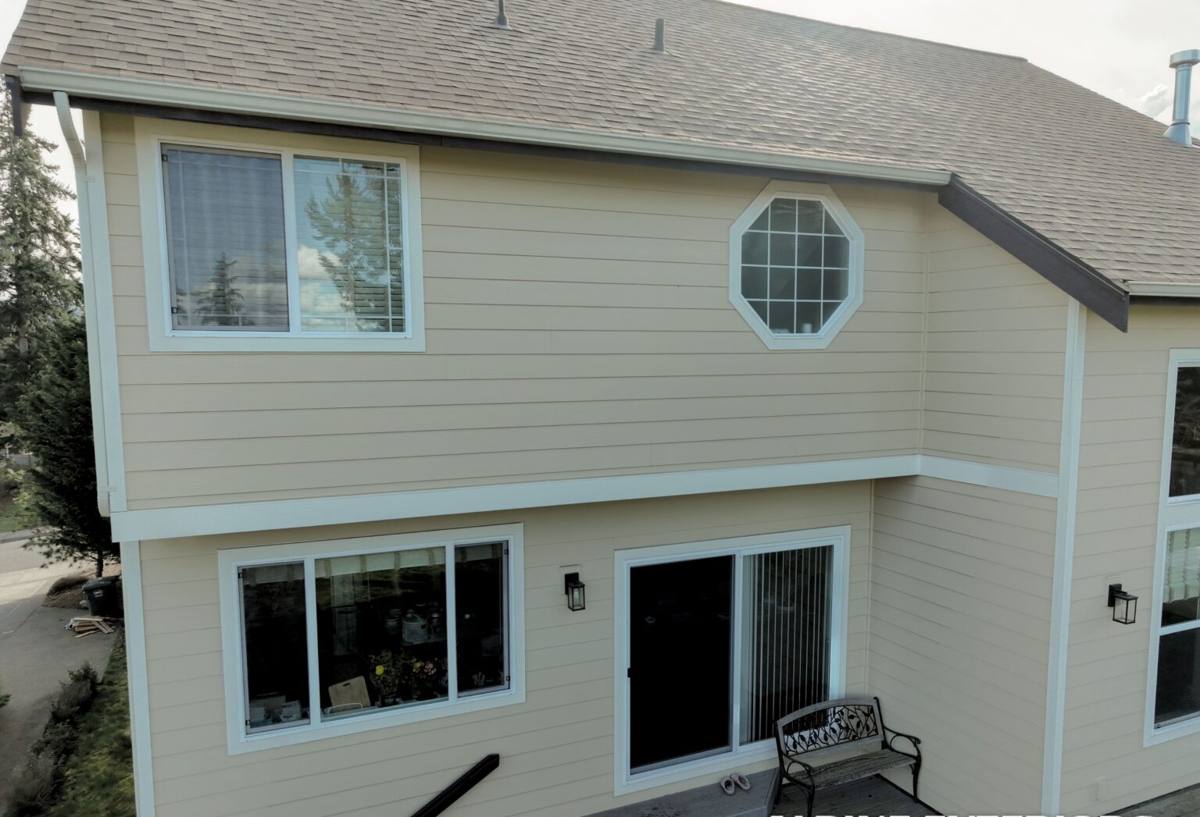
How Each Handles Water in a Region That Gets a Lot of It
Lynden sits close enough to the Salish Sea that homes here deal with a mix most inland towns don't: salt-tinged air off the bay, long stretches of driving rain pushed in by winter storms, and a moss season that can run from October into April. Siding here isn't just decorative — it's doing real work most of the year.
Vinyl is inherently water-resistant as a material, but it isn't installed as a sealed water barrier — it's a rain screen that relies on gaps, laps, and a functioning weather-resistive barrier behind it to manage the water that gets past it. Vinyl also expands and contracts significantly with temperature, which is why it's hung with slotted nail holes instead of fastened tight. That movement is normal and by design, but it means the panels are never a rigid, monolithic surface.
Fiber cement is dimensionally stable — it doesn't expand and contract the way vinyl does, so it can be installed tight and caulked at trim and penetrations without the material fighting the sealant over time. It also doesn't support mold or moss growth the way wood-based products can, which matters directly in a climate where north-facing walls can stay damp for weeks at a stretch.
Where Moisture Actually Gets In
With both products, the majority of real-world water problems trace back to flashing, caulking, and penetrations — not the field of the siding itself. This is worth saying plainly: a poorly installed run of James Hardie will fail faster than a well-installed run of vinyl. Material quality doesn't rescue bad installation, and we'll come back to why that matters when you're hiring anyone for this work.
Wind, Impact, and Fire
Vinyl is light and flexible, which helps it survive minor impacts without cracking, but that same flexibility means it can deform, warp, or blow off in high wind if it isn't installed with the correct nailing pattern and clearances. It's also a petroleum-based plastic — it will soften and melt at relatively low heat, which matters for anything near a grill, a fire pit, or a wildfire ember exposure.
Fiber cement is non-combustible. It won't ignite, melt, or contribute fuel to a fire on the exterior of the home. It's also considerably more rigid, so it holds up to wind-driven debris and impact better than a thin plastic panel, though it's heavier and more brittle under a direct, hard strike than people expect — it can crack rather than dent.
Appearance and Finish: Factory Paint vs. Site-Applied Color
Vinyl color is baked into the plastic itself, which means there's no repainting a vinyl panel — you're stuck with the original color, and that color will fade unevenly over time, especially on south and west-facing walls that take the most UV exposure. Darker vinyl colors fade faster and can also warp more in direct sun due to heat absorption, which is part of why the vinyl color palette tends to lean toward lighter, muted tones.
James Hardie's ColorPlus finish is a baked-on, factory-applied coating applied in a controlled environment before the boards ever reach the jobsite, rather than field-painted after installation. It carries its own finish warranty separate from the substrate warranty, and because it's cured under controlled conditions rather than painted outdoors, the finish is more consistent and better bonded than a site-applied paint job would be. It can also be repainted down the road if a homeowner wants to change the color, something vinyl simply doesn't allow.
Installation Sensitivity
Vinyl has a reputation as an easy DIY or low-skill install, and mechanically it is more forgiving — a slightly imperfect nail spacing is unlikely to cause a failure. The tradeoff is that "easy to install poorly" is common with vinyl, and a loose, rippled, or poorly flashed vinyl job can look bad and perform worse without ever technically failing outright.
Fiber cement is far less forgiving. It requires correct fastener type and spacing, proper joint treatment, specific clearances above grade, decks, and roof lines, and manufacturer-specified caulking and flashing details. Installed to spec, it's an extremely durable, low-drama product. Installed off-spec, it can develop moisture problems at the exact seams that were supposed to keep water out. This is the core reason we install James Hardie exclusively rather than offering multiple siding lines — we'd rather be excellent at one product's installation requirements than mediocre across several.
A Practical Checklist for Comparing Bids on Either Product
- Ask for the specific fastener type and spacing called out for your wall assembly, not a general answer
- Confirm clearance requirements above grade, roofing, and decks are being met, not just eyeballed
- Ask how joints, corners, and trim will be flashed and sealed, and with what products
- Confirm whether the installer is factory-trained or certified on the specific product being installed
- Get the warranty terms in writing, including whether it's transferable if you sell the home
Long-Term Maintenance
Vinyl's maintenance is mostly cleaning — periodic washing to keep moss and mildew from taking hold, particularly in the shaded, damp corners common on Lynden lots with mature trees. It doesn't need painting, but it also can't be refreshed if it fades, chalks, or gets brittle with age, which tends to happen faster than owners expect on older installations.
Fiber cement needs the caulking at joints and trim inspected and refreshed periodically, which is standard maintenance for any rigid-panel siding system. Because it can be repainted, an aging finish is a cosmetic fix rather than a full re-siding decision. In a moss-prone climate, its resistance to moisture-driven rot and its solid attachment to the wall are the bigger long-term advantages.
Cost: Upfront vs. Life-Cycle
Vinyl is almost always the lower upfront cost of the two. That's real and worth acknowledging honestly rather than glossing over. Where the comparison shifts is over a 20-30 year ownership horizon, once you factor in fade-driven replacement, impact damage, and the fact that vinyl can't be repainted or easily patched to match aged panels.
| Factor | Vinyl Siding | James Hardie Fiber Cement |
|---|---|---|
| Upfront installed cost | Lower | Higher |
| Typical lifespan | 20-30 years, condition-dependent | 30-50+ years when installed to spec |
| Repaintable | No | Yes |
| Fire behavior | Combustible plastic | Non-combustible |
| Moss/mildew resistance | Surface growth with regular cleaning needed | Resists moisture-driven growth |
| Resale perception | Standard, budget-associated | Widely viewed as a premium, durable upgrade |
Warranty Comparison
Vinyl warranties vary a great deal by manufacturer and product tier, and many are prorated — meaning the payout shrinks as the siding ages, so a failure at year 18 may be covered at a fraction of replacement cost. Fine print on fade, labor coverage, and transferability differs product to product, so it's worth actually reading rather than assuming.
James Hardie backs its fiber cement products with a non-prorated limited warranty on the substrate, and the ColorPlus finish carries its own separate finish warranty. Both are transferable to a subsequent homeowner under the manufacturer's terms, which is a real factor if you plan to sell the home before you'd otherwise replace the siding.
Why We Only Install James Hardie
We don't install vinyl, and we're upfront about why: it's a legitimate, functional product that a lot of reputable contractors install well, but it isn't the product we want representing our work on Whatcom County homes for the next three decades. Between the salt air, the driving rain off the water, and a moss season that punishes anything that holds moisture or can't be refreshed, we'd rather stand behind one system we know thoroughly — installed to the manufacturer's exact spec, every time — than offer a lower-cost option we'd have reservations recommending.
If you're weighing your options for a home in Lynden or elsewhere in Whatcom County, we're happy to walk your property, look at your specific exposure and trouble spots, and give you a straight answer — including whether fiber cement is genuinely the right call for your situation. Reach out for a free, no-pressure estimate using the form below.