 Lynden Siding
 Siding in Deming: A Different Kind of Exposure
Deming sits back from the open water, tucked into the Nooksack River valley at the foot of the Mount Baker foothills, and that setting shapes what happens to a house's exterior over time. Homes here tend to sit under heavier tree cover than in-town Lynden properties, with more shade, more standing humidity, and slower drying after a storm rolls through. Add in Whatcom County's broader climate pattern of driving rain, salt-laden marine air moving inland on winter systems, and a moss season that can run eight or nine months out of the year, and you get an exterior environment that punishes the wrong siding choice faster than most homeowners expect.
We've worked exterior projects across Whatcom County long enough to know that what holds up on a dry, open lot in town doesn't always hold up the same way on a shaded, river-adjacent property in Deming. That's part of why we install one siding product, not a catalog of options.
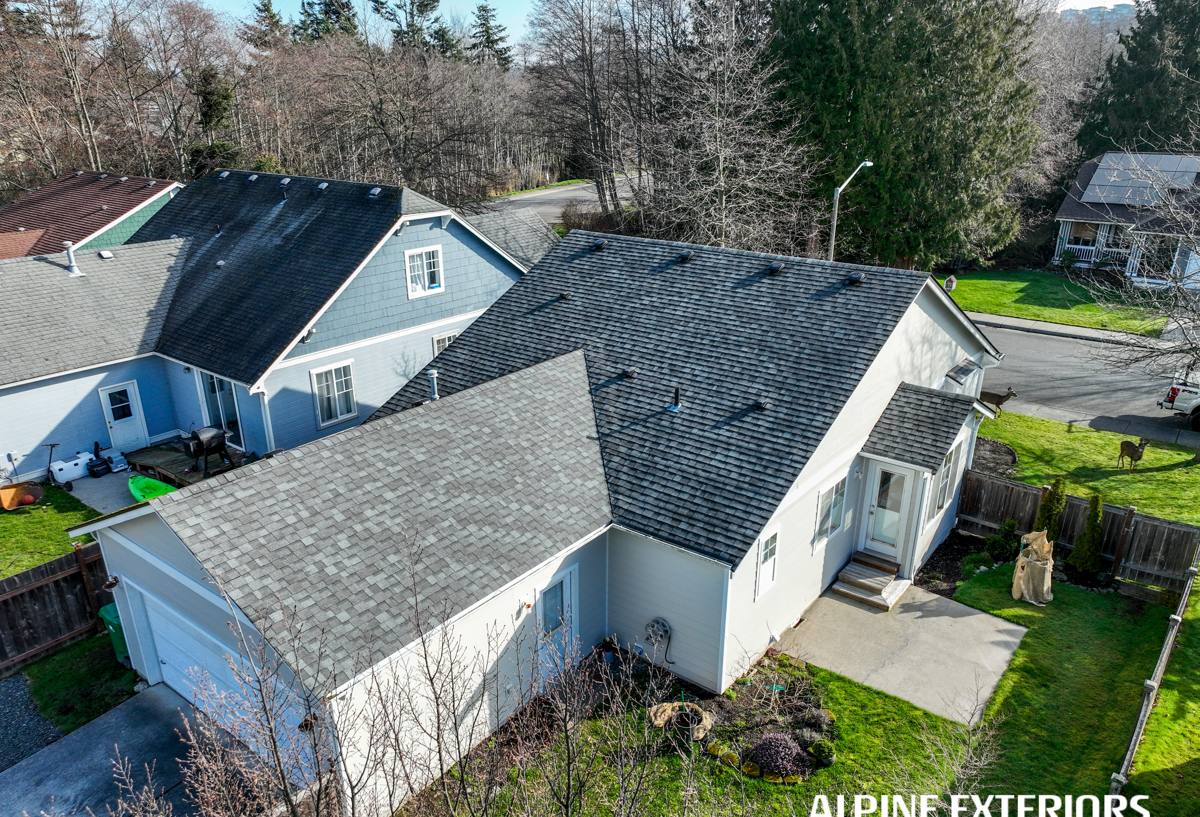
What Deming's Climate Actually Does to a House
Shade and Slow Drying
Mature conifers and deciduous cover are part of what makes Deming appealing, but they also mean siding, trim, and roof surfaces on many lots don't get the direct sun exposure that helps a coastal or open-field home dry out quickly after rain. Moisture sits longer against north- and west-facing walls, and organic debris — needles, leaves, pollen — accumulates in siding laps and butt joints where it holds water against the material.
Moss, Algae, and Mildew
A long moss season isn't just a roof problem. Given enough shade and moisture, moss and algae will colonize siding surfaces too, especially anything with a porous or absorbent face. Left alone, that growth holds moisture against the wall assembly and accelerates whatever deterioration process the underlying material is already prone to.
Driving Rain and Wind-Driven Moisture
Storms moving up the valley don't just fall straight down — wind pushes rain sideways into wall assemblies, working at seams, corners, and butt joints. Over years, that's where poor installation detailing or a moisture-sensitive substrate shows its weaknesses first.
Why We Standardized on James Hardie Fiber Cement
We install James Hardie siding exclusively. Not because it's the only product on the market, but because after years of exterior work in this climate, it's the one we're willing to put our name behind and back with a real installation standard. A few of the specific reasons:
It's Engineered for This Climate
Hardie's HZ5 product line is formulated specifically for the wetter, more humid conditions found in the Pacific Northwest — different from the HZ10 formulation sold in hot, dry climates. That's not a marketing detail; it means the product's moisture and freeze-thaw behavior was actually engineered around conditions like Deming's, not adapted from a national default.
It's Non-Combustible
Fiber cement doesn't burn. With wildfire smoke and dry-season fire risk an increasing concern even west of the Cascades, a non-combustible exterior is a meaningful, permanent difference from wood-based or vinyl products — vinyl can soften and deform under radiant heat, and wood-based composites are combustible by nature.
ColorPlus Factory Finish
Hardie's ColorPlus finish is baked on at the factory under controlled conditions, with a UV-cured, multi-coat process that holds color and resists fading, chipping, and cracking far better than field-applied paint. In a shaded, moisture-heavy environment where mildew and algae growth are already a fight, starting with a finish that resists staining and doesn't need repainting on a normal cycle is a real advantage.
A Warranty Backed by the Manufacturer
Hardie backs its products with a strong, transferable limited warranty — meaningful protection for a homeowner making a purchase intended to last decades, and a selling point if the home changes hands.
Why We Don't Install Vinyl, LP SmartSide, or Wood Siding
This isn't about calling any of these products junk — each has legitimate use cases and satisfied customers somewhere. But for the climate we work in, each carries trade-offs we're not willing to build a business around:
- Vinyl siding is inexpensive and low-maintenance in mild conditions, but it expands and contracts significantly with temperature swings, can crack in cold snaps, and isn't structural — it relies entirely on correct installation over a sound weather barrier. It also can't be painted a darker color without risk of heat warping, which limits long-term flexibility.
- LP SmartSide and similar engineered wood products use a resin-treated wood strand core. It performs reasonably well when installation details (caulking, flashing, ground clearance) are followed exactly, but wood-based cores are inherently more moisture-sensitive than fiber cement, and in a shaded, high-moisture environment like Deming, that sensitivity matters more, not less.
- Primed spruce or cedar siding offers a traditional look many homeowners want, but real wood requires an ongoing maintenance commitment — repainting, caulking, moisture monitoring — that most homeowners underestimate until they're a decade in and behind on it.
Fiber cement solves the moisture-sensitivity problem at the material level rather than relying entirely on maintenance discipline to keep it dry. That's the trade-off that matters most in a valley environment with heavy shade and a long wet season.
Material Comparison for Deming's Climate
| Material | Moisture/Moss Resistance | Fire Resistance | Maintenance Burden | Factory Finish |
|---|---|---|---|---|
| James Hardie Fiber Cement | High — engineered core, HZ5 formulation | Non-combustible | Low — occasional wash | ColorPlus baked-on finish |
| Vinyl | Moderate — doesn't absorb, but seams trap debris | Combustible, can deform under heat | Low, but limited repair options | Color molded through, fades over time |
| LP SmartSide / Engineered Wood | Moderate — sensitive to installation gaps | Combustible | Moderate — depends on install detailing | Factory primed, field-finished |
| Cedar / Primed Spruce | Lower in shaded, wet conditions | Combustible | High — regular repainting/caulking | Field-applied |
How a Siding Project Works, Start to Finish
Inspection First
Before we talk siding, we look at the whole wall assembly — what's underneath the current siding, whether there's hidden moisture damage, how the flashing at windows and rooflines is holding up, and whether trim, fascia, or sheathing needs attention. On shaded Deming lots, we pay particular attention to north-facing walls and any areas where moss or algae staining suggests moisture has been sitting for a while.
Installation Standards
Correct installation is what makes fiber cement perform the way it's designed to. That means following Hardie's fastening, clearance, and flashing specifications exactly — proper starter strips, correct nail placement, weather-resistant barrier integration, and ground clearance to keep the bottom edge of the siding out of splash-back moisture. Installation quality is the single biggest factor in whether any siding product lasts 10 years or 40.
Timeline
Most single-family siding replacements run one to three weeks depending on home size, existing wall condition, and weather windows — and in a valley climate, we plan around wet-weather delays rather than rush installation in marginal conditions.
Beyond Siding: The Full Exterior Envelope
Siding doesn't work in isolation. We also handle roofing, windows, and decks because a home's exterior performs as one system — a roof that's shedding water poorly, windows with failed flashing, or a deck ledger board trapping moisture against the wall will undermine even a well-installed siding job. When we're on-site for a siding estimate in Deming, we'll flag anything else in the exterior envelope worth a look, whether or not it's part of the immediate project.
Choosing a Contractor for Exterior Work in Deming
Deming's mix of larger lots, tree cover, and distance from town means not every contractor working the coastal parts of the county is equally familiar with what shows up here. A few things worth confirming before hiring anyone for siding, roofing, window, or deck work:
- Do they carry current Washington contractor licensing and insurance, and will they show you proof without hesitation?
- Do they install one product line to a documented standard, or a mix of whatever's cheapest for the bid?
- Will they inspect the wall assembly and substrate before quoting, not just measure and price?
- Do they have experience with shaded, moisture-heavy sites specifically, not just open coastal lots?
- Is the manufacturer's warranty transferable, and is it backed by the manufacturer directly rather than just the installer?
- Are they upfront about timeline risk from valley weather rather than promising a date they can't control?
Maintaining Siding in a Shaded, Wet Environment
Even low-maintenance fiber cement benefits from basic upkeep on a lot like Deming's:
- Rinse siding annually to remove pollen, moss spores, and organic debris before they establish
- Keep tree branches and shrubs trimmed back from exterior walls to improve airflow and sun exposure
- Check caulking around windows, doors, and trim every year or two and re-caulk as needed
- Clear gutters regularly so overflow isn't running down the wall face
- Watch ground-level splash zones near planting beds and downspouts for standing moisture
None of this is heavy maintenance — it's the kind of seasonal attention that keeps any exterior performing the way it's supposed to, and it matters more on a shaded valley lot than an open, sun-exposed one.
Get a Free Estimate for Your Deming Home
If you're planning siding work — or want an honest look at your roof, windows, or deck while we're there — we're happy to walk the property, explain what we're seeing, and put together a straightforward, no-pressure estimate. Use the form below to get started.