 Lynden Siding
 New-Construction Windows in Deming: Getting It Right Before the Siding Goes On
Deming sits in the rural stretch of Whatcom County east of Lynden, in the foothill country that leads up toward the Nooksack River valley and Mount Baker Highway corridor. A lot of the building activity out here is new construction — acreage lots, custom homes, shop-houses, and additions going up on land that was farmland or timber not long ago. That's a different job than replacing windows in an older house. On a new build, the window openings don't exist yet as finished products; they exist as rough framing, and everything about how well those windows perform for the next thirty years gets decided in the few weeks between framing and siding.
That window gets exactly one first installation. There's no siding to pull off later and re-flash if the sill pan was skipped or the head flashing was lapped the wrong way. Get it right the first time, or live with the consequences — usually a slow leak nobody notices until there's rot in the wall cavity. For new construction in Deming, we treat window installation as a wall-assembly problem, not a "set the window in the hole" problem, because that's what actually determines whether the house stays dry.
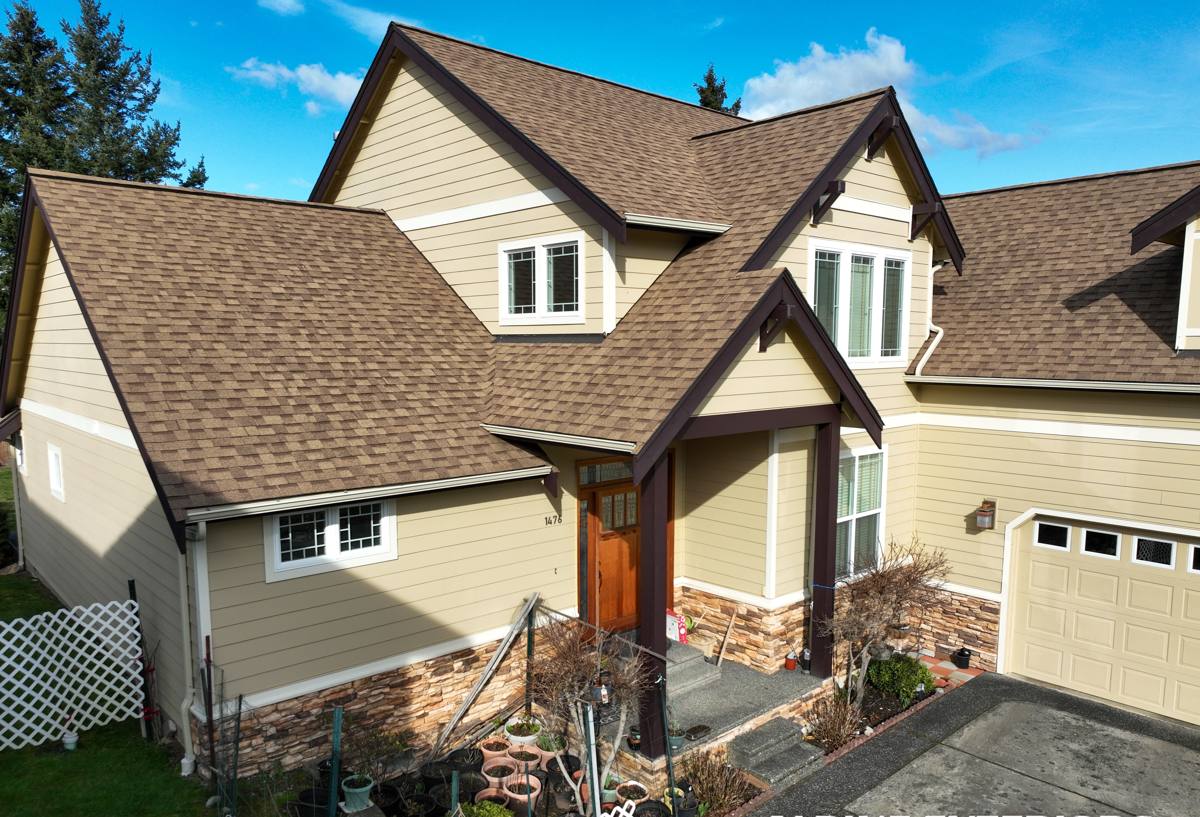
What Deming's Climate Asks of New Windows
Whatcom County's weather is defined by a marine air mass that pushes moisture inland almost year-round, and Deming — even set back from open water — still sits inside that system. New windows going into a new-construction opening here need to be selected and installed with three things in mind.
Driving Rain, Not Just Rain
Rain in this part of the county rarely falls straight down for long. Wind pushes it sideways into whatever the wall is presenting to the weather, and a window opening is the single biggest interruption in that wall's water-shedding surface. A window installed with a properly pitched sill pan and correctly lapped flashing sheds that wind-driven water without issue. A window installed without one is a slow-motion problem, because the water finds its way in at the sill corners and works on the framing from the inside where nobody sees it until the drywall or trim starts telling on it.
A Long Moss Season
Deming's tree cover and the region's mild, wet stretch from fall through spring give moss, algae, and general damp-surface growth a long season to work with — longer than drier parts of the state get. That mostly shows up on roofs and siding, but it matters for windows too: any sill, trim board, or shaded corner that holds water instead of shedding it becomes a spot where moisture sits and organic growth gets a foothold, which accelerates wear on caulk joints, trim, and finishes over time.
Marine-Influenced Air and Hardware
Even away from open saltwater, this corner of Washington sits inside a marine air mass that carries more moisture and salt-tinged air than you'd get on the dry side of the state. Over years, that steady exposure is harder on lower-grade window hardware, screen frames, and fasteners than most people expect. It's a slow effect, not a dramatic one, but it's part of why we don't treat hardware and finish quality as an afterthought on a new build.
Rough Opening to Finished Window: What a Correct Install Involves
On new construction, we're working directly with the framer's rough opening and the water-resistive barrier (WRB) that's about to go on the wall, before siding closes everything up. That sequencing is an advantage — we're not fighting existing trim or old flashing — but it also means there's no room for shortcuts, because whatever gets built into the wall now stays there.
Rough Opening Sizing and Sequencing
Every window has a manufacturer-specified rough opening tolerance, and getting that right up front avoids forcing a window into a hole that's too tight or leaving gaps that have to be over-shimmed later. We coordinate with the framing crew or builder on opening sizes before the windows are ordered, not after, so there's no scramble when the windows show up on site.
Sill Pan and Flashing, in the Right Order
A correct install starts with a sloped sill pan at the bottom of the opening — something that directs any water that gets past the window back outside rather than letting it pool on the framing. From there, flashing tape and the window's nailing flange integrate with the WRB in a specific shingle-lap order: sill first, then jambs, then head, each layer overlapping the one below it so water always drains outward and down, never inward. Skipping or reversing that sequence is the single most common cause of window leaks we see traced back to installation rather than the product itself.
Integrating With the Wall Assembly
The window isn't a standalone unit — it has to work with the WRB, the siding that will go over it, and the trim details around it. On new construction we make sure the flashing and WRB integration is complete and correctly lapped before the siding crew closes it up, because that seam is invisible once the house is finished and very expensive to fix later.
Choosing the Right Window for a New Build
New construction gives you a real choice of frame material and glass package, since you're not constrained by an existing opening or finish. The right call depends on budget, sun exposure on each elevation, and how much upkeep you want to take on long-term.
| Frame Material | Moisture & Corrosion Behavior | Typical Maintenance | Realistic Lifespan Here |
|---|---|---|---|
| Vinyl | Won't rot; performance depends heavily on weld and seam quality | Low; occasional track and weep-hole cleaning | 20-30 years |
| Fiberglass | Dimensionally stable, holds up well against sustained moisture | Low | 30-40+ years |
| Wood, painted or clad | Attractive but needs diligent upkeep at joints and sills to avoid moisture problems | Higher; regular finish maintenance | 15-30 years depending on upkeep |
| Aluminum | Conducts cold and can corrode over time in marine-influenced air unless well-finished | Moderate | 20-30 years |
We'll talk through which material fits each elevation of your new build rather than defaulting to one product for the whole house. A shaded north wall under fir trees and a sun-exposed south wall on the same build don't always call for the same answer, and glass packages (low-E coatings, gas fill, frame reinforcement) matter as much as frame material for how the windows perform through a Whatcom County winter.
Working With Your Builder or General Contractor
Most new-construction window jobs in Deming come through coordination with a builder or GC rather than a homeowner calling us directly, though we work both ways. Either way, the same things matter: window orders need to be placed early enough to hit the framing schedule, rough openings need to be confirmed before framing locks in, and flashing details need to be agreed on before the WRB and siding trades show up. We're used to working inside someone else's build schedule and communicating directly with the framer or GC so nothing stalls the job waiting on us — and so nothing gets rushed past the flashing step because the siding crew is ready to start.
Our New-Construction Window Process
- Plan review and rough opening check. We review the window schedule against the framing plan and confirm openings before windows are ordered.
- Product selection. We walk through frame material, glass package, and options for each elevation based on sun and weather exposure.
- Sill pan and flashing installation. Sloped sill pans go in first, followed by correctly shingle-lapped flashing integrated with the WRB.
- Window set and fastening. Windows are shimmed, squared, and fastened to manufacturer spec — not just eyeballed level.
- Insulation and air-sealing at the jambs. The gap between window and framing gets sealed correctly, which affects both energy performance and moisture control.
- Final check before siding closes it up. We confirm flashing laps and WRB integration are complete and correct before the wall gets covered, since that's the last point anyone can see this work directly.
Cost Factors on a New-Construction Window Job
| Factor | How It Affects Cost |
|---|---|
| Frame material | Vinyl is the most budget-friendly; fiberglass and wood-clad cost more up front |
| Number and size of openings | More and larger windows mean more material and labor, straightforward math |
| Glass package | Upgraded low-E coatings and gas fills add cost but improve comfort and efficiency |
| Site access and lot conditions | Rural Deming lots can mean longer material staging or driveway access considerations |
| Coordination complexity | Custom shapes, tall openings, or multi-unit combinations take more install time |
We'll give you a straight number after seeing the plans, not a vague range that grows once the job starts. Broadly, new-construction window packages scale a lot with how many openings a home has and what glass and frame tier you choose — there's no honest single price that fits every build.
Why a Crew That Already Works Deming Matters
New-construction window work depends on getting the sequencing right with everyone else on the job site — framers, WRB installers, siding crews — and on understanding what this specific climate actually does to a wall assembly over time, not just in the first year. A crew that's done this work across Whatcom County knows how wind-driven rain behaves on an exposed foothill elevation versus a sheltered one, knows what a long moss season does to a poorly detailed sill over a decade, and shows up already speaking the same language as the other trades on a Deming build site. That familiarity is what keeps a new-construction schedule moving without sacrificing the flashing details that determine whether the house stays dry for the next thirty years.
Checklist: What to Confirm on a New-Construction Window Job
- Rough openings confirmed against manufacturer specs before windows are ordered
- Sloped sill pans installed at every opening, not just standard flat sills
- Flashing lapped in the correct order — sill, then jambs, then head
- Flashing and WRB integration inspected before siding covers the wall
- Frame material and glass package matched to each elevation's sun and weather exposure
- Jamb gaps properly insulated and air-sealed, not just stuffed with fiberglass
- Installation schedule coordinated directly with your framer or GC's timeline
If you're planning a new build or addition in Deming and want the window package handled by a crew that treats flashing and sequencing as seriously as the windows themselves, we're happy to look at your plans and put together a straightforward, no-pressure estimate — just fill out the form below.