 Lynden Siding
 Decking Built for Nooksack's Weather, Not Just Its Looks
Nooksack sits in a part of Whatcom County where the weather doesn't give a deck much of a break. Marine air drifting in off the Salish Sea carries salt that settles on every horizontal surface. Rain falls steadily for months at a time, often as a fine, driving mist that finds its way into every gap and fastener hole. And when the rain finally slows, the region's long, damp shoulder seasons turn shaded decks green with moss almost overnight. A deck built for a drier climate, or built without those specific conditions in mind, tends to show it within a few years — soft spots, discoloration, slick moss growth, and hardware that rusts before the boards even wear out.
Composite decking, installed correctly, is one of the better answers to that climate. It doesn't absorb water the way wood does, it won't rot, and it resists the kind of moisture-driven decay that's so common in Lynden-area yards. But "composite" isn't a single product with one set of rules — board quality, substructure design, drainage, and hardware choices all matter just as much here as the material itself. A composite deck installed the same way you'd install one in a dry inland climate will still struggle in Nooksack. One installed with this region's rain and moss season in mind will hold up for decades.
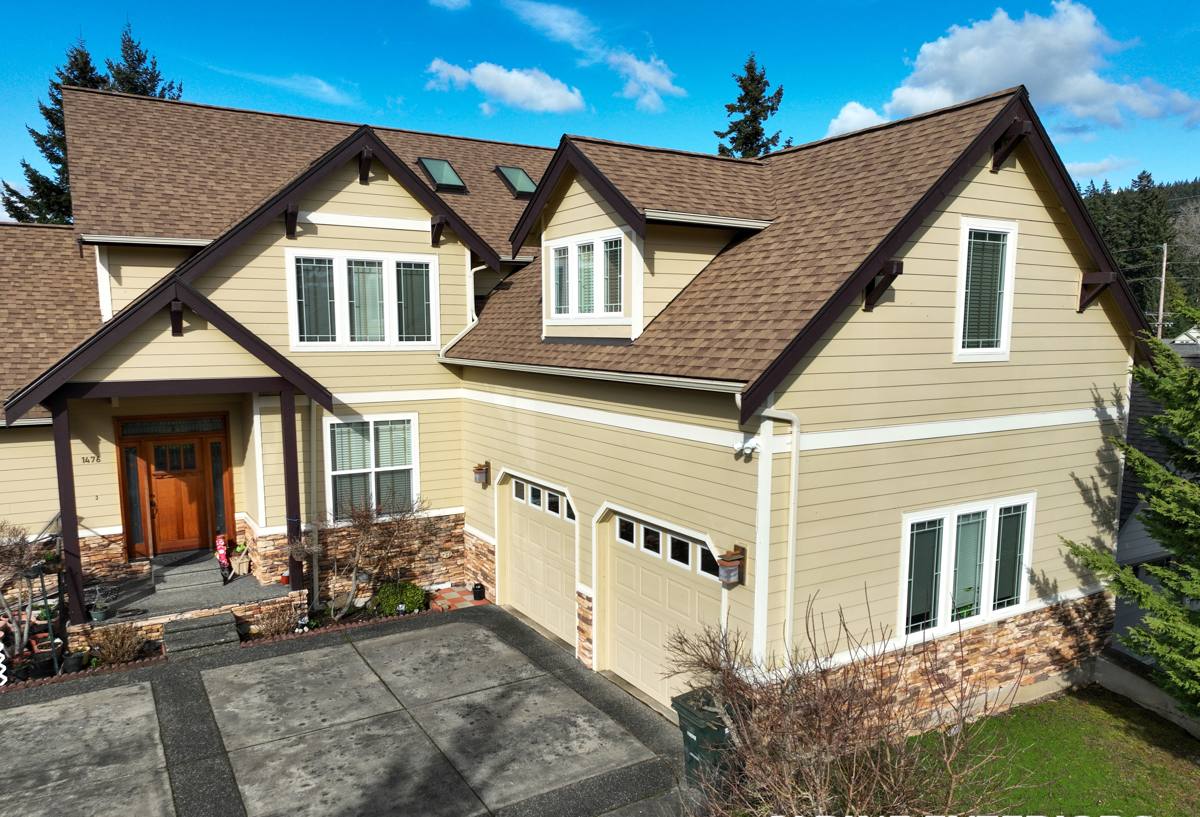
What Nooksack Homes Actually Need From a Deck
Moisture Management First
The single biggest factor in how a deck performs here isn't the board brand — it's how water is handled underneath and around it. Composite boards shed surface water well, but the substructure, ledger board, and any enclosed space beneath the deck still need a clear path for moisture to escape. Decks built low to the ground, decks with poor airflow underneath, or decks attached to a house without proper flashing are the ones that develop problems first, regardless of what decking material sits on top.
Slip Resistance Through Moss Season
Whatcom County's damp, shaded stretches of the year mean moss and algae growth is a near-guarantee on any deck that doesn't get regular sun and airflow. Board surface texture matters more here than in drier climates — a smooth, glossy composite board that looks great in a showroom can become genuinely slick on a shaded Nooksack deck by November. We factor sun exposure and shading into which board texture and finish we recommend for a given yard.
Fastener and Hardware Corrosion
Salt-laden air doesn't just affect coastal-front homes — it travels inland with prevailing winds and settles on hardware throughout the county. Standard fasteners can start showing rust streaks on light-colored composite boards within a season or two. This is a detail that's easy to skip and expensive to fix later, since streaked boards are hard to clean and replacing hidden fasteners usually means pulling boards.
Composite Board Types: What the Differences Actually Mean
Not all composite decking is built the same way, and the differences matter more in a wet climate like this one than they would somewhere dry. The table below covers the main categories we work with and how each one holds up under Nooksack conditions.
| Board Type | Moisture Performance | Best Use in Nooksack Yards |
|---|---|---|
| Capped composite (full wrap) | Best resistance to moisture absorption and staining; core is fully protected | Recommended default for most Nooksack decks, especially shaded or low-airflow sites |
| Capped composite (three-sided) | Good surface protection, but cut ends and bottom face are exposed | Acceptable where end cuts can be sealed and airflow underneath is strong |
| Uncapped composite | Absorbs moisture over time; more prone to swelling, staining, and mold in a wet climate | We generally steer homeowners away from this option for Nooksack's rain and moss exposure |
| PVC (fully synthetic) | No wood content, minimal moisture absorption, resists mold and staining well | Strong option for shaded, high-moisture areas, at a higher material cost |
We don't push one brand over another as a matter of loyalty — we care about which construction actually survives a Whatcom County winter without callbacks. Full-wrap capped composite is our standard recommendation for the majority of Nooksack projects because it's the most forgiving of the moisture exposure this area sees, but we'll walk through the honest trade-offs — including price — for your specific site and sun exposure.
Substructure: The Part Nobody Sees but Everyone Eventually Notices
The framing underneath a composite deck does more work than the boards on top, and it's where most premature failures actually start. In Nooksack's climate, that means:
- Joists spaced and sized to the specific board's manufacturer requirements — composite boards flex differently than wood and are less forgiving of wide joist spacing
- Joist tape or another moisture barrier on top of framing lumber, so standing water doesn't sit against exposed wood under the decking
- Ledger board flashing that properly directs water away from the house rim joist, not just a bead of caulk
- Enough clearance and airflow underneath the deck to let framing dry out between rain events instead of staying damp for weeks at a time
- Corrosion-resistant structural hardware and fasteners rated for the moisture and salt exposure this area sees, not just standard exterior-grade hardware
A deck can have premium composite boards on top and still fail early if the substructure underneath was built to a generic spec instead of this region's actual conditions.
How We Approach a Composite Deck Build in Nooksack
1. Site and Sun Assessment
Before we talk board colors, we look at how much direct sun the deck area actually gets, which direction it faces, and how close it sits to grade. That tells us how much moss and algae pressure to plan for and whether we need to lean toward a more slip-resistant board texture.
2. Structural Layout and Drainage Plan
We design the substructure and drainage path for the specific site — grade, downspout locations, and existing water flow around the foundation all factor in. This is also where we plan flashing at the house connection point, since that's one of the most common places water intrusion starts.
3. Framing and Moisture Barrier Installation
Framing goes in with corrosion-resistant hardware and a moisture barrier over the joists, matched to the manufacturer specs of the board system we're installing.
4. Board Installation
Boards are installed with hidden fastener systems where the product allows it, proper expansion gapping for temperature and moisture movement, and attention to how cut ends are sealed or capped.
5. Railings, Stairs, and Final Details
Railings and stair hardware get the same corrosion-resistant treatment as the deck's structural fasteners, since these are often the first place homeowners notice rust staining.
6. Walkthrough
We walk the finished deck with the homeowner, cover basic care, and point out anything worth watching over the first year — how it drains in heavy rain, and any areas likely to need more frequent cleaning due to shade.
Keeping a Composite Deck Looking Right Through the Wet Months
Composite decking is genuinely lower-maintenance than wood, but "low-maintenance" in a Whatcom County winter still means some upkeep. A simple seasonal routine goes a long way:
- Sweep debris and standing leaves off the deck regularly, especially in fall — trapped organic matter is what feeds moss and mold growth
- Rinse the deck surface periodically through the wet months to keep pollen, dirt, and algae from building a foothold
- Clean shaded or low-airflow areas more often than sun-exposed sections — they'll accumulate moss faster
- Check that gaps between boards and around framing stay clear so water keeps draining as designed
- Address any hardware rust staining early with a proper composite-safe cleaner rather than letting it set into the board surface
What a Composite Deck Project Typically Costs
Composite decking costs more upfront than pressure-treated wood, but the honest comparison has to include maintenance and lifespan, not just the initial bid. Here's how the major cost factors generally break down.
| Cost Factor | What Drives It |
|---|---|
| Board selection | Uncapped composite is the lowest-cost option; full-wrap capped composite and PVC boards cost more but resist Nooksack's moisture and staining better |
| Deck size and layout | Square footage, number of levels, and shape complexity (angles, curves, multiple stair sets) all add labor |
| Substructure condition | New builds versus decks replacing failed wood framing — old framing often needs full replacement to meet current moisture-management standards |
| Height and railing requirements | Elevated decks need more substantial railing systems and often stairs, which adds both material and labor |
| Site access and drainage work | Sites needing grading, drainage correction, or flashing repair at the house connection add scope beyond the deck itself |
We give straightforward, itemized estimates so you can see where the money is going, rather than a single lump number that hides which choices are driving the price.
Why It Matters That We Already Work in Nooksack
A composite deck built to a generic national spec sheet can still fail early in Whatcom County if it wasn't built with this area's rain volume, moss pressure, and salt-laden air in mind. Crews who work Nooksack and the surrounding Lynden area regularly already know which board textures actually stay safe underfoot through a wet November, which fastener finishes hold up against the salt air, and where drainage tends to go wrong on local lots. That local pattern recognition is hard to replicate from a spec sheet alone, and it's usually the difference between a deck that needs attention in year three and one that's still solid well into its second decade.
If you're planning a new composite deck or replacing an aging one in Nooksack, we're happy to walk your property, talk through board options honestly, and put together a clear, no-pressure estimate using the form below.