 Lynden Siding
 Siding Built for Acme's Foothill Climate
Acme sits east of Lynden along the South Fork Nooksack River, tucked closer to the foothills than most of the towns we serve. That location changes what a house has to deal with year-round. Homes here sit under heavier tree cover, get less direct sun on shaded sides, and hold onto moisture longer after a storm than homes out on the open flats closer to town. Combine that with Whatcom County's long, wet winters and the mild, moisture-laden air that moves through the whole region, and you get exterior siding conditions that are genuinely tougher than a lot of homeowners realize until they're dealing with a problem.
We're a Lynden-based siding, roofing, window, and deck contractor, and Acme is inside our regular service area. We're not sending a crew from out of the county who's never worked a shaded, tree-lined property before — we know what driving rain does when it comes off the foothills, and we know how differently the north side of a house ages compared to the south side out here.
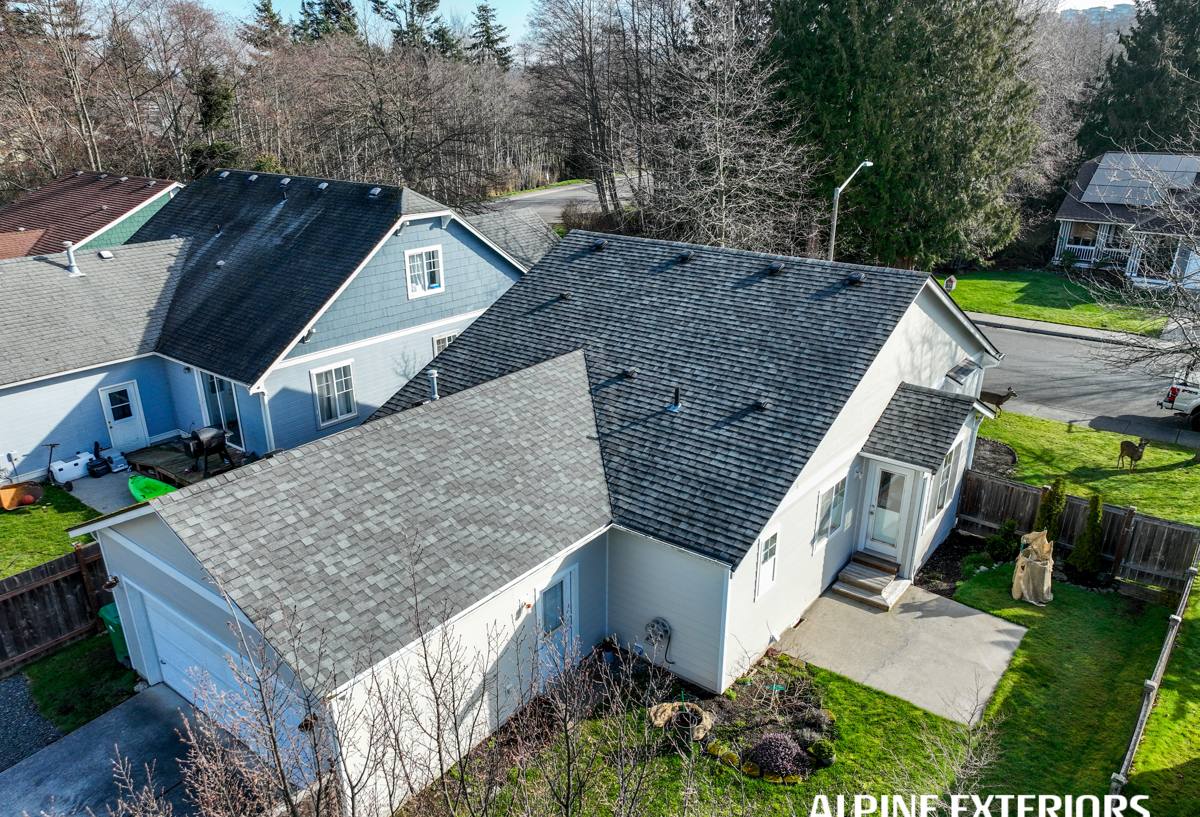
What Acme Homes Face That Other Areas Don't as Much
Driving Rain and Slow-Drying Walls
Wind-driven rain doesn't just wet a wall — it drives moisture into seams, laps, and fastener points, and forces water behind the surface if the material and installation don't manage it correctly. In a more open, sun-exposed neighborhood, a wall dries out fast after a storm. Under heavier tree canopy, like a lot of Acme properties have, that same wall can stay damp for days. That's exactly the kind of exposure that punishes siding materials which depend on paint film or surface sealing to keep water out.
A Long Moss and Algae Season
Shade plus moisture plus mild temperatures is the recipe for moss and algae growth on exterior surfaces, and Acme has all three in abundance for a big chunk of the year. Moss doesn't just look bad — it holds water against the surface it's growing on, which is a slow, steady problem for any siding material that isn't dimensionally stable and rot-resistant at its core.
Regional Moisture Load
Whatcom County as a whole deals with salt-tinged marine air moving inland off the Strait of Georgia and Bellingham Bay, on top of heavy regional rainfall. Acme is further from open water than our coastal service areas, but it still sits inside that same wet, low-evaporation weather pattern — homes here just add tree shade and river-bottom humidity on top of it.
Why This Adds Up to a Material Decision, Not Just a Labor Decision
A lot of siding failures we get called out to inspect aren't installation failures at all — they're material failures. The siding simply wasn't built to handle years of staying damp. That's the core reason we made a decision that shapes every job we do:
Why We Only Install James Hardie Fiber Cement
We don't install vinyl, LP SmartSide, Cemplank, Allura, primed spruce, or raw cedar. That's not a marketing angle — it's a standard we hold because of what we've seen these products do over time in exactly the conditions Acme homes deal with.
- Vinyl expands and contracts with temperature swings, can warp or crack in cold snaps, and doesn't hold up structurally against sustained wind-driven rain the way a rigid material does.
- LP SmartSide and other engineered wood products are wood-based. Wood-based siding depends on an intact factory coating and careful field caulking to keep moisture out — and in a shaded, slow-drying environment, any gap in that protection invites swelling and rot at the edges.
- Primed spruce and cedar are natural wood. They look great fresh, but they need real maintenance — repainting, caulking, moisture monitoring — to survive a climate like this long-term, and that upkeep is easy to fall behind on.
- Cemplank and Allura are also fiber cement, and fiber cement as a category is the right call for this climate. Where we differ is manufacturing consistency, factory finish quality, and warranty backing — which is why we standardized on one brand rather than mixing suppliers.
James Hardie fiber cement is cement, sand, and cellulose fiber. It doesn't rot, it doesn't feed moss the way wood fiber can, and it's non-combustible. It's dimensionally stable in a way vinyl and wood products aren't, so it doesn't gap, warp, or telegraph fastener movement over time the way some alternatives do. For a property like an Acme home that spends a lot of the year in shade and damp, that stability matters more than it does on a sunny open lot.
ColorPlus Factory Finish
Most Hardie siding we install uses the ColorPlus baked-on finish system rather than field paint. It's more UV- and moisture-resistant than a job-site paint job, and it comes backed by its own finish warranty separate from the substrate warranty. For a shaded property that holds moisture longer, a finish that isn't relying on a perfect field-applied coat is a real advantage.
HZ5 Climate Engineering
Hardie makes region-specific product formulations. The Pacific Northwest falls under their HZ5 zone, engineered for high-moisture, freeze-capable climates. That's the version we install here — it's not the same product sold in a dry, low-humidity market.
How a Siding Project Works, Start to Finish
- On-site assessment — we walk the exterior, check current siding condition, look at trim, flashing, and any moisture staining or soft spots, especially on shaded and north-facing walls.
- Tear-off and inspection — once old siding is off, we can actually see the sheathing. This is where hidden rot or past water damage shows up, and we address it before anything new goes on.
- Weather barrier and flashing — proper house wrap, window and door flashing, and drainage planes go in correctly the first time. This step is what actually keeps water out — the siding is the second line of defense, not the first.
- Hardie installation to spec — correct fastener placement, proper gaps and clearances, and manufacturer-specified overlaps. Installed wrong, even the best material can fail early; installed right, it's built to last decades.
- Final trim, caulking, and walkthrough — details finished, site cleaned up, and a walkthrough so you know what you're looking at and what maintenance (if any) it actually needs.
Comparing Siding Options for a Shaded, Wet Property
| Material | Moisture Behavior | Maintenance | Typical Lifespan |
|---|---|---|---|
| Vinyl | Doesn't rot, but can warp/crack; doesn't manage driving rain structurally | Low, but replacement is common after damage | 15-25 years, shorter in harsh exposure |
| Cedar / primed spruce | Absorbs moisture; prone to rot if coating fails | High — regular repainting and caulking | 10-20 years before major issues in wet shade |
| LP SmartSide (engineered wood) | Depends on intact coating and sealed edges | Moderate — edge and seam inspection needed | 20-30 years with diligent upkeep |
| James Hardie fiber cement | Doesn't rot; stable in sustained moisture | Low — occasional wash, no repainting cycle | 30+ years, factory finish separately warrantied |
Roofing, Windows, and Decks Matter Here Too
Siding doesn't work in isolation. On a shaded, moisture-heavy property like most of what we see around Acme, the roof, windows, and any exterior decking all affect how much water your walls actually deal with. A roof that's shedding water properly, gutters that are actually keeping up with the tree cover, and windows that are flashed and sealed correctly all reduce the load on your siding. We handle all four trades, which means when we're on-site we're looking at the whole envelope, not just the wall covering — and we'll tell you honestly if something else is actually the source of a problem you're seeing.
What to Check Before Hiring Anyone for Exterior Work
- Are they licensed and insured in Washington, and will they show you proof without you having to ask twice?
- Do they explain the "why" behind material choices, or just quote a price and a product name?
- Do they talk about flashing and weather barrier details, or only the visible siding?
- Will they walk your specific property and point out shaded, moisture-prone areas that need extra attention?
- Do they offer a written, itemized estimate rather than a vague lump-sum number?
Get a Free, No-Pressure Estimate
If you're noticing moss buildup, soft spots, peeling paint, or just want an honest read on how your current siding is holding up under Acme's shade and rainfall, we're glad to take a look. There's no cost and no pressure to move forward — just a straight assessment from a crew that works this exact climate. Use the form below to request your free estimate.