 Lynden Siding
 Kendall sits up against the foothills northeast of Lynden, close enough to the Nooksack River and the rising terrain toward Mount Baker that the weather here behaves a little differently than it does in town. Homes out this way see more shade from tree cover, slower-drying mornings, and longer stretches where moisture just sits on exterior surfaces instead of burning off. If you own a home in Kendall, you already know your siding works harder than siding on a house in a more open, sun-exposed spot.
We're a Lynden-based exterior contractor doing siding, roofing, windows, and decks throughout Whatcom County, including Kendall. We install one siding product: James Hardie fiber cement. That's a deliberate choice, not a lack of options, and it matters most in areas like Kendall where the microclimate leans wetter and shadier than the county average.
What Kendall's Climate Does to a House
Kendall isn't coastal, but Whatcom County as a whole gets driving rain off the Pacific through fall and winter, and Kendall's proximity to wooded, higher-elevation terrain adds its own wrinkles on top of that.
Shade and slow-drying surfaces
More tree cover means more homes with north- or east-facing walls that rarely see direct sun. Wood siding, engineered wood, and even some fiber cement installed without proper clearance can stay damp for days after a storm. Prolonged dampness is what feeds moss, mildew, and eventually rot at seams and butt joints.
Moss season
Moss isn't just a roof problem here. It colonizes north-facing siding, especially near ground level, under eaves, and anywhere airflow is restricted by landscaping or fencing. Left unchecked, moss holds moisture against the siding surface far longer than open air would, which accelerates whatever underlying damage the material is prone to.
Driving rain and wind-driven wet
Storms coming through the county don't just fall straight down — wind pushes rain sideways into wall assemblies, especially on exposed gable ends and around window and door trim. Poor flashing or caulk-dependent siding systems fail here first, because the water finds every gap.
Temperature swings
Kendall gets colder overnight than in-town Lynden thanks to elevation and cold air drainage off the foothills. That means more freeze-thaw cycling on any siding material that absorbs water — repeated expansion and contraction is exactly what cracks paint film and opens seams over time.
Why We Only Install James Hardie
We used to get asked why we don't offer vinyl, LP SmartSide, cedar, or primed spruce. The honest answer is that we looked at how those products perform in exactly the conditions Kendall throws at a house, and we didn't want to be the crew that installs something, watches it struggle in year six or seven, and has to explain that to the homeowner.
What James Hardie is
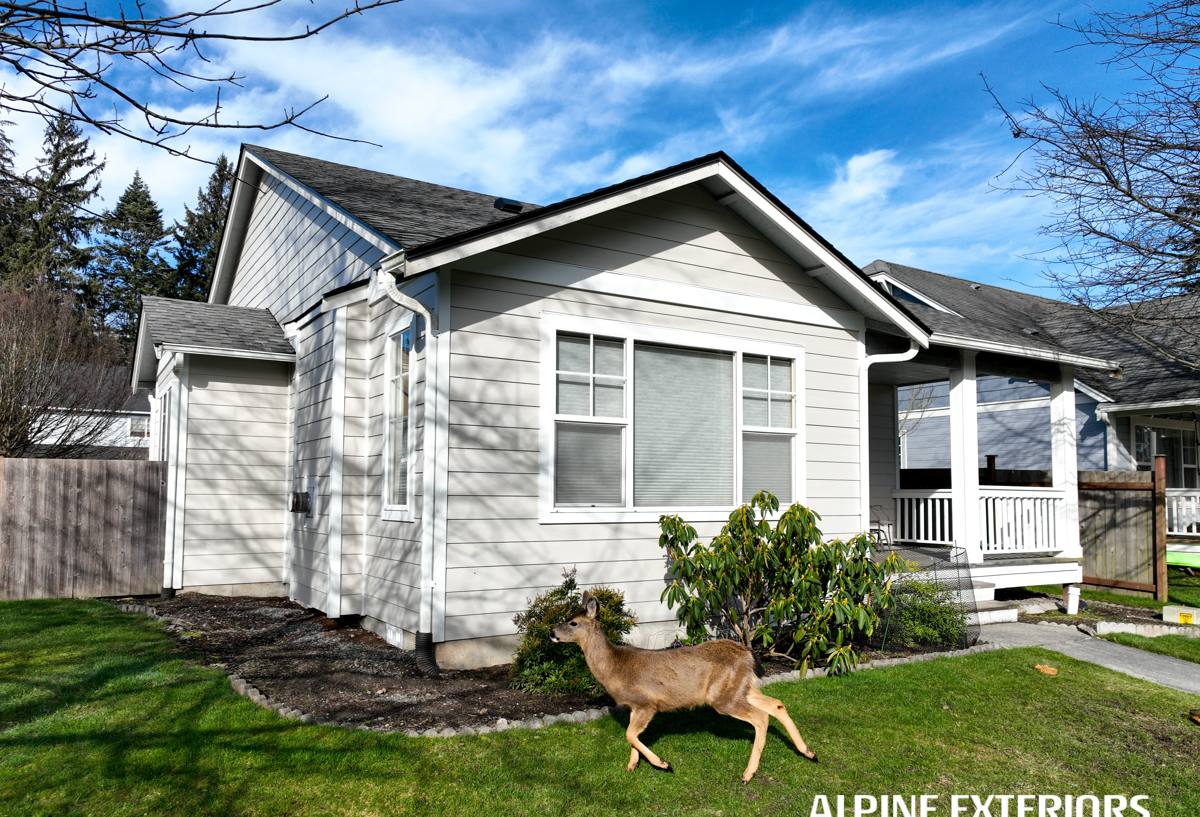
James Hardie siding is fiber cement — a blend of cellulose fiber, sand, and cement formed into planks, panels, and trim. It's non-combustible, dimensionally stable across wet and dry cycles, and it doesn't rot because there's no wood fiber for moisture to feed on. The factory-applied ColorPlus finish is baked on under controlled conditions, which gives it a more durable, consistent topcoat than field-applied paint.
What that means in a shaded, wet neighborhood like Kendall
- It doesn't swell, cup, or delaminate the way engineered wood products can when they stay damp for extended periods.
- It holds paint and color far longer than site-primed wood siding, which needs repainting on a much shorter cycle in a climate like this.
- It resists moss and mildew staining better than wood-based sidings, and what does grow on the surface is easier to clean off without damaging the material underneath.
- It's engineered in climate-specific HZ product lines, and the HZ5 formulation is built for the kind of cold, wet Pacific Northwest conditions we get inland from the coast.
Why we don't install the alternatives
Vinyl siding is affordable and low-maintenance in the sense that it doesn't need painting, but it's a thin, flexible material that can warp in heat, crack in cold, and it doesn't hold up well to impact. It also doesn't offer the same fire resistance or resale perception as fiber cement.
LP SmartSide and similar engineered wood products use treated wood strand technology and have improved a lot over the years, but they're still wood-based, which means the seams, cut edges, and fastener points are places where moisture intrusion can eventually cause swelling if caulking and paint maintenance lapse — a real risk in a shaded, damp pocket like Kendall.
Cedar and primed spruce are traditional and look great fresh, but they require an ongoing maintenance commitment — refinishing, caulking, and vigilant moisture management — that most homeowners underestimate until they're a decade in and behind on it.
We're not saying these products are junk. We're saying that after years of doing exterior work in this specific climate, we made a professional call to standardize on one product we trust to perform with minimal surprises, and that product is James Hardie.
How a Siding Project Works for a Kendall Home
Assessment
We start by looking at the whole exterior envelope, not just the siding surface. That includes checking for existing moisture damage, evaluating how much shade and moss exposure specific walls get, and looking at flashing details around windows, doors, and rooflines — because siding failure is very often a flashing or trim failure first.
Product and color selection
We walk you through Hardie's plank profiles, panel options, and trim to match your home's style, and help you pick a ColorPlus finish that will hold up and look right against the wooded backdrop common in Kendall.
Tear-off and prep
Old siding comes off, and we inspect the sheathing underneath for rot or damage before anything new goes on. In a damp climate, this step catches problems that would otherwise get sealed behind new siding and cause trouble down the road.
Installation to spec
James Hardie's performance depends heavily on correct installation — proper clearances from grade and roofing, correct fastener patterns, and properly lapped or caulked joints. We install to manufacturer spec because that's also what keeps the transferable warranty intact.
Final walkthrough
We go over the finished work with you, confirm trim and caulking details, and make sure you know what little maintenance the product does need going forward.
Roofing, Windows, and Decks in the Same Climate
Siding doesn't work in isolation. A lot of the moisture problems we see on Kendall homes trace back to a roofing or flashing issue that's been sending water down behind the siding for years. Because we also handle roofing, windows, and decks, we can look at your exterior as one connected system rather than patching one component while another keeps failing quietly.
- Roofing — moss and moisture management matter here just as much as on walls, and roof-to-wall flashing details directly affect how well siding performs.
- Windows — proper window flashing integration is one of the most common failure points behind siding, especially on older homes being re-sided.
- Decks — exposed to the same driving rain and freeze-thaw cycling, and often overlooked until rot shows up at ledger boards or posts.
Cost Factors for a Kendall Siding Project
| Factor | Why It Matters Here |
|---|---|
| Home size and wall complexity | More corners, gables, and dormers mean more cutting, trim, and labor time |
| Extent of tear-off and repair | Shaded, damp walls are more likely to have hidden sheathing damage discovered during removal |
| Siding profile and trim package | Lap width, panel style, and trim detail affect material and labor cost |
| Access and site conditions | Wooded lots and sloped terrain common in Kendall can affect staging and equipment access |
| Paint/finish selection | ColorPlus finishes vary by line; some premium colors and textures cost more than standard options |
Signs Your Kendall Home May Need Siding Attention
- Moss or dark streaking that keeps returning to the same wall sections, especially shaded, north-facing areas
- Paint that's peeling, bubbling, or chalking faster than it should
- Soft spots or visible warping, especially near the bottom courses or around windows
- Gaps opening up at seams, corners, or trim boards
- Rising heating bills that could point to a compromised exterior envelope
Working With a Local Crew
A crew that works this specific stretch of Whatcom County day in and day out knows which walls in Kendall stay wet longest, which neighborhoods deal with the worst moss buildup, and how the terrain affects everything from material staging to drainage planning. That local knowledge shows up in the details — clearance heights, flashing choices, and where extra attention actually pays off — not just in the finished look of the siding.
If you're noticing moss, fading paint, or general wear on your home's exterior, we're happy to come take a look. We offer free, no-pressure estimates for siding, roofing, window, and deck work in Kendall and the surrounding Lynden area — no obligation, just an honest read on where your home stands.