 Lynden Siding
 Aldergrove sits right at the border crossing that connects Lynden, Washington to the Fraser Valley of British Columbia, and homes on both sides of that line deal with the same weather. It's a stretch of the Pacific Northwest where marine air off the Salish Sea, heavy winter rain, and shaded, slow-drying yards all show up on a house's exterior long before they show up anywhere else. If you own a home near the Aldergrove-Lynden crossing, you already know the drill: siding that looks fine from the street can be hiding trouble at the seams, the trim, and the north wall that never quite dries out.
We're based in Lynden and have worked this specific stretch of Whatcom County for years. This page walks through what the local climate actually does to a house, how we approach siding, roofing, windows, and decks for homes in this area, and why we install exclusively James Hardie fiber cement siding rather than the vinyl, engineered wood, or other fiber cement products you'll see offered elsewhere.
What This Climate Does to a House
The area around Aldergrove and Lynden isn't the wettest corner of the Pacific Northwest, but it gets enough of the right conditions, in the wrong combination, to be genuinely hard on exterior materials.
Salt-Tinged Marine Air
Prevailing air moving inland off the Strait of Georgia and Puget Sound carries fine salt and moisture with it. It's not the same direct salt spray you'd get on a beachfront property, but over years it accelerates corrosion on fasteners, staples, and any exposed metal flashing, and it keeps painted and coated surfaces working harder to hold their finish.
Driving Rain
Storms here don't just fall straight down — wind-driven rain gets pushed sideways into wall assemblies, especially on west- and south-facing elevations. That matters more than people expect, because most siding failures aren't about the face of the material getting wet; they're about water finding a way behind it through a lap joint, a nail hole, or a poorly flashed window and butt seam, and then having nowhere to go.
A Long Moss and Mildew Season
Shaded lots, tree cover, and cool damp air combine to give this area a moss and algae season that can run most of the year on north-facing walls and roof planes. Moss holds moisture against a surface, which is bad news for any siding or roofing material that isn't built to handle sustained dampness — it's one of the fastest ways wood-based products start to soften, delaminate, or rot from the back side out.
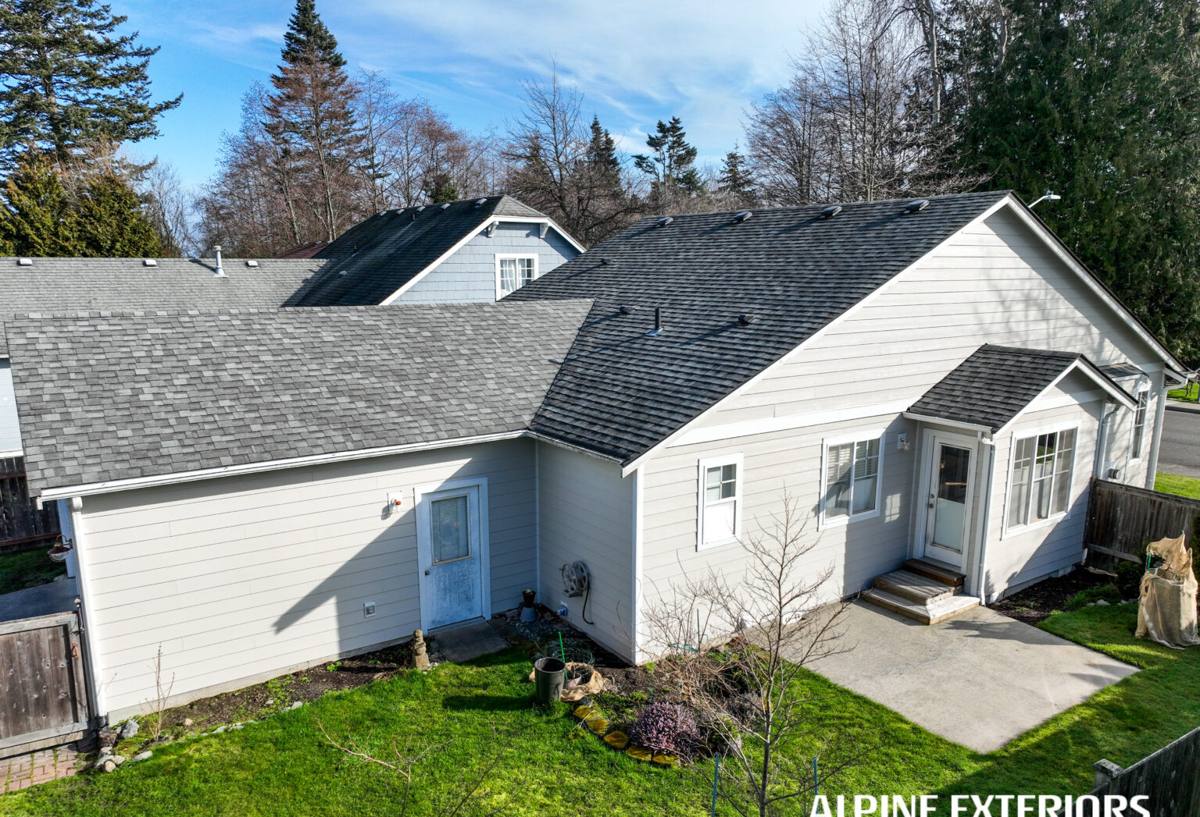
What We See on Older Homes in the Area
Working this area consistently, certain patterns show up over and over on homes that are 15, 25, or 40+ years old:
- Cedar or wood-composite siding with soft, spongy sections near the bottom courses and around window sills
- Vinyl siding that has warped, buckled, or faded unevenly on sun-exposed walls
- Moss and black streaking concentrated on north and east walls that get less direct sun
- Caulking that has shrunk, cracked, or pulled away at trim and window joints
- Rot at inside corners, deck ledger boards, and anywhere two building materials meet without proper flashing
- Older fiber cement or hardboard siding with swollen, delaminating edges where paint failed years ago
None of this is unique to any one house — it's what this climate does to exterior materials over time when moisture gets a foothold and isn't dealt with.
Why We Install Only James Hardie Fiber Cement
We get asked regularly why we don't offer vinyl, LP SmartSide, or other fiber cement brands. The honest answer is that after years of servicing homes in exactly this kind of climate, we standardized on one product because it holds up the most consistently and gives homeowners the fewest surprises down the road.
James Hardie siding is non-combustible fiber cement — it doesn't rely on a wood core that can absorb moisture and soften over time. Its ColorPlus factory-applied finish is baked on under controlled conditions, which gives it more consistent, longer-lasting color than most field-applied paint jobs, and it holds up better against the fading and chalking that sun and salt air cause over years. Hardie also engineers specific product lines (their HZ5 line, for example) for climates with more moisture and temperature swing, which is a meaningful difference from a one-size-fits-all product.
We're not saying every alternative product is bad — plenty of them have real strengths. But when we weigh moisture tolerance, long-term appearance, fire performance, and warranty structure for homes in this specific climate, fiber cement from James Hardie is what we're willing to put our name behind and what we install on our own projects.
How Siding Materials Compare in This Climate
| Material | Moisture Tolerance | Typical Lifespan Here | Maintenance |
|---|---|---|---|
| Vinyl | Doesn't rot, but can warp/crack in temperature swings | 15-25 years | Low, but fading and brittleness increase over time |
| Cedar/Wood | Poor — absorbs moisture, prone to rot under moss and shade | 10-20 years before major repair | High — regular staining/sealing required |
| LP SmartSide (engineered wood) | Moderate — treated, but still a wood-strand core | 20-30 years with diligent upkeep | Moderate — caulking and touch-up paint on a schedule |
| James Hardie Fiber Cement | Strong — cement-based, doesn't swell or rot | 30-50+ years with correct install | Low — periodic washing, factory finish holds color |
Cost factors that actually move the number on a bid include the size and complexity of the home, how much old siding and trim needs to be removed, whether there's hidden rot to repair underneath, the Hardie plank or panel profile chosen, and site access. We give real numbers during an in-person estimate rather than a broad range that doesn't mean much for your specific house.
Roofing, Windows, and Decks: Why the Whole Exterior Matters
Siding doesn't work in isolation. A house is a system, and in a climate with this much wind-driven rain and moss pressure, the pieces have to work together.
Roofing
Roof condition directly affects siding performance. A roof with failing flashing or moss buildup sheds water in ways it wasn't designed to, and that water often ends up running down onto siding and trim it wasn't meant to hit directly. When we're on-site for a siding project, we look at roof-wall intersections, kick-out flashing, and gutter performance as part of the same conversation.
Windows
Window flashing and integration with the siding plane is one of the most common failure points we find when we open up a wall. Old or poorly flashed windows are a direct path for wind-driven rain to get behind the siding, no matter how good the siding itself is. Replacing siding is often the right moment to address aging windows at the same time, since the wall is already open.
Decks
Deck ledger boards attached to the house are another common rot point, especially where moss and standing moisture collect against the house wall. We build and repair decks with the same moisture-management mindset we bring to siding — proper flashing at the ledger, materials suited to sustained dampness, and drainage that actually moves water away from the structure.
What a James Hardie Installation Actually Involves
Correct installation matters as much as the product itself — Hardie's own warranty is tied to installation following their specifications, not just using their material. Our process for homes in the Lynden-Aldergrove area includes:
- Full removal of old siding and inspection of the sheathing underneath for hidden rot or moisture damage
- Repair of any damaged sheathing or framing before new material goes up
- Installation of a weather-resistive barrier and correct flashing at every window, door, and penetration
- Proper fastening, clearances, and caulking per James Hardie's published installation specifications
- Attention to butt joints and lap spacing so water sheds correctly rather than wicking into seams
- Final walkthrough so you understand what was done and what the warranty covers
Skipping any one of these steps is how a good product ends up performing poorly. It's also usually why homeowners end up disappointed with a siding job that looked fine on installation day and failed a few winters later.
Why a Local Crew Matters Here
A contractor who works this specific corridor — Lynden, Aldergrove, and the surrounding Whatcom County communities — knows which walls take the worst of the wind-driven rain, where moss builds up fastest, and how the marine air affects fastener and finish choices differently than it would fifty miles inland. That's not a marketing point; it changes real decisions on a job, from flashing details to which elevations need extra attention during install. A crew that's only passing through doesn't carry that same familiarity with how this particular stretch of weather behaves against a house.
Signs It's Time to Have Your Siding Looked At
- Soft or spongy spots when you press on siding, especially near the bottom courses
- Persistent moss or dark streaking that comes back within weeks of cleaning
- Paint that's peeling, bubbling, or chalking heavily on one or more walls
- Visible warping, buckling, or gaps at seams and corners
- Rising energy bills that might point to compromised insulation behind failing siding
- Cracked or missing caulking around windows, doors, and trim
Catching these early usually means a more targeted repair. Waiting until siding is visibly failing across the whole house usually means a full replacement is the only real option left.
If you're near Aldergrove or anywhere in the Lynden area and want a straight answer on what your siding, roofing, windows, or deck actually need, we're happy to take a look. Fill out the form below for a free, no-pressure estimate — no obligation, just an honest read on where things stand.