 Lynden Siding
 Roof Repair for Aldergrove, BC Homes
Aldergrove sits close enough to Whatcom County that a lot of homeowners here end up calling a Lynden-based crew instead of driving into the city for a quote. That proximity matters more than it sounds like it would. A roofer who works this corridor regularly already understands the weather pattern that beats up roofs on both sides of the border — the same marine air, the same wet winters, the same moss problem that doesn't care which country it's growing in.
This page covers roof repair specifically, not full tear-off replacement. Repair is its own skill set: knowing what can be fixed cleanly, what's a temporary patch dressed up as a fix, and when a homeowner is better off putting money toward replacement instead. We'll walk through what Aldergrove roofs are up against, what a correct repair actually involves, and how we handle scheduling and access for a job that sits just across the line from our home base.
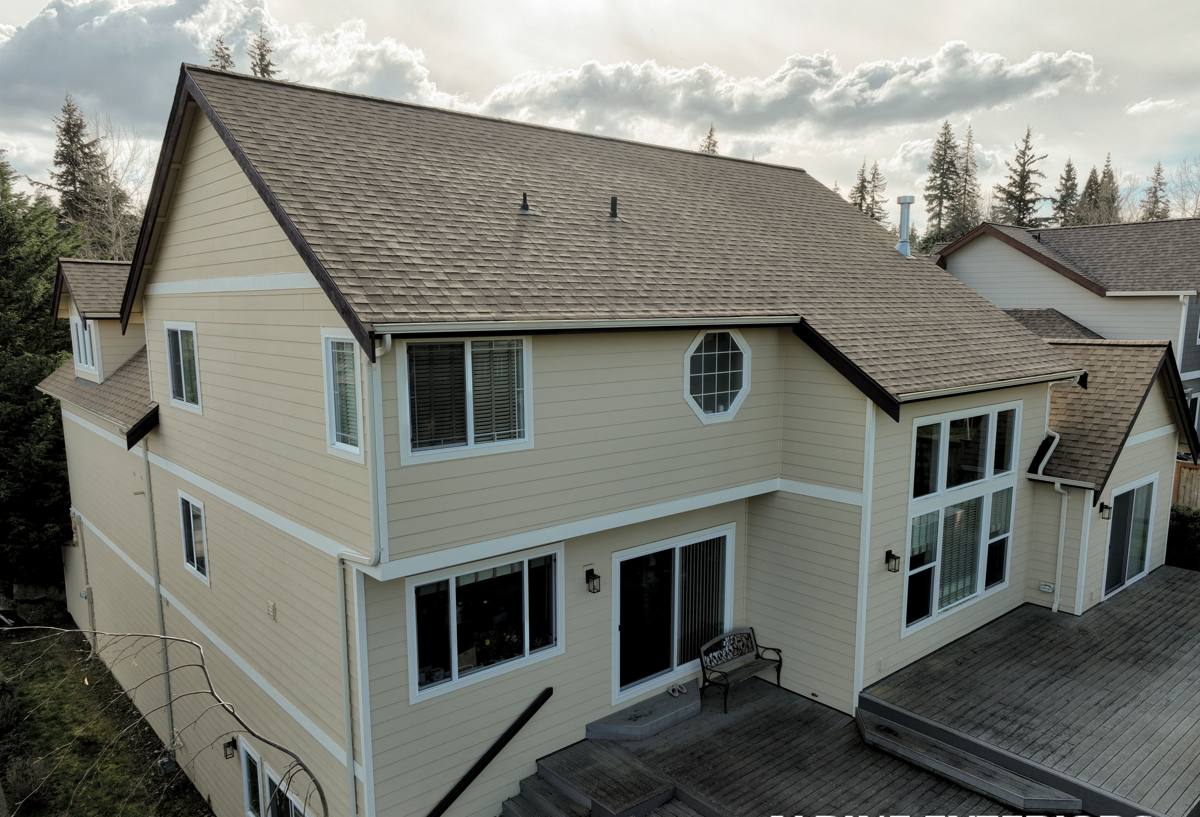
What This Climate Does to a Roof
The Pacific Northwest marine climate that covers Lynden, Whatcom County, and Aldergrove alike is hard on roofing in a few specific, predictable ways.
Salt Air and Metal Fatigue
Even well inland from the coast, salt-laden air moves through this region on prevailing winds. Over years, it accelerates corrosion on exposed metal — flashing, fasteners, vent caps, gutter hardware. A repair that reuses corroded flashing instead of replacing it is a repair that fails again within a season or two.
Driving Rain
This isn't a light-drizzle climate. Wind-driven rain finds every gap in flashing, every underlayment seam that wasn't lapped correctly, every nail that backed out half an inch. Roofs here need water management that accounts for rain coming in sideways, not just falling straight down.
Moss and Constant Moisture
Long, cool, wet stretches with limited direct sun give moss and algae exactly what they need to take hold, especially on north-facing slopes and under tree cover. Moss doesn't just look bad — it lifts shingle edges, holds moisture against the roof deck, and turns small leaks into slow rot if it's left alone for years.
Signs an Aldergrove Roof Needs Repair
Most roof problems in this area show up gradually. Homeowners usually notice one of these first:
- A stain on a ceiling or attic rafter that appears after a heavy rain, especially one with wind
- Granules collecting in gutters or at downspout outlets
- Shingles that look cupped, curled, or darker in patches (an early moisture sign)
- Visible moss growth, particularly on shaded or north-facing sections
- Daylight visible through the roof deck from inside the attic
- Flashing around chimneys, vents, or skylights that looks rusted, lifted, or cracked
- A roof that's 12-15+ years old and hasn't had any maintenance or inspection
None of these automatically mean a full replacement. Most of them, caught early, are repairable. The problem is that "caught early" window closes fast in a climate this wet — a small flashing leak that would take an afternoon to fix can turn into rotted decking within a wet season if it's ignored.
What a Correct Repair Actually Involves
A repair done right isn't just patching the spot where water is visibly coming through. It means finding where the water is actually entering — which is often several feet from where the stain shows up inside — and fixing the underlying cause, not just the symptom.
Diagnosis Before Patching
We trace leaks back to their source: a lifted shingle, failed flashing, a cracked pipe boot, or underlayment that's given out. Patching over the visible symptom without finding the source is the single most common shortcut that leads to a callback.
Matching Materials Honestly
On an older roof, exact shingle matches aren't always available. We'll tell you upfront when a patch will be visible rather than promising an invisible repair we can't deliver. Sometimes the honest move is replacing a full slope or section instead of one visible patch of mismatched shingles.
Flashing Gets Priority
Given how hard this climate is on metal, any repair that touches flashing gets new material, not a resealed version of what was already failing. Caulk and roofing cement are short-term fixes for flashing problems, not real solutions.
Moss and Debris Removal
If moss contributed to the problem, we clear it as part of the repair rather than leaving it to keep holding moisture against the deck after the patch is done.
Repair vs. Replacement: How We Make That Call
This is the judgment call homeowners most want an honest answer on, and it depends on more than just the roof's age.
| Factor | Leans Toward Repair | Leans Toward Replacement |
|---|---|---|
| Age of roof | Under 12-15 years | Beyond typical material lifespan |
| Extent of damage | Isolated to one area or slope | Spread across multiple sections |
| Decking condition | Solid, no soft spots | Soft, spongy, or visibly rotted |
| Number of past repairs | First or second repair | Third-plus repair on the same roof |
| Material availability | Shingle match still available | Discontinued or badly weathered mismatch |
We'll walk the roof, check the attic side when accessible, and give you a straight answer on which column your situation falls into — including telling you when repair is the right call even though replacement would be the bigger job for us.
How Our Process Works
1. Inspection
We look at the roof from the ground and, where it's safe and useful, up close — checking flashing, valleys, penetrations, and the general condition of the shingle field, not just the spot you called about.
2. Straight Explanation
Before any work starts, we explain what's actually wrong, why it happened, and what fixing it correctly involves. If there's a cheaper, faster patch that won't hold up in this climate, we'll say so rather than let you find out next winter.
3. Written Estimate
You get a clear scope of work and price before we start — no surprise add-ons once the tarp comes off.
4. The Repair
We work around the region's rain windows where we can, and we don't leave a roof partially open overnight if weather is moving in.
5. Cleanup and Check
Debris, old materials, and stray fasteners get cleared from the yard and gutters before we call the job done.
Why a Crew That Already Works Aldergrove Matters
Aldergrove sits close to Lynden, but it's still a cross-border trip for a lot of contractors, and that discourages some crews from taking on smaller repair jobs there. A crew based in Lynden and already accustomed to working this corridor doesn't treat an Aldergrove repair as an inconvenient outlier — it's a normal part of the route.
Practically, that means fewer scheduling headaches: no crew canceling because a repair job across the border wasn't worth the trip, no guesswork about how long the crossing adds to a workday, and no unfamiliarity with how the local climate behaves compared to a crew based somewhere drier. It also means we're not learning this region's moss patterns and rain exposure on your roof — we already know them from working nearby properties on both sides of the line.
What to Ask Any Roofer Working This Area
- Do they carry current liability insurance, and can they show proof of it?
- Will they put the scope of repair and price in writing before starting?
- Do they explain what caused the leak, not just where they're patching?
- Are they using new flashing and materials, or reusing what's already failing?
- Do they have a plan for weather delays that doesn't leave your roof exposed?
Maintenance That Extends the Life of a Repair
A good repair buys time, but the climate keeps working against the roof year-round. A few habits make a real difference:
- Keep gutters clear so water isn't backing up under the roof edge
- Trim back branches that shade a roof slope and keep it perpetually damp
- Have moss treated or removed before it spreads across a full slope
- Walk the attic after a heavy windstorm and look for new stains
- Get a roof inspected every few years even without an obvious problem
None of this replaces a professional inspection, but it catches the kind of small issues that are cheap to fix early and expensive to ignore.
Get an Honest Look at Your Roof
If you're dealing with a leak, moss buildup, or damaged flashing on a home in Aldergrove, we're happy to come take a look and give you a straight answer on whether it's a repair or something bigger — no pressure, no upsell. Fill out the form below for a free estimate, and we'll walk you through exactly what we find.