 Lynden Siding
 Exterior Work in Laurel and the Surrounding Lynden Area
Laurel sits in the rural stretch of Whatcom County that many Lynden-area homeowners call home — a mix of farmhouses, newer construction, and older homes tucked back among trees. It's not a downtown commercial strip, and it doesn't need to be treated like one. Homes out here deal with more tree cover, more standing shade, and more distance from a hardware store than homes closer to town, which changes how we think about siding, roofing, windows, and decks when we're working on a property in this area.
We handle all four of those trades as one crew, not four subcontractors handed off between each other. When we're on your roof, we're already looking at your siding transitions, your window flashing, and how water moves off the structure. That matters more in a place like Laurel, where a lot of homes sit close to trees and get less direct sun and wind exposure than open farmland closer to the valley floor.
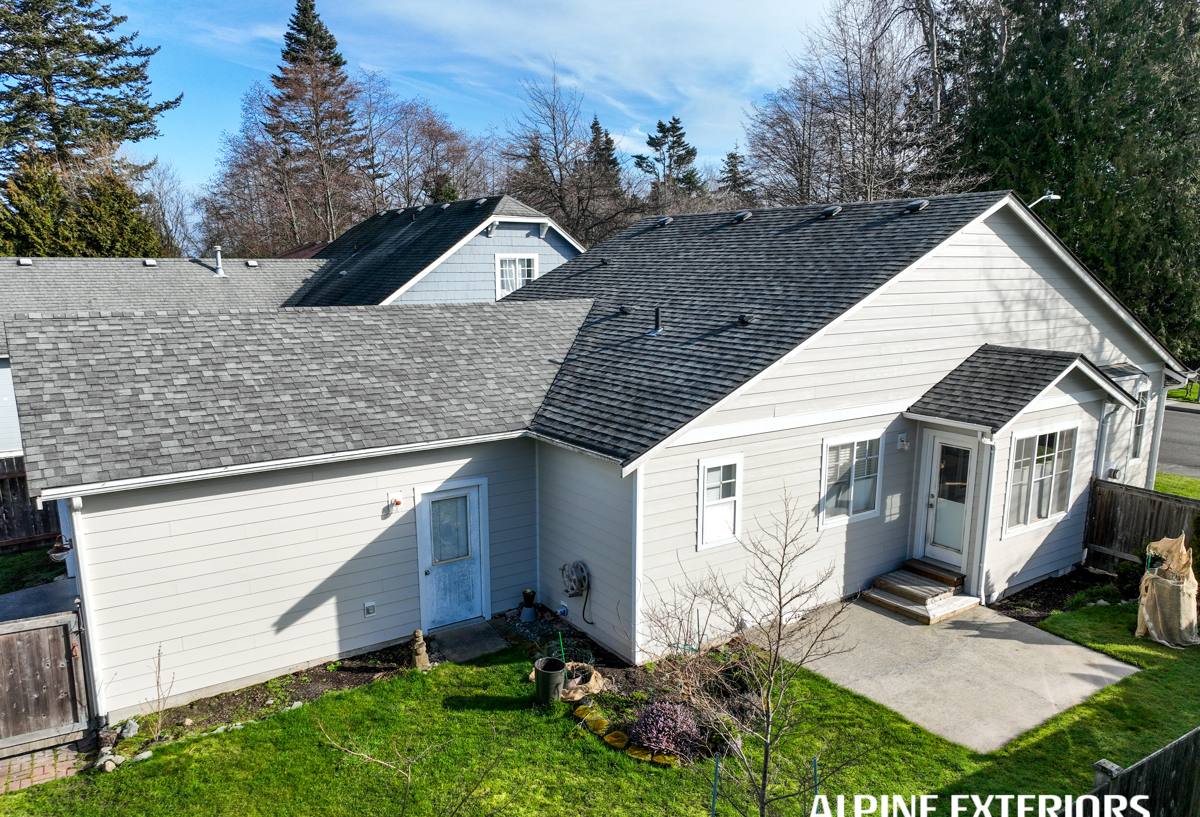
What Whatcom County's Climate Does to Siding Out Here
Western Whatcom County, including the Lynden and Laurel area, gets a specific combination of weather that's harder on exterior materials than people expect. It's not one dramatic storm a year — it's the accumulation of many wet, mild months in a row.
Driving Rain and Wind-Driven Moisture
This part of the county sees long stretches of rain that doesn't just fall straight down — wind off the Strait of Georgia and Puget Sound pushes it sideways into wall assemblies, especially on west- and south-facing elevations. Siding that isn't dimensionally stable, or that relies on paint film integrity to keep water out, tends to show it first at butt joints, corner boards, and anywhere caulk is doing more work than it should.
Salt Air Influence
You don't have to be waterfront to feel salt air in this part of Whatcom County — it travels inland on prevailing winds and settles into anything porous or poorly finished. Over years, that accelerates corrosion on fasteners and hardware and breaks down lower-quality coatings faster than manufacturers' glossy brochures suggest.
A Long Moss Season
Tree-covered lots like a lot of what you find in and around Laurel hold shade and moisture longer into the day than open exposures. That means moss and algae get a real head start each fall and don't fully let go until well into spring. Any siding material that's even slightly porous — or that has small surface irregularities where organic material can grab hold — will show green and black staining faster in a shaded, wooded setting than it would on a bare, sun-exposed wall.
None of this means your house is doomed. It means the material choice and the install details matter more here than they would in a drier, sunnier climate — and that's the whole reason we've standardized on one siding product instead of offering a menu of options.
Why We Only Install James Hardie Fiber Cement
We get asked fairly often why we don't offer vinyl, LP SmartSide, Cemplank, Allura, or primed wood siding as options. It's a fair question, and the honest answer is that we looked at how each of those materials actually performs over 15-20 years in a climate like this one, not just how they perform in a showroom or a sales brochure, and we made a call.
| Material | Moisture Behavior | Maintenance Burden | Fire Resistance | Typical Real-World Lifespan Here |
|---|---|---|---|---|
| James Hardie fiber cement | Non-organic, engineered to resist moisture-driven swelling and rot | Low — factory finish holds up without repainting for years | Non-combustible | 30+ years with correct install |
| Vinyl siding | Doesn't rot, but panels warp and gap with UV and temperature cycling | Low, but caulk/trim seams fail over time | Melts/deforms in heat | 15-25 years, variable |
| LP SmartSide | Engineered wood strand; performs well if perfectly sealed, vulnerable at cut edges and joints | Moderate — edge sealing and caulk maintenance is not optional | Combustible (treated) | 15-25 years, install-dependent |
| Primed spruce or cedar | Natural wood; absorbs moisture, moves seasonally, needs a sound paint film | High — repainting and moisture monitoring on a real schedule | Combustible | 10-20 years without diligent upkeep |
Every one of those alternatives can be installed correctly and can last a long time under the right conditions. But "the right conditions" usually means dry, sunny exposures and homeowners who stay on top of caulking and repainting schedules. In a shaded, moss-prone, salt-air-influenced area like Laurel, we'd rather not sell a product that depends on that level of upkeep to avoid moisture problems at the seams.
James Hardie fiber cement is made from cement, sand, and cellulose fiber — it doesn't feed moss the way organic wood fiber does, it doesn't swell and crack at cut edges the way engineered wood can, and it's non-combustible, which matters more every year in this part of the state. Hardie's ColorPlus factory finish is baked on under controlled conditions rather than field-painted, which is a meaningfully different level of coating consistency than anything applied on-site with a brush or sprayer in variable weather. It also carries a strong, transferable limited warranty, which protects you if you sell the home before the siding does.
We install Hardie's HZ5 product line, which is engineered specifically for climates like Whatcom County's — freeze-thaw cycling, sustained moisture exposure, and coastal-influenced weather. It's not the cheapest material on the market, and we tell people that upfront. It's the material we're willing to put our name behind after twenty-plus years of siding coming and going in Pacific Northwest weather.
How a Siding Project Works on a Laurel-Area Home
Every property is different, but the sequence is fairly consistent:
- On-site walkthrough — we look at your current siding, trim, window flashing, and any moisture or moss patterns already showing on the walls
- Written estimate with material quantities and a clear scope, not a vague per-square-foot number
- Removal of old siding and inspection of the sheathing underneath for rot or damage before anything new goes on
- Correct water-resistive barrier and flashing details at every window, door, and penetration — this is where most siding failures actually start, not in the siding itself
- Installation of Hardie panel, lap, or shingle siding to manufacturer fastening and clearance specs
- Factory-finished ColorPlus color, so there's no field painting required after install
That flashing and moisture-barrier step is the one homeowners rarely see discussed, and it's the step that determines whether siding lasts 30 years or fails at year eight regardless of what material is on the wall. A wooded, shaded lot with limited drying time between rain events makes those details less forgiving, not more.
Roofing, Windows, and Decks — Handled as One System
Siding doesn't work in isolation. On a lot of Laurel-area homes we've looked at, the actual water intrusion problem started at a roof-to-wall transition, a poorly flashed window, or a deck ledger board — not the siding field itself. Because we do roofing, windows, and decks in addition to siding, we can flag those issues during a siding estimate instead of ignoring anything outside our scope.
- Roofing — proper roof-to-wall step flashing keeps water from ever reaching your new siding in the first place
- Windows — old or poorly flashed windows are one of the most common hidden moisture entry points behind siding
- Decks — ledger board connections and deck-to-house flashing are a frequent source of rot that shows up as siding damage years later
Why a Local Crew Matters Here
Laurel and the areas around it aren't hard to reach, but they also aren't the first stop for every contractor working out of the bigger Whatcom County population centers. A crew that actually knows this stretch of the county — the tree cover, the drainage patterns, the way moss builds up on north- and shade-facing walls faster than it does elsewhere — makes different, better calls on things like starter strip placement, ventilation gaps behind siding, and where extra flashing attention is worth the time.
Being local also means we're not disappearing after the invoice clears. If a warranty question comes up five years from now, we're still working in the same county, on the same types of homes, for the same neighbors.
Signs a Laurel-Area Home May Need New Siding
- Persistent moss or algae staining that comes back within a season of cleaning
- Soft or spongy spots when you press on siding near the bottom courses or around windows
- Visible cracking, warping, or separation at panel seams and corner boards
- Paint that's peeling or bubbling rather than just fading
- Rising energy bills that suggest the wall assembly isn't performing the way it used to
- Visible daylight or drafts around window and door trim
Any one of these on its own isn't necessarily an emergency. Two or three together, especially on a shaded or moisture-prone elevation, usually mean it's worth having someone look at what's happening behind the siding, not just at the surface.
What Affects the Cost of a Siding Project
| Factor | Why It Matters |
|---|---|
| Home size and wall complexity | More corners, gables, and dormers mean more cutting, flashing, and labor time |
| Current siding removal | Tear-off and disposal of old material adds cost versus new construction |
| Sheathing condition | Rot repair found once old siding is off can change the scope |
| Hardie product line and profile | Lap, panel, and shingle styles carry different material and labor costs |
| Trim and accessory scope | Corner boards, trim boards, and soffit work add to the total |
| Access and site conditions | Tree-covered or tight-access lots can affect staging and labor time |
We don't quote a rough number over the phone without seeing the house — too many of these factors change the total for it to be honest to do otherwise.
Get a Free Estimate for Your Laurel-Area Home
If you're noticing moss buildup, soft spots, or aging siding on a home in Laurel or anywhere else in the Lynden area, we're happy to come take a look. There's no pressure and no obligation — just a straightforward assessment of what your home actually needs and what it would take to fix it right. Use the form below to request a free estimate.