 Lynden Siding
 What Board & Batten Siding Actually Is
Board and batten is one of the oldest siding patterns in the Pacific Northwest, and it's having a real resurgence on farmhouse, modern-farmhouse, and craftsman homes throughout Lynden and the rest of Whatcom County. The look is simple: wide vertical boards installed with narrow strips (battens) covering the seams between them. What's changed is the material. Where board and batten used to mean solid wood boards that cupped, split, and needed repainting every few years, it now usually means engineered fiber cement panels and trim designed specifically for this pattern.
The visual result is the same clean, vertical rhythm homeowners want. The performance is not the same at all — and that difference is the whole reason we're writing this page.
Why the Vertical Look Matters Here
Vertical siding sheds water differently than horizontal lap siding. Done correctly, the batten strips and panel seams direct rain down and away from the wall assembly rather than letting it pool on horizontal ledges. In a climate like ours, where driving rain off the Salish Sea and Nooksack Valley wind patterns can push moisture sideways into a wall, that drainage path is not a cosmetic detail — it's part of how the siding actually protects the house.
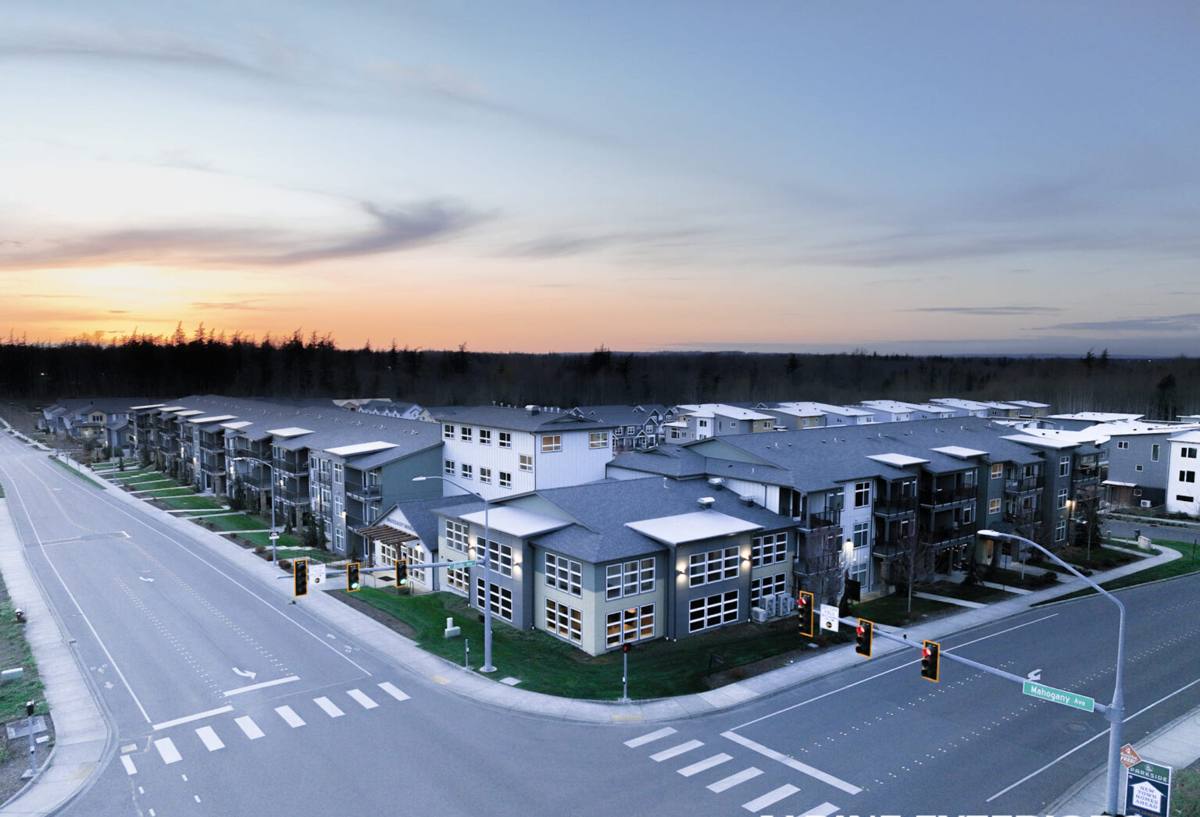
Why Board & Batten Fits Lynden and Whatcom County Homes
Lynden sits in a corridor that gets a genuine mix of coastal and valley weather. Salt-laden air drifts in off the Strait of Georgia and Bellingham Bay, humidity stays high for much of the year, and the long gray stretch from October through April keeps siding damp far longer than it would be in a drier climate. Add in the moss and algae season that runs practically half the year on north-facing walls under mature trees, and you've got a set of conditions that punishes any siding material with a weak moisture tolerance.
Board and batten in a moisture-stable material holds its lines and its finish through all of that. In a moisture-sensitive material, it's often the first style to show trouble, because the narrow battens and exposed vertical seams have more edge detail — more places for water to find a way in if the material or the installation isn't right.
James Hardie's Board & Batten Systems
We install James Hardie exclusively, and for board and batten specifically, Hardie offers a few ways to get the look with engineered fiber cement rather than wood:
- HardiePanel vertical siding with batten strips — large-format fiber cement panels installed vertically, with separate batten boards (also fiber cement) fastened over the panel joints.
- Hardie Artisan Vertical Siding — a heavier, more dimensional panel product with deeper reveals, aimed at homes where the architecture calls for a premium, high-relief look.
- HardieTrim boards used as the battens themselves, milled to match reveal widths and paint-ready or ColorPlus-finished to match the field panel.
All of these are cement, sand, and cellulose fiber, autoclaved into a dense, dimensionally stable board. They don't absorb water the way wood does, they don't expand and contract with humidity swings the way wood or some polymer products do, and they carry a Class A noncombustible fire rating — relevant for Whatcom County's dry-season wildfire smoke years even though we're not in a high fire-hazard zone like parts of eastern Washington.
ColorPlus Factory Finish
Most of our board and batten installs use Hardie's ColorPlus finish — color baked onto the panel and trim at the factory under controlled conditions, rather than field-painted after installation. For a pattern with this many seams and edges, that matters. Field paint has to be worked into every batten edge and panel joint by hand, and it's the first thing to fail when it's applied thin or in the wrong weather. A factory finish is uniform across every board before it ever reaches Lynden, and it comes with its own finish warranty separate from the substrate warranty.
Why Installation Technique Matters More Than the Product
Board and batten fails from bad installation far more often than it fails from bad material. This is the single biggest thing we want homeowners to understand before hiring anyone for this style of siding.
| Detail | Why It Matters |
|---|---|
| Rainscreen / drainage gap behind panels | Lets any moisture that gets behind the siding drain and dry instead of sitting against the sheathing |
| Fastener placement and spacing | Wrong nailing pattern voids Hardie's warranty and can cause panels to crack or work loose over time |
| Batten fastening through panel into framing | Battens must be secured to solid backing, not just face-nailed to the panel, or they loosen in wind |
| Panel and batten gaps for expansion | Fiber cement moves slightly with temperature; gaps sized wrong cause buckling or open joints |
| Flashing at window and door heads | Vertical siding channels more water past openings; flashing errors here show up as interior leaks |
| Caulking limited to correct joints only | Over-caulking seams that should drain traps water instead of releasing it |
James Hardie publishes detailed installation specifications for board and batten precisely because these details are easy to get wrong and expensive to fix once the siding is up. A crew that treats this like standard lap siding installation, just turned sideways, will produce a house that looks right for the first year and starts showing problems by year three or four.
Board & Batten Material Comparison
Homeowners researching this style often come across LP SmartSide, vinyl board and batten panels, and primed cedar or spruce boards. Here's the honest comparison, focused on how each behaves specifically in a vertical, seam-heavy pattern in our climate:
| Material | Moisture behavior | Finish stability | Long-term maintenance |
|---|---|---|---|
| James Hardie fiber cement | Does not absorb and swell; engineered for wet climates | Factory ColorPlus finish holds color for years | Occasional wash; no repainting on ColorPlus product |
| LP SmartSide (engineered wood) | Wood-based strand product; edges are the vulnerable point if cut edges aren't sealed and maintained | Field or factory paint, depending on product | Edge sealing and paint upkeep are ongoing responsibilities |
| Vinyl board and batten panels | Doesn't rot, but expands/contracts more with temperature and can warp or bow | Color is through the material but fades and chalks over time; can't easily be repainted a darker color | Low maintenance but limited repair options if a panel cracks |
| Primed cedar or spruce boards | Real wood; absorbs moisture at end grain and seams unless meticulously maintained | Field paint, needs recoating on a cycle | Highest ongoing maintenance of the group |
We don't install LP SmartSide, vinyl, or bare wood board and batten. That's not because those products can't work — plenty of homes around Whatcom County have them and homeowners maintain them fine. It's because we've standardized our crews, our warranty, and our installation training on one system, and we'd rather do one thing at the highest level than stretch across four product lines and dilute our expertise on all of them.
Maintenance and Long-Term Care
One of the practical selling points of Hardie board and batten in this climate is how little it asks of you afterward.
- Rinse with a garden hose or soft wash once or twice a year to keep moss and algae from establishing, especially on north-facing and shaded walls
- Inspect caulking at trim and penetrations every couple of years — caulk is the one component that does age faster than the siding itself
- Keep sprinklers and irrigation from spraying directly on the siding day after day
- Trim back vegetation and tree cover that keeps a wall section shaded and damp longer than the rest of the house
- Touch up any impact damage promptly rather than letting a chip sit exposed through a wet winter
None of this is unique to board and batten — it's the same basic care any siding benefits from — but the vertical pattern's extra seams make consistent care slightly more valuable than it is on plain lap siding.
What Drives the Cost of a Board & Batten Project
| Factor | Effect on cost |
|---|---|
| Panel vs. true board-and-batten with individual boards | Individual board installations take more labor time than large-format panels with applied battens |
| Reveal width and batten spacing chosen | Narrower spacing means more battens, more fasteners, more labor per square foot |
| Wall complexity (gables, dormers, cutouts) | More cuts and more flashing details around openings add time |
| Tear-off of existing siding | Removing old siding and dealing with any sheathing repair underneath adds a project phase |
| ColorPlus vs. field-painted primed product | Factory finish costs more upfront but removes a painting cycle from your maintenance schedule |
Planning a Board & Batten Project
If you're weighing this style for a Lynden home, here's what's worth sorting out before you get quotes:
- Decide whether you want board and batten on the whole house or as an accent (gables, a porch surround, a single elevation)
- Pick a reveal and batten spacing that matches your home's proportions — wider spacing reads more modern, narrower reads more traditional farmhouse
- Confirm what's happening with the wall assembly underneath — house wrap condition and sheathing integrity matter as much as the siding you put over them
- Ask any contractor bidding the job to walk you through their fastening and drainage-gap approach specifically for vertical siding, not just their general siding process
- Get the manufacturer warranty terms in writing, including what's covered on the panel versus the finish versus the installation
If you're considering board and batten for a home in Lynden or anywhere in Whatcom County, we're glad to come take a look, talk through reveal and color options, and give you a straightforward, no-pressure estimate using the form below.