 Lynden Siding
 A Familiar Look, A Familiar Problem
Primed wood siding — often sold as primed spruce or primed pine lap siding — has a long history in the Pacific Northwest. It's affordable, it machines easily, and fresh off the truck it looks sharp: crisp lines, tight joints, a smooth factory-primed surface ready for paint. We understand why it's still specified on new construction and why some homeowners in Lynden ask about it when they're pricing out a re-side. It's not a bad piece of wood. The problem is what happens to that wood after five, ten, or fifteen years sitting on a house in Whatcom County.
We don't install primed wood or spruce siding on any home we work on. Not because the product is a scam or because every board fails — plenty of primed wood siding jobs look fine for years if everything goes right. We stopped installing it because "everything goes right" is a high bar to clear in this climate, and when it doesn't, the failure mode is expensive, slow to show itself, and hard to fully fix without a full tear-off.
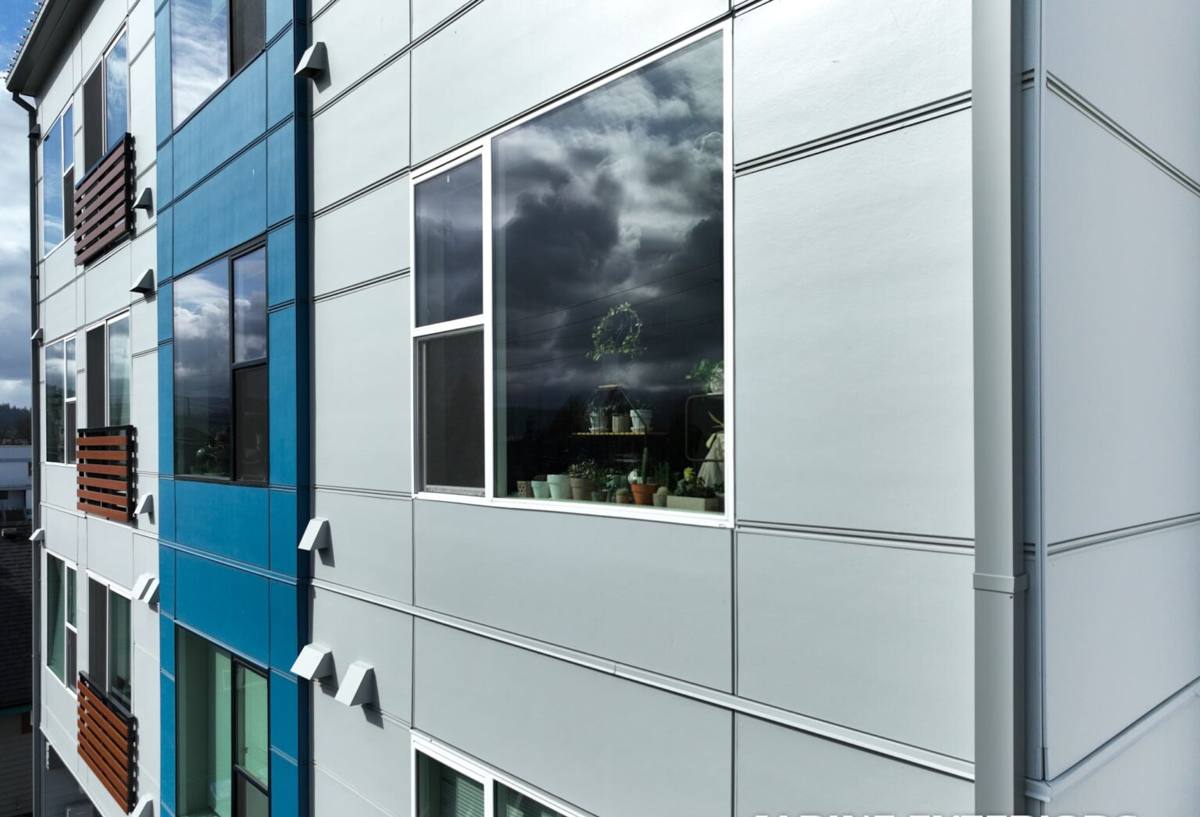
What Primed Wood Siding Actually Gets Right
To be fair to the product: primed spruce and pine lap siding is lightweight, easy for crews to cut and nail, and it takes paint well when it's fresh. It's been used on houses in this region for generations, and a lot of older Lynden homes still wear their original wood siding. Cost per square foot is usually lower than fiber cement, at least on the material line item. If you like the classic look of horizontal wood lap and you're committed to staying on top of maintenance, it can hold up — for a while.
The trade-off is that "holding up" depends almost entirely on things outside the manufacturer's control: how well the crew back-primed the cut ends, how tight the caulk joints stay, how often the homeowner repaints, and how much moisture the wall assembly is exposed to. That's a lot of variables stacked against a material that is, at its core, a soft, water-absorbent wood species.
Where It Tends to Fall Short
- End grain absorption: Every cut end, miter, and butt joint exposes raw wood fibers that pull in moisture like a straw, even when the face is primed and painted.
- Paint film breakdown: Primer and paint are a maintenance system, not a one-time fix — once the film cracks or chalks, the wood underneath is exposed again.
- Swelling and delamination: Repeated wet-dry cycles cause the board to swell, shrink, and eventually separate at the surface (delamination) or split along the grain.
- Insect and rot vulnerability: Once moisture gets past the paint film, spruce and pine are both attractive to rot fungus and wood-boring insects.
Whatcom County's Climate Doesn't Do This Product Any Favors
Lynden sits close enough to the Salish Sea and the Fraser Valley that homes here deal with a steady diet of driving rain, salt-tinged air moving in off the water, and a moss season that can run from fall through spring. That combination is rough on any exterior wall, but it's particularly hard on painted wood. Salt air accelerates the breakdown of paint films and metal fasteners. Driving rain — rain that comes in sideways during a Whatcom County windstorm — gets pushed up under laps and into seams that were designed for water running straight down, not sideways.
Then there's moss. A long moss season means organic growth holding moisture directly against the siding surface for months at a time, right where sun exposure is already lowest and drying time is slowest. On fiber cement that's a cosmetic cleaning issue. On primed wood, sustained moss contact against a painted wood surface is one of the more reliable ways to start a rot problem you won't see until you're replacing boards.
None of this means every primed wood installation in Lynden is doomed. It means the margin for error is thin, and the maintenance schedule required to stay ahead of it is more demanding than most homeowners realize when they're comparing sticker prices.
The Real Cost Is in the Maintenance, Not the Install
This is the part that doesn't show up on a bid sheet. Primed wood siding is a system that requires ongoing homeowner investment to perform anywhere close to its potential lifespan. Skip a repaint cycle or two, and the clock on hidden moisture damage starts running.
| Factor | Primed Wood / Spruce Lap | James Hardie Fiber Cement |
|---|---|---|
| Repaint interval | Every 5-7 years, often sooner in coastal exposure | ColorPlus finish rated 15+ years before repaint needed |
| Moisture behavior | Absorbs water at cut ends and paint failures | Cement-based, does not swell or rot from moisture |
| Moss/algae resistance | Low — organic growth holds moisture at surface | Higher — non-organic surface, engineered finish |
| Combustibility | Combustible wood product | Non-combustible fiber cement |
| Typical warranty | Limited, often finish-only, non-transferable | Long-term, transferable product warranty |
| Insect vulnerability | Susceptible once paint film fails | Not a food or nesting source for insects |
Add up the repainting labor, the caulk touch-ups, the occasional board replacement, and the maintenance cost over 20-30 years frequently outpaces the up-front savings versus a material that's engineered to not need that cycle at all.
Why We Standardized on James Hardie Instead
We install James Hardie fiber cement siding exclusively, and this is exactly the kind of situation that decision is built around. Hardie's siding is a cement-based composite, not a wood product — it doesn't absorb water the way spruce or pine does, it doesn't feed rot fungus, and it isn't a food source for insects. That matters directly here: a material that shrugs off driving rain and doesn't care much about a few extra weeks of moss contact each winter is a material that's actually matched to what Whatcom County weather does to a house.
Hardie's HZ product lines are engineered with regional climate zones in mind, which is relevant on the west side of the Cascades where wind-driven rain and humidity are the dominant stress factors, as opposed to the freeze-thaw cycles that dominate colder inland climates. The factory-applied ColorPlus finish is baked on under controlled conditions — a more durable, consistent process than field-applied primer and paint — and it's backed by a long-term finish warranty. The product warranty itself is transferable, which matters if you sell the house before the warranty term is up.
None of that makes Hardie maintenance-free forever. Caulk joints still need periodic inspection, and any siding benefits from an annual walk-around. But the baseline material is doing the heavy lifting instead of relying entirely on a paint film to keep water out.
What This Means If You're Comparing Bids
If you're getting quotes and one includes primed wood or spruce lap siding at a lower price point, that's not automatically a red flag — some contractors install it well, and it has a place in this market. But it's worth asking pointed questions before you decide it's the better deal.
- Ask what the realistic repaint interval is for your specific exposure — south and west-facing walls that catch driving rain will need attention sooner than sheltered elevations.
- Ask whether cut ends and field joints will be back-primed and sealed, not just face-primed at the mill.
- Ask what the warranty actually covers — many wood siding warranties cover the primer, not rot or structural failure of the board itself.
- Ask how the quoted price compares over a 20-year window once repainting labor is factored in, not just the install-day number.
- Ask whether the installer has experience with this specific climate — coastal-adjacent, high-moss, high-rain — not just siding installation in general.
Our Bottom Line
We're not going to tell you primed wood siding is junk, because it isn't — it's a legitimate product with a long track record when it's maintained the way it's supposed to be. Our decision not to install it comes down to a professional judgment call: given what Lynden's weather actually does to a wall assembly year after year, we'd rather stand behind a material that doesn't need a perfect paint schedule to perform. That's why every home we side gets James Hardie fiber cement, not primed spruce, not vinyl, not anything else.
If you're weighing siding options for a home in Lynden or elsewhere in Whatcom County, we're happy to walk your specific house, talk through what your exposure looks like, and give you a straight answer — including telling you if wood siding would actually be a reasonable choice for your situation. Reach out for a free, no-pressure estimate using the form below.