 Lynden Siding
 Serving Wiser Lake, Washington
Wiser Lake sits just outside Lynden proper, in the part of Whatcom County where farmland, wooded lots, and lakeside properties meet. It's a quieter corner of the county, but the exterior of a house here works just as hard as one downtown — arguably harder, given the tree cover, the humidity that sits over the water, and the long stretches of the year when a home's siding rarely gets a chance to fully dry out. We've done exterior work throughout Lynden and the surrounding county, and Wiser Lake has its own particular set of demands that are worth understanding before you pick a siding product or a crew.
This page is about what we see on homes in this area, how we approach siding replacement here, and why we've standardized on one product rather than offering a menu of options.
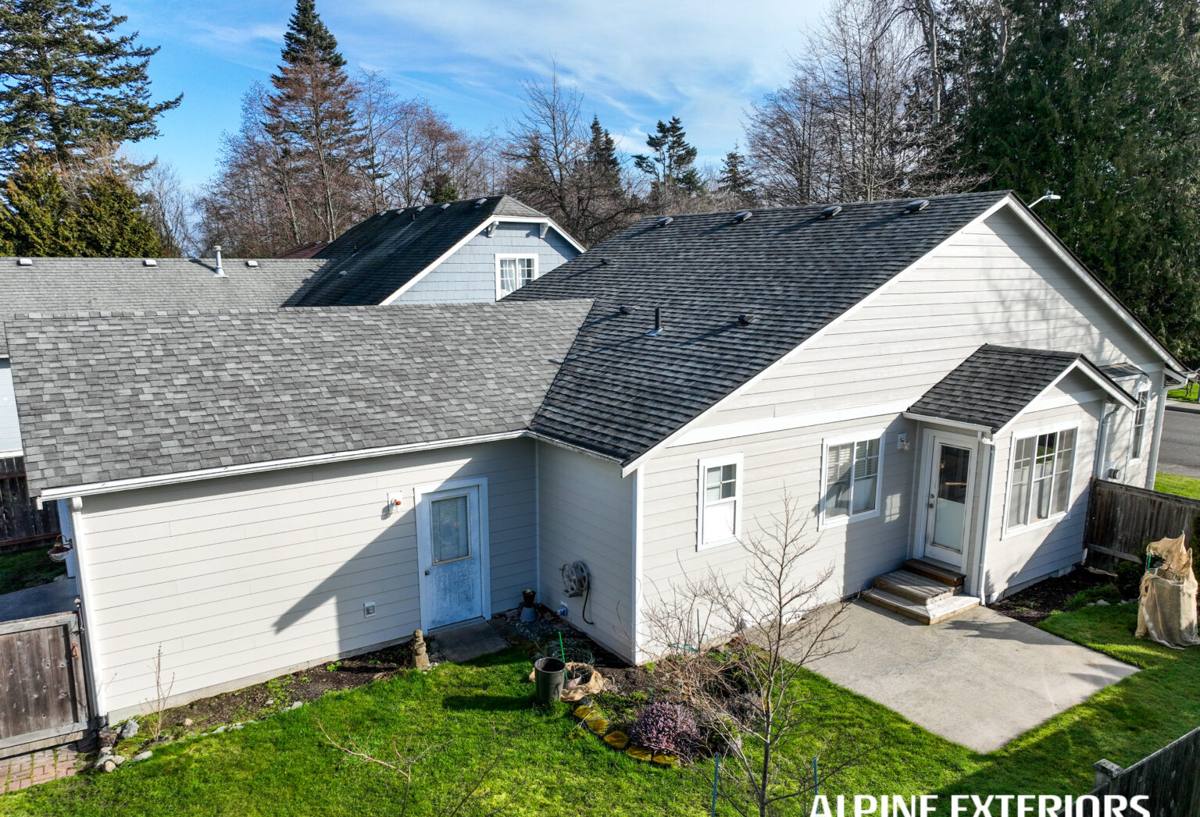
What the Local Climate Does to a House
Whatcom County's exterior climate is shaped by marine air moving in off the Salish Sea and up the valleys, mixed with the everyday reality of a Pacific Northwest wet season. Around Wiser Lake, that shows up in a few specific ways:
Moss and Prolonged Dampness
Tree-shaded lots near the lake, combined with a wet season that can run from fall through spring, mean siding and trim often stay damp longer than they would on a more exposed, sunnier lot in town. Moss and algae take hold on north-facing walls, under eaves, and anywhere airflow is limited. On a wood-based product, that sustained moisture is exactly the condition that leads to swelling, soft spots, and paint failure over time.
Driving Rain
Storms coming through this part of the county aren't always gentle straight-down rain — wind-driven rain pushes water sideways into laps, seams, and trim joints. Siding systems and flashing details that aren't installed with that in mind will eventually let water behind the cladding, even if the surface looks fine.
Salt-Influenced Marine Air
Even away from the immediate shoreline, Whatcom County's air carries salt-laden moisture inland from the Georgia Strait and Bellingham Bay, especially during onshore wind events. Over years, that mineral-laden humidity accelerates corrosion of exposed fasteners and speeds the breakdown of finishes not built to handle it.
Temperature Swings and UV
Summers bring real UV exposure on unshaded southern and western walls, while winter can bring frost. A siding product has to hold its finish and dimensional stability through both ends of that range, year after year.
Why Material Choice Is the First Decision
Every siding material handles the above differently. Here's a straightforward comparison of how common options perform under Wiser Lake's specific conditions:
| Material | Moisture & Moss Resistance | Salt Air Durability | Long-Term Maintenance |
|---|---|---|---|
| Vinyl | Won't rot, but seams and J-channels can trap moisture; warps in heat, brittles in cold | Fasteners and trim can corrode; panels fade and chalk over time | Low upfront, but replacement is common after fading/cracking |
| Primed wood / spruce | Absorbs moisture readily; prone to swelling and rot in shaded, damp spots | Finish breaks down faster in salt-influenced humidity | Repainting cycle every few years; caulk and touch-up ongoing |
| Engineered wood (e.g., LP SmartSide) | Better than raw wood but still wood-fiber based; edges and cut ends are moisture-sensitive | Moderate; depends heavily on correct sealing of all cuts | Requires diligent field-sealing and caulk maintenance to hold up |
| James Hardie fiber cement | Non-organic core; doesn't feed moss or absorb water like wood fiber | Factory-cured cement product holds up well in coastal-influenced air | ColorPlus finish reduces repainting; periodic cleaning and caulk checks |
This is exactly why, on lake-adjacent and heavily treed lots like the ones around Wiser Lake, we don't treat siding material as a matter of preference. It's a matter of what will actually hold up.
Why We Install James Hardie Only
We're a Hardie-only siding contractor. We don't install vinyl, LP SmartSide, Cemplank, Allura, primed spruce, or cedar. That's not a marketing angle — it's a standard we've held to because of what we see on exterior jobs in exactly this kind of climate.
- Non-combustible core: Hardie's fiber cement doesn't burn, which matters in a county that sees wildfire smoke and dry-season risk alongside its wet winters.
- Doesn't feed moss and mildew: Because the core isn't wood fiber, it doesn't provide the organic material that moss and algae need to establish themselves the way they do on wood-based sidings.
- Climate-engineered product lines: Hardie makes region-specific HZ formulations, and we install the version engineered for our climate zone rather than a one-size-fits-all product.
- Factory-applied ColorPlus finish: Baked-on rather than field-painted, it holds color and resists the fading and chalking that shows up faster on site-painted products in strong UV.
- Transferable warranty: A meaningful, well-documented warranty backing the product matters more on a home you might sell someday than a warranty that's hard to pin down.
We're upfront that this means we're not the right contractor if you've already decided on vinyl or an engineered wood product. But if you want an honest opinion on what actually performs in a damp, moss-prone, tree-shaded environment like Wiser Lake, that opinion is Hardie.
Installation Details That Matter Here
Fiber cement performs as well as it's installed. A lot of the siding problems we get called out to look at aren't material failures — they're installation shortcuts that let water get behind a wall assembly. On lots like the ones around Wiser Lake, a few details get extra attention:
Flashing and Water Management
Window and door flashing, kick-out flashing at roof-wall intersections, and proper weather-resistive barrier lapping all matter more where driving rain is common. Water needs a planned path out, not just a caulk bead hoping it never gets tested.
Clearances and Airflow
Hardie specifies minimum clearances from grade, roof lines, and decks. On shaded, damp lots those clearances aren't a suggestion — they're what keeps the bottom edge of the siding from sitting in prolonged moisture and staying dark and damp longer than it should.
Fastening and Joints
Correct fastener type and placement, proper joint treatment, and factory-mitered or correctly caulked seams keep water from finding its way behind panels — especially important given the salt-influenced air that speeds corrosion of the wrong hardware.
The Whole Exterior Envelope
Siding doesn't work in isolation. We also handle roofing, windows, and decks, because on a lake-adjacent, tree-covered property, these systems all interact:
- Roofing: Roof edges, valleys, and flashing feed water directly onto siding below — a roof that's shedding water in the wrong place will undermine even well-installed siding.
- Windows: Window flashing integrates directly with the siding install; old or poorly flashed windows are one of the most common sources of hidden water intrusion we find.
- Decks: Decks that tie into the house need their ledger boards and flashing done right, or they become a chronic moisture point right where siding meets structure.
Looking at the whole envelope together, rather than siding in isolation, is part of why we tend to catch problems before they become expensive ones.
Why a Local Crew Matters
Working throughout Lynden and the surrounding Whatcom County towns means we already know the conditions a Wiser Lake property faces before we walk the site — the moss patterns on shaded walls, the way driving rain hits certain wall orientations, what Whatcom County permitting and inspection expects. A crew that's only worked in a different climate zone doesn't bring that same read on a property, and it shows in the details they do or don't catch during installation.
Maintenance Checklist for Wiser Lake Homes
Whatever siding is on your home now, these are worth checking regularly given the local climate:
- Inspect north-facing and heavily shaded walls each fall for early moss or algae growth
- Check caulk joints around windows, doors, and trim for cracking or gaps
- Look for soft spots or swelling at the bottom edge of siding near grade
- Clear gutters and downspouts before the wet season to keep water moving away from walls
- Check that vegetation and shrubs aren't holding moisture against exterior walls
- After major windstorms, walk the exterior for loose trim, dented panels, or displaced flashing
Cost Factors for a Wiser Lake Siding Project
| Factor | Why It Matters Here |
|---|---|
| Home size and wall complexity | More corners, gables, and dormers mean more cutting, flashing, and labor time |
| Existing siding removal | Water-damaged sheathing found under old siding may need repair before new siding goes on |
| Access and lot conditions | Tree cover, slopes, and lake-adjacent lots can affect staging and equipment access |
| Product line and profile | Lap width, texture, and trim details all affect material cost |
| Color and finish selection | Factory ColorPlus finish is included in material pricing but color depth can vary by line |
We give straightforward, itemized estimates so you can see exactly what's driving the number, rather than a single lump sum.
Get a Free Estimate for Your Wiser Lake Home
If your siding is showing moss, soft spots, fading, or you're just planning ahead for a home in this climate, we're happy to come take a look. There's no pressure and no obligation — just an honest read on what your home needs and what it would take to do it right. Fill out the form below to schedule a free estimate.