 Lynden Siding
 Windows in Deming Take a Different Kind of Beating
Homes around Deming and the rest of Whatcom County don't fail the way houses do in drier parts of the state. It's rarely one bad storm that does the damage. It's the slow, steady combination of driving rain off the foothills, long stretches of damp gray weather, salt-laden air moving in from the Sound, and a moss season that can run half the year. Wood frames swell and shrink. Seals between glass panes break down early. Sills that never fully dry out start to soften from the inside before there's any visible sign on the surface.
We work on windows throughout the Lynden area, including Deming and the surrounding rural properties, so we see this pattern constantly: a window that looks fine from the curb but is already failing where you can't see it. This page covers what that means for window replacement specifically in this area, what a correct job actually involves, and how we handle it.
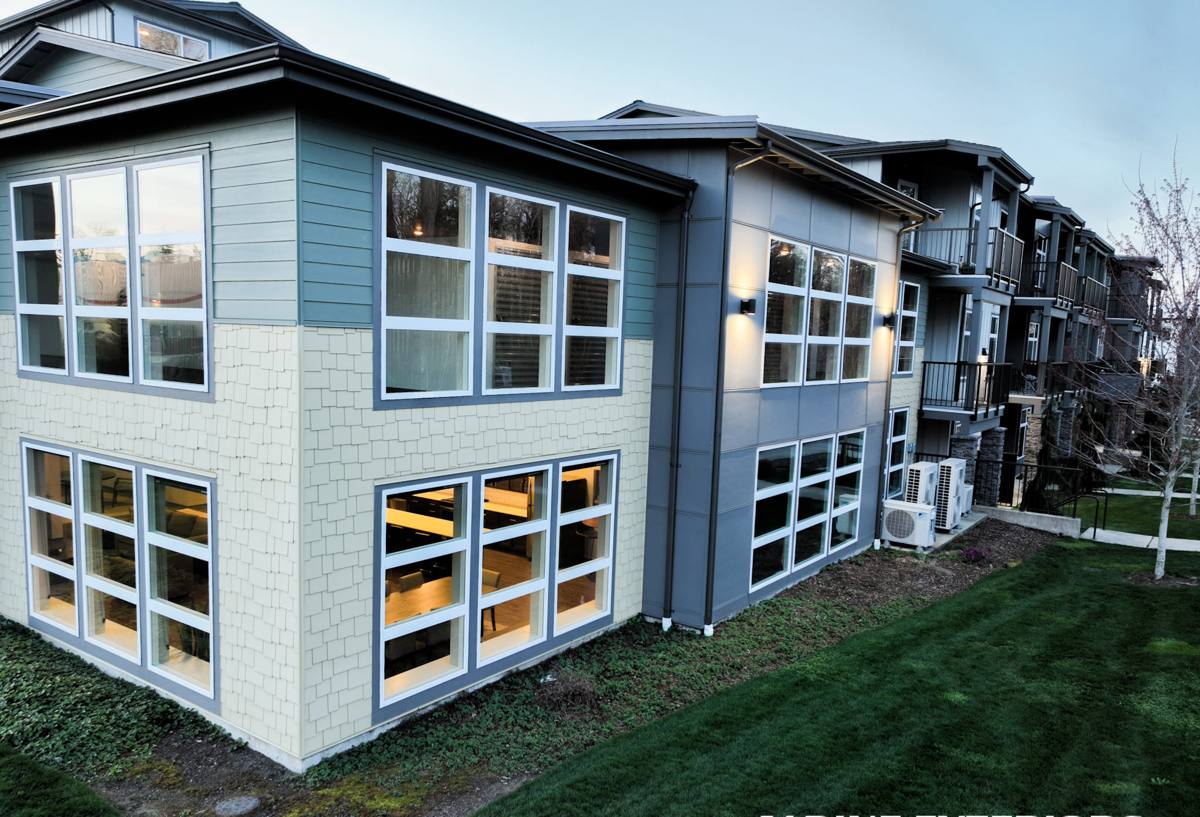
What the Local Climate Does to Windows Over Time
Moisture Is the Real Enemy
Whatcom County doesn't get extreme weather so much as constant weather. Rain that falls sideways in a wind event finds its way into gaps that would never leak in a calm, dry climate. Over years, that moisture works into wood trim, sheathing, and framing around the window opening — long before it shows up as a stain on your interior wall.
Moss and Algae Add to the Load
The same shade and dampness that grow moss on roofs and north-facing siding also creep onto window sills, tracks, and exterior trim. Moss holds water against the surface it's growing on. On a wood sill or an aging vinyl frame, that constant contact accelerates rot and degrades seals faster than a drier climate ever would.
Salt Air and Metal Components
Proximity to Puget Sound means a light but steady dose of salt in the air, even well inland. Over years, that salt exposure corrodes cheaper window hardware — hinges, cranks, locks, and screen frames — well before the glass or frame itself gives out. It's a slow process, but it's one more reason "budget" windows tend to disappoint homeowners here sooner than expected.
Signs a Deming-Area Home Actually Needs Replacement
Not every old window needs to go. Some just need better weatherstripping or a resealed exterior. Here's how to tell the difference:
- Fogging or a milky haze between the panes of a double-pane window — this means the seal has failed and the insulating gas or air gap is gone for good; it can't be fixed, only replaced
- Soft, spongy, or darkened wood at the sill or bottom corners of the frame
- Visible gaps where you can see daylight or feel a draft even with the window closed and locked
- Windows that are difficult to open, close, or lock — often a sign the frame has swollen or shifted from moisture cycling
- Paint that bubbles or peels repeatedly on the interior trim near a window, even after repainting
- A noticeable difference in room temperature near the window compared to the rest of the house
- Visible moss, algae, or persistent black staining on the exterior sill or lower frame
If you're seeing two or more of these on the same window, replacement is usually the more honest answer than another round of caulk and paint.
What a Correct Window Replacement Actually Involves
The window itself is only part of the job. In this climate, the installation is what determines whether the window lasts fifteen years or thirty-five. A rushed or careless install is the single biggest reason windows fail early here, regardless of how good the window itself is.
Removal and Inspection
We pull the old window carefully and inspect the framing underneath before anything new goes in. If there's rot, soft sheathing, or evidence of long-term moisture intrusion, that gets addressed and repaired first. Installing a new window over damaged framing just hides a problem that will resurface, usually worse.
Flashing and Moisture Management
This is the step that matters most in a wet climate and the one most often shortcut by inexperienced crews. Proper flashing — installed in the correct order with the right overlap, sealed with quality tape and sealant, and integrated with the existing weather-resistive barrier — is what keeps wind-driven rain from getting behind the new window. Skip this or do it out of sequence, and you've built a leak into the wall that may not show up for a year or two.
Air Sealing and Insulation
The gap between the new window frame and the rough opening needs to be sealed and insulated correctly — not stuffed with excess spray foam, which can bow the frame, and not left with gaps that undercut the window's efficiency rating.
Interior and Exterior Finish Work
Trim, caulking, and paint or stain get finished to match the surrounding wall, and everything is cleaned up before we consider the job done.
Choosing the Right Window Frame for This Climate
Frame material matters more here than in drier regions, because it determines how the window handles years of moisture exposure and temperature swings.
| Frame Material | How It Handles Local Moisture | Maintenance | Typical Fit |
|---|---|---|---|
| Vinyl | Won't rot; performs well with consistent moisture exposure | Low — occasional cleaning | Most homes; strong value for the climate |
| Fiberglass | Very stable in wet, temperature-swinging conditions; minimal expansion/contraction | Low | Higher-end replacements, homes wanting long-term durability |
| Wood (clad exterior) | Good insulator, but exterior cladding is what protects it from our rain and moss exposure | Higher — cladding and seals need monitoring | Homes prioritizing a traditional interior look |
| Aluminum | Conducts cold and can condense/sweat in our damp winters unless thermally broken | Moderate | Less common for residential in this climate |
We don't push one brand or material on every homeowner. The right choice depends on your home's exposure — a window on the rain-facing side of the house has different demands than one tucked under an eave.
Our Process, Start to Finish
- Free on-site estimate — we look at the actual windows and openings, not just a photo or a phone description, since moisture damage in this climate often hides below the surface
- Honest recommendation — including whether a window truly needs replacing or could reasonably be repaired
- Clear written quote — frame material, glass package, and installation scope spelled out before any work starts
- Scheduled install — timed with an eye on the weather window, since flashing and sealant work needs dry conditions to be done right
- Removal, framing check, and proper flashing install — as detailed above
- Finish work and cleanup — trim, caulking, and a clean job site when we leave
- Final walkthrough — we go over the finished windows with you before calling the job complete
What Window Replacement Costs Depend On
We don't publish flat prices because every home and every opening is different, but these are the factors that actually move the number:
| Factor | Why It Matters |
|---|---|
| Number of windows | Per-window cost typically drops on larger, whole-home projects |
| Frame material and glass package | Vinyl, fiberglass, and wood-clad options span a wide price range; upgraded glass adds cost but pays off in comfort and efficiency |
| Condition of existing framing | Rot repair or sheathing replacement adds labor beyond a straightforward swap |
| Window size and type | Standard double-hung windows are simpler than large picture windows, bays, or custom shapes |
| Access and height | Second-story or hard-to-reach windows require more setup time |
We walk through these factors on-site so the quote reflects your actual home, not a generic average.
Why a Crew That Already Works This Area Matters
Window replacement done wrong in a dry climate might just mean a slightly drafty room. Done wrong in Whatcom County, it means water intrusion, hidden rot, and repeat callbacks — because the rain here doesn't give a poorly sealed window much time to be forgiven. A crew that regularly works Deming, Lynden, and the surrounding area already understands the exposure patterns specific to this region: which sides of a house take the worst of the driving rain, how moss and shade affect a given wall, and how to sequence flashing so it actually sheds water instead of trapping it.
That local familiarity isn't a marketing line — it's the difference between an install that holds up for decades and one that needs attention again in a few years.
Simple Maintenance to Extend the Life of New Windows
- Clear moss, leaves, and debris from sills and tracks each fall before the wet season sets in
- Check exterior caulking annually for cracking or gaps, especially after a hard winter
- Wipe down and lightly lubricate hardware — locks, cranks, hinges — once or twice a year to counter salt-air corrosion
- Watch for condensation between panes, which signals a seal failure even in a newer window
- Keep gutters and downspouts clear so roof runoff isn't sheeting directly down onto window tops
If your windows around Deming are showing any of the signs above, or you'd just like an honest opinion on whether repair or replacement makes more sense for your home, we're happy to take a look. Estimates are free, there's no pressure, and you'll get a straight answer either way — just fill out the form below to get started.