 Lynden Siding
 Metal Roofing Built for Kendall's Climate
Kendall sits in the foothill country northeast of Lynden, where Whatcom County's weather gets amplified by elevation and tree cover. Homes and outbuildings out here take a different kind of beating than roofs closer to town: heavier tree canopy along the Mt. Baker corridor keeps roof surfaces shaded and damp longer after a storm, driving rain off Pacific systems hits hard and often, and the marine-influenced air that moves through this whole part of Whatcom County works its way into fasteners, flashing, and any metal that isn't properly coated. Add a moss season that can stretch for most of the year in shaded spots, and you've got a roof environment that punishes shortcuts.
A metal roof, installed correctly, handles that combination better than most alternatives. But "installed correctly" is doing a lot of work in that sentence — metal roofing rewards good workmanship and exposes bad workmanship faster than shingles do. This page is about what that actually means for a Kendall property, not a generic pitch for metal as a product.
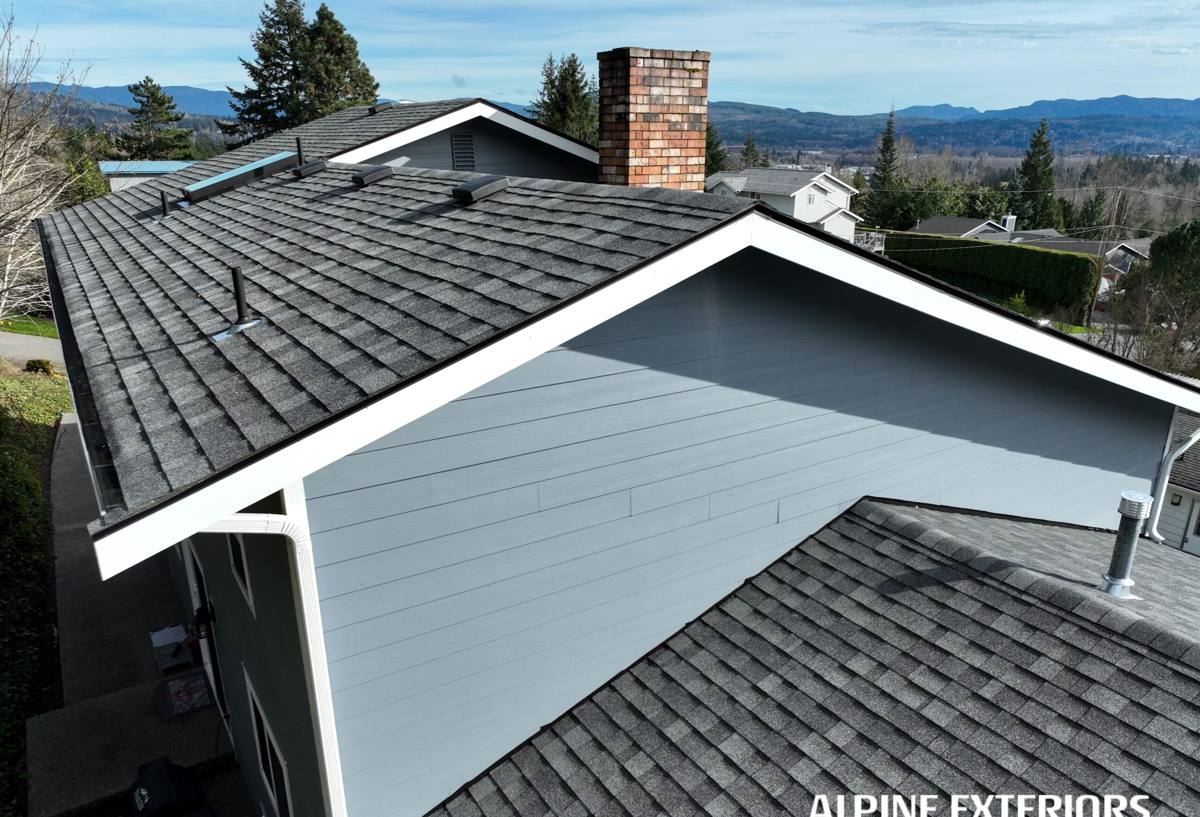
Why Metal Roofing Makes Sense in This Area
Comparison-shopping roofing materials in a place like Kendall usually comes down to how each option handles moisture, moss, and long-term maintenance under tree cover. A few reasons metal roofing tends to hold up well here:
- Smooth, hard panel surfaces give moss and algae less to grip onto compared to the textured surface of asphalt shingles, which matters under shaded canopy.
- Steep water-shedding is fast and consistent, which helps during the driving, wind-blown rain events that come through this corridor.
- Panel systems handle snow load and freeze-thaw cycling well when the foothills get a cold snap, since properly installed metal sheds snow rather than holding it against the deck.
- Correctly finished steel and aluminum panels resist the slow corrosion that damp, marine-influenced air can cause on lesser coatings or exposed fasteners over time.
None of that means metal is automatically the right call for every roof or budget — asphalt and other materials still have a place. But for homeowners already looking at metal, Kendall's climate is a legitimate reason to lean that direction rather than a marketing angle.
What a Correct Metal Roof Install Actually Involves
Underlayment and Moisture Protection
Metal panels are the visible layer, but the underlayment underneath is what actually keeps water out if wind-driven rain ever gets past a seam or fastener. In a climate that sees sustained wet periods, we pay close attention to underlayment selection and lapping, plus extra protection at eaves, valleys, and any low-slope transitions where standing water is more likely.
Fastener Pattern and Panel Attachment
How panels attach to the deck determines how the roof performs in wind and how it ages. Fastener spacing, clip type, and torque all matter — overdriven or underdriven fasteners are one of the most common causes of leaks on metal roofs we're asked to inspect or repair, regardless of who installed them originally.
Flashing and Penetrations
Chimneys, vents, skylights, and wall transitions are where most metal roof leaks actually start, not the open field of the panels. Flashing has to be fitted, not just caulked, and it needs to account for the panel profile so water sheds around penetrations instead of pooling against them.
Ventilation
A roof deck that can't breathe traps moisture underneath the panels, which defeats a lot of the benefit of switching to metal in the first place. We check existing ridge, soffit, and gable ventilation as part of any metal roofing job and address gaps before panels go on, not after.
Panel Options We Install
There isn't one "best" metal roofing system — the right choice depends on the roof's pitch, the building's use, and the budget. Here's how the common options compare for a property like one you'd find in or around Kendall:
| Panel Type | Best For | Trade-Offs |
|---|---|---|
| Standing Seam | Main homes, visible roof lines, long-term ownership | Higher upfront cost; concealed fasteners mean fewer future leak points |
| Exposed-Fastener (5V, Corrugated) | Shops, barns, outbuildings, budget-conscious re-roofs | Lower cost, but exposed screws need periodic inspection and eventual re-tightening or replacement |
| Stone-Coated Steel | Homeowners wanting a traditional shingle or shake look | Heavier system with more installation steps; higher material cost than exposed-fastener panels |
Many Kendall properties end up mixing systems — standing seam on the house, exposed-fastener panels on a detached shop or barn — which is a reasonable, budget-conscious approach as long as both are installed to the same flashing and ventilation standard.
Our Process, Start to Finish
- On-site assessment — we look at the existing roof, deck condition, ventilation, and any trouble spots (valleys, chimneys, low-slope sections) before quoting anything.
- Tear-off or overlay decision — we'll tell you honestly whether your existing roof can support an overlay or whether a tear-off is the right call, based on deck condition and local code, not on which one is easier for us.
- Deck repair — any soft, rotted, or moisture-damaged sheathing gets replaced before a single panel goes on.
- Underlayment and flashing prep — eaves, valleys, and penetrations get protected first.
- Panel installation — panels go on with the fastener pattern and clip spacing specified for that system, not a generic shortcut pattern.
- Trim, flashing, and accessories — ridge caps, valley flashing, and any snow guards or gutter tie-ins are finished out.
- Cleanup and walkthrough — site cleanup, magnetic sweep for stray fasteners, and a walkthrough so you know what maintenance to expect.
What's Different About Kendall Specifically
A few things come up more often on Kendall properties than on roofing jobs closer to Lynden's town center:
- Tree canopy overhang. Heavier tree cover in this area means more shaded roof surface, more organic debris in valleys and gutters, and a real moss risk even on a well-installed metal roof if debris is left to accumulate.
- Detached structures. Shops, barns, and outbuildings are common on Kendall's larger, more rural lots, and they're often roofed separately from the main house — sometimes on a different budget or timeline.
- Longer access and driveways. Material staging and equipment access take more planning on rural lots than on a standard in-town residential job, which we account for when scheduling.
- Whatcom County permitting. Re-roofing and structural work on these properties still runs through county permitting rather than a city process, and we handle that as part of the job.
Maintenance and What to Expect Over Time
Metal roofing is lower-maintenance than shingles, but "low-maintenance" isn't "no-maintenance," especially under tree cover. A simple annual routine covers most of what a Kendall property needs:
- Clear needles, leaves, and debris from valleys and gutters, especially heading into fall.
- Check for moss starting in shaded areas or where debris has sat against the panel — catch it early with a soft wash rather than letting it establish.
- On exposed-fastener systems, have fasteners checked every few years for backing out or worn washers.
- Inspect flashing around chimneys, vents, and skylights after major wind events.
- Keep overhanging branches trimmed back from the roofline to reduce debris load and moss risk.
Cost Factors to Understand Before You Budget
Metal roofing costs vary widely based on a handful of factors that matter more than the base price per square:
| Factor | Why It Matters |
|---|---|
| Panel system chosen | Standing seam runs higher than exposed-fastener panels due to labor and material |
| Roof pitch and complexity | Valleys, dormers, and multiple roof planes add labor and flashing detail |
| Tear-off vs. overlay | Tear-off adds disposal and deck-repair costs but is often the more honest long-term choice |
| Access and tree cover | Rural lots with limited access or heavy canopy can add setup and staging time |
| Accessories | Snow guards, gutter upgrades, and ridge venting add to the total but address real climate needs |
We'd rather walk a property and give you real numbers than quote a per-square estimate that doesn't hold up once we see the roof.
Why Hiring a Crew That Already Works in Kendall Matters
A roofing crew that's already worked this area understands the tree cover, the moss patterns, the driving rain direction, and the practical realities of rural access — that's not something you can fully substitute with a general roofing background. Before hiring anyone for a metal roofing project out here, it's worth checking:
- Are they licensed and insured to work in Washington, and can they show it without hesitation?
- Do they have experience with the specific panel system you're considering, not just metal roofing in general?
- Will they put the scope, materials, and warranty terms in writing before work starts?
- Do they talk through ventilation and flashing detail, or just panel color and price?
- Are they familiar with Whatcom County permitting requirements for your property type?
If a contractor can't answer those plainly, that's worth noticing before you sign anything.
If you're weighing metal roofing for a home, shop, or outbuilding in the Kendall area, we're happy to walk the roof, talk through honest options for your budget and building, and give you a straightforward, no-pressure estimate using the form below.