 Lynden Siding
 Custer's Climate Puts Real Demands on Windows
Custer sits close enough to the water that salt air is a daily fact of life, not an occasional nuisance. Add in Whatcom County's long wet season, driving rain that comes in sideways off winter storms, and the shade and moisture that keep moss thriving on north-facing walls for much of the year, and you have a climate that is genuinely hard on window assemblies. Aluminum hardware pits and corrodes faster near salt air. Wood sashes that aren't properly sealed and maintained take on moisture and start to swell, stick, or rot at the corners. Vinyl frames that were installed without correct flashing let water track behind the trim instead of shedding off the wall, and homeowners don't find out until there's already damage inside the wall cavity.
None of this means Custer homes need exotic products. It means the installation details that get glossed over in milder climates — flashing sequence, sill pan drainage, sealant choice, and correct fastening — matter more here and have less room for error.
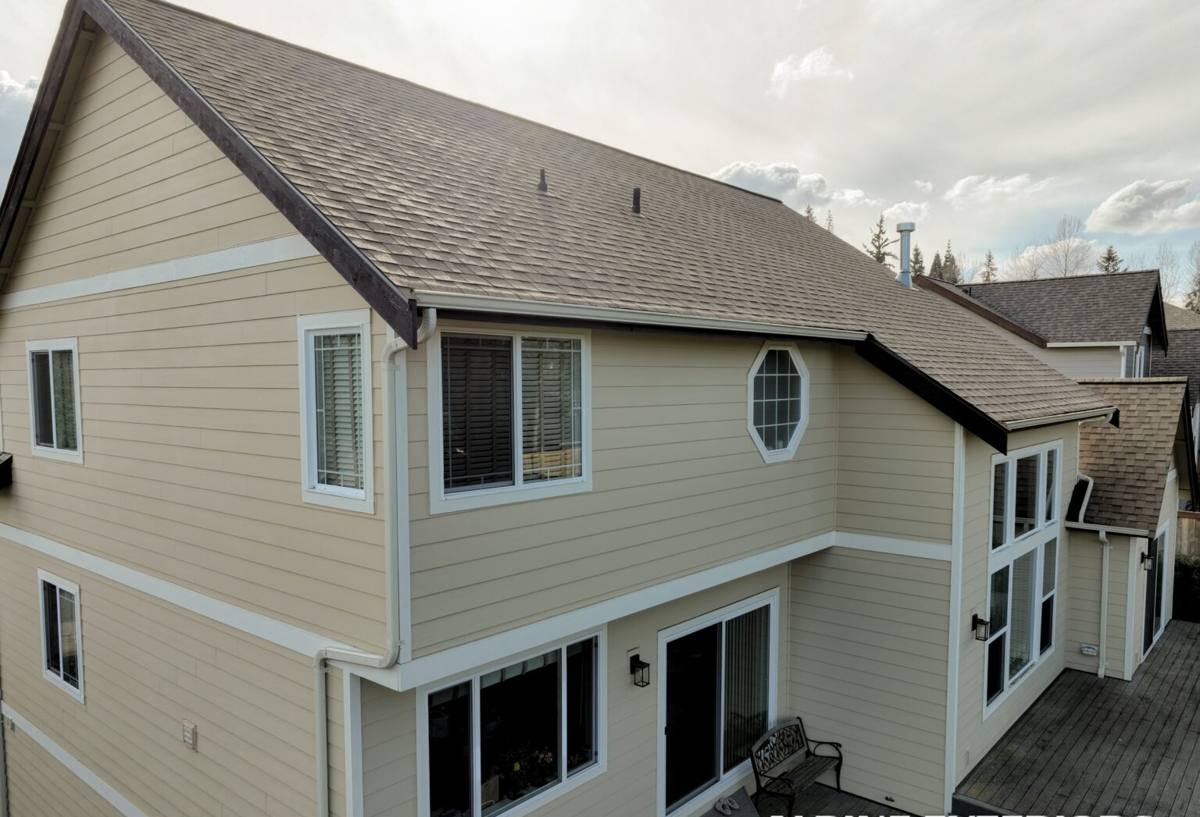
Signs a Custer Home Needs Window Replacement
Most homeowners don't replace windows because they woke up one day and decided to. They replace them because something started going wrong. In this area, the most common warning signs we see are:
- Fogging or a permanent haze between panes, which means the seal on a double-pane unit has failed and the insulating gas or air gap is gone
- Visible moss or dark staining on the exterior trim or sill, often a sign that water is sitting where it shouldn't
- Soft or spongy wood at the sill or lower corners of the frame, which usually means rot has already started
- Windows that are hard to open, don't latch cleanly, or let in a draft you can feel with a hand near the frame
- Noticeably higher heating bills in winter with no other explanation
- Condensation forming on the inside of the glass regularly, even when the house isn't overly humid
Any one of these can be a minor fix. Several together, especially on a home more than 20 years old, usually point to windows that have reached the end of their useful service life.
What a Correct Window Replacement Job Actually Involves
Window replacement looks simple from the curb, but the parts that determine whether it lasts happen underneath the trim, where nobody sees them. Here's what we consider non-negotiable on every job.
Careful Removal
The old window and surrounding trim come out carefully so we can see the condition of the framing and sheathing underneath before anything new goes in. This is often the first real look anyone has had at that part of the wall in years, and it's the point where hidden rot or old water damage gets found and dealt with — not covered up.
Flashing and Drainage
Every opening gets a sill pan and properly lapped flashing so that any water that gets behind the exterior cladding has a clear path back out, rather than pooling against the framing. In a climate with as much driving rain as Whatcom County sees, this step matters more than the window itself. A great window installed over bad flashing will still fail.
Squaring and Shimming
The new unit is set plumb, level, and square in the opening and shimmed correctly so the frame isn't under stress. A window that's slightly racked in its opening won't operate smoothly and puts uneven pressure on the seals, shortening their life.
Insulation and Air Sealing
The gap between the window frame and the rough opening gets filled with a low-expansion foam or backer rod and sealant rather than packed tight with fiberglass, which settles over time and leaves gaps for both air and moisture.
Exterior Sealing and Trim
Sealant goes at the correct joints — not everywhere, since a fully sealed perimeter with no weep path can trap water instead of releasing it. Trim is reinstalled or replaced so the whole assembly sheds water the way it was designed to.
Insert Replacement vs. Full-Frame Replacement
Not every window replacement means tearing out down to the studs, and knowing which approach fits your situation matters both for cost and for how well the finished job performs against Custer's weather.
When an Insert Replacement Makes Sense
If the existing frame is square, dry, and free of rot, a new window unit can often be installed inside the old frame, leaving existing trim and siding undisturbed. This is faster, less invasive, and typically less expensive. It only works, though, if what's behind the old frame is actually sound — which is why we check before recommending it, not after.
When Full-Frame Is the Right Call
If there's rot, the opening is out of square, or the flashing behind the old trim was done poorly the first time, an insert replacement just seals a problem back up inside the wall. Full-frame replacement removes the old frame entirely, exposes the rough opening, and lets us correct flashing, framing, and drainage issues at the source. On older Custer homes that have taken on decades of driving rain and moisture, this is more often the right call than homeowners expect.
Choosing Frame and Glass for a Salt Air, High-Rain Climate
Frame Material
Vinyl frames with welded (not just mechanically fastened) corners hold up well here and require the least maintenance. Fiberglass is a strong option too, with better dimensional stability in temperature swings, at a higher price point. Wood-clad windows can look great, but the maintenance burden in a moist, salt-influenced climate is real — any gap in the exterior cladding or finish becomes an entry point for rot, and upkeep has to be kept up every year, not every five. We'll install what a homeowner wants, but we're honest about which materials ask less of you over the next 15-20 years.
Glass and Glazing
Double-pane, low-E glass is the standard for this region and does most of the work on comfort and energy performance. Argon-filled units add a modest efficiency bump. For homes with more direct exposure to wind-driven rain, we also pay attention to the glazing bead and gasket detail, since that's often where a cheaper window starts to leak first, well before the glass itself fails.
Permits and Code Considerations
Window replacement in Whatcom County generally requires a permit when the work changes the size of the rough opening or involves structural framing changes; straightforward like-for-like replacements are often more limited in scope. Bedrooms also have specific requirements for emergency egress — the window has to be large enough and low enough to the floor to serve as an exit in an emergency — which matters if you're replacing an older, smaller bedroom window with something different in size or style. We handle the permit question as part of the estimate so there are no surprises mid-project.
How Our Process Works
We keep the process straightforward because the last thing a homeowner needs is more confusion added to a home improvement decision.
- Free on-site estimate. We look at the existing windows, check for signs of water intrusion or rot, and measure openings.
- Straightforward proposal. You get a clear scope and price — no pressure, no expiring-today discount tactics.
- Scheduling around weather. In this climate we plan installation days with the forecast in mind so openings aren't sitting exposed during a storm.
- Removal, inspection, and installation. Old units come out, framing gets inspected and repaired if needed, and new windows go in with correct flashing and sealing.
- Cleanup and walkthrough. We clear debris and walk the job with you so you can see and operate every window before we consider it finished.
What Affects the Cost of Window Replacement
Every home is different, and we won't quote a number without seeing the openings, but the factors below are what typically move the price up or down on a Custer job.
| Factor | Why It Matters |
|---|---|
| Frame material (vinyl vs. fiberglass vs. wood-clad) | Material cost and expected maintenance over the window's life differ significantly |
| Window size and style | Larger units, and operable styles like casement or sliding, cost more than fixed picture windows |
| Condition of the existing framing | Hidden rot found during removal adds carpentry work before the new window can go in |
| Number of windows replaced at once | Doing several openings in one visit generally lowers the per-window cost versus one at a time |
| Trim and siding tie-in | Matching existing trim profiles or siding takes more labor than a straightforward swap |
| Access and story height | Second-story or hard-to-reach openings take longer and require more setup |
As a rough guide, homeowners in this area typically budget anywhere from a few hundred to a couple thousand dollars per window installed, depending on the factors above. We'll give you an exact figure after seeing the actual openings.
Why Local Experience in Custer Actually Matters
A crew that only occasionally works this far north and west in Whatcom County can miss things that a crew working here regularly catches without thinking twice — which wall orientations take the worst weather, how much moss buildup on a north-facing trim board is normal wear versus a sign of trapped moisture, and how the salt-influenced air affects fastener and flashing choices over time. We work in Lynden and the surrounding communities, including Custer, often enough that these aren't judgment calls made on the fly — they're standard practice.
There's also a practical side to hiring locally: a crew based nearby can respond quickly if a question comes up after the job, and stands behind its work in the same community it lives in.
Protecting Your New Windows After Installation
New windows installed correctly should need very little from you, but a small amount of upkeep goes a long way in this climate.
- Rinse salt residue and grime off exterior frames a couple of times a year, especially after winter storms
- Keep gutters and downspouts clear so water isn't overflowing near window openings
- Trim back vegetation or moss growth that's holding moisture against exterior trim
- Check exterior caulk lines annually and have any cracked sealant redone before it fails
- Operate each window a few times through the seasons so hardware doesn't seize up from disuse
- Wipe down interior sills after heavy condensation to prevent mildew from taking hold
Following even a few of these will meaningfully extend the life of the installation.
Ready to Talk About Your Windows?
If your Custer home has windows that are fogging, drafting, sticking, or just past their prime, we're happy to take a look and give you a straight answer about what's going on and what it would take to fix it. The estimate is free, there's no pressure attached to it, and you can use the form below to get in touch.