 Lynden Siding
 Siding That Has to Work Year-Round in Abbotsford, BC
Homes in and around Abbotsford, BC sit in a corner of the Pacific Northwest where the weather doesn't do the exterior of a house any favors. Long, wet winters, moisture-laden coastal air, and shaded north- and east-facing walls that barely dry out between rains all add up to conditions that punish the wrong siding choice. We install James Hardie fiber cement siding exclusively, and on homes in this area, that's not a marketing preference — it's a response to what actually holds up here.
This page covers what Abbotsford, BC homeowners should know about fiber cement siding specifically: what the climate demands, what correct installation looks like, and how our process works when we take on a project in this area.
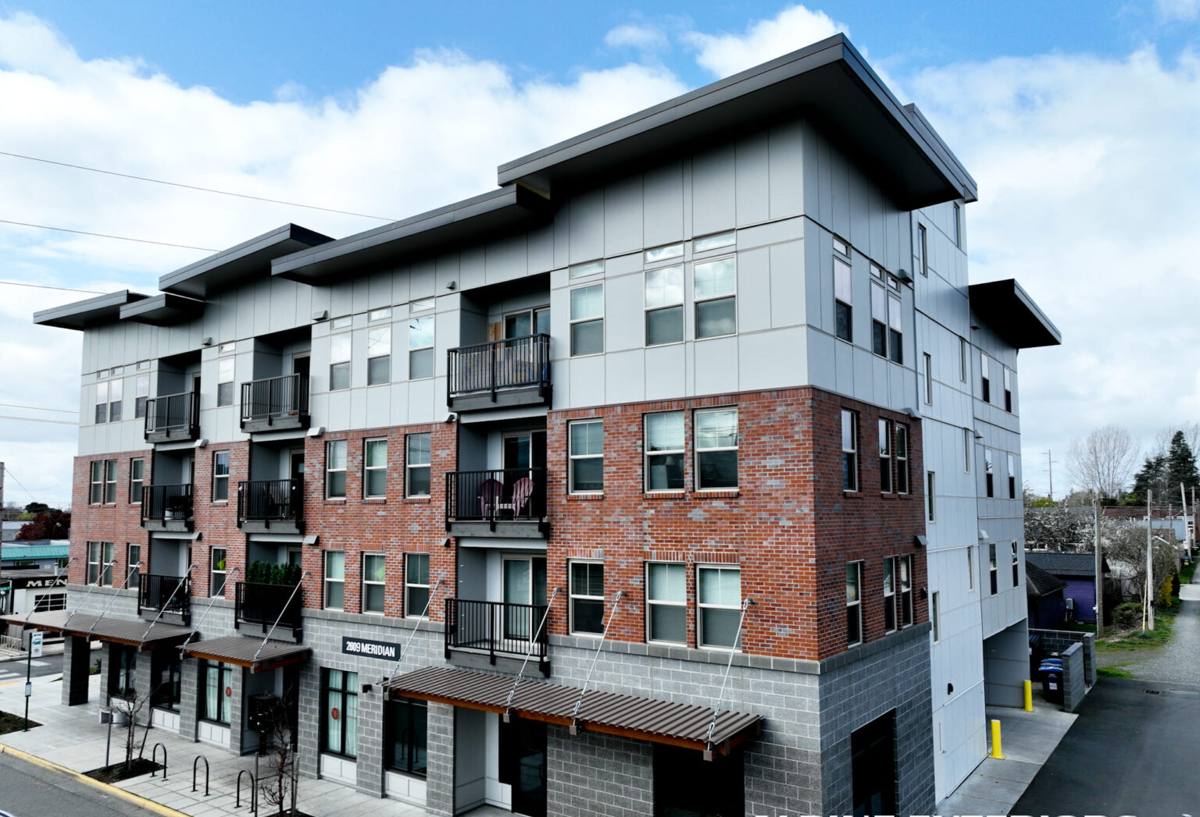
What the Local Climate Actually Does to Siding
Three factors show up again and again on homes we look at in this region:
- Driving rain: Wind-driven storms push water sideways into wall assemblies, not just straight down. Siding with weak seams, poor flashing, or gaps at penetrations lets that water behind the cladding, where it can sit against sheathing for months.
- Salt-tinged coastal air: Moisture carried inland off the coast accelerates corrosion on fasteners, trim, and any metal components that aren't rated for it. Over years, this quietly weakens whatever is holding the siding to the wall.
- A long moss season: Extended damp, shaded stretches — especially on north-facing walls, under eaves, and near mature trees — give moss, algae, and mildew a long runway to establish themselves on porous or textured surfaces.
None of these factors are unique to any one street or neighborhood in Abbotsford, BC — they're regional, tied to the broader Fraser Valley and Whatcom County climate pattern. But they're consistent enough that siding decisions here should be made with them in mind, not treated as an afterthought.
Why Fiber Cement Holds Up Where Other Materials Struggle
James Hardie fiber cement is a cement, sand, and cellulose fiber composite. It doesn't rot, it doesn't feed moss and mildew the way wood fiber does, and it doesn't warp or buckle the way vinyl can when temperatures swing or panels are installed too tight. For a climate defined by sustained moisture rather than extreme heat, that combination matters more than almost any other spec sheet detail.
Where This Shows Up in Practice
- ColorPlus factory-applied finish resists fading and holds its color without the repaint cycle that painted wood or fiber cement needs
- Non-combustible core, which matters increasingly for insurance underwriting in the region
- HZ5 and HZ10 product engineering built specifically for climate zones with sustained moisture exposure, rather than a one-size-fits-all panel
- A rigid, dimensionally stable board that keeps caulk lines and joints tight through wet-dry cycles, instead of gapping and giving water a path inward
We don't install LP SmartSide, vinyl, Cemplank, Allura, primed spruce, or cedar. Each of those has legitimate uses elsewhere, but for the moisture load and moss pressure homes face in this area, we've standardized on Hardie because it's the product we're willing to warranty our labor against.
What a Correct Fiber Cement Installation Actually Involves
Fiber cement siding is only as good as the assembly behind it. Most siding failures we get called out to inspect aren't material failures — they're installation shortcuts that let water in behind a perfectly good board. A correct job includes:
- A drainable water-resistive barrier installed continuously, lapped correctly, and sealed at every penetration before a single board goes up
- Proper starter strips and flashing at the foundation line, window and door heads, and anywhere a horizontal surface meets a vertical wall
- Correct fastener spacing and type — corrosion-resistant fasteners driven to manufacturer spec, not overdriven or underdriven, which affects how the board handles expansion and contraction
- Manufacturer-specified gaps and clearances at butt joints, corners, and where siding meets trim, roofing, or the ground, so water has somewhere to go instead of wicking upward
- Field-cut edges sealed or primed per Hardie's installation instructions, since a raw cut edge is the one place the factory finish doesn't already protect
Skip any one of these and you can end up with siding that looks fine for a year or two and then starts showing staining, soft spots, or paint failure at the joints — problems that trace back to installation, not the board itself.
Fiber Cement vs. Other Common Siding Choices for This Climate
| Material | Moisture Behavior | Moss/Algae Resistance | Long-Term Maintenance |
|---|---|---|---|
| James Hardie Fiber Cement | Dimensionally stable, does not absorb and swell | Smooth ColorPlus finish resists buildup better than porous materials | Occasional wash; no repainting for the life of the finish |
| Vinyl | Can warp or buckle with temperature swings and poor installation | Textured surfaces and seams can trap moisture and grime | Low, but panels can crack or fade and are hard to spot-repair invisibly |
| Cedar / Primed Spruce | Absorbs moisture; prone to rot without diligent upkeep | Wood fiber is a food source for moss and mildew | Regular repainting, caulking, and rot inspection required |
| LP SmartSide (engineered wood) | Better than solid wood but still wood-based; edges vulnerable if not sealed | More resistant than cedar, still organic material | Periodic recaulking and finish maintenance |
Our Process for Abbotsford, BC Projects
Because we already work in Abbotsford, BC and know the wall assemblies and exposure patterns common to homes here, our process is straightforward:
1. On-Site Assessment
We walk the exterior, check for existing moisture damage, moss buildup, and problem areas — particularly shaded walls and anywhere the old siding shows signs of past water intrusion.
2. Tear-Off and Sheathing Check
We remove the old cladding and inspect the sheathing underneath. Any soft or damaged sheathing gets addressed before new siding goes up — covering a problem is not an option we offer.
3. Water-Resistive Barrier and Flashing
A new drainable barrier and correctly lapped flashing go in at every transition point, before any Hardie board is installed.
4. Hardie Installation to Manufacturer Spec
Boards are installed with correct fastening, gapping, and sealed cut edges, following James Hardie's published installation requirements — not shortcuts that save a day of labor now and cost the homeowner later.
5. Final Walkthrough
We review the completed work with the homeowner, including care and maintenance expectations specific to this climate.
Cost Factors Worth Understanding Upfront
| Factor | Why It Affects Price |
|---|---|
| Home size and wall complexity | More corners, dormers, and trim details mean more cutting, flashing, and labor time |
| Condition of existing sheathing | Moisture damage found during tear-off requires repair before new siding can go on |
| Hardie product line and profile | HZ5 vs. HZ10, plank vs. panel, and ColorPlus vs. field-painted all carry different material costs |
| Access and site conditions | Steep lots, tight setbacks, or limited staging area affect labor time |
| Trim and accessory scope | Full siding replacement often includes new trim, fascia, or soffit work to match |
We don't quote a job without seeing the home. Broad ranges you'll find online rarely account for the sheathing condition or complexity specific to a given house, which is why an on-site look matters more than a number pulled from a general estimate.
Maintenance Checklist for Fiber Cement in This Climate
- Rinse siding annually, especially shaded and north-facing walls where moss and algae take hold first
- Trim back vegetation and tree branches that keep wall sections damp and shaded longer than necessary
- Inspect caulk lines at trim and penetrations every year or two and recaulk if cracked or pulling away
- Check gutters and downspouts before the wet season to make sure water is being directed away from walls, not onto them
- Watch for staining or discoloration at butt joints and corners, which can signal a flashing or sealant issue worth catching early
Why It Matters That We Already Work in Abbotsford, BC
Siding installation isn't just about the product — it's about understanding the specific exposure a wall faces given its orientation, shading, and how weather moves through this particular area. A crew that regularly works Abbotsford, BC has already seen how driving rain hits certain wall orientations, where moss tends to establish first, and which details on older homes tend to fail first. That local pattern recognition is part of what makes an installation correct the first time, rather than something that needs revisiting in a few years.
If you're considering fiber cement siding for a home in Abbotsford, BC, we're glad to come take a look and talk through what your specific home needs. There's no pressure and no cost for the estimate — just a straight assessment from a crew that installs one product and installs it right.