 Lynden Siding
 Siding Replacement for Deming Homes
Deming sits inland from Lynden, back in the foothill country where Whatcom County's farmland gives way to timber and the land starts climbing toward Mount Baker. It's a quieter, more heavily wooded setting than the open farm ground closer to town, and that changes how a house's exterior actually experiences the weather. Tree cover holds shade and moisture against north- and east-facing walls longer than an open lot would, and the same driving rain and long moss season that define this whole corner of Washington show up here with a bit more intensity, not less. We work in Deming as part of our regular Whatcom County service area, and a siding replacement here gets planned around what this specific setting does to a wall assembly over time, not a generic install spec.
We install James Hardie fiber cement siding exclusively. For a wooded, moisture-heavy property like a typical Deming home, it's the material we recommend without qualification.
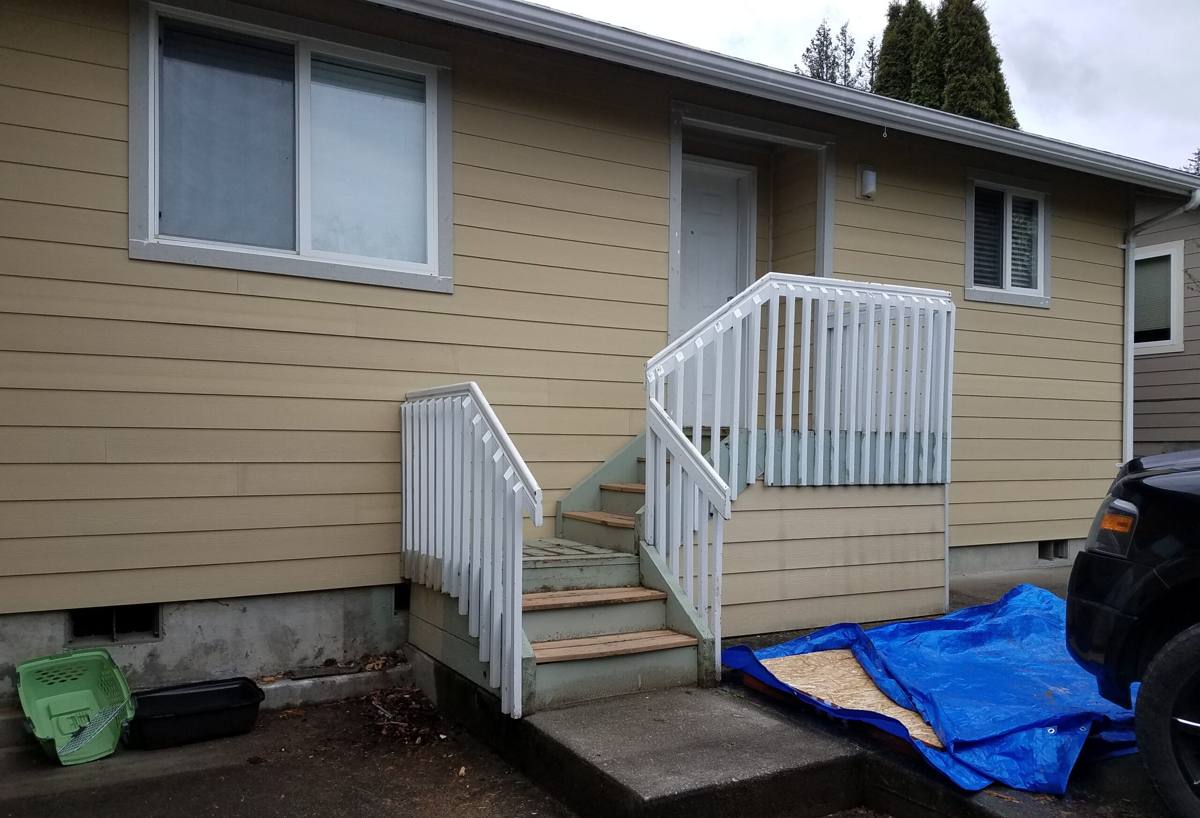
What Deming's Climate Does to Siding
Driving Rain and Heavier Foothill Precipitation
Whatcom County as a whole sees plenty of driving rain moving in off the Sound, and that pattern doesn't ease up as you move inland toward the foothills — if anything, rainfall totals tend to run higher the closer a property sits to the higher ground toward Mount Baker. Wind-driven rain pushes moisture sideways into siding seams, corner boards, and window trim rather than letting it run straight off a wall, and siding that isn't detailed to shed that kind of rain shows water damage first at joints, corners, and anywhere flashing is doing less than it should.
A Long Moss and Mildew Season Under Tree Cover
Mature trees are part of what makes Deming feel like Deming, but they also mean more shaded wall area, slower drying after a storm, and a moss and mildew season that can run longer here than on an open lot in town. Siding that holds even a little moisture against its surface becomes a growth surface over time, and once moss or mildew takes hold on a shaded wall, it tends to come back quickly after cleaning unless the underlying moisture problem gets addressed.
Salt Air, Even This Far Inland
Deming sits well back from the water compared to towns right on Bellingham Bay, but salt-tinged marine air still reaches this far inland across the county, especially during wind events. It's a lighter dose of corrosion exposure than a shoreline property gets, but it still matters for fastener choice, flashing metal, and any lower-grade finish that wasn't built to handle it.
Sap, Debris, and Gutter Strain from Nearby Trees
A wooded lot brings a maintenance dimension that an open farmland property doesn't deal with as much: needle and leaf debris collecting against siding at grade, gutters that clog faster and back water up behind fascia and trim, and sap or organic staining on siding surfaces under larger trees. None of that is a reason to avoid a wooded lot, but it's a real factor in how a siding system holds up and how often it needs attention.
What a Correct Siding Replacement Involves
Replacing siding on a Deming home is more than swapping old boards for new ones. Done right, it starts with a full tear-off so the crew can actually see the sheathing and framing underneath, not just the visible surface. That matters here specifically, because a shaded, moisture-prone wall can be hiding rot or soft sheathing behind siding that still looks intact from the outside.
- Full tear-off, not overlay: New siding installed over old material or damaged sheathing just buries a problem instead of fixing it.
- House wrap and flashing system: A properly lapped weather-resistive barrier and correctly integrated window and door flashing do the real work of keeping water out — caulk should be a backup, not the primary defense.
- Correct fastening pattern: Nail spacing and placement affect both wind performance and the siding's long-term dimensional stability.
- Proper clearance from grade: Siding installed too close to the ground wicks moisture up from wet soil, which is a bigger risk on a shaded, slow-drying lot.
- Lapped and sealed joints: Butted joints without proper lap or sealant are a common failure point, especially at inside and outside corners.
Skipping any one of these steps might not show up right away, but on a property that holds moisture as long as a typical Deming lot does, shortcuts tend to surface within a wet season or two rather than staying hidden for decades.
Why James Hardie Is What We Install
We used to install a wider range of siding products before we narrowed to one system. That decision came out of years of tear-offs and service calls across Whatcom County, watching which materials actually held up under sustained regional moisture and which ones quietly turned into maintenance problems for the homeowner.
- Non-combustible core: Fiber cement doesn't feed a fire the way wood-based or wood-derived siding products can, which matters for both household safety and insurance underwriting.
- Factory-applied ColorPlus finish: Color is baked on under controlled factory conditions rather than brushed on in the field, so it resists fading, chalking, and moisture intrusion far longer than site-applied paint.
- Climate-engineered HZ product lines: Hardie builds formulations specifically for regions with sustained moisture exposure, which fits a shaded, rain-heavy Deming property well.
- Dimensional stability: Fiber cement doesn't swell, cup, or warp the way engineered wood siding can after repeated wet-season moisture cycles.
- Strong transferable warranty: Hardie backs its products with a solid warranty structure, provided the installation follows spec, which gives a homeowner real protection rather than a marketing claim.
We don't install LP SmartSide, vinyl siding, Cemplank, Allura, primed spruce, or cedar. Each of those products has a place in the broader market, and plenty of homeowners elsewhere are satisfied with them. But we made a professional call that one system we trust completely, installed correctly, is worth more to a Deming homeowner than a cheaper option that quietly shifts maintenance risk onto them a few years down the road, especially on a lot that holds shade and moisture the way most properties here do.
Choosing the Right Hardie Product for a Deming Home
| Product Line | Best Use | Why It Fits This Area |
|---|---|---|
| HardiePlank lap siding | Most standard single-family homes | Traditional lap profile sheds wind-driven rain effectively when installed with proper overlap and flashing |
| HardiePanel vertical siding | Accent walls, gables, and modern or rustic designs | Clean vertical lines that suit the mix of farmhouse and cabin-style homes common in wooded, foothill settings |
| HardieShingle siding | Craftsman-style homes and accent sections | Textured, natural look without the moisture absorption and upkeep of real wood shingle under tree cover |
| HardieTrim boards | Corners, window and door casing, fascia | Factory-finished trim resists the same sustained moisture exposure as the field siding |
Color and profile come down to the individual home and the homeowner's preference, but the underlying product family and installation approach stay consistent — we spec what actually fits a Deming property's shade and moisture exposure rather than defaulting to whatever's easiest to install.
Our Siding Replacement Process
- Walk-through and assessment: We inspect the existing siding, trim, and any visible trouble spots, and talk through what we're seeing before any work is scheduled.
- Written estimate: A clear scope and price based on the actual home, not a generic per-square-foot number.
- Tear-off and substrate inspection: Old siding comes off so we can see the sheathing and framing directly, which is when hidden moisture damage gets found and addressed.
- Weather barrier and flashing installation: House wrap, window and door flashing, and any trim details go in before a single piece of new siding is hung.
- Hardie siding installation: Installed to manufacturer spec, with fastening, spacing, and joint detailing suited to this property's actual exposure.
- Final walk-through: We review the finished work with the homeowner before calling the job complete.
Repair vs. Full Replacement
Not every siding issue on a Deming home calls for a full tear-off. An isolated section damaged by a fallen branch, a trim failure around one window, or minor impact damage can often be repaired and matched into existing Hardie siding. But if water has been tracking behind the wall for a while under tree cover, or the home still has an older, non-Hardie product nearing the end of its service life, patching it usually just delays a larger job while hidden rot keeps spreading. We'll tell you honestly which situation you're actually looking at.
Siding Readiness Checklist
- Shaded and tree-covered walls checked for moss, mildew, or persistent dark staining
- Siding and trim inspected for soft spots, gaps, or separation at seams and corners
- Gutters and grade checked for debris buildup that traps moisture against the wall
- Window and door flashing inspected for cracking or failure
- Grade clearance confirmed so siding isn't sitting too close to damp ground
- Deck or porch ledger connections to the house checked for trapped moisture
Cost Factors for Deming Siding Replacement
| Factor | What It Affects | Why It Matters Here |
|---|---|---|
| Tear-off vs. overlay | Labor scope and substrate access | Tear-off reveals hidden moisture and rot damage common under older siding on shaded, slow-drying walls |
| Substrate condition | Repair costs before new siding goes on | Long-term trapped moisture under tree cover can rot sheathing and framing before it's ever visible |
| Site access | Labor time and equipment staging | Wooded and rural lots can have longer driveways, tighter clearance, or limited equipment access |
| Home size and trim complexity | Material and labor cost | More corners, gables, and window openings mean more flashing and trim detail |
| Gutter and drainage condition | Whether drainage work is needed alongside siding | Poor drainage on a shaded lot accelerates moisture problems even with new siding installed |
Exact costs depend on the specific property and its exposure, which is why we walk the home in person before giving a real number instead of quoting off a generic price sheet.
Why a Local Crew That Works in Deming Matters
A crew that works this part of Whatcom County regularly understands how tree cover, driving rain, and a long moss season actually behave on real homes here over a full year, not just how a product performs on a spec sheet. That experience shapes practical decisions on install day: which wall orientations stay wet longest under shade, where extra flashing attention pays off, and which fastening and drainage details are worth the added time so a homeowner isn't dealing with a callback after the next wet season. Deming's wooded, foothill setting is a real departure from the open farmland closer to Lynden, and a crew with hands-on local experience treats that difference seriously instead of applying a one-size-fits-all approach built for a different kind of lot.
If your Deming home needs new siding, a repair, or just an honest second opinion on what's happening behind an aging wall, we're glad to take a look. Reach out using the form below to schedule a free, no-pressure estimate.