 Lynden Siding
 Deming's Decks Work Harder Than Most
Deming sits in a river valley along the Nooksack, tucked under heavy tree cover on the way toward the foothills of Mount Baker. That setting is beautiful, but it's tough on outdoor structures. Shade from surrounding conifers keeps decking boards damp long after a storm has passed, moist marine air moves inland across Whatcom County for much of the year, and the combination of driving rain and slow-drying wood gives moss and algae exactly what they need to take hold. A deck in an open, sunny yard in eastern Washington might go years without a problem. A deck in Deming, sitting partly shaded under fir or cedar, is fighting moisture almost year-round.
None of that means a deck here is doomed — it means it needs to be built and maintained with that reality in mind. Most of the repair calls we get in this area trace back to the same root cause: water that had nowhere to go, sitting somewhere it shouldn't have been sitting for too long.
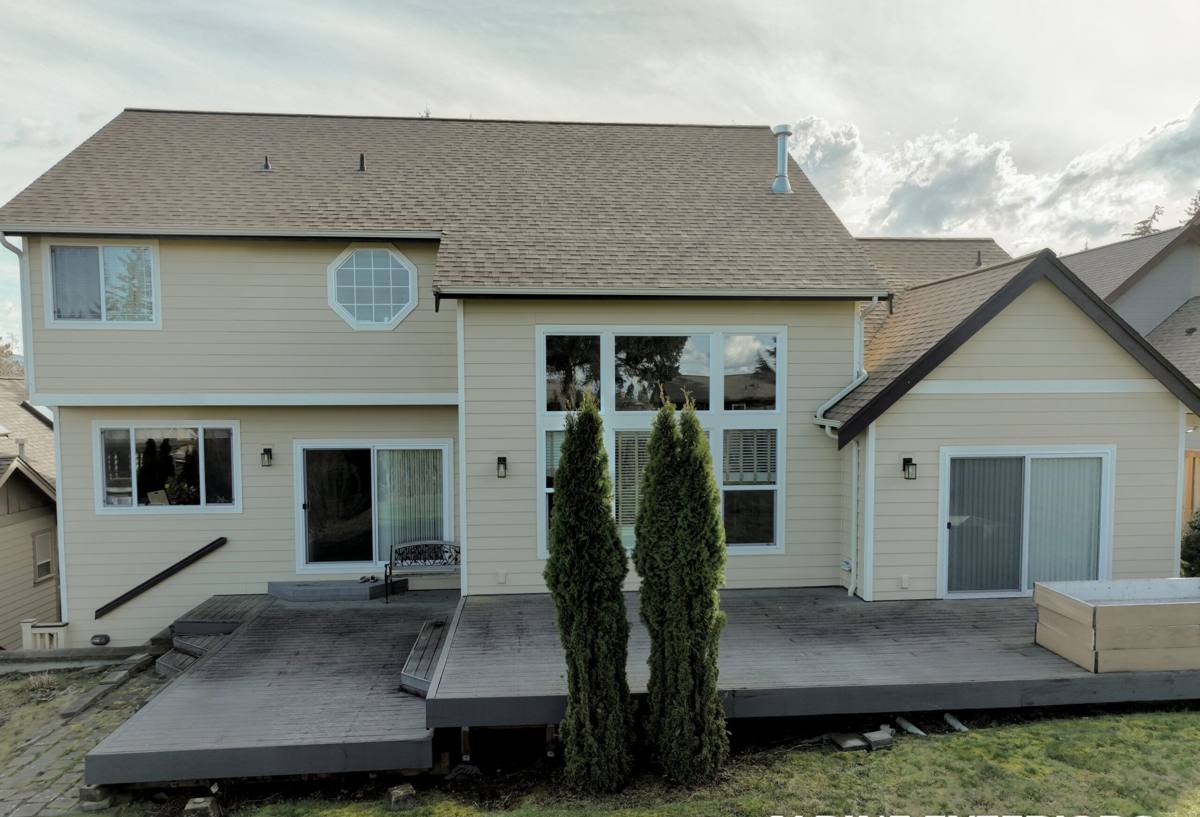
Signs Your Deck Needs Repair, Not Just a Cleaning
Homeowners often assume a mossy, gray-looking deck just needs a power wash. Sometimes that's true. Other times the moss is a symptom of a deeper moisture problem, and washing it off buys a season before it's back — worse. Here's what actually signals a repair is needed:
- Soft or spongy spots when you walk across the decking, especially near the house or in shaded corners
- Any give or bounce in the framing when you jump lightly near the deck's edge
- Rust streaks bleeding out from screws, nails, or joist hangers
- Gaps opening up between the ledger board (where the deck attaches to the house) and the siding
- Guardrail posts that wiggle or flex when pushed
- Consistent moss or algae growth in the same spots every year, even after cleaning
- Stair stringers or the bottom few inches of posts that look darker, punkier, or splintered compared to the rest of the wood
If you're seeing more than one of these, it's worth having someone look underneath the deck, not just at the surface.
What a Correct Deck Repair Actually Involves
Ledger Board and Flashing
The ledger board — where the deck bolts to the house — is the single most common failure point we find in this climate. If the flashing behind it was missed, undersized, or installed before code required it (common on older decks in this area), water runs down the siding and behind the ledger every time it rains. Over years, that rots the ledger, the rim joist behind it, and sometimes framing inside the wall. A correct repair means pulling the decking back far enough to actually inspect this connection, not just caulking over what's visible.
Framing, Posts, and Footings
Joists, beams, and posts take on moisture from both directions — rain from above, and splash-back or standing water from below if the ground under the deck doesn't drain. We check joist hangers for rust and undersizing, posts for rot at the base where they meet the footing, and footings themselves for movement or heaving. Any hardware being replaced goes back in hot-dipped galvanized or stainless, sized for treated lumber corrosion standards — this is a place where using whatever hardware is on the shelf causes the exact same failure to happen again in a few years.
Decking Boards and Fasteners
Individual board replacement makes sense when damage is localized — a few cupped, split, or soft boards in an otherwise sound deck. We match species and thickness where we can, and we reset the fastening pattern so water sheds instead of pooling in screw heads or gaps. If moss has been an ongoing fight, we'll also look at whether board spacing and airflow underneath are contributing — tight spacing traps moisture that wider gapping would let dry out.
Guardrails and Stairs
Guardrail posts and stair stringers see concentrated stress and, in shaded yards, some of the worst moss and rot exposure on the whole structure. These aren't cosmetic — a guardrail has to actually hold a load, so any post with base rot or a loose connection gets rebuilt to current code, not patched.
Repair or Replace? What Actually Decides It
| Factor | Usually Points to Repair | Usually Points to Replacement |
|---|---|---|
| Framing condition | Joists and beams solid, no soft spots | Widespread rot in joists, beams, or ledger |
| Age of structure | Under 15-20 years, built to a reasonable standard | Older deck, unknown or outdated construction |
| Extent of damage | Isolated boards, posts, or hardware | Rot or corrosion spread across multiple systems |
| Ledger/flashing | Flashing present and functioning | Missing or failed flashing causing ongoing water intrusion |
| Code compliance | Guardrails and stairs already meet current code | Rail height, spacing, or footings don't meet current code |
We'll always tell you honestly which side of that table your deck falls on. A repair that only addresses the surface while the framing underneath is failing isn't a favor to anyone — it just delays a bigger job and adds cost.
How We Handle a Deming Deck Repair
1. Inspection From Below
We start underneath the deck, not on top of it. That's where ledger rot, hanger corrosion, and post base damage actually show up first — by the time it's visible on the surface, it's usually been developing for a while.
2. A Clear, Written Scope
You get a plain description of what's failing, what we recommend fixing now versus what to watch, and what it involves — no vague "deck repair" line item. If we find something during the inspection that changes the scope, we tell you before we start, not after.
3. The Repair Itself
Framing and structural work happens first, then decking, then rails and stairs. Any hardware touched gets upgraded to corrosion-resistant fasteners regardless of whether that board was the reason we were called out — it's not worth reusing rusted hardware next to new wood.
4. Walkthrough
Before we consider the job done, we walk it with you — what was fixed, what to keep an eye on given your yard's shade and drainage, and simple upkeep that actually matters here versus what doesn't.
Materials: What We Use and the Trade-Offs
Pressure-treated lumber remains the standard for framing under any decking material — it's what codes and engineering are built around, and it's a known quantity. For decking boards, both wood and composite have a place, and the honest answer is that the right choice depends on how much upkeep you want to do:
| Wood Decking | Composite Decking | |
|---|---|---|
| Upfront cost | Lower | Higher |
| Moss/algae resistance | Lower — needs periodic cleaning and sealing | Better, though not immune in heavy shade |
| Maintenance | Regular cleaning, staining or sealing | Occasional washing, no sealing |
| Repair approach | Individual boards easy to swap and blend | Board matching depends on product age/availability |
| Feel underfoot | Traditional | Consistent, less prone to splintering |
We don't push one material over the other — we'll walk you through what fits your deck's exposure, your budget, and how much maintenance you actually want to sign up for.
Permits and Whatcom County Requirements
Structural deck repair — replacing framing, footings, or guardrails — can fall under Whatcom County or Lynden permitting depending on scope and location. We'll tell you upfront if your project needs a permit and handle that conversation as part of the job, rather than leaving you to figure it out. Straightforward board or fastener replacement that doesn't touch structure typically doesn't trigger the same requirements, but it's worth confirming rather than assuming either way.
Why a Crew That Already Works Deming Matters
Deming's mix of river-valley shade, tree cover, and steady Whatcom County rainfall isn't the same set of conditions a crew based somewhere drier or more open deals with regularly. We know what a ledger looks like after a few wet seasons behind un-flashed siding out here, we know which corners of a shaded yard never fully dry out, and we're not guessing at what "normal wear" looks like on a deck built in this specific climate. That familiarity means less time spent diagnosing and more time spent actually fixing the parts that matter.
If your deck has soft spots, persistent moss, rusting hardware, or just feels less solid than it used to, we're happy to take a look and give you a straight answer — repair, replace, or leave it alone for now. Reach out for a free, no-pressure estimate using the form below.