 Lynden Siding
 Why Blaine's Location Is Hard on Siding
Blaine sits right on the water at the top of Whatcom County, close enough to the Strait of Georgia and Semiahmoo Bay that salt-laden air is part of daily life for homes near the shoreline. That air doesn't just smell different — it behaves differently on a house. Salt residue settles into siding surfaces, joints, and fastener heads, and over years it accelerates corrosion and breaks down finishes that were never engineered to handle it. Add in wind-driven rain coming off the water and a long, gray, damp stretch of the year that keeps north- and shade-facing walls wet for weeks at a time, and you have a climate that is genuinely more demanding on exterior siding than most inland parts of Whatcom County.
Then there's moss. Blaine's moisture season runs long, and anywhere sunlight is limited — under eaves, behind landscaping, on the shaded side of a house — moss and algae get a foothold and don't let go easily. On the wrong siding material, that moss holds moisture directly against the surface for months, which is exactly the condition that causes swelling, cupping, and rot to take hold quietest and spread fastest. A siding replacement in Blaine isn't just a cosmetic upgrade — it's a chance to put a material and installation system on the house that's actually built to handle salt, wind rain, and moss, instead of one that's just tolerating it until the next problem shows up.
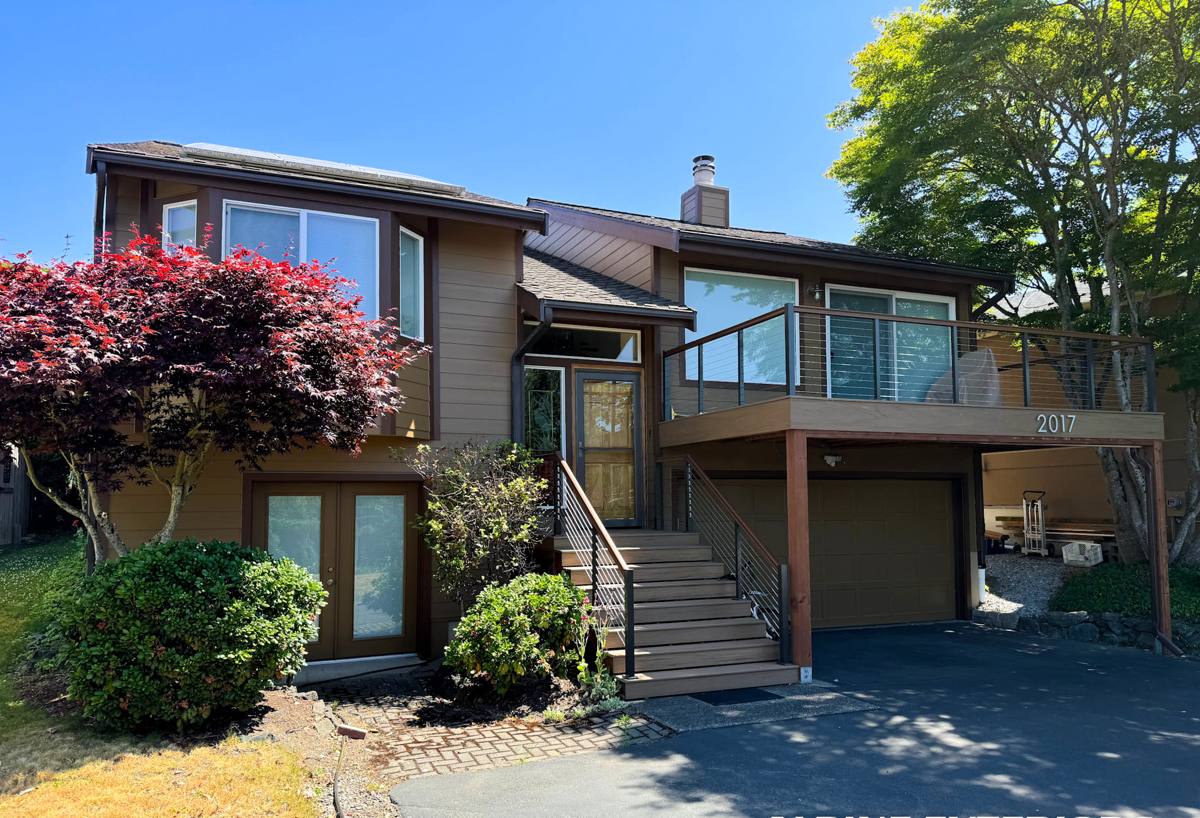
Signs a Blaine Home's Siding Has Reached the End
Coastal exposure tends to show up in specific, recognizable ways before a full failure happens. Homeowners in Blaine and the surrounding shoreline areas should watch for:
- Soft or spongy spots when you press on siding, especially near the bottom courses and around window and door trim
- Persistent moss or dark algae staining that comes back within a season or two of cleaning
- Paint or finish that's peeling, chalking, or fading unevenly — often worse on the walls that face the water or stay shaded
- Visible gaps, warping, or boards that have pulled away from the wall plane
- A musty smell or discoloration on interior walls that back up to exterior siding, which can point to moisture getting past the cladding
Any one of these on its own might just need a repair. Several at once, especially on a home that's a couple decades old, usually means the siding system itself — not just the paint — has reached the point where patching stops making sense.
What a Correct Siding Replacement Actually Involves
A siding replacement done right is not simply pulling off old boards and nailing up new ones. In a climate like Blaine's, most of what determines whether the job lasts happens underneath the siding, where nobody will ever see it again once the project is done.
Tear-off and inspection
Removing the old siding is also the only real chance to look at the sheathing, framing, and existing water barrier underneath. In a coastal, high-moisture area, it's common to find soft sheathing or hidden rot around window openings, at the base of walls, or behind areas where old siding trapped moisture. That damage has to be found and repaired before anything new goes up — covering it over just resets the clock on the same failure.
Weather-resistive barrier and flashing
A properly lapped weather-resistive barrier, correctly integrated flashing at every window, door, and roof-to-wall intersection, and properly sealed penetrations are what actually keep wind-driven rain from getting behind the siding in the first place. This detail work matters more in Blaine than in drier parts of the state, because the volume and direction of driving rain off the water puts more pressure on every seam and joint.
Installation to manufacturer spec
Fastener spacing, board gapping, caulking at butt joints, and clearance from grade, decks, and roof lines all have to follow the manufacturer's published installation instructions — not shortcuts. Installed too tight, siding can't move with seasonal humidity changes. Installed with too little ground clearance, it wicks moisture straight from the soil. These are the details that separate siding that lasts thirty-plus years from siding that starts failing in five.
Why We Install Only James Hardie Fiber Cement in Blaine
We standardized on James Hardie fiber cement siding for every home we work on, and in a salt-air, high-moisture area like Blaine, the reasoning is straightforward. Fiber cement is engineered from cement, sand, and cellulose fibers — it doesn't have the organic wood content that gives moss and rot something to feed on, and it isn't a plastic product that can become brittle or distort in temperature swings near the water. James Hardie's HZ5 product line is specifically engineered for climates that see extended damp seasons, which describes Whatcom County's coastline well.
The ColorPlus factory finish is also worth explaining, because it's a real point of difference, not marketing language. It's a baked-on finish applied and cured under controlled factory conditions, which gives it more consistent coverage and better fade and moisture resistance than field-applied paint can achieve on-site — a meaningful advantage on walls that take direct salt spray and sun. James Hardie also backs its siding with a strong, transferable limited warranty, which matters to homeowners who may sell the house within the product's lifespan.
We don't install vinyl, LP SmartSide, or unfinished wood siding, and we're upfront about why: each of those products has real strengths, but each also has a moisture-sensitivity, maintenance burden, or long-term durability trade-off that we don't think holds up well against Blaine's specific combination of salt air, driving rain, and a moss season that doesn't take much of a break. James Hardie is what we've found performs correctly here when it's installed to spec, and it's the only product we put our name behind.
Our Siding Replacement Process
- On-site inspection — we walk the exterior, check for soft spots, moisture damage, and problem areas specific to the home's exposure to wind and water
- Written estimate — a clear scope covering tear-off, any sheathing repair allowance, materials, and installation, with no vague line items
- Tear-off and sheathing check — old siding comes off, sheathing and framing get inspected, and any rot or damage gets repaired before moving forward
- Weather barrier and flashing — a new, properly lapped water-resistive barrier and correctly integrated flashing at every opening and transition
- James Hardie installation — installed to manufacturer specification, with correct fastening, gapping, and clearances for this climate
- Final walkthrough — trim, caulking, and paint-matched touch-ups reviewed with the homeowner before we consider the job finished
What Drives the Cost of a Siding Replacement
Every home is different, but the same handful of factors move the price of a siding replacement up or down. Understanding them helps homeowners get a realistic estimate instead of comparing quotes that aren't actually scoped the same way.
| Cost Factor | Why It Matters |
|---|---|
| Amount of tear-off | Full removal of old siding down to sheathing costs more than installing over a sound existing surface, but is often the right call on aging homes |
| Sheathing or framing repair | Rot found during tear-off has to be repaired before new siding goes on — this is the most common source of scope changes |
| Home size and wall complexity | More corners, dormers, and trim details mean more cutting, flashing, and labor time |
| Siding profile and accents | Mixing lap siding with shingle-style accents or board-and-batten trim adds material and labor cost over a single simple profile |
| Access and site conditions | Steep grades, tight side yards, or multi-story walls near the water can require more staging and safety setup |
| Color and finish | Factory ColorPlus finishes come in a range of standard colors; custom field-painted finishes add cost |
We walk through each of these during the on-site estimate so the number a Blaine homeowner gets actually reflects their house, not a generic average.
Why a Lynden-Based Crew That Already Works Blaine Matters
Siding installation quality depends heavily on details that a crew either understands from experience or learns the hard way on your house. A crew that already works Blaine and the surrounding Whatcom County coastline knows how far to extend flashing details for wind-driven rain off the water, understands which walls in this area are realistically going to fight moss regardless of maintenance, and has a feel for scheduling installation around this region's wetter stretches so the weather barrier isn't left exposed longer than it should be.
There's also a practical side to being local: a Lynden-based crew can respond quickly if a question comes up after the job, doesn't have travel time built into every visit, and has a reputation in the immediate area to stand behind — not just a name on an invoice from a company that drove in from out of town for one job and won't be back.
Keeping Your New Siding Looking Right
James Hardie siding installed correctly is genuinely low-maintenance, but "low-maintenance" isn't "no-maintenance," especially this close to the water. A short annual routine keeps it performing the way it's supposed to for decades:
- Rinse siding periodically with a garden hose to clear salt residue and airborne debris, especially on walls facing the water
- Keep gutters and downspouts clear and directed away from the foundation so water isn't pooling against lower siding courses
- Trim back landscaping and vegetation that's shading walls or restricting airflow, since that's where moss and algae take hold first
- Inspect caulking at trim joints, window and door surrounds, and butt joints once a year, and re-caulk any that's cracked or pulled away
- Watch the bottom courses near grade and near decks or patios for any staining or softness, and address it early rather than waiting
None of this is heavy work, but skipping it is how even a good siding job ends up looking tired well before it should.
If your Blaine home's siding is showing wear, or you're just planning ahead for a replacement, we'd be glad to take a look and walk you through what your house actually needs. Reach out for a free, no-pressure estimate — there's a form right below to get started.