 Lynden Siding
 Bellingham Siding Takes a Different Kind of Beating
Bellingham sits close enough to the water that salt-laden air is a real factor in how siding ages, not just a talking point. Add in driving rain that comes sideways off Bellingham Bay during winter storms, and a moss season that can run from October through April in a wet year, and you have a climate that is genuinely hard on exterior walls. A siding repair here is not the same job as a siding repair in a dry inland town. The failure patterns are different, and the fix has to account for that.
The Salt Air Factor
Airborne salt accelerates corrosion on fasteners, flashing, and any exposed metal trim. On wood-based and composite sidings, it also speeds up the breakdown of paint films and factory finishes, especially on the sides of a house that face the water or open exposure. Repairs that only address the visible rot or crack, without checking the fasteners and flashing behind it, tend to fail again within a couple of seasons.
Driving Rain and Wind-Driven Moisture
Whatcom County storms frequently push rain horizontally, not straight down. That means water gets forced into joints, laps, and trim details that would stay dry in a calmer climate. Siding that looks fine from the ground can still be taking on moisture at every horizontal seam, especially on gable ends and second-story walls with less roof overhang protection.
The Long Moss Season
Moss and algae don't just look bad — they hold moisture against the siding surface for months at a time on north-facing and shaded walls. That constant dampness is one of the biggest drivers of rot at butt joints, corner boards, and anywhere caulking has started to fail. A repair that doesn't also address the moisture source underneath the moss is a short-term patch, not a real fix.
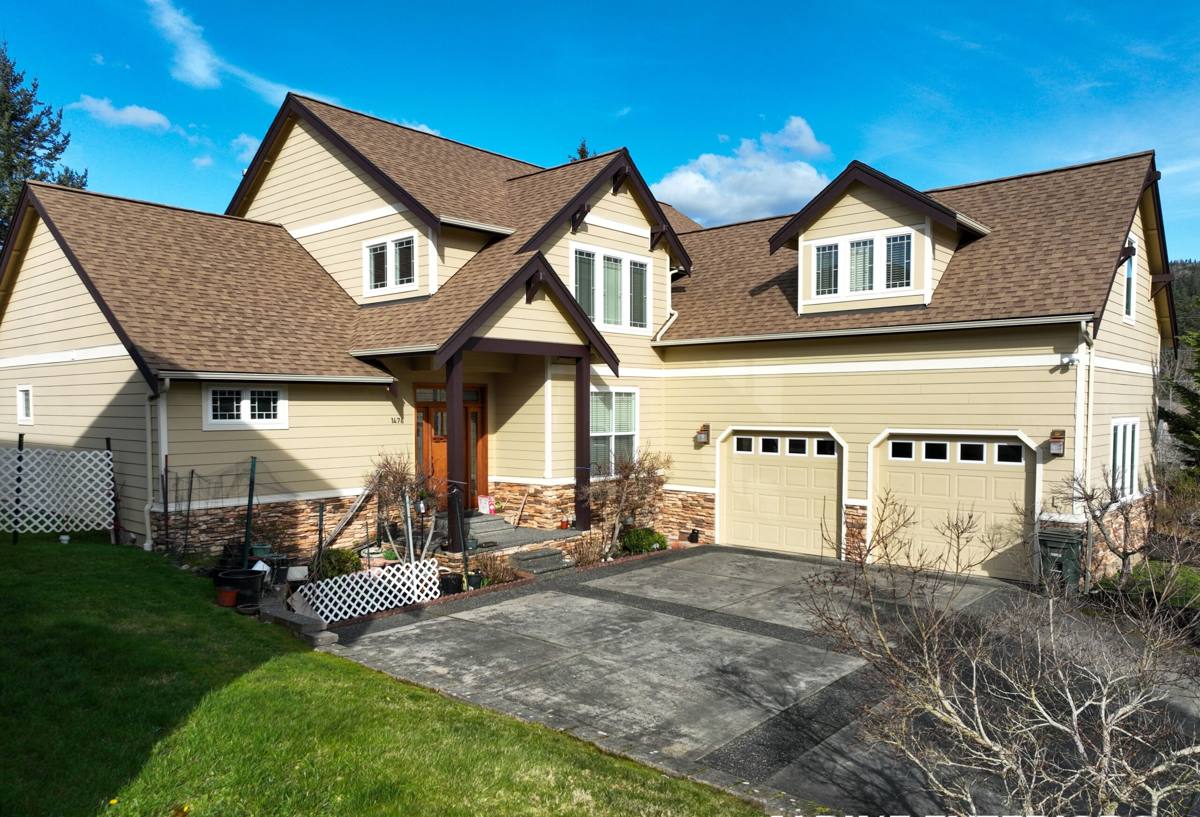
Signs Your Siding Needs Repair, Not Just a Paint Job
Homeowners often call us after noticing something cosmetic, but the underlying damage is usually more advanced than the surface suggests. Here's what we look for and what you can check yourself before calling anyone:
- Soft or spongy spots when you press on the siding, especially near the bottom courses and around windows
- Visible cracking, buckling, or separation at panel joints and corner boards
- Paint that's peeling or bubbling in a specific area rather than uniformly across the wall
- Persistent moss or algae growth that comes back within weeks of cleaning
- Staining or dark streaks below nail heads or at horizontal seams
- Gaps opening up around window and door trim, or caulk that's cracked and pulling away
- A musty smell or visible staining on interior walls that back up to exterior siding
What a Correct Repair Actually Involves
A siding repair that's done right starts before any material comes off the wall. Rushing straight to "patch and paint" is how the same spot ends up failing again in two or three years.
Diagnosing the Real Cause
We remove enough siding to see what's actually happening underneath — whether it's a flashing failure, a caulking gap, a grading issue pushing splashback onto the wall, or moisture trapped by moss and debris. Fixing the symptom without finding the cause just resets the clock on the same problem.
Matching Materials and Finish
If the existing siding is still a viable material and the damage is localized, we'll match the profile, exposure, and finish as closely as the original product allows so the repair doesn't stand out as an obvious patch. Where the material itself is failing — not just one damaged section — patching becomes a losing game, and that's a different conversation.
Sealing and Flashing Details
Every repair gets proper flashing and sealant at the vulnerable points: butt joints, window and door transitions, and any penetration through the siding. Given how much wind-driven rain this area sees, these details matter more here than in a drier climate — skipping them is the single most common reason a repair doesn't last.
Repair or Replace? How We Actually Make That Call
Not every damaged section needs a full re-side, and not every "repair" request should end with a patch. We look at the extent of the damage, the age and condition of the material overall, and what's driving the moisture problem before recommending either path.
| Factor | Repair Usually Makes Sense | Replacement Usually Makes Sense |
|---|---|---|
| Extent of damage | Isolated to one or two sections | Recurring across multiple walls |
| Underlying material condition | Still sound elsewhere on the house | Widespread softness, delamination, or warping |
| Age of existing siding | Well within its expected service life | Near or past the material's realistic lifespan |
| Moisture source | Identifiable and fixable at the repair point | Systemic — poor original installation or product performance |
| Cost over time | One-time fix, low future risk | Repeated patches costing more than a re-side over a few years |
We'll tell you honestly which category your situation falls into. If a patch will genuinely hold, that's what we recommend — we're not looking to sell a full re-side when a repair will do the job.
What We Find on Bellingham-Area Homes, and What It Means
Repair calls in this area come in on every kind of siding — vinyl, cedar, LP SmartSide, fiber cement from various manufacturers, and older primed wood products. We'll repair what's there when a repair is the right answer, matching materials as closely as we reasonably can. But when damage is widespread enough that the honest recommendation is replacement, our company installs only James Hardie fiber cement siding, and we'll explain exactly why rather than just defaulting to it.
Vinyl and wood-based sidings tend to be the ones we see failing fastest in this specific climate — vinyl can warp and gap at the laps under sustained wind-driven rain, and wood-based products are the most vulnerable to the moisture-holding effect of a long moss season. That's not a knock on every installation of those products; it's a pattern we see repeatedly on homes exposed to Bellingham's combination of salt air, driving rain, and shade-driven moss growth.
James Hardie fiber cement is engineered specifically for wet coastal climates like this one — it's non-combustible, doesn't support rot the way wood-based products can, and its ColorPlus factory finish is built to hold color and resist the kind of moisture cycling this region delivers year-round. When a homeowner is facing a full re-side rather than a repair, that's the material we stand behind and the only one we install.
Our Repair Process, Start to Finish
- Inspection and diagnosis — we identify the actual cause of the damage, not just the visible symptom
- Honest recommendation — repair or replace, explained in plain terms with the reasoning behind it
- Material matching — for repairs, we match profile and finish as closely as the existing product allows
- Removal and inspection of the wall behind it — checking for hidden rot, damaged sheathing, or failed flashing
- Proper flashing and sealing — the details that keep wind-driven rain and moss-season moisture out for good
- Finish work — installation, caulking, and paint or finish matching so the repair blends in
- Cleanup — job site left clean, debris hauled, and a final walkthrough with you before we call it done
Why a Crew That Already Works Bellingham Matters
Siding repair is detail work, and the details that matter change based on climate and exposure. A crew that regularly works homes in and around Bellingham and Lynden already knows how wind-driven rain behaves against these walls, how long moss season really lasts here, and which details tend to fail first on homes exposed to salt air off the water. That's not something you can fully substitute with general contracting experience from a different region.
There's also a practical side to hiring local: faster response for an inspection, no long-distance travel costs baked into your estimate, and a crew that's still around and easy to reach if a question comes up after the work is done. For a repair — where getting the diagnosis right up front saves you from paying for the same fix twice — that local familiarity is worth something real.
Maintaining Your Siding After the Repair
A good repair buys you years, but a little seasonal attention keeps it that way, especially given how long moss season runs here.
- Keep gutters clear so overflow doesn't run down the siding face, especially before fall rains ramp up
- Trim back vegetation and tree cover that keeps walls shaded and damp longer than they need to be
- Rinse moss and algae off north-facing and shaded walls before it has a chance to establish and hold moisture
- Re-check caulking at trim and joints every year or two — it's cheap insurance against a repeat repair
- Walk the exterior after major windstorms to catch any new damage early, while it's still a small fix
If you're seeing soft spots, recurring moss, or damage that keeps coming back no matter what you try, we're happy to come take an honest look. There's no pressure and no obligation — just a straight answer on whether a repair will hold or whether it's time to talk about something more permanent. Use the form below to request a free estimate.