 Lynden Siding
 Custom Deck Building in Nooksack
Nooksack sits a few miles up the valley from Lynden, in the farmland along the Nooksack River in the northern reach of Whatcom County. It's a quieter, more rural setting than the towns closer to the coast, but it still sits inside the same marine-influenced weather system that shapes exterior work across this whole corner of Washington. Salt-tinged air moves up the valley from the Sound, rain comes through wind-driven rather than falling straight down, and mild temperatures give moss a long season to work on anything that stays shaded or damp. A deck is a horizontal surface exposed to all of that at once, which is exactly why a deck built without this climate in mind tends to show problems years before it should.
We build custom decks for homes throughout the Nooksack and Lynden area, and we design and frame every one of them around what this valley's weather actually does to a structure sitting outdoors, year-round, with no siding or roof overhead to shed the worst of it.
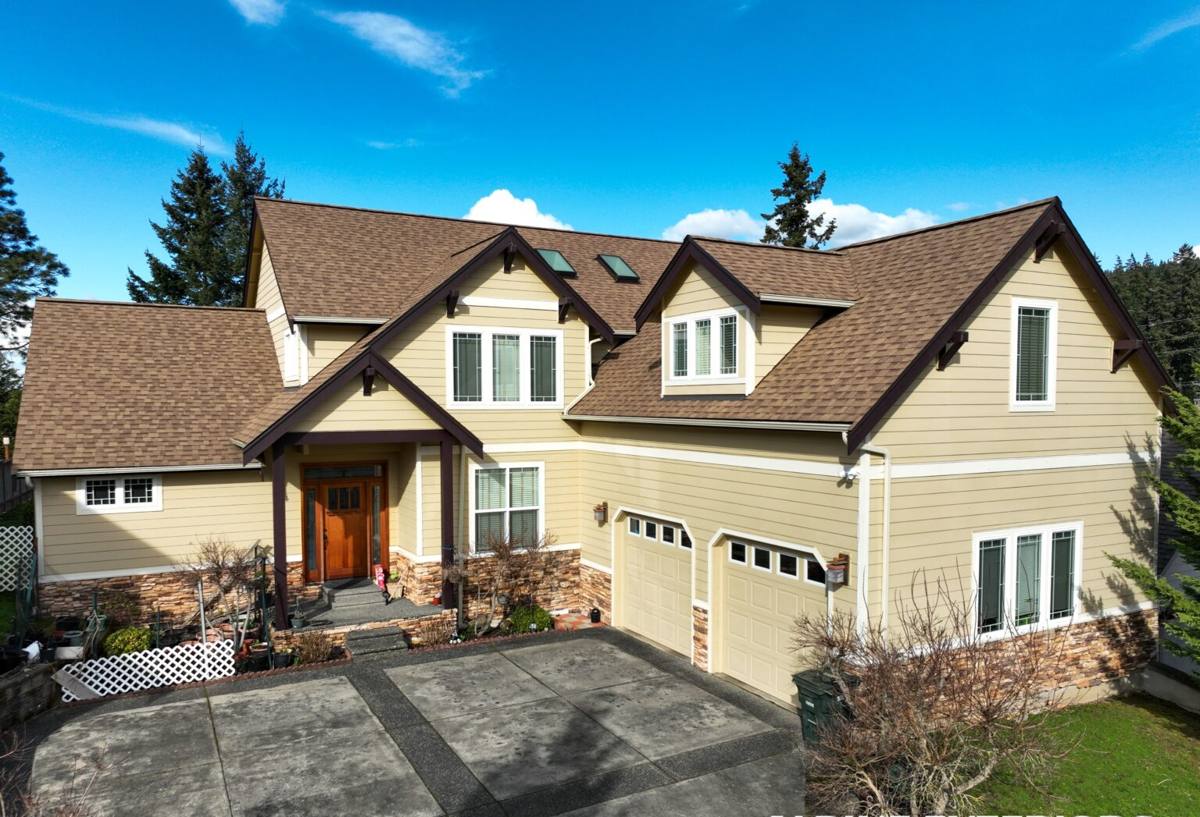
What Nooksack's Climate Does to a Deck
Driving Rain and Standing Moisture
A deck doesn't shed water the way a wall does. Wind-driven rain lands flat on the surface and has to drain through board gaps or off the edge, and on a flat or gently sloped deck that drainage path matters more than most homeowners realize. Boards that are spaced too tight, or a substructure that doesn't pitch water away from the house, leave moisture sitting against the decking and framing longer than it should, especially through a wet Whatcom County fall and winter.
A Long Moss and Algae Season
Mild temperatures and consistent moisture give moss and algae a long growing season on horizontal surfaces in this part of the county, and a deck catches more of that than a vertical wall ever will. Shaded decks under mature trees or on the north side of a house are the first to show green staining and a slick, slippery surface, and left unaddressed, that buildup holds moisture directly against the decking material.
Salt-Tinged Air, Even Up the Valley
Nooksack sits further inland than our waterfront service areas, so it doesn't take direct salt spray. But it's still inside the same marine weather system, and salt-carrying air moves up the Nooksack valley more than most homeowners expect. Over years, that air accelerates corrosion on fasteners, joist hangers, and any exposed metal hardware, which is a real consideration on a structure where the hardware is doing the structural work of holding the deck to the house and to its footings.
Ground Moisture on River-Valley Lots
A lot of Nooksack properties sit on open farmland or lots close to the river bottom, and ground moisture and humidity around a deck's footings and lower framing can run higher here than on a well-drained hillside lot elsewhere in the county. That affects how footings are set and how much airflow the substructure needs underneath to actually dry out between storms instead of staying damp all winter.
What a Correctly Built Deck Involves
Most of what determines whether a deck lasts fifteen years or forty years is invisible once the decking boards go down. The framing, fasteners, and flashing underneath do the real work, and cutting corners there is exactly what turns a good-looking new deck into a soft, unsafe one within a handful of wet seasons.
Ledger Board Attachment
The ledger board, where the deck attaches to the house, is the single most important structural and moisture connection on the whole project. It has to be through-bolted or lag-screwed to the framing behind the siding, not just nailed to the sheathing, and it has to be flashed so that water sheds outward and down rather than tracking behind it into the wall. A poorly flashed ledger is one of the more common ways a deck project ends up causing hidden rot inside the house itself, not just in the deck.
Framing and Footings
Footings need to be set below frost depth and sized for the actual load of the deck, its railings, and anything that will sit on it. Joist spacing and beam sizing have to account for board type, since composite decking has different span requirements than wood. On a valley lot with higher ground moisture, we also pay attention to footing drainage and substructure airflow so the framing has a real chance to dry out between rain events instead of staying wet all season.
Fasteners and Hardware
Every fastener, joist hanger, and structural connector on a deck in this climate should be rated for the corrosion exposure it's actually going to see, not just whatever's cheapest at the yard. Hot-dip galvanized or stainless hardware costs more upfront than standard coated fasteners, but on a structure exposed to salt-influenced air and constant moisture year-round, it's the difference between hardware that's still sound in twenty years and hardware that's rusting and weakening well before that.
Choosing a Decking Material for This Climate
There's no single right answer for every homeowner — budget, maintenance tolerance, and how long you plan to stay in the house all factor into the decision. What matters is understanding how each option actually behaves under sustained rain, standing moisture, and a long moss season, rather than choosing on looks and price alone.
| Decking Material | Moisture & Moss Behavior | Typical Maintenance | Realistic Lifespan Here |
|---|---|---|---|
| Pressure-treated wood | Absorbs moisture readily; needs consistent sealing to resist rot and moss | Annual or biennial cleaning and sealing | 10-15 years with consistent upkeep |
| Cedar | Naturally rot-resistant but still absorbs moisture over time without upkeep | Regular oiling or staining to hold color and resist moss | 15-20 years with consistent upkeep |
| Capped composite (e.g. TimberTech) | Resists moisture absorption; polymer cap sheds surface moss and algae better than wood | Periodic washing; no sealing or staining required | 25-30+ years |
| Uncapped composite | More moisture-resistant than wood but can absorb some surface moisture and stain over time | Low, occasional cleaning | 20-25 years |
Wood decking can absolutely work on a Nooksack property if the homeowner is committed to the upkeep it needs in a climate this wet. Capped composite decking costs more upfront but asks less of the homeowner year after year, which is why it's what we build most often out here. Either way, the decking material is only the surface — the framing and fasteners underneath still have to be built for this valley's moisture, not just for whatever's sitting on top.
Designing a Custom Deck for a Nooksack Property
Nooksack lots tend to be more open and rural than an in-town lot closer to Lynden or Bellingham — larger yards, more distance between houses, and often a working farm or open field somewhere in view. That changes some of the practical design questions on a custom deck project: how much of the structure needs shade or wind protection versus how much a homeowner wants an open, unobstructed deck to take advantage of the view and the space.
Railings and Guards
Railing material matters as much as decking material in this climate. Wood railings need the same ongoing sealing as wood decking, while composite and aluminum railing systems hold up with far less maintenance against the same moisture and moss exposure. Whatever the material, railing height and baluster spacing have to meet current code for any deck above the applicable height threshold.
Multi-Level and Attached Structures
A number of custom deck projects in this area involve multiple levels, built-in seating, or a covered section over part of the deck. Every added structure — a pergola, a partial roof, built-in planters — changes how water moves across and off the deck, so those features need to be designed into the drainage plan from the start rather than bolted on afterward.
Our Process for a Custom Deck Project
- On-site walk and consultation: We look at the house, the lot, sun and shade patterns, and how the deck will connect to the home before talking materials or layout.
- Design and material selection: We lay out size, shape, railing style, and decking material based on the homeowner's budget and how much ongoing maintenance they want to take on.
- Permitting: Most decks above a certain height or attached to the house require a permit through the applicable local building department. We handle that process rather than leaving it to the homeowner.
- Footings and framing: Footings are set to code depth, and the substructure is built with fasteners and hardware sized for this climate's moisture and corrosion exposure.
- Decking, railing, and finish work: Boards, railings, and any built-in features go in last, with attention to drainage and fastening patterns that hold up long-term.
- Final walkthrough: We go over the finished deck with the homeowner, including basic maintenance expectations for whatever material was chosen.
Cost Factors on a Custom Deck
| Factor | What It Affects | Why It Matters in Nooksack |
|---|---|---|
| Size and layout | Material quantity and labor hours | Larger, more open rural lots often support bigger decks than in-town lots |
| Decking material | Upfront cost vs. long-term maintenance | Composite costs more upfront but needs far less upkeep in this wet climate |
| Framing and footing depth | Structural cost | Higher ground moisture on some valley lots can affect footing and drainage requirements |
| Railing style | Material and labor cost | Low-maintenance railing materials hold up better against sustained moisture and moss |
| Added structures | Design and framing complexity | Pergolas, partial roofs, and built-ins all need to be planned into the drainage design |
| Site access | Labor time and equipment needs | Rural properties can have longer driveways or less staging room than a tight in-town lot |
Exact costs come down to the specific property and design, which is why we walk the lot and talk through options in person before giving a real number rather than quoting off a generic price sheet.
Signs an Existing Deck Needs Attention
- Soft, spongy, or bouncy boards anywhere on the deck surface
- Rust staining or visibly corroded fasteners, especially around the ledger board
- Persistent green or black staining that returns quickly after cleaning
- Gaps, cracking, or separation where the deck meets the house
- Wobbly railings or posts that move under normal pressure
- Standing water or slow drainage after a typical rain
Why a Local Crew Matters in Nooksack
A crew that builds decks throughout the Nooksack and Lynden area regularly sees how driving rain, valley moisture, and a long moss season actually behave on real structures over a full year, not just how a product performs on a spec sheet. That experience shapes practical decisions on a project: how deep to set footings on a river-valley lot, which board spacing actually sheds water instead of trapping it, and which hardware is worth the extra cost so a homeowner isn't dealing with soft framing or rusted connectors a decade in. Nooksack's mix of open farmland and valley dampness isn't identical to every other town in Whatcom County, and a crew with hands-on local experience treats that difference seriously instead of building the same deck the same way everywhere.
If you're considering a custom deck for your Nooksack home, we're glad to walk the property and talk through what actually fits the house, the lot, and the budget. Reach out using the form below to schedule a free, no-pressure estimate.