 Lynden Siding
 Why Ferndale's Climate Is Harder on Siding Than Most Homeowners Realize
Ferndale sits close enough to the coast, the Nooksack River bottomland, and the industrial waterfront that its homes deal with a combination most inland Washington towns don't: salt-tinged air, long stretches of driving rain off the Strait, and a wet season that runs far longer than the calendar suggests. Add the shade from mature Western Washington trees and the humidity that never fully burns off some mornings, and you get siding conditions that punish anything with a weak moisture strategy or a coating that wasn't built for it.
Whatcom County's marine climate means siding on a Ferndale home isn't just getting rained on — it's getting rained on sideways, staying damp longer between storms, and sitting in the kind of persistent moisture that feeds moss, algae, and mildew almost year-round. A product that performs fine in a drier climate can fail here in a fraction of the time.
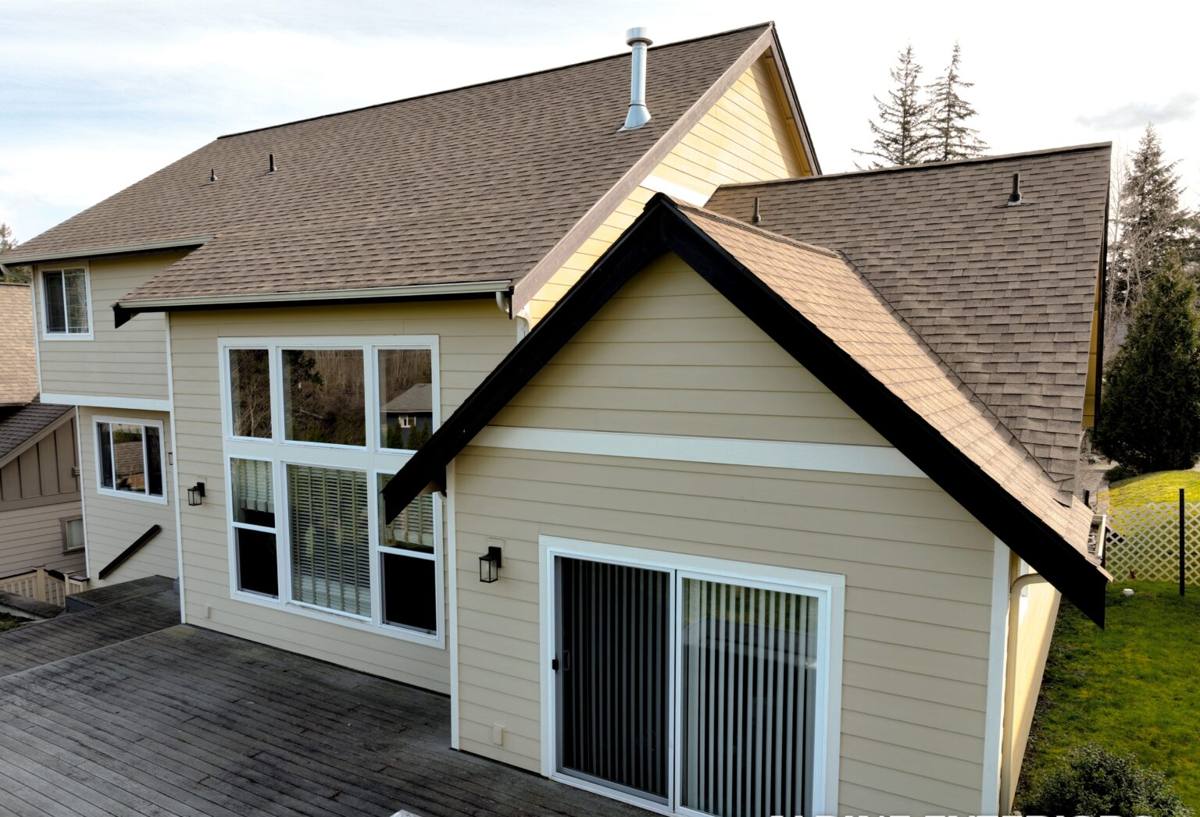
What Salt Air, Driving Rain, and Moss Actually Do to a House
Salt Air
Proximity to Bellingham Bay and the Strait of Georgia means airborne salt is a real factor for many Ferndale properties, not just homes right on the water. Salt-laden moisture accelerates corrosion of fasteners and trim metal, and it degrades weak paint films faster than inland exposure does. Siding materials and finishes that aren't engineered for coastal-adjacent exposure can chalk, fade, or break down years ahead of schedule.
Driving Rain
Wind-driven rain doesn't just wet the siding surface — it pushes water sideways into laps, seams, and any gap in the water-resistive barrier behind the cladding. Over enough seasons, this is how poorly detailed siding jobs develop hidden rot, even when the surface looks fine from the curb.
Moss and Organic Growth
Whatcom County's moss season is long. Shaded north walls, homes tucked under fir and cedar canopy, and roofs that shed onto lower siding all create the damp, low-light conditions moss and algae thrive in. Organic growth on siding isn't just cosmetic — it holds moisture against the surface and, on materials that absorb water or swell, that trapped moisture is what eventually causes real damage.
Why We Only Install James Hardie Fiber Cement
We made a deliberate decision to install James Hardie fiber cement exclusively — not vinyl, not LP SmartSide, not primed wood, not other fiber cement brands. In a climate like Ferndale's, the material and the factory finish matter as much as the installation. Fiber cement is engineered from cement, sand, and cellulose fibers, which means it doesn't absorb and swell with moisture the way wood-based or engineered-wood products can, and it won't soften or delaminate under years of coastal humidity.
James Hardie's HZ5 product line is specifically engineered for climates with prolonged moisture exposure — the kind Whatcom County delivers for a good chunk of the year. Combined with the factory-applied ColorPlus finish, which is baked on under controlled conditions rather than field-painted, homeowners get a coating that resists fading and holds up to the UV and salt exposure this area sees, without the touch-up cycle that field-applied paint eventually demands.
Fiber cement is also non-combustible, which matters in a region where wildfire smoke and ember exposure have become a more regular late-summer concern across Washington. That's not the primary reason we standardized on Hardie, but it's a real benefit homeowners should know about.
What a Correct Fiber Cement Job Looks Like in a Climate Like This
Fiber cement is only as good as its installation. In a high-moisture, salt-exposed environment, a handful of details separate siding that lasts decades from siding that fails early — regardless of how good the material itself is.
- Proper water-resistive barrier and rainscreen or drainage plane behind the siding, so any moisture that gets past the cladding has somewhere to go
- Correct starter strip, flashing, and kick-out flashing at every roof-wall intersection, so water is directed away from seams instead of into them
- Manufacturer-specified fastener spacing and fastener type — corrosion-resistant fasteners matter more here given the salt air
- Proper clearance between siding and grade, decks, patios, and roof lines, per Hardie's installation instructions
- Correctly caulked and sealed joints using compatible sealants, not gaps left to "weather in"
- Butt joints and panel seams treated to shed water, not trap it
- Ventilation behind the cladding so damp Whatcom County air isn't sitting stagnant against the wall assembly
Skip any one of these and you can end up with a wall that looks right for a few years and then starts showing problems right where the details were cut short — usually around trim, corners, and anywhere two roof planes meet a wall.
How We Approach a Ferndale Siding Job
Assessment
We start by looking at the whole envelope, not just the siding surface — checking for existing moisture damage, evaluating the current water-resistive barrier, and noting problem areas like shaded walls, low clearance points, and locations exposed to prevailing wind-driven rain.
Removal and Substrate Check
Old siding comes off so we can actually see the sheathing underneath. This is where hidden rot or past moisture intrusion gets caught and addressed before new siding goes on top of it — not after.
Weather Barrier and Drainage
We install a proper water-resistive barrier and drainage plane appropriate to the wall assembly, giving any moisture that gets behind the cladding a path out instead of a place to sit.
Installation to Hardie Spec
Panels, fasteners, flashing, and joint treatment all follow James Hardie's published installation guidelines for the HZ5 zone — this is what keeps the manufacturer's warranty intact and is also simply what correct installation requires in this climate.
Final Detailing
Trim, caulking, and touch-up work get finished with the same attention as the field panels — the majority of long-term siding failures start at details, not the flat wall area.
Fiber Cement vs. Other Siding Options for a Home Like Yours
| Factor | James Hardie Fiber Cement | Vinyl | Engineered Wood (LP SmartSide) | Primed Wood / Cedar |
|---|---|---|---|---|
| Moisture behavior in wet climates | Doesn't absorb/swell; cement-based | Doesn't absorb, but seams and gaps allow water intrusion behind panels | Wood-based core can swell if moisture reaches it | Absorbs moisture directly; prone to rot without diligent upkeep |
| Finish durability in salt air | Factory ColorPlus finish resists fading/chalking | Color molded through, but can fade and become brittle over time | Field or factory paint, needs regular recoating | Requires frequent repainting/staining |
| Fire resistance | Non-combustible | Melts/deforms under heat | Combustible (wood-based) | Combustible |
| Moss/algae resistance | Resists surface growth; cleanable | Can trap moisture behind panels where growth isn't visible | Vulnerable at damaged or unsealed edges | Highly susceptible, especially on shaded walls |
| Long-term maintenance | Occasional wash; no repainting for the life of the finish | Low, but cracks and fades over decades | Periodic recoating and edge sealing | Regular painting/staining, ongoing rot checks |
Every one of these products has a place in the market. Our decision to install Hardie exclusively comes down to how the material and factory finish specifically hold up to the moisture load and salt exposure that Ferndale and the rest of Whatcom County see most of the year.
Signs Your Ferndale Home's Siding May Already Be Struggling
- Soft or spongy spots when you press on the siding, especially near the bottom courses or under windows
- Persistent moss or dark streaking that comes back quickly after cleaning
- Visible gaps, cracking, or separation at seams and corners
- Paint that's peeling, bubbling, or chalking heavily on rubbing
- Interior signs like musty smells, peeling interior paint, or staining near exterior walls
- Warping or bowing visible from an angle down the wall plane
None of these are things to wait out. Once moisture gets behind cladding in this climate, it doesn't dry out on its own — it just keeps working on the sheathing and framing underneath.
Why a Crew That Already Works This Area Matters
Siding installation isn't one-size-fits-all across Washington. A crew used to installing in a drier climate east of the Cascades may not default to the flashing details, drainage planes, and fastener choices that a coastal-influenced, high-moisture area like Ferndale actually needs. A crew that regularly works Whatcom County knows what the wet season does to a wall assembly over time, which parts of a house tend to take the worst of the wind-driven rain, and where moss problems tend to start first. That local pattern recognition is part of what keeps a siding job performing correctly for decades instead of just looking good at the walkthrough.
If you're weighing a siding replacement or new construction siding for a Ferndale property, we're happy to walk the exterior with you, point out anything we see, and put together a straightforward plan — no pressure, no upsell games. Reach out for a free estimate and we'll give you an honest read on what your home actually needs.