 Lynden Siding
 Storm Damage Roof Repair for Aldergrove, BC Homes
Aldergrove sits just across the line from Lynden, connected by the Aldergrove-Lynden border crossing, and the storms that roll through this stretch of the Fraser Valley and Nooksack corridor don't stop at the border to check paperwork. Homes on both sides of that line take the same wind-driven rain, the same winter windstorms, and the same long, damp moss season. We're a Lynden-based crew that already makes the short drive north regularly, and storm damage roof repair for Aldergrove is a service we handle on the same terms as any job on the US side — same standards, same materials, same honest assessment of what actually needs fixing.
Storm damage isn't always dramatic. Sometimes it's a handful of shingles torn loose in a windstorm; sometimes it's flashing that got knocked half-loose and has been quietly letting water in for weeks before anyone notices a stain on the ceiling. Either way, the fix needs to hold up through the next storm, not just look patched from the ground.
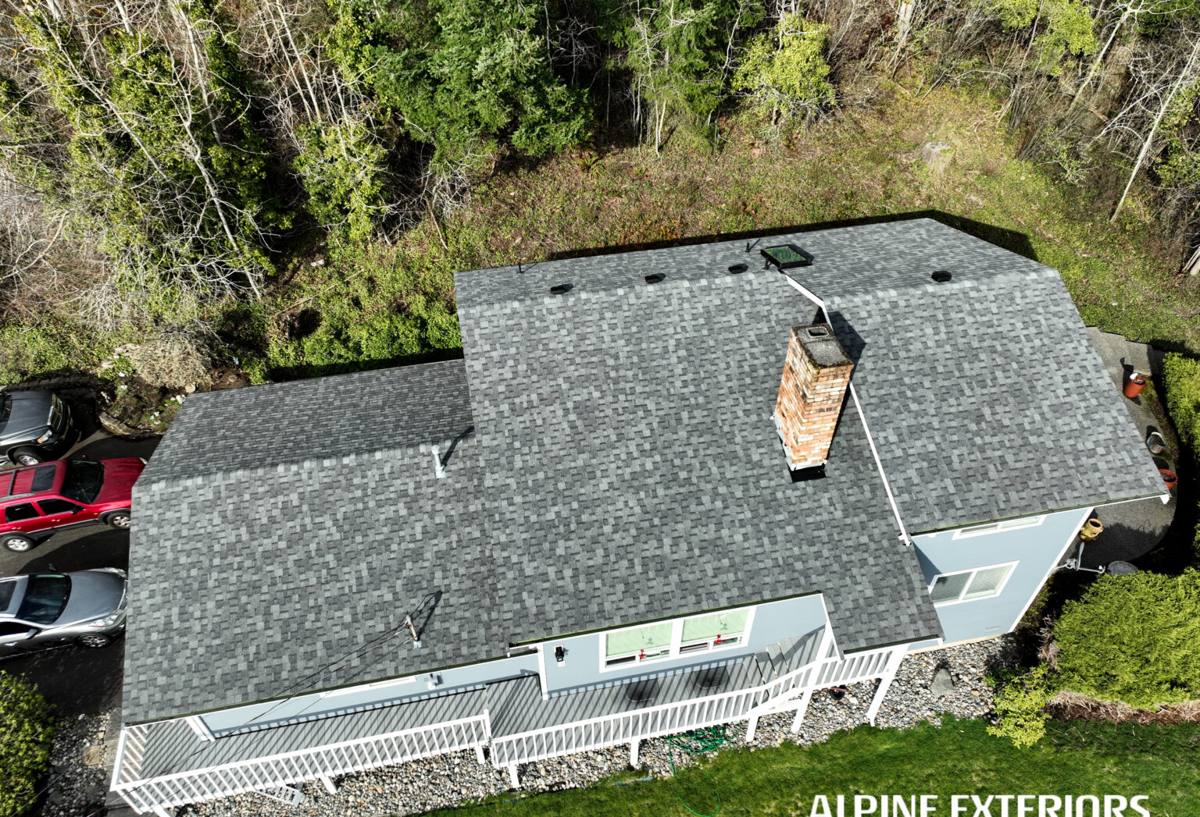
What Storms Actually Do to a Roof in This Area
Wind-Driven Rain and Lifted Shingles
Storms moving through the Fraser Valley and down into Whatcom County tend to bring rain sideways rather than straight down. That sideways force is what gets under shingle tabs, works into valleys, and pushes water past flashing that's only sealed for a straight-down rain event. A roof that looks fine from the driveway can still have shingles that were lifted and re-seated poorly by wind, which means they're one more storm away from tearing loose completely.
Wind Gusts and Uplift
Sustained winter wind gusts put uplift pressure on roof edges, ridge caps, and any shingle or panel that wasn't fastened to spec in the first place. Older roofs, or roofs that have already been through a few storm cycles, are the ones most likely to lose material outright. Once a section is missing, the exposed underlayment or deck underneath is only ever a few hours of hard rain away from a leak.
Debris Impact
Mature trees are common on properties throughout this area, and falling branches and wind-blown debris are one of the more common causes of localized storm damage — a cracked shingle, a dented ridge vent, or a punctured spot that isn't obvious unless someone gets up on the roof and looks for it.
Moss Weakening the Roof Ahead of the Storm
This region's long moss season matters here in a way that's easy to overlook. A roof with established moss growth is already holding extra moisture and has granules and material weakened by months of organic growth sitting on top of it. That roof takes storm damage worse than a clean, well-maintained one — the same wind gust that barely touches a healthy roof can tear loose shingles that moss has already been undermining for a year or more.
What a Correct Storm Damage Repair Actually Involves
A lot of storm repair work we see called in from other companies is really just patchwork — a few new shingles nailed over the damaged spot without checking what's underneath. That approach hides problems instead of fixing them. Our process is built around finding the actual extent of the damage before anything gets repaired:
- A full roof inspection, not just a look at the obviously damaged section, since wind damage is rarely limited to one spot
- Checking the roof deck and underlayment underneath any missing or lifted shingles for moisture intrusion
- Inspecting flashing at valleys, chimneys, vent pipes, and roof-to-wall transitions, since that's where storm-driven rain most often finds a way in
- Matching replacement shingles or roofing material as closely as possible so the repair doesn't stand out or create a new weak seam
- Confirming proper fastening and sealing so the repaired section can actually withstand the next windstorm, not just look finished
- Checking gutters and downspouts for storm debris that can back water up under roof edges
None of that takes much longer than a rushed patch job, but it's the difference between a repair that lasts and one that calls us back after the next storm.
Repair or Replace? An Honest Read After Storm Damage
Storm damage doesn't automatically mean a new roof. We look at how much of the roof surface is affected, the age and condition of the roofing that wasn't directly hit, whether the deck underneath shows moisture damage, and how many storm events the roof has already been through. A handful of shingles torn loose on an otherwise sound, moderately aged roof is usually a straightforward, targeted repair. A roof that's near the end of its service life, already carrying moss damage, and now has storm damage spread across multiple slopes is usually better served by a full replacement rather than another round of patches on a roof that's already struggling. We'll walk you through what we actually find and why, rather than defaulting to whichever option costs more.
| Situation | Typical Fix | What We Check First |
|---|---|---|
| A few shingles torn loose in one area, roof otherwise sound | Targeted shingle and flashing repair | Underlayment and deck condition beneath the damaged section |
| Lifted or missing ridge cap after a windstorm | Ridge cap replacement and re-fastening | Ventilation and fastening pattern along the full ridge |
| Leak appearing after a storm, no obvious missing shingles | Flashing inspection and repair at valleys, vents, chimneys | Sealant and lap condition at every penetration |
| Storm damage on a roof with heavy pre-existing moss | Often leans toward replacement | Granule loss, deck softness, and overall remaining service life |
| Widespread damage across multiple roof planes | Full or partial roof replacement | Structural condition of the deck and total storm exposure |
Signs Your Aldergrove Roof Took Storm Damage
- Shingles you can see are missing, cracked, or curled after a windstorm
- Granules collecting in gutters or at the base of downspouts following a storm
- A new water stain on an interior ceiling or wall, especially near an exterior wall or chimney
- Flashing that looks bent, lifted, or separated from the roof surface
- Debris, branches, or visible dents on the roof after high winds
- A soft spot when the roof deck is walked on, or sagging visible from the ground
- Daylight visible through the roof deck from inside the attic
Any one of these is worth a call before the next storm system moves through. Storm damage tends to get worse with every additional rain event it sits through unaddressed, not better.
Why a Crew That Already Works Aldergrove Matters
A contractor who's never worked this area before storm damage hits is starting from zero — learning the terrain, the typical roofing systems used on both sides of the border, and how this region's wind and rain actually behave, all while a homeowner is waiting on a leak. We already make regular trips across the Aldergrove-Lynden crossing for work, so we're not learning the area on your dime. That familiarity shows up in practical ways: knowing which roof orientations in this area tend to take the worst of a windstorm, recognizing early moss damage that makes a roof more vulnerable before the next storm even arrives, and being straightforward about logistics like scheduling and materials for a cross-border job instead of treating it as a complication.
Beyond Storm Repair: The Rest of the Exterior
Storm damage rarely stops neatly at the roofline. Wind-driven rain that gets past a damaged roof section can show up as moisture damage at a wall-to-roof transition, in soffit and fascia trim, or in siding just below the affected area. Lynden Siding Contractor handles roofing, siding, windows, and decks, and on siding specifically we install James Hardie fiber cement as our standard, chosen for how it holds up against sustained moisture and this region's long moss season compared to lower-cost alternatives. If a roof inspection turns up related damage nearby, we can address it as part of the same visit instead of leaving you to track down a second contractor.
What to Do Right After a Storm
If you can see obvious damage or a leak has already started, a few practical steps help limit further loss while you wait for a proper repair:
- Note and, if safe from the ground, photograph visible damage for your insurance file
- Move furniture or belongings away from any active interior leak
- Avoid getting on the roof yourself, especially in wet or windy conditions — storm-damaged roofing can be unstable
- Check your gutters and downspouts for blockages that could be making a minor leak worse
- Call for an inspection sooner rather than later; a small area of exposed deck gets significantly more expensive to repair the longer it sits open to weather
Get a Free, No-Pressure Estimate
If a recent storm left your Aldergrove roof damaged, or you're not sure whether what you're seeing is worth a repair call, we're glad to take a look and give you a straightforward read on what it actually needs. Reach out using the form below to schedule a free estimate — no pressure, no upsell script.