 Lynden Siding
 Everson's Climate Is Harder on Siding Than It Looks
Everson sits along the Nooksack River just outside Lynden, in a part of Whatcom County that stays green for a reason. The marine air that moves in off the Salish Sea settles into these river-valley towns as long stretches of overcast, driving rain, and humidity that never fully lets go — even in the months when it isn't technically raining. Add a moss season that can run from early fall through late spring, and you've got a climate that's constantly testing whatever material is bolted to the outside of your house.
Most siding failures we see in this area aren't dramatic. They're slow. Paint that won't hold past a few years. Trim boards that go soft at the bottom. Panels that cup, bow, or grow a permanent green tint on the north-facing walls. None of that happens because a homeowner did something wrong — it happens because the material wasn't built for this much sustained moisture in the first place.
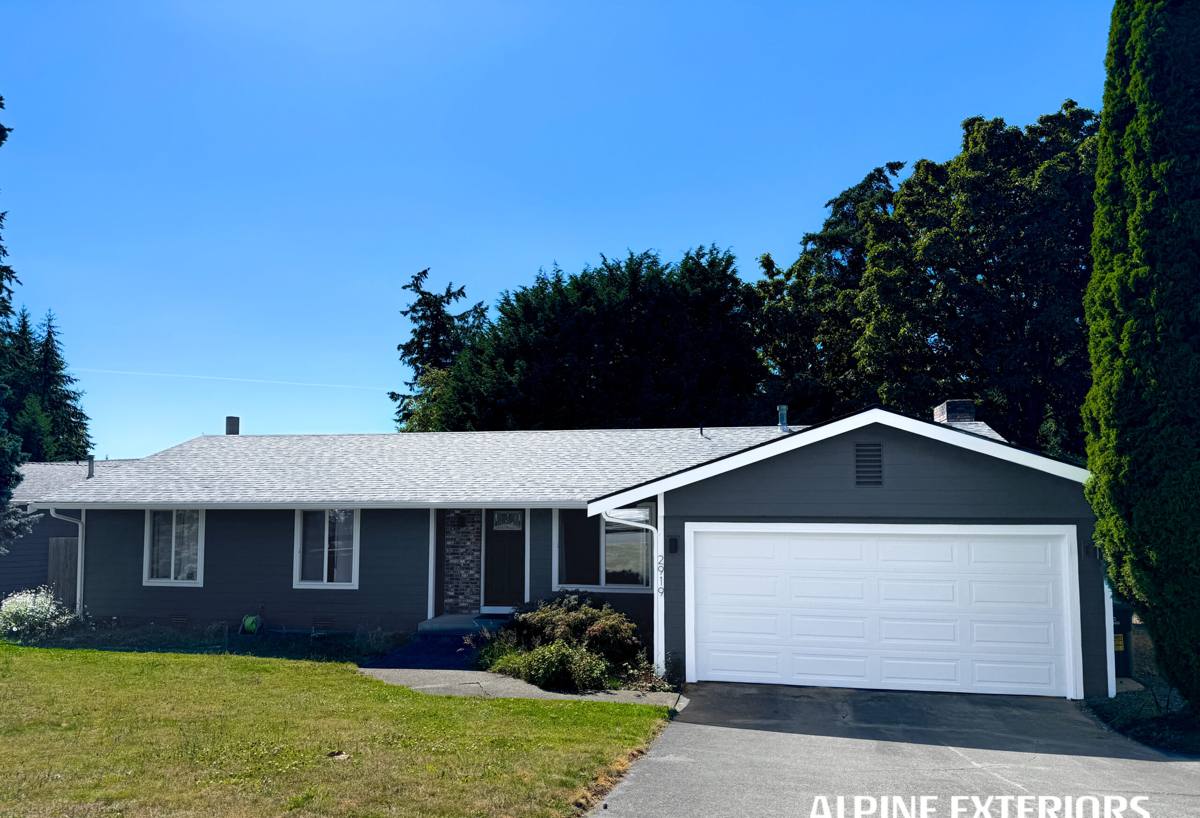
This page is about one job in one place: installing fiber cement siding correctly on homes in and around Everson, and why that combination — the right material, installed the right way, by a crew that already works this corner of the county — actually matters here.
Why Fiber Cement Fits This Climate
Fiber cement is cement, sand, and cellulose fiber pressed and cured into a rigid plank or panel. It doesn't absorb water the way wood does, it doesn't expand and contract with humidity the way vinyl does, and it doesn't feed the moss and mildew that thrive in this valley's damp air the way both of those materials can over time.
That matters more in Everson than it would somewhere dry, because the failure clock starts the day siding goes up and runs continuously — there's no long dry season here to let a marginal installation dry out and recover. A gap in the caulking, a missed flashing detail, or a fastener driven wrong doesn't get a break; it gets fed moisture on a near-constant basis.
What This Means in Practice
- Fiber cement doesn't rot, so a small moisture intrusion doesn't become structural wood damage behind the wall.
- It's dimensionally stable, so it doesn't buckle or gap as it cycles through wet and dry.
- It holds factory-applied finish far longer than field-painted wood, which matters when repainting means scaffolding a two-story wall in the rain.
- It's non-combustible — not a climate issue specifically, but a real advantage during Washington's increasingly active wildfire smoke seasons, when embers can travel farther than people expect.
What a Correct Installation Actually Involves
Fiber cement is only as good as the installation behind it. A lot of the siding problems we get called out to inspect in this area trace back to a rushed or undersized install, not a defective product. The material forgives very little when it's installed to a lower standard than it's engineered for.
The Details That Matter Most in a Wet Climate
- Drainage plane and rain screen gap — a proper weather-resistive barrier plus a ventilated gap behind the siding lets any moisture that does get past the cladding dry out instead of sitting against the sheathing.
- Flashing at every penetration — windows, doors, hose bibs, light fixtures, and deck ledgers all need step or head flashing detailed to shed water outward, not funnel it behind the panel.
- Correct fastener placement — face-nailing or blind-nailing at the manufacturer's specified spacing and distance from panel edges, using corrosion-resistant fasteners rated for the coastal-influenced air common across Whatcom County.
- Proper clearances — siding held up off decks, patios, and grade by the manufacturer's minimum gap so splash-back and standing snow don't wick moisture into the bottom edge.
- Factory-cut edges kept sealed or primed — any field cut needs to be sealed before installation, since a raw cut edge is the one part of the panel that isn't factory-protected.
None of this is exotic. It's just detail work that takes longer to do right, and it's the difference between siding that looks the same in fifteen years and siding that needs trim repairs in five.
Why We Only Install James Hardie
We install James Hardie fiber cement exclusively. We don't install LP SmartSide, vinyl, Cemplank, Allura, primed spruce, or cedar, and it's worth being straight about why.
Vinyl is inexpensive and low-maintenance in the short term, but it's a thin material that expands and contracts noticeably with temperature swings, can crack in a hard impact, and traps moisture behind it if the install isn't ventilated properly — a real concern in a climate this humid. LP SmartSide is an engineered wood product; it performs reasonably when kept dry and properly maintained, but wood-based siding is fundamentally more sensitive to sustained moisture exposure than fiber cement, and this valley doesn't offer much of a dry season to help it recover from a lapse in maintenance. Primed spruce and cedar are real wood — beautiful, but they need consistent repainting and sealing to hold up here, and that maintenance burden only grows as a house ages.
Other fiber cement brands like Cemplank and Allura are legitimate products, but we've standardized on James Hardie specifically for its ColorPlus factory finish (which holds color longer than field paint), its HZ5 product line engineered for wetter Pacific Northwest climates, and a transferable warranty structure we trust enough to put our own installation behind. Standardizing on one system also means our crews install it the same correct way on every job, instead of relearning different manufacturers' specs house to house.
How Our Process Works for Everson Homes
- On-site assessment — we look at your current siding, sheathing condition where accessible, trim, and drainage details before quoting anything.
- Tear-off and inspection — once the old siding is off, we check the sheathing and weather barrier for hidden moisture damage before closing anything back up.
- Weather barrier and rain screen install — this step gets skipped or shortcut more than any other in this industry, and it's the one that determines how the wall performs for the next twenty years.
- James Hardie installation — planks or panels installed to manufacturer spec, with flashing, fastening, and clearances handled as described above.
- Trim, caulking, and final detail — the finish work that determines how clean the job looks and how well it sheds water at every joint.
- Walkthrough — we go over the finished job with you before we consider it done.
Comparing Siding Materials for This Climate
| Material | Moisture Behavior | Moss/Mildew Resistance | Maintenance | Typical Lifespan |
|---|---|---|---|---|
| James Hardie Fiber Cement | Doesn't absorb or rot | Strong, factory finish resists growth | Occasional wash | Decades with correct install |
| Vinyl | Can trap moisture behind panel | Moderate, prone to mildew in gaps | Low, but limited repair options | Variable, shorter in impact/heat events |
| LP SmartSide / Engineered Wood | Sensitive to sustained moisture | Requires consistent sealing | Regular inspection and upkeep | Depends heavily on maintenance |
| Cedar / Primed Spruce | Absorbs moisture readily | Needs treatment to resist growth | Frequent repainting/sealing | Shorter without diligent care |
What to Watch For If You're Not Ready to Replace Yet
Not every home in Everson needs new siding this year. But given how this climate accelerates small problems, it's worth knowing what to look for between now and whenever you do replace it.
- Persistent green or black staining that comes back within weeks of washing it off.
- Paint that's peeling or bubbling rather than just fading evenly.
- Soft spots when you press on trim boards, especially near the bottom edge or around window sills.
- Visible gaps or separation at seams and corners.
- Panels that feel warped, bowed, or no longer sit flush against the wall.
- A musty smell near exterior walls inside the home, which can point to moisture already past the cladding.
Any of these is worth a look before it turns into a bigger repair.
Cost Factors for a Fiber Cement Project
Every home is different, but the same handful of factors drive most of the variation in price from one Everson-area home to the next.
| Factor | Why It Affects Cost |
|---|---|
| Home size and wall area | More square footage means more material and labor hours. |
| Existing siding removal | Tear-off, disposal, and sheathing inspection add time before install even starts. |
| Siding profile and trim complexity | Detailed trim, multiple accent profiles, or complex rooflines take more precision per foot. |
| Moisture or rot repair | Damaged sheathing found during tear-off needs to be repaired before new siding goes on. |
| Height and access | Multi-story walls or tight lot lines require more scaffolding and setup time. |
We provide a written estimate that breaks these out so you can see what you're actually paying for, rather than a single lump number.
Why a Crew That Already Works Everson Is Worth Choosing
A contractor who works Lynden, Everson, and the surrounding Whatcom County towns regularly has already seen how this specific climate treats siding over time — which flashing details actually hold up, which corners of a house take the worst weather exposure, and how a rain screen performs after a few real wet seasons rather than in a manufacturer's brochure. That's different from general contracting experience in a drier region applied to a wet one after the fact.
It also means someone is local if a warranty question or a trim detail needs a second look years down the road, instead of chasing down a crew that did one job in the area and moved on.
If you're weighing a siding replacement on a home in Everson or anywhere around Lynden, we're happy to take a look and put together a straightforward, no-pressure estimate — there's a form below whenever you're ready.