 Lynden Siding
 Windows Built for Deming's Particular Climate
Deming sits in the Nooksack River valley east of Lynden, tucked closer to the foothills than the open farmland most people picture when they think of Whatcom County. That location changes what a window has to deal with day to day. Homes here get more tree cover, more shade, and more standing moisture on siding and trim than houses out on the flats. Add in the driving rain that blows through the valley much of the year and the long moss season that Whatcom County is known for, and you have a climate that is hard on window frames, sills, and the seals around them.
A window that works fine in a drier inland climate can fail early here — not because the product itself is bad, but because it was never designed for constant damp, low sun exposure, and organic growth working into every gap it can find. Custom windows for a Deming home means matching frame material, glazing, and installation detail to those specific conditions, not just picking whatever is cheapest at the yard.
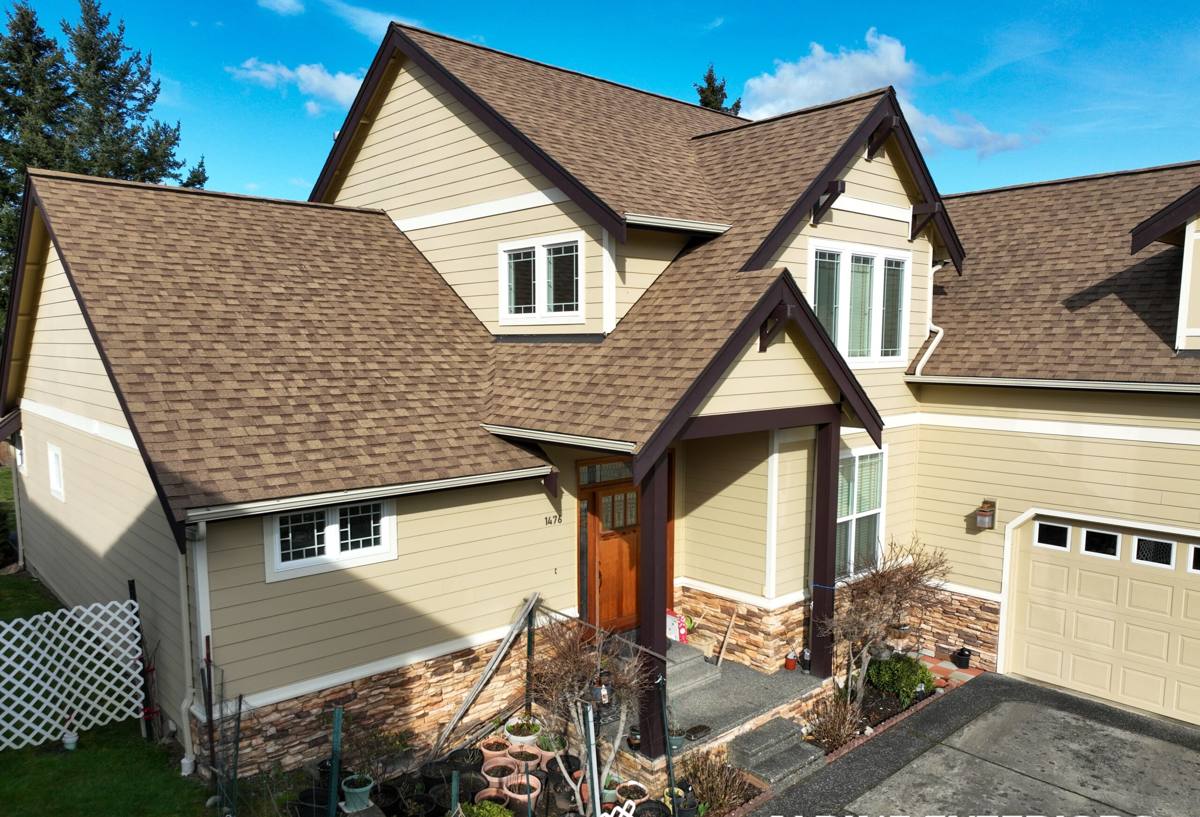
Why Shade and Moisture Hit Deming Homes Harder
Coastal parts of Whatcom County deal with salt air working into hardware and finishes over time. Deming is far enough inland that salt exposure isn't the main concern, but the tradeoff is heavier tree canopy and less direct sun to dry things out after a storm. That combination — driving rain plus shade — means window sills, bottom corners, and exterior trim stay wet longer after every system that comes through.
Moss doesn't care whether it's growing on a roof or in the corner of a window frame. Wherever moisture sits and sunlight is scarce, moss and algae get a foothold. On windows specifically, that shows up as:
- Dark staining or green growth at the bottom corners of the sash and frame
- Sills that stay damp for days after rain instead of drying between storms
- Wood trim around older windows going soft before the glass or hardware ever fails
- Condensation build-up on the interior in winter, which points to a failing seal, not just cold weather
None of that is unusual for this part of the county. It's just what the climate does to a window that wasn't detailed to shed water fast and dry out between rain events.
What a Correct Custom Window Installation Involves
"Custom" doesn't just mean a non-standard size or shape, though that's part of it — a lot of older Deming-area homes have openings that don't match modern stock sizing, especially additions or homes that have had windows swapped once before. Custom fabrication means the window is built to the actual opening instead of the opening being reframed to fit a stock unit.
But the bigger factor in how a window performs here is the installation detail around it, not just the unit itself. A correct install includes:
Flashing and drainage
Every window needs a path for water to get out if it ever gets behind the exterior cladding — and in a climate with this much driving rain, it eventually will. That means proper sill pan flashing, head flashing that laps correctly with the housewrap or building paper above it, and side flashing that ties into the drainage plane rather than just caulk holding things together.
Air and moisture sealing
The gap between the window frame and the rough opening has to be sealed with the right materials in the right order — backer rod and sealant on the exterior, low-expansion foam or batt insulation in the cavity, and an interior air seal. Get the order wrong and you can trap moisture inside the wall instead of keeping it out.
Sill pitch
A sill that's dead level holds water. A correct install pitches the sill slightly outward so rain sheets off instead of pooling — a small detail that matters a lot when a house sees this much rainfall over a year.
Glazing and frame selection
In a shaded, damp lot, low-maintenance frame materials and glass with the right coatings for a mostly overcast climate outperform choices better suited to sunnier, drier regions.
Frame Material Comparison for a Deming-Area Home
There's no single "best" frame material for every house — it depends on the home's exposure, the amount of shade on that elevation, and what the homeowner wants to maintain over time. Here's how the common options stack up for this climate specifically:
| Frame Material | Moisture Performance | Maintenance | Typical Lifespan |
|---|---|---|---|
| Vinyl | Doesn't absorb water or rot; seams and welds need to be well-made | Low — occasional cleaning, no painting | 20–30 years |
| Fiberglass | Very stable in wet, temperature-swinging conditions; won't warp or rot | Low — durable finish, minimal upkeep | 30–40+ years |
| Wood (clad exterior) | Good if the cladding and seals stay intact; vulnerable where cladding is compromised | Higher — interior wood finish, watch for exterior seal failure | 20–30 years with upkeep |
| Aluminum | Conducts cold and can condensate heavily in a damp, low-light climate | Low, but thermal performance is the tradeoff | 25–35 years |
For most Deming homes dealing with shade and prolonged dampness, vinyl and fiberglass tend to be the more forgiving choices — they don't give moisture a foothold the way exposed or improperly sealed wood can. That said, plenty of homes in this area have wood or wood-clad windows that are performing fine, because the cladding and flashing were done right in the first place. The material matters less than whether the install detail respects what this climate actually does to a house.
Our Process for a Deming Window Job
- On-site assessment. We look at each opening individually — exposure, shade, drainage, and the condition of the existing sill, trim, and framing underneath. This is also when we check for hidden moisture damage that isn't visible from inside the house.
- Measuring and custom fabrication. Openings get measured to the actual structure, not assumed to match stock sizing. Anything out of square or out of level gets noted before ordering.
- Removal and inspection. Old windows come out carefully so we can check the rough opening, sill, and sheathing for rot or prior water intrusion before anything new goes in. Any damaged framing gets addressed before the new window is set — installing over a compromised opening just hides the problem.
- Flashing and installation. Sill pan, flashing, air sealing, and insulation are installed in the correct sequence, with sill pitch set to shed water outward.
- Interior and exterior finish. Trim, sealant lines, and hardware are finished and tested for smooth operation and a tight seal.
- Walkthrough. We go over how the windows operate, what maintenance (if any) they'll need, and answer any questions before we consider the job done.
Signs a Deming Home's Windows Need Attention
Because moisture problems around windows build slowly in this climate, a lot of homeowners don't notice until there's visible damage. Some signs worth checking for:
- Moss, algae, or dark staining collecting at the bottom corners of the frame or sill
- Wood trim that feels soft or spongy when pressed, especially at the bottom corners
- Windows that are noticeably harder to open and close than they used to be
- Visible daylight or drafts around the frame when the window is closed
- Fogging or moisture between panes of double-glazed units, meaning the seal has failed
- Peeling paint or bubbling on interior trim near a window, which often points to moisture getting into the wall
- Noticeably higher heating bills without another explanation
Any one of these on its own isn't necessarily an emergency, but a few of them together usually means it's worth having someone take a real look before the underlying framing gets involved.
Why a Crew That Already Works This Area Matters
Whatcom County covers a lot of different microclimates — the coastline, the flat farmland around Lynden, and river valley communities like Deming with heavier tree cover and less sun. A crew that works across all of it knows that a detail that holds up fine on an open, sunny lot can fail within a few years on a shaded Deming property, and prices and specs jobs accordingly rather than treating every house the same.
That local familiarity also means knowing what kind of moisture and drainage issues tend to show up in older homes in this specific area, what permitting looks like in Whatcom County, and how to schedule around a rain-heavy install season without leaving a house exposed. It's the difference between a crew that's installed a handful of windows here and one that treats this climate as the baseline, not the exception.
Maintenance That Actually Matters Here
Custom windows installed correctly for this climate don't need much upkeep, but a little attention goes a long way in a long moss season:
- Rinse sills and frame corners periodically, especially on shaded elevations, to keep moss and algae from establishing
- Keep gutters and downspouts clear so water isn't sheeting down past windows during heavy rain
- Trim back vegetation that's shading a window and keeping it damp longer than it needs to be
- Check exterior caulk lines once a year for cracking or separation, and have any gaps resealed before they let water behind the trim
None of this replaces a correct install, but it does extend the life of one — especially in a valley climate where rain and shade don't let up for much of the year.
Getting an Honest Look at Your Windows
If your Deming-area home has windows that are fogging, sticking, staining, or just costing more to heat than they should, it's worth having someone look at the actual cause before deciding what to do. We offer a free, no-pressure estimate — come take a look, tell you honestly what we see, and lay out the options without any obligation. Use the form below to get started.