 Lynden Siding
 Storm Damage Roof Repair for Deming Homes
Deming sits in a stretch of Whatcom County where weather doesn't ease up gradually — it swings. Wind funnels down out of the foothills, rain comes in sideways off Pacific systems moving through the Puget Sound and Strait of Georgia corridor, and roofs here spend a good chunk of the year wet. That combination is hard on a roof in ways that a drier climate never tests. A shingle that would hold up fine in a mild, dry region can start failing here after a single bad wind event, simply because it was already softened by months of moisture and moss growth.
Storm damage roof repair is its own trade skill, separate from routine roof maintenance or a full re-roof. It means finding what a specific weather event did to a specific roof, figuring out whether that damage is cosmetic or structural, and fixing it in a way that holds through the next storm — not just patching what's visible from the ground. For homeowners in Deming, that work needs to account for local wind exposure, the moss and moisture load typical of this part of Whatcom County, and the fact that a repair done wrong now often turns into a much bigger problem by next winter.
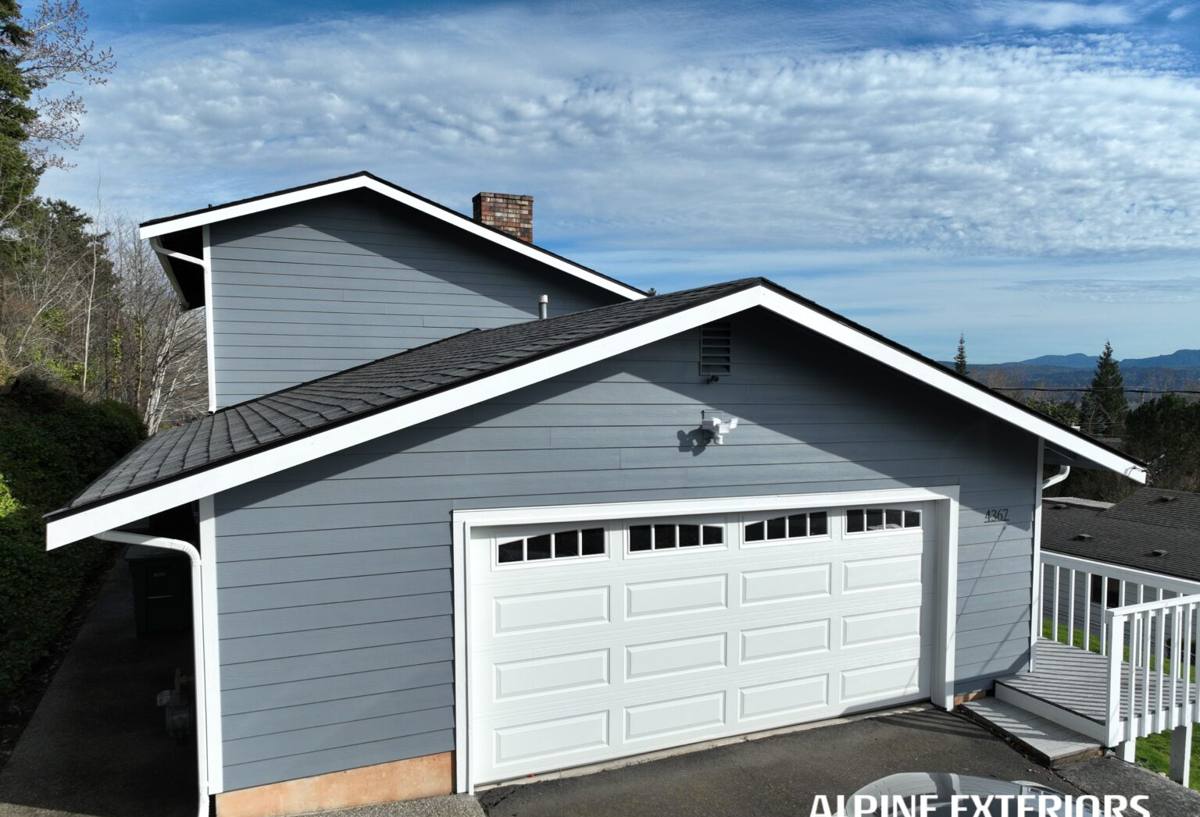
What Storm Damage Actually Looks Like Here
Not all storm damage is obvious. Some of it announces itself — a section of shingles peeled back, a tree limb through the decking, a gutter torn off the fascia. But a lot of the damage we find on Whatcom County roofs after a storm is quieter than that, and it's the quiet damage that causes the most expensive problems if it sits unaddressed.
Wind Damage
Wind doesn't need to be extreme to do damage — it needs the right angle and enough gusting to work shingle tabs loose. Once a tab lifts and the seal breaks, that shingle is now a lever for the next gust, and the damage spreads outward from that point. On older roofs, or roofs where the original seal never fully bonded, this can happen in winds that wouldn't concern anyone.
Wind-Driven Rain
Rain that falls straight down mostly runs off. Rain pushed sideways by wind finds every gap — under shingle edges, around flashing, into vents and pipe boots that have started to crack. This is usually how storm damage turns into interior water damage: not a hole in the roof, but rain forced uphill under materials that were never designed to shed water moving in that direction.
Impact and Debris Damage
Fir and cedar limbs come down in windstorms throughout this region, and even a glancing hit can crack shingles, dent metal flashing, or knock granules loose from asphalt shingles in a way that isn't visible unless someone gets up there and looks closely.
Moss-Weakened Roofing
This one is specific to the Pacific Northwest, and it matters more in a storm-repair context than most homeowners realize. A roof with heavy moss growth holds moisture against the shingle surface for weeks at a time. That constant dampness softens the mat underneath the granules, so shingles that look intact are already structurally weaker than they should be — meaning the same storm that a clean roof shrugs off can tear loose shingles on a moss-covered one.
Why a Rushed Fix Costs More Later
After a storm, the instinct is to get something — anything — covering the damaged spot as fast as possible. That instinct is right for a tarp over an active leak. It's wrong as a long-term plan. A repair that only addresses the visible damage, without checking the decking underneath, the flashing around the affected area, and the condition of the surrounding shingles, tends to fail again within a season or two.
We see this most often with valley and flashing repairs done in a hurry: new shingles go down over old flashing that was already compromised, or a patch gets tucked under existing courses without re-establishing the proper water-shedding lap. It looks finished. It isn't. The next heavy rain finds the same path in, and now there's hidden water damage on top of the original storm damage.
Our Storm Damage Repair Process
1. Full Roof Inspection, Not Just the Damaged Spot
We start by walking the whole roof, not just the area the homeowner points to. Storms rarely damage only one spot — wind stresses the whole roof plane, and it's common to find secondary damage near ridges, valleys, and penetrations that wasn't visible from the ground.
2. Documentation
We photograph and note the damage clearly, dated and specific to the storm event where possible. This matters if you're filing an insurance claim — adjusters respond better to clear, organized documentation than to a verbal description after the fact.
3. A Repair Plan That Names the Actual Cause
We tell you what failed and why — a broken seal, cracked flashing, a soft spot in the decking — rather than a vague "storm damage" label. That distinction affects both the repair approach and how the damage should be represented on an insurance claim.
4. The Repair Itself
Damaged shingles are removed back to sound material, not just at the exact point of failure. Flashing is checked and replaced where it's cracked, rusted, or no longer sealing correctly — reusing failing flashing under new shingles is one of the most common shortcuts we see, and one of the most common causes of a repeat leak. Underlayment gets inspected wherever shingles are pulled, since a torn or saturated underlayment layer is often the real reason water made it to the decking in the first place.
5. Cleanup and Final Check
We clear debris, check gutters and downspouts for storm debris that can back water up under the roof edge, and do a final walk to confirm the repair ties in cleanly with the surrounding roof.
Repair, or Is It Time to Replace?
Not every storm-damaged roof needs full replacement, and not every roof that looks fine after a storm should be left alone. The right call depends on the roof's age, its condition before the storm, and how widespread the damage actually is once we're up there looking at it.
| Factor | Repair Usually Makes Sense | Replacement Usually Makes Sense |
|---|---|---|
| Roof age | Under 12-15 years, in otherwise good shape | Nearing or past its expected lifespan |
| Extent of damage | Localized to one area or slope | Spread across multiple slopes or the whole roof |
| Moss and granule condition | Light moss, granules still intact elsewhere | Heavy moss history, widespread granule loss |
| Decking condition | Solid decking found during repair | Soft or delaminated decking in multiple spots |
| Prior repair history | First significant repair on this roof | Repeated patch jobs already on record |
We'll give you a straight answer either way. A roof that only needs a repair doesn't need a sales pitch for a full replacement, and we'd rather keep your trust for the next 15 years than pad one job.
Storm Damage and Insurance Claims
Most homeowners' policies cover storm damage to a roof, but the claim process rewards preparation. We can document damage in a way that supports your claim, but we don't handle the claim itself or promise a specific payout — that's between you and your insurer, and we'd rather be honest about that boundary than make claims we can't back up. What we can do is make sure the adjuster is looking at accurate information: what failed, when it likely happened, and what an honest repair actually requires.
Reducing Repeat Storm Damage
Whatcom County's wet season is long, and a roof that's already stressed from moss or age will keep taking storm damage year after year unless the underlying conditions get addressed. A few things make the biggest difference for homes in the Deming area:
- Keeping moss growth under control, since a moss-free roof sheds wind-driven rain far better than one holding a wet mat of growth
- Clearing gutters and valleys before the fall storm season, so water has somewhere to go instead of backing up under roof edges
- Re-sealing or replacing pipe boots and flashing on a schedule, since these fail years before shingles typically do
- Trimming back limbs that overhang the roof, reducing both impact risk and the shade that keeps moss thriving
Signs You Should Have Your Roof Checked After a Storm
- Shingles you can see are lifted, cracked, or missing from the ground
- Granules collecting in gutters or at downspout outlets
- New water stains on ceilings or upper walls after a windy, wet stretch
- Visible daylight or gaps around vent pipes, chimneys, or skylights
- A neighbor's roof visibly damaged in the same storm — wind damage rarely stops at a property line
- Debris or limb strikes on the roof surface, even if nothing looks obviously broken
Why It Matters That We Already Work in Deming
A crew that already works this part of Whatcom County knows what a normal Deming roof looks like before a storm hits it — how much moss buildup is typical for the tree cover here, how local wind patterns tend to stress a roof from a particular direction, and which repair shortcuts don't hold up through a full wet season. That local familiarity means a faster, more accurate diagnosis instead of guesswork, and a repair built for the weather this roof will actually see again.
If a recent storm has left your Deming home with roof damage — visible or just suspected — we're happy to take a look. Reach out for a free, no-pressure estimate using the form below, and we'll give you a straightforward read on what's actually going on up there.