 Lynden Siding
 Composite Decking Built for Deming's Wet, Wooded Conditions
Deming sits along the Nooksack River corridor in Whatcom County, tucked under heavier tree cover than you'll find on more open lots closer to Lynden proper. That combination — filtered sun, river humidity, and long stretches of overcast, wet weather — is exactly the environment where a deck either performs for twenty-plus years or turns into a maintenance headache within five. Composite decking has become the default choice for homeowners in this area for good reason, but "composite" isn't one product. The board profile, the cap system, the substructure underneath it, and the way it's fastened all determine whether a deck sheds water and resists moss or slowly traps moisture against itself.
This page covers what a Deming composite deck actually needs to hold up, what a correct installation looks like, and how our process works from the first walkthrough to the final board.
Why the Local Climate Changes the Decking Conversation
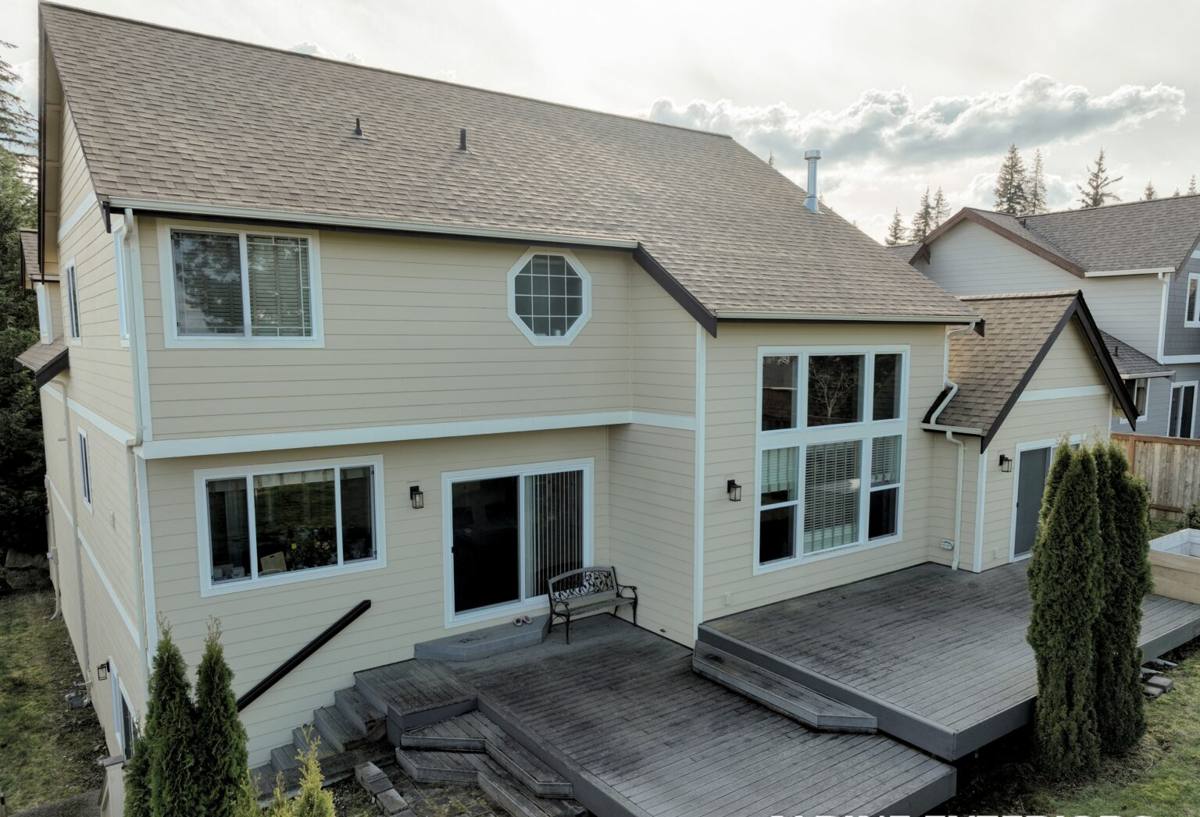
Whatcom County's climate is shaped by moisture-laden marine air moving in off the Puget Sound and Strait of Georgia, and Deming's setting adds its own layer on top of that: shaded, tree-lined lots near the river hold humidity longer than open ground, and driving rain off the foothills tends to hit decks at an angle rather than falling straight down. The result is a long moss season — often eight or nine months of the year — where any surface that stays damp and shaded will grow something green on it eventually.
Moss, Algae, and Shaded Lots
Moss and algae aren't a sign of a bad deck. They're a sign of a deck that isn't drying out between rain events. On a poorly ventilated or poorly sloped deck, that green film builds a slick surface that's genuinely dangerous on stairs and landings, and it holds moisture against the board surface far longer than open air would. The fix isn't a different cleaning product — it's getting the airflow, drainage, and board spacing right at the time of installation, so the deck has a real chance to dry between storms instead of staying damp for days.
Capped vs. Uncapped Composite
Most composite boards on the market today are either fully capped (a polymer shell wraps the wood-plastic core on all sides), capped on three sides, or left uncapped with the wood fiber exposed at the surface. In a climate like Deming's, that distinction matters more than the color or the grain pattern. Uncapped composite absorbs water at the surface and is far more prone to mold and staining in constant shade. Fully capped boards resist moisture penetration and hold up better where a lot doesn't get much direct sun. We steer clients toward fully capped products for this reason — not brand loyalty, just a better match for local conditions.
What a Correctly Installed Composite Deck Requires
Composite boards themselves are low-maintenance, but the deck as a system is only as good as what's underneath and how it's put together. Most composite deck problems we get called out to fix in this area trace back to the substructure, not the boards.
Substructure and Ventilation
Composite decking is heavier than wood and behaves differently with temperature and moisture, so joist spacing, blocking, and beam sizing need to follow the manufacturer's engineering specs for that specific product — not generic lumber-framing habits. Just as important is clearance underneath: a deck built low to grade with poor airflow beneath it will trap humidity year-round, which speeds up moss growth on the boards above and can lead to rot in the framing below, even when the framing itself is treated or composite.
Fastening and Board Spacing
Hidden fastener systems are standard on most composite decks now, and they matter for more than looks — surface screws create entry points where water sits and stains the cap. Gapping between boards has to account for composite's expansion and contraction with temperature swings, and that gap also does real work draining water off the deck surface quickly instead of letting it pool. Too tight, and you get cupping or buckling over a wet winter. Too loose, and you get a sloppy-looking deck that catches debris.
Flashing Where the Deck Meets the House
The ledger board connection — where the deck attaches to the house — is the single most common failure point on any deck in this climate, composite or wood. Proper flashing keeps driving rain from working its way behind the siding and into the wall assembly. This is a place where cutting corners doesn't show up as a problem for a year or two, then shows up as a much bigger repair than the deck itself.
Our Process, Start to Finish
- On-site evaluation. We look at sun exposure, tree cover, grade, drainage path, and how the deck will tie into the house before we talk products.
- Material selection. We walk through board and rail options based on your budget and how shaded or exposed the deck location actually is.
- Substructure build or assessment. New framing is engineered to the decking manufacturer's specs; existing framing on a resurfacing job gets inspected before any new boards go down.
- Flashing and waterproofing at the ledger. This step happens before a single deck board is installed, not after.
- Installation. Hidden fasteners, correct board gapping, and attention to drainage slope across the whole surface.
- Railings, stairs, and trim. Fascia and picture-framing details finished to match the field boards.
- Final walkthrough. We go over basic care with you before we consider the job done.
Composite vs. Other Decking Materials
Homeowners in Deming often ask us to compare composite against pressure-treated wood and cellular PVC before deciding. Here's an honest breakdown based on how each performs in this specific climate, not a manufacturer's marketing sheet.
| Material | Moss/moisture resistance | Maintenance | Typical lifespan here |
|---|---|---|---|
| Pressure-treated wood | Absorbs moisture, needs regular sealing to resist moss and rot | Annual cleaning, periodic re-staining/sealing | 10-15 years before major repair or replacement |
| Capped composite | Sheds water at the surface, resists staining in shade | Occasional wash-down, no sealing or staining | 25-30 years, often with a manufacturer warranty |
| Cellular PVC | Fully waterproof surface, will not absorb moisture | Similar low-maintenance profile to composite | 25-30+ years, generally the highest upfront cost |
What Drives the Cost of a Composite Deck
Every project is different, but the same handful of factors move the price up or down on most composite decking jobs we quote in the Deming and Lynden area.
| Factor | Why it affects cost |
|---|---|
| Deck size and shape | Square footage and the number of cuts, angles, or curves needed |
| Height above grade | Taller decks need more substructure, railing, and often stairs |
| Board tier and cap type | Fully capped, higher-grain boards cost more than base-tier composite |
| Substructure condition | Resurfacing existing framing costs less than building new from footings up |
| Railing style | Composite or metal rail systems vary widely in material cost |
| Site access and grade | Sloped or heavily treed lots common around Deming can add labor time |
We'll always give you a clear, itemized number before work starts — no vague allowances that turn into surprises partway through the job.
Living With a Composite Deck in a Moss-Prone Climate
A properly installed composite deck in this climate still needs some seasonal attention. It's far less demanding than wood, but "zero maintenance" is a marketing phrase, not reality.
- Sweep off leaves, needles, and debris regularly, especially under tree cover — trapped organic matter is what moss feeds on
- Rinse the deck surface a few times a year with plain water and a soft-bristle broom or brush
- Keep gutters and downspouts near the deck clear so water isn't dumping directly onto the surface
- Check that furniture and planters aren't sitting in one spot long enough to trap moisture underneath
- Clear leaf litter and debris from between boards where it can hold water against the edges
- Have the substructure checked every few years, even though the boards themselves don't need it as often
Why Local Experience Matters for This Job
Composite decking manufacturers publish installation specs, but those specs are written for a national market — they don't account for a specific lot's shade pattern, a river-corridor humidity level, or how driving rain actually hits a given house in Whatcom County. A crew that regularly works decks in Deming and the surrounding Lynden area has already seen how these boards behave through a full wet season here: where moss shows up first, which orientations need extra drainage attention, and how flashing details need to be handled against local siding types. That local pattern recognition is the difference between a deck that's built to a spec sheet and one that's actually built for this address.
Get a Free Estimate
If you're planning a new composite deck or replacing worn boards on an existing one, we're happy to come take a look and give you a straight, no-pressure estimate. Use the form below to get started, and we'll walk the site with you before recommending anything.