 Lynden Siding
 Roof Repair for Everson Homes: What the Climate Demands
Everson sits in a part of Whatcom County where roofs work harder than they do almost anywhere else in the state. The combination of salt-tinged marine air drifting in off the Sound, driving rain that comes in sideways during winter storms, and a moss season that can run eight or nine months a year means a roof here rarely fails from one dramatic event. It fails gradually, from small problems that get ignored until they're not small anymore. A roof repair done right in this area has to account for all three of those pressures at once, not just patch whatever is leaking today.
We're based in Lynden and work Everson regularly, which matters more than it might seem. A crew that only shows up once doesn't have a feel for how fast moss regrows on a north-facing slope here, or which flashing details tend to fail first when a storm rolls through with wind behind the rain. That local pattern recognition is a big part of what separates a repair that holds up from one that reopens in eighteen months.
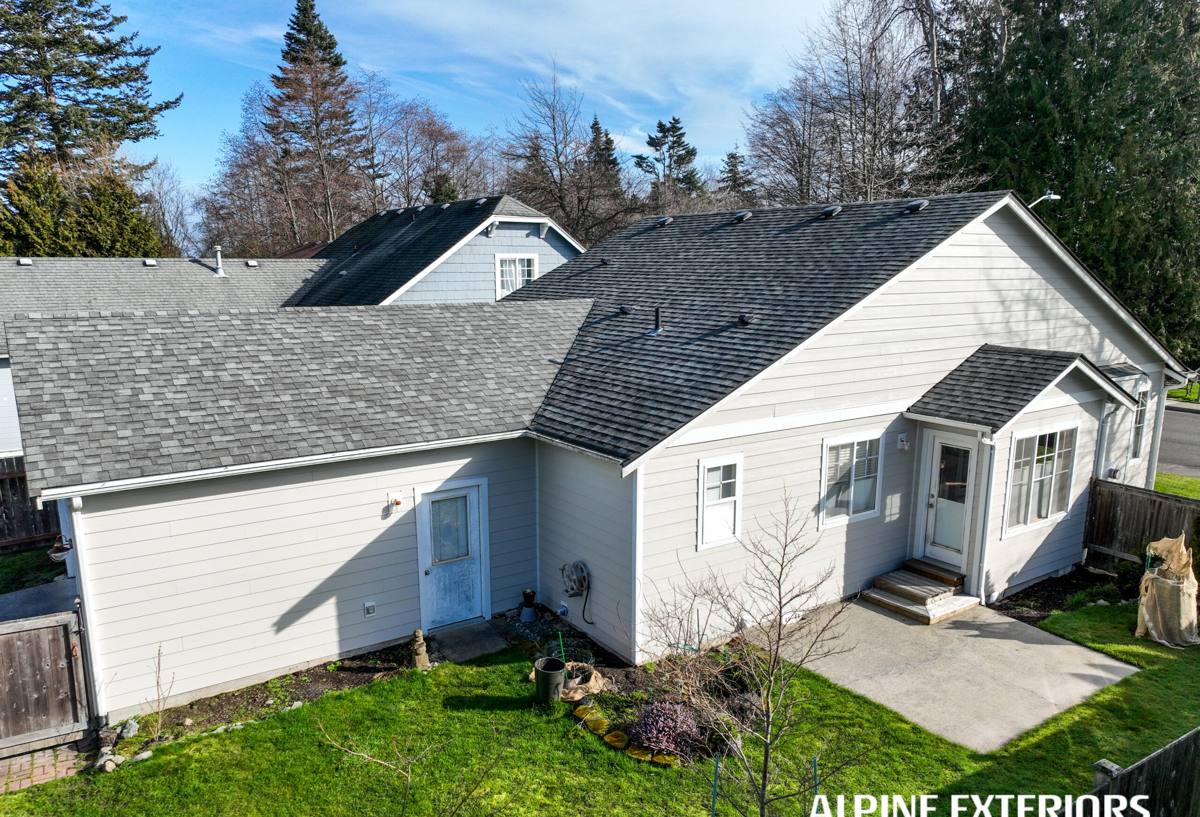
Common Roof Problems We See on Everson-Area Homes
Moss and Organic Growth
Moss is the slow killer of roofs in this part of Whatcom County. It doesn't just sit on the surface — its root structure works into the granule layer of asphalt shingles and lifts them at the edges, which is exactly where wind-driven rain finds its way in. Shaded, north-facing roof planes and anything near overhanging trees are the first places we check, because moss there is almost never cosmetic once it's established for more than a season or two.
Wind-Driven Rain and Flashing Failures
Most of the leaks we get called out for aren't from worn-out shingle fields — they're from flashing. Step flashing at wall intersections, valley metal, and the counterflashing around chimneys and vent pipes take the brunt of horizontal rain during a winter blow. These components are small, but they're doing most of the work of keeping water out, and they're often the first thing to fail on an otherwise decent roof.
Salt Air and Metal Corrosion
Metal roofing components — nails, flashing, gutter hardware, and any exposed fasteners — corrode faster in this region than they would further inland. Once a fastener starts rusting, it loses its grip on the shingle or panel it's holding down, which creates a slow, hard-to-spot failure point. This is one of the reasons material selection matters as much as workmanship when we're doing a repair here.
What a Correct Roof Repair Actually Involves
A proper repair starts with figuring out why the roof failed, not just where it's currently leaking. Water travels before it shows up as a stain on a ceiling, so the visible damage and the actual entry point are often several feet apart. Skipping that diagnostic step is how homeowners end up paying for the same repair twice.
- Confirm the actual entry point, not just the visible symptom
- Check the surrounding roofing material's condition, not just the failed section
- Inspect flashing, underlayment, and decking wherever they're exposed during the repair
- Match materials to what's already on the roof as closely as possible
- Address the underlying cause (moss, aging flashing, fastener corrosion) — not just the leak
- Verify the repair from inside the attic or crawlspace where accessible, not just from the roof surface
Any of those steps skipped is how a "fixed" leak comes back after the next storm. It's also why repair pricing can vary a lot between contractors — a quick patch and a proper diagnostic-driven repair look similar on a quote but are not the same job.
Our Roof Repair Process
- Inspection. We get on the roof (or use a camera where access is limited) and look at the whole system — shingles, flashing, vents, and any visible decking — not just the spot you called about.
- Honest assessment. We tell you what's actually wrong, what caused it, and whether a repair makes sense or whether you're better off putting that money toward a replacement timeline instead.
- Written estimate. You get a clear scope of work and price before anything happens, no surprise add-ons once we're on the roof.
- Repair work. We remove and replace only what needs it, matching materials and fastening methods appropriate for this climate.
- Cleanup and walkthrough. Debris and old materials are hauled off, and we show you what was done and why.
Repair vs. Replacement: How We Help You Decide
Not every roof problem calls for a full replacement, and not every leak should be treated as "just a patch." The right call depends on the roof's age, how widespread the damage is, and how many past repairs it's already had.
| Factor | Leans Toward Repair | Leans Toward Replacement |
|---|---|---|
| Roof age | Under 10-12 years | Nearing or past expected lifespan |
| Damage extent | Isolated to one area or flashing | Widespread across multiple slopes |
| Moss condition | Surface growth, recently treated | Long-term growth with granule loss |
| Repair history | First or second repair | Repeated repairs to the same areas |
| Underlying decking | Sound, dry | Soft spots or rot found during inspection |
We'll always give you the honest read on which side of that table your roof falls on. If a repair genuinely solves the problem, that's what we'll recommend — a roof doesn't need to be replaced just because it's convenient for us to sell a bigger job.
Materials and Methods We Use
For this climate, we favor corrosion-resistant fasteners and flashing over standard-grade hardware, even when it costs a little more up front. Given how much salt-laced moisture and driving rain this area sees, cutting corners on fastener quality shows up as a callback within a few years, and that's not a trade-off we're willing to make on our own name. Where moss has been an issue, we'll also talk through preventive options — zinc or copper strips, periodic cleaning — as part of the repair rather than leaving you to deal with a repeat problem next season.
We match shingle type, color, and exposure as closely as the market allows, but we'll always tell you upfront if an exact match isn't realistic, especially on an older roof where the original product may be discontinued.
Why a Lynden-Based Crew Working Everson Matters
Roofing crews that treat Everson as a one-off job site tend to bring generic assumptions with them — assumptions built for drier climates or different housing stock. Working this area regularly means we already know which roof designs and material choices hold up here and which ones create recurring problems. It also means we're not driving in from out of the county for a callback, which matters if a repair needs a follow-up visit during a wet stretch.
Being local also means accountability. We're not a crew that finishes a job and disappears — Whatcom County is where we live and work, and our reputation here depends on repairs that actually hold.
Before You Hire: A Quick Checklist
- Ask what caused the leak, not just what they plan to patch
- Get the scope and price in writing before work starts
- Ask whether they're inspecting the whole roof or just the reported problem area
- Confirm what materials they're using and why, especially fasteners and flashing
- Ask how they handle it if the repair doesn't fully resolve the leak
- Check that they carry proper licensing and insurance for roofing work in Washington
After the Repair: Keeping It That Way
A good repair buys you time, but a little maintenance buys you a lot more of it in this climate. Keeping gutters clear so water isn't backing up under the roof edge, knocking back moss growth before it re-establishes, and having the roof looked at after major windstorms are the three habits that do the most to protect the work we've done. None of it needs to be elaborate — it just needs to be consistent, given how much this region's weather works against a roof year-round.
If you're dealing with a leak, missing shingles, or a roof that's just due for an honest look, we're happy to come out and give you a straightforward assessment. There's no pressure and no cost to get our take — just a clear picture of what's going on and what it would take to fix it right. The estimate form below is the easiest way to get that started.