 Lynden Siding
 Roofing for Everson's Particular Mix of Weather
Everson sits in the part of Whatcom County where marine moisture off the coast, wind funneling down the Nooksack River valley, and long stretches of overcast, wet weather all show up on the same roof in the same year. Homes here don't fail because asphalt shingle roofing is a bad choice — they fail because the roof underneath the shingles wasn't built for this specific combination of driving rain, salt-laden air moving inland, and a moss season that can run eight months or longer. A correctly installed asphalt shingle roof handles all of that well. A roof installed without attention to local conditions starts showing problems in three to five years instead of lasting its full service life.
This page is about one job, done right, in this one area: asphalt shingle roofing on Everson homes, from what the climate demands to what our crew actually does on your roof.
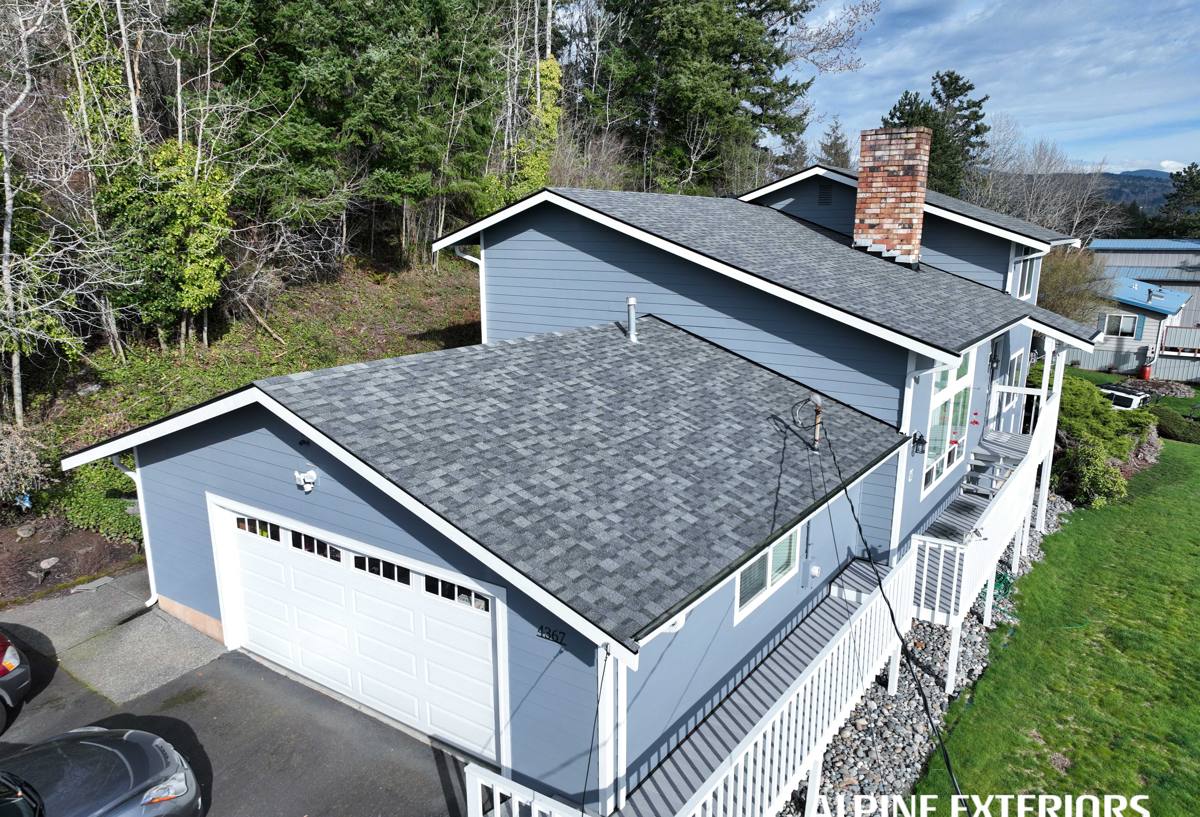
What Everson's Climate Actually Does to a Roof
Driving Rain and Wind-Driven Water
Whatcom County doesn't just get rain — it gets rain pushed sideways by wind coming off open fields and down the river corridor. That matters because a shingle roof's water resistance depends on overlap, sealant strips, and underlayment doing their job even when water is hitting the roof at an angle instead of falling straight down. Roofs with shortcuts in flashing or underlayment tend to leak first at valleys, chimneys, and low-slope transitions — exactly where wind-driven rain finds a way in.
Moss and Sustained Moisture
Everson's tree cover, humidity, and long stretches without direct sun create ideal conditions for moss and algae growth on north-facing and shaded roof slopes. Moss isn't just cosmetic — it holds moisture against the shingle surface, works its way under shingle tabs as it grows, and can lift edges enough to let water underneath. A roof that sheds moss quickly and dries out between rain events will always outlast one that stays damp.
Salt Air and Material Fatigue
Moisture carrying salt from Puget Sound doesn't stay at the shoreline — it moves inland with the weather, and over years it accelerates corrosion on exposed metal: nail heads, flashing, and vent stacks. Roofs built with standard-grade fasteners and thin flashing show rust and wear earlier here than they would in a dry inland climate. This is one of the reasons material choice matters as much as installation quality.
Signs an Everson Roof Needs Attention
Most roof problems in this climate show up gradually. Homeowners who catch them early spend far less than those who wait for an active leak.
- Moss or algae streaking on shaded slopes, especially north- and west-facing roof planes
- Granules collecting in gutters or at downspout outlets — a sign shingles are wearing down
- Curling, cupping, or lifted shingle edges, particularly along ridges and valleys
- Dark staining or soft spots on interior ceilings near exterior walls or chimneys
- Rusted nail heads or flashing visible from the ground or attic
- Daylight visible through the roof deck when viewed from inside the attic
- Shingles noticeably older than 15–20 years with no record of maintenance
What a Correct Asphalt Shingle Installation Involves
Tear-Off and Deck Inspection
We remove existing roofing down to the deck rather than layering over old shingles. This lets us inspect the sheathing for soft spots, water staining, or rot before anything new goes on — a step that's easy to skip and expensive to regret later. Any damaged decking gets replaced, not covered.
Underlayment and Water-Resistant Barrier
Synthetic underlayment goes down across the full roof, with self-adhering ice-and-water membrane at the eaves, valleys, and any roof-to-wall transitions — the spots most exposed to wind-driven rain and ice damming during cold snaps. This layer is what protects the deck if wind ever forces water under a shingle tab.
Flashing at Every Penetration
Chimneys, skylights, vent stacks, and sidewalls all need properly formed and lapped flashing, not caulk standing in for metal. Caulk fails; correctly lapped flashing sheds water by design and doesn't depend on a sealant staying intact for twenty years.
Shingle Installation and Fastening
Shingles are nailed according to the manufacturer's pattern and the local wind exposure — using the correct nail count, placement in the nailing strip, and fastener length for the deck thickness. Under-nailed or improperly placed fasteners are one of the most common causes of shingle blow-off in wind events, and it's invisible from the ground until it fails.
Ridge and Ventilation Details
Ridge vent, intake vents at the eaves, and balanced airflow through the attic all get addressed as part of the install, not treated as optional. More on why this matters below.
Choosing Shingles for This Climate
Not every asphalt shingle product is built the same way, and in a climate this wet, the differences show up faster than they would somewhere dry. The table below outlines the practical trade-offs we walk homeowners through.
| Shingle Type | Typical Lifespan | Best For | Trade-Off |
|---|---|---|---|
| 3-Tab Standard | 15–20 years | Budget-conscious re-roofs | Less wind resistance, wears faster under sustained moisture |
| Architectural / Dimensional | 25–30 years | Most Everson homes | Higher upfront cost, but stronger wind rating and better moss resistance with the right granule treatment |
| Algae-Resistant (Class A) | 25–30 years | Shaded lots, north-facing slopes | Copper- or zinc-infused granules resist moss and algae growth longer, though no shingle is permanently moss-proof |
| Impact-Rated | 25–30+ years | Homes wanting storm durability | Costs more; may qualify for insurance discounts in some cases — worth confirming with your carrier |
For most Everson homes, we recommend a dimensional shingle with algae-resistant granules. The added cost over standard 3-tab shingles is modest relative to the roof's total lifespan, and the moss resistance directly addresses the biggest maintenance headache in this climate. We install shingles from established manufacturers with strong wind and algae warranties — we're glad to walk through specific product lines and warranty terms during your estimate.
Roof Ventilation: The Detail Homeowners Rarely See
A shingle roof isn't just what's on top — how the attic breathes underneath it matters just as much in a climate like Whatcom County's. Without balanced intake and exhaust ventilation, warm, moist air from the living space gets trapped in the attic, condenses on the underside of the roof deck, and creates the kind of sustained dampness that rots sheathing and feeds moss growth from the inside out. Proper ventilation also keeps shingles from overheating in the rare stretch of summer sun, which extends their service life.
When we re-roof a home, we check existing intake and exhaust venting and correct imbalances as part of the job — not as a costly add-on discovered after the fact.
Our Process, Start to Finish
- Inspection and estimate — we assess your current roof, attic ventilation, and any problem areas, and give you a clear, written estimate with no pressure to decide on the spot.
- Material selection — we walk through shingle options and pricing based on your roof's exposure and your budget, not a one-size-fits-all recommendation.
- Scheduling around weather — asphalt shingles need dry conditions to install and seal correctly, so we plan installation windows around Whatcom County's weather patterns rather than rushing a job into the rain.
- Tear-off, deck repair, and installation — completed as outlined above, with daily site cleanup.
- Final walkthrough — we review the completed roof with you, including ventilation and any maintenance recommendations specific to your property's sun and shade exposure.
Maintenance That Actually Extends Roof Life Here
A well-installed roof still benefits from basic upkeep in this climate. The most useful things a homeowner can do:
- Keep gutters and downspouts clear so water isn't backing up under the eaves during heavy rain
- Trim back overhanging branches to reduce shade, debris buildup, and moss growth on the roof surface
- Have moss treated (not pressure-washed, which can strip granules) as soon as it appears rather than after it's established
- Schedule a roof check after major wind events to catch lifted or displaced shingles early
- Watch for granule buildup in gutters as an early sign of shingle wear
Why It Matters to Hire a Crew That Already Works in Everson
Roofing crews unfamiliar with Whatcom County's weather sometimes schedule around a generic forecast window and get caught by a wind-driven rain event mid-install, or they specify materials and ventilation details suited to a drier climate. A crew that already works Everson roofs regularly knows which slopes hold moss longest, how local wind patterns affect fastening and flashing decisions, and how to time a tear-off so your home isn't left exposed when the weather turns. That local pattern recognition is the difference between a roof that performs as designed and one that needs early repairs.
We also understand that a roof is one of the largest investments in your home, and Everson homeowners deserve a straightforward process — clear pricing, honest material recommendations, and a crew that shows up when scheduled.
Get a Free, No-Pressure Estimate
If your Everson home's roof is showing moss, wear, or age, or you're planning ahead for a replacement, we're happy to take a look and give you a straightforward, honest assessment. There's no obligation and no pressure — just a clear picture of your roof's condition and what it would take to get it right. Fill out the form below to schedule your free estimate.