 Lynden Siding
 Why Decks Wear Out Faster in the Nooksack Valley
Nooksack sits in an agricultural valley near the Nooksack River, close enough to the water and to Bellingham Bay's salt air that decks here take a different kind of beating than decks in drier parts of the state. It isn't one dramatic event that kills a deck in this part of Whatcom County — it's the slow accumulation of moisture cycles, fog off the river bottom, and a moss season that can stretch from October well into April. A deck that would last twenty-five years in eastern Washington often needs real structural attention here in fifteen, sometimes sooner if it was built without the right flashing or fasteners.
The driving rain typical of this area doesn't just fall straight down — wind off the valley pushes it sideways into ledger boards, under railing posts, and into any gap where end grain is exposed. Add a long stretch of shaded, damp mornings and you get moss and algae that hold moisture against the wood or composite surface far longer than a sunnier lot would. Salt-laden air moving up from the coast accelerates corrosion on fasteners, hardware, and hidden structural connectors, which is often the real reason an old deck fails — not the boards on top, but the metal holding it together underneath.
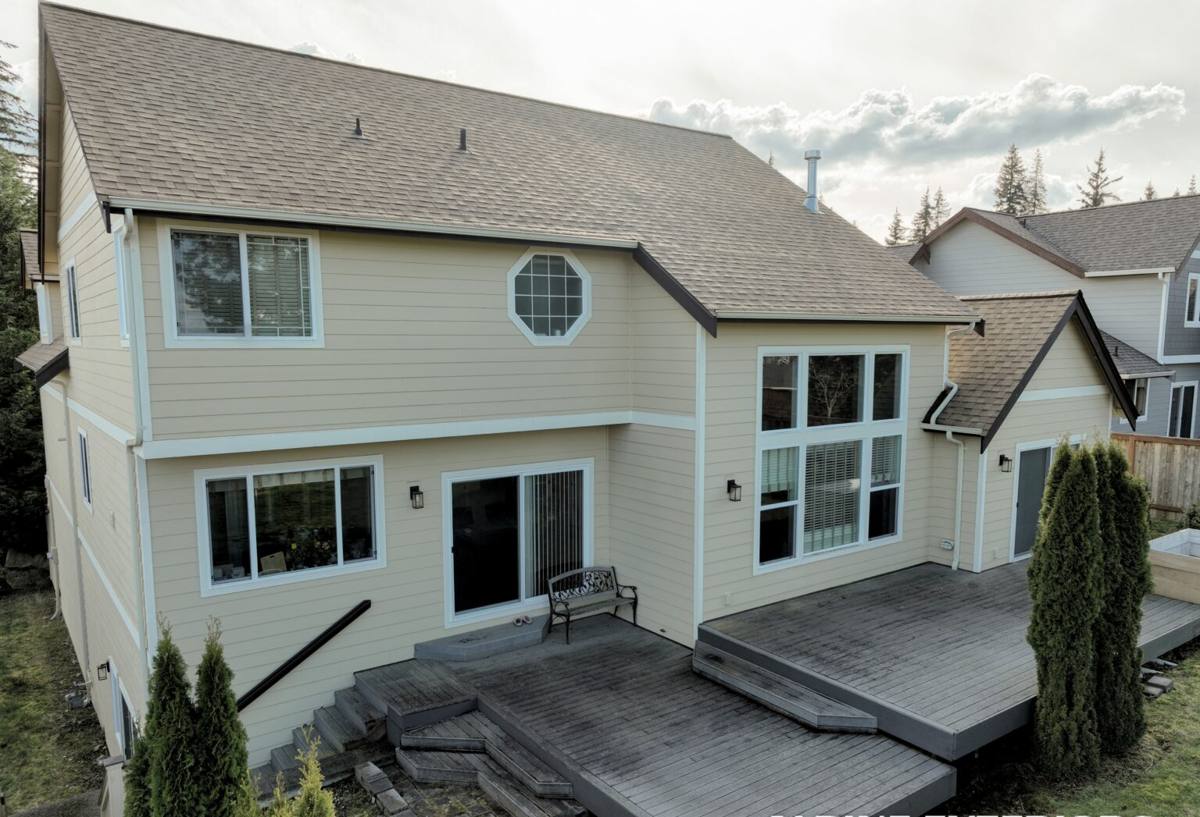
Signs Your Deck Needs Replacement, Not Another Repair
Homeowners in Nooksack often ask us to patch a board or two before they realize the underlying structure has already been compromised. A correct assessment looks past the surface. Some signs point clearly toward replacement rather than another round of spot repairs:
- Soft, spongy, or spring-back decking in multiple areas, not just one board
- Rust streaks or crumbling around joist hangers and structural screws
- A ledger board that's separated even slightly from the house, or shows water staining behind it
- Persistent moss or black staining that returns within weeks of cleaning
- Posts or footings that feel loose, or visible movement when the deck is loaded
- A deck built before current attachment and flashing standards were common practice
If only one or two of these show up in one localized spot, repair can make sense. When they show up in combination, or when the framing itself is compromised, replacement is the honest recommendation — patching over a failing structure just delays the cost and adds risk.
What a Correct Deck Replacement Involves Here
A deck built for this climate isn't just about picking nicer boards. The parts nobody sees after the job is done are what determine whether it lasts.
Ledger Attachment and Flashing
The ledger board — where the deck attaches to the house — is the single most common failure point in wet climates like this one. Water that gets behind an improperly flashed ledger has nowhere to go, and it will rot the rim joist and sheathing behind it before it ever shows on the surface. A correct replacement uses proper flashing detail, a water-resistant barrier behind the ledger, and structural fasteners rated for the load and for exterior exposure, not general-purpose deck screws.
Footings and Frost Depth
Whatcom County's frost depth and soil conditions matter for footing design, especially on decks that sit low to grade or near the river valley's heavier, wetter soils. Footings that are too shallow or undersized will shift over a few freeze-thaw cycles, which is why an older deck can develop a subtle lean or bounce even if the decking on top still looks fine.
Decking Material Choice
Material choice affects how much maintenance the deck demands going forward. We'll walk through the honest trade-offs for your budget and how much upkeep you want to take on, rather than pushing one product because it's what we happen to stock.
Comparing Decking Materials for This Climate
| Material | How It Handles Rain & Moss | Maintenance | Typical Lifespan Here |
|---|---|---|---|
| Pressure-treated wood | Needs sealing to shed water well; moss grows readily if shaded | Annual cleaning, periodic re-sealing | 10–15 years before major repair |
| Cedar | Naturally rot-resistant but still needs finish upkeep in this rainfall | Regular cleaning and refinishing | 15–20 years with upkeep |
| Capped composite | Sheds water well, resists moss staining better than wood | Occasional washing, no sealing/staining | 25+ years |
| Uncapped composite (older style) | Can absorb moisture at cut edges and stain over time | More frequent cleaning than capped composite | 15–20 years |
We steer most Nooksack homeowners toward capped composite or a well-maintained cedar, mainly because of how much less moss and moisture take hold on those surfaces compared to bare or uncapped wood. That's a maintenance and moisture-behavior call, not a knock on wood decking done right — plenty of well-built, well-maintained wood decks in this area hold up fine when the owner keeps up with cleaning and sealing.
Railings, Fasteners, and Hardware That Hold Up
Railings and structural hardware take the same coastal air exposure as the decking, and in our experience they fail quietly. A galvanized fastener that looks fine on day one can start corroding within a few years if it wasn't rated for the connection it's used in. On every replacement we use stainless or coated fasteners matched to the connector type, hot-dip galvanized structural hardware where it's load-bearing, and railing post attachments that are through-bolted rather than just screwed to the rim joist. It costs more up front than using whatever fastener is on the shelf, but it's the difference between a deck that needs its railings re-secured in five years and one that doesn't.
Permits and Whatcom County Requirements
Most deck replacements that involve new footings, structural framing changes, or railing height changes require a permit through Whatcom County, even when the footprint stays the same as the old deck. Inspectors here are specifically checking ledger attachment, flashing, footing depth, and guardrail spacing — the exact details that matter most for a deck's long-term performance in this climate. We handle the permit process as part of the job so it isn't left to the homeowner to navigate, and we build to pass inspection the first time, not to squeak by.
Our Deck Replacement Process
- On-site assessment — we check the ledger, framing, footings, and grading around the deck, not just the surface boards, to confirm replacement is the right call.
- Design and material selection — we go over decking, railing, and hardware options against your budget and how much maintenance you want to do.
- Permit filing — we submit the plans to Whatcom County and schedule required inspections.
- Demolition and disposal — the old deck comes out, including any compromised framing or footings, and debris is hauled off site.
- Structural rebuild — new or repaired footings, ledger flashing, framing, and structural connectors go in to current standards.
- Decking, railing, and finish work — surface material and railings are installed and fastened per the design.
- Final walkthrough and inspection — we confirm the work passes county inspection and walk the finished deck with you.
Keeping a New Deck Ahead of the Moss and Rain
Even a well-built deck needs some seasonal attention in this climate. A short list of habits goes a long way toward protecting the investment:
- Sweep leaves and debris off the deck regularly through fall, when they trap moisture against the surface
- Wash down shaded or north-facing areas at least once a year to knock back moss before it takes hold
- Check that gaps between boards stay clear so water drains through instead of pooling
- Inspect railing posts and stair connections once a year for movement or corrosion streaks
- Keep gutters and downspouts near the deck clear so runoff isn't dumping extra water onto it
- Re-seal wood decking on the manufacturer's recommended schedule, not just when it starts looking gray
What Deck Replacement Typically Costs
| Cost Factor | Why It Matters |
|---|---|
| Deck size and layout | Larger footprints and multiple levels increase framing, decking, and labor |
| Footing and framing condition | Decks needing new footings or full reframing cost more than those with sound substructure |
| Decking material | Composite runs higher upfront than pressure-treated wood but lowers long-term upkeep costs |
| Railing style and height | Code-required guardrail heights and material choice (wood, composite, metal, cable) shift cost |
| Site access | Decks in tight or elevated locations take longer to demo and rebuild safely |
Every deck is different, so we'd rather walk your site and give you real numbers than quote a range that doesn't mean much. What we can say honestly is that building it right the first time — proper flashing, fasteners, and footings — almost always costs less over the life of the deck than repeatedly repairing one that was built to a lower standard.
Why a Crew That Already Works Nooksack Matters
A contractor who mostly works drier climates or different soil conditions can build a deck that meets code on paper and still struggles here within a decade. Working regularly in Lynden and the surrounding Whatcom County communities, including Nooksack, means we've seen firsthand how the valley's rain, fog, and moss season affect different materials and details over time — not in a manual, but on decks we've inspected and repaired. That local track record shapes how we flash a ledger, size a footing, and choose fasteners, and it's why we build decks that are meant to handle this specific climate rather than a generic one.
If your deck is showing its age or you're planning a replacement, we're happy to take a look and give you a straightforward, no-pressure estimate — just fill out the form below.