 Lynden Siding
 Decks in Custer Face a Different Set of Problems Than Decks Inland
Custer sits close enough to saltwater that the air itself works against a deck year-round. Add Whatcom County's long wet season and the moss that comes with it, and you've got a combination that punishes decks built to a generic, one-size-fits-all spec. A deck that would hold up fine in a drier inland climate can start showing corrosion streaks, soft spots, and slick green growth within a couple of seasons out here if it wasn't built with this specific environment in mind.
This isn't a scare story — it's just what salt-influenced air and driving rain do to wood, metal, and even some composite products over time. The good news is that every one of these problems has a known, practical fix. It just has to be built in from the start, not patched in later.
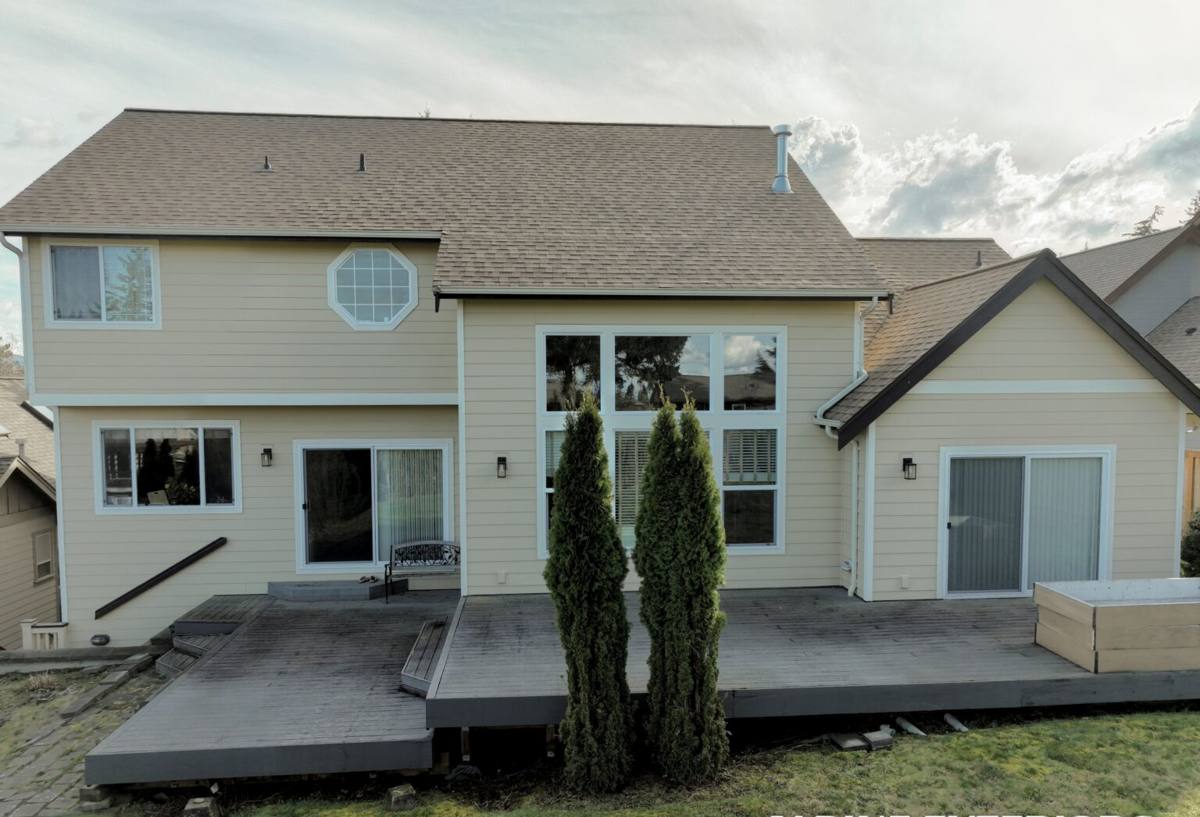
What Salt Air and Driving Rain Actually Do to a Deck
Two separate mechanisms are working against a Custer deck at the same time, and a correct build has to address both.
Salt-influenced corrosion
Airborne salt accelerates corrosion on any exposed metal — fasteners, joist hangers, post bases, railing brackets. Standard electro-galvanized hardware is not rated for this kind of exposure and will start rusting well before the wood around it fails. Once a fastener corrodes, it loses holding strength long before it looks obviously bad, which is part of what makes it dangerous rather than just cosmetic.
Driving rain and moss
Wind-driven rain doesn't just fall on a deck — it gets pushed sideways into ledger connections, under railing posts, and into any gap where two materials meet. Combined with our long stretch of overcast, damp weather, that moisture rarely gets a fast chance to dry out. Shaded areas and north-facing decks in particular grow moss on decking boards, stair treads, and railings, which is not just an appearance issue — wet moss on a walking surface is genuinely slick and a fall hazard.
Hardware and Fasteners: The Detail Most Decks Get Wrong
The single biggest difference between a deck that lasts and one that starts failing early in a coastal-influenced climate like Custer's is almost never the decking board on top — it's the hardware nobody sees once the build is finished. We build with stainless steel or heavy hot-dip galvanized fasteners, joist hangers, and structural connectors rated for corrosive exposure, not the standard-grade hardware that's fine 30 miles inland but undersized for this air. We also match fastener metal to the connector metal — mixing incompatible metals in a wet environment causes galvanic corrosion that eats through both.
- Stainless steel or heavy hot-dip galvanized structural screws and bolts throughout the frame
- Corrosion-rated joist hangers and post bases, not standard electro-galvanized
- Matched metals at every connection to avoid galvanic corrosion between dissimilar hardware
- Properly flashed ledger board attachment so wind-driven rain can't track behind it into the house framing
Choosing Decking Material for a Custer Property
There's no single "best" decking material — there's a best material for your budget, your maintenance appetite, and how exposed your particular site is to driving rain and shade-driven moss growth. We walk every option honestly rather than pushing whatever has the best margin.
| Material | How it handles our climate | Maintenance | General cost position |
|---|---|---|---|
| Pressure-treated wood | Solid structurally; surface needs regular sealing to resist moisture and moss | Annual cleaning, periodic sealing/staining | Lowest upfront cost |
| Cedar | Naturally moisture- and insect-resistant, but still needs surface protection against moss in shaded spots | Regular cleaning, periodic finish renewal | Mid-range |
| Composite decking | Doesn't absorb moisture the way wood does; still needs cleaning where moss can gain a foothold on the surface | Low — periodic washing, no sealing/staining | Higher upfront, lower long-term labor |
| PVC decking | Fully synthetic, very strong moisture and mold resistance | Lowest — occasional washing | Highest upfront |
Whichever material you choose, board spacing and airflow underneath the deck matter as much as the board itself. Tight spacing that doesn't let moisture evaporate is one of the most common reasons a deck grows moss faster than its neighbor.
Railings and Fasteners on Top of the Deck
Railing posts and their attachment points take the same driving-rain and salt exposure as everything else, often worse since they're the most exposed vertical surface on the structure. We use the same corrosion-rated hardware standard here as we do below deck, and we detail post bases so standing water has somewhere to go instead of sitting against the wood or metal.
Footings, Drainage, and What's Underneath the Deck
A deck is only as good as what's holding it up, and in our wet climate that starts below grade. Footings need to be set to the correct depth and properly poured so they don't shift with seasonal ground saturation. Post bases need to sit above grade and above where water pools after a heavy rain, not buried in wet soil or mulch where they'll stay damp for weeks at a time.
We also grade and, where needed, add simple drainage so water sheds away from footings and from the underside of the deck instead of collecting there. A deck built on a shaded, low-lying section of a Custer lot without attention to drainage is exactly the kind of structure that develops moss, soft framing, and a musty smell underneath within a few years — and it's almost entirely preventable at the framing stage.
Our Process, Start to Finish
- On-site walkthrough: we look at your yard's specific exposure — how much direct sun it gets, how sheltered or exposed it is from wind-driven rain, and how the ground drains.
- Honest material conversation: we lay out the real tradeoffs between wood, cedar, composite, and PVC for your specific site and budget — no upselling toward whichever product has the best margin.
- Design and layout: sizing, stairs, railings, and any attached structures like pergolas or benches are planned before anything is ordered.
- Permitting: we handle the permit process with the appropriate local building department so the structural work is inspected and documented correctly.
- Build: footings, framing, corrosion-rated hardware throughout, decking, and railings, built to hold up specifically to Whatcom County's wet, salt-influenced conditions.
- Final walkthrough: we go over the finished deck with you, including what maintenance it actually needs and on what schedule.
Permitting in Whatcom County
Most new deck construction — and many deck replacements involving structural framing — requires a permit and inspection through the county building department, since Custer is unincorporated Whatcom County rather than inside Lynden's city limits. We handle that process as part of the job rather than leaving it to the homeowner, and we build to the structural code requirements that apply here, including footing depth and railing height where applicable. Skipping this step is one of the more common corners cut by unpermitted or out-of-area crews, and it can become a real problem at resale.
Maintaining a Deck in Custer's Climate
No deck, regardless of material, is truly maintenance-free in this climate. The goal is keeping maintenance light and predictable instead of discovering a costly problem after it's already progressed.
- Sweep debris and standing leaf litter off the deck regularly, especially in shaded corners where moss gets started
- Clean moss and algae off boards and stairs with an appropriate deck cleaner before it builds up — a slick deck surface is a fall risk
- Check railing posts and stair connections yearly for looseness, which can signal hardware corrosion underneath
- Reseal or restain wood and cedar decking on the schedule the finish manufacturer recommends — don't wait until it's visibly gray and dry
- Keep gutters and downspouts near the deck clear so roof runoff isn't dumping extra water onto or under the structure
- Confirm underneath the deck stays reasonably dry and ventilated, not damp and enclosed
Why It Matters That We Already Work Custer
A crew that mostly builds decks in drier, inland climates will often default to standard hardware and standard detailing because that's what works where they usually build. That's not a knock on their skill — it's just a mismatch with this specific environment. Working regularly in and around Lynden and Custer means we already know which corners of a lot tend to hold moisture, which hardware actually holds up to this air over the long run, and what Whatcom County's inspectors expect to see. That local pattern recognition is the difference between a deck that needs real attention in five years and one that's still solid in fifteen.
If you're planning a new deck or replacing one that's showing its age, we're happy to come take a look and walk the site with you. There's no pressure and no cost to get our honest read on what your specific property needs — just fill out the form below and we'll set up a time.