 Lynden Siding
 Building a Deck That Actually Holds Up in Bellingham
Bellingham sits where marine air off Bellingham Bay, frequent driving rain, and heavily wooded lots all combine to work against outdoor wood structures. A deck built the same way you'd build one in a dry inland climate will show problems here years sooner — soft framing, rusted hardware, slick green boards, or a ledger connection quietly rotting behind the siding. None of that is inevitable. It comes down to a handful of details done correctly the first time: footings, flashing, hardware, and drainage.
This page focuses specifically on deck building for homes in and around Bellingham, in Whatcom County. The climate here isn't identical to inland Washington, and a deck built for it should reflect that.
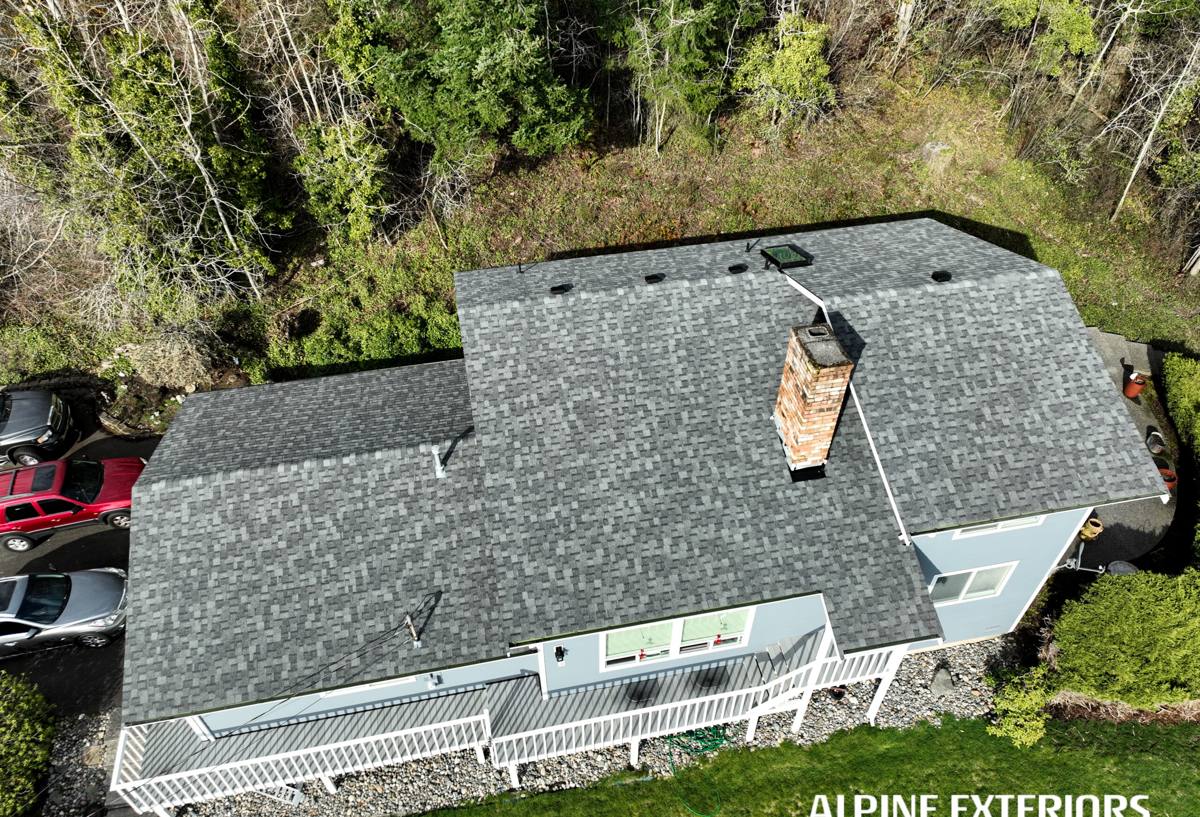
What Bellingham's Climate Does to a Deck Over Time
Salt Air and Metal Fatigue
Homes closer to Bellingham Bay and the Salish Sea get a steady, low-grade dose of salt-laden air. It doesn't take a waterfront lot to feel the effect — airborne salt travels well inland on the wind. Standard zinc-coated fasteners and hangers that would last for decades in a dry climate can start showing rust streaks and pitting in a few years near the water. Once corrosion starts on a structural fastener, it doesn't stop on its own.
Driving Rain and the Ledger Board
Whatcom County gets a lot of rain, and a good share of it comes in sideways during winter storms. Wind-driven rain finds any gap in flashing and pushes water upward and sideways, not just straight down. The spot that suffers most is the ledger board — the framing member that bolts the deck to the house. If that connection wasn't flashed correctly when the deck was built, water tracks behind the siding and into the rim joist, and by the time it's visible, the framing underneath is often already soft. This is one of the most common — and most preventable — deck failures in wet coastal climates.
Moss, Algae, and Shaded Lots
Many properties around Bellingham sit under mature fir, cedar, or hemlock canopy, and plenty of lots face north or get only partial sun. Less direct sunlight means deck boards stay damp longer after every rain, and that's exactly what moss and algae need to take hold. Beyond looking bad, a mossy deck surface holds moisture against the wood constantly and gets genuinely slippery — a real hazard on stairs and near doorways.
What a Correctly Built Deck Requires Here
Footings Sized for Local Soil and Frost Depth
Concrete footings need to be poured below the local frost depth and sized for the soil they're sitting in. A lot of Whatcom County soil holds water and has a heavier clay content, which means footings need adequate drainage gravel underneath to keep them from shifting as the ground freezes, thaws, and saturates through the wet season. Skipping this step is invisible on day one and expensive to fix later, since it usually means tearing into a finished deck.
Ledger Flashing Done Right
The ledger connection deserves more attention than almost any other part of the build. That means proper metal flashing paired with a self-adhered waterproof membrane, structural lag screws or through-bolts into solid rim joist framing rather than nails, and detailing that sheds water away from the siding and wall sheathing instead of behind it. This is the single detail most responsible for whether a deck is still solid in fifteen years or quietly rotting from the inside.
Corrosion-Resistant Hardware Throughout
Given the salt air and near-constant moisture, we use stainless steel or hot-dip galvanized joist hangers, structural screws, and bolts rated for exterior and ground-contact use. Interior-grade or basic coated hardware is not built for this environment, and using it is one of the easiest ways to shorten a deck's life without anyone realizing it until the hardware starts failing.
Drainage and Airflow Underneath
Framing and decking both need enough slope to shed water rather than pond it, and there needs to be enough clearance underneath the deck for air to actually move. A deck built too low to the ground, or without any slope, turns the space underneath into a permanently damp environment — which is exactly where moss, mildew, and rot get a head start.
Choosing a Decking Material for This Climate
There's no single "best" decking material — the right choice depends on how much maintenance you want to take on and what you're trying to get out of the deck long-term. Here's how the common options actually behave in a wet, shaded, salt-air environment like Bellingham's:
| Material | Moisture Behavior | Maintenance | Moss/Algae Resistance |
|---|---|---|---|
| Pressure-treated lumber | Resists rot with proper sealing; can cup or check if left unsealed | Needs re-sealing every 1-2 years in this climate | Low — moss takes hold quickly if not maintained |
| Cedar | Naturally rot-resistant, but still absorbs moisture | Needs periodic cleaning and oiling to hold color and resist moss | Moderate — better than untreated pine, still needs upkeep in shade |
| Composite decking | Doesn't absorb water the way wood does; won't rot or splinter | Occasional cleaning; no sealing or staining required | Higher — surface algae can still form in deep shade but is easier to clean off |
Composite tends to make the most sense on shaded, damp lots where moss is a recurring headache, since there's no wood surface for it to root into. Cedar and pressure-treated wood are both good options too, as long as you're realistic about the annual maintenance they need in this climate — skipping it is what leads to premature graying, cupping, and moss buildup.
Permits and Code Requirements in Bellingham and Whatcom County
Most new decks — especially anything attached to the house or elevated more than a couple feet off grade — need a building permit, whether the property falls under the City of Bellingham or unincorporated Whatcom County. Code requirements we build to include:
- Footings sized and set to the required frost depth
- Guardrails at the required minimum height once the deck reaches a certain height off grade
- Baluster spacing that won't allow a small child to pass through
- Stair rise and run within code tolerances
- A ledger connection engineered and fastened to code, not just nailed
We handle the permit drawings and submission as part of the job, so you're not the one figuring out which jurisdiction's forms apply or what the inspector will be looking for.
Our Deck Building Process
- Site visit and assessment — we look at grade, drainage, sun exposure, tree canopy, and the existing structure the deck will attach to.
- Design and material consult — we talk through layout, size, and decking material based on your budget and how much upkeep you want to take on.
- Permit drawings and submission — we prepare and submit what the local jurisdiction requires before any work begins.
- Demo, if replacing an old deck — including a check of the framing and ledger connection underneath, which often reveals issues that weren't visible from the surface.
- Footings and framing — set to proper depth, with correct spacing and corrosion-resistant hardware throughout.
- Ledger flashing — installed with metal flashing and membrane before any decking goes down.
- Decking and railing installation — with proper board gapping for drainage and expansion.
- Final walkthrough — so you know how the deck was built and what it needs going forward.
Keeping Your New Deck in Good Shape
A well-built deck still needs some basic seasonal attention, especially in a climate this wet. A little consistency goes a long way toward avoiding bigger problems later:
- Sweep debris out of the gaps between boards so water can keep draining through
- Keep gutters and downspouts directing water away from the deck and its footings
- Clean moss or algae with a deck-safe cleaner rather than a pressure washer, which can damage wood fibers and composite surfaces alike
- Re-seal or re-stain wood decking on the schedule the material actually needs, not just when it starts looking gray
- Check visible hardware once a year for early rust or corrosion, especially on decks closer to the water
- Inspect the ledger flashing area periodically for any sign of moisture tracking into the siding
Why Hire a Crew That Already Builds Decks in Bellingham
A deck built to a generic national standard will meet code on paper and still underperform here if it isn't detailed for this specific climate. Working in Bellingham regularly means we're not guessing at how much salt air a fastener needs to resist, how footings behave in Whatcom County's wetter soils, or how much shade a given lot is really dealing with. It also means we already know what the local permitting process expects, so that part of the job doesn't slow yours down.
If you're planning a new deck or need to replace one that's showing its age, we're happy to take a look and walk you through what your property specifically needs. Reach out for a free, no-pressure estimate using the form below.