 Lynden Siding
 Why Bellingham Decks Take More Punishment Than Most
Bellingham sits close enough to Bellingham Bay that salt-laden air reaches yards well inland, and it sits squarely in a Whatcom County weather pattern that delivers long stretches of driving rain, heavy fall and winter cloud cover, and short windows of real drying time. Add the tree cover common in Bellingham's older and newer neighborhoods alike, and you get a deck environment that stays damp for months at a stretch. That combination — moisture, low sun exposure, and salt in the air — is exactly what accelerates wood rot, corrodes cheap fasteners, and feeds the moss and algae that make decks slick and stained by late winter.
A deck built the same way you'd build one in a dry inland climate will underperform here. The materials, the fastening hardware, the drainage details, and even the board spacing all need to account for what a Bellingham deck actually deals with over a Pacific Northwest year.
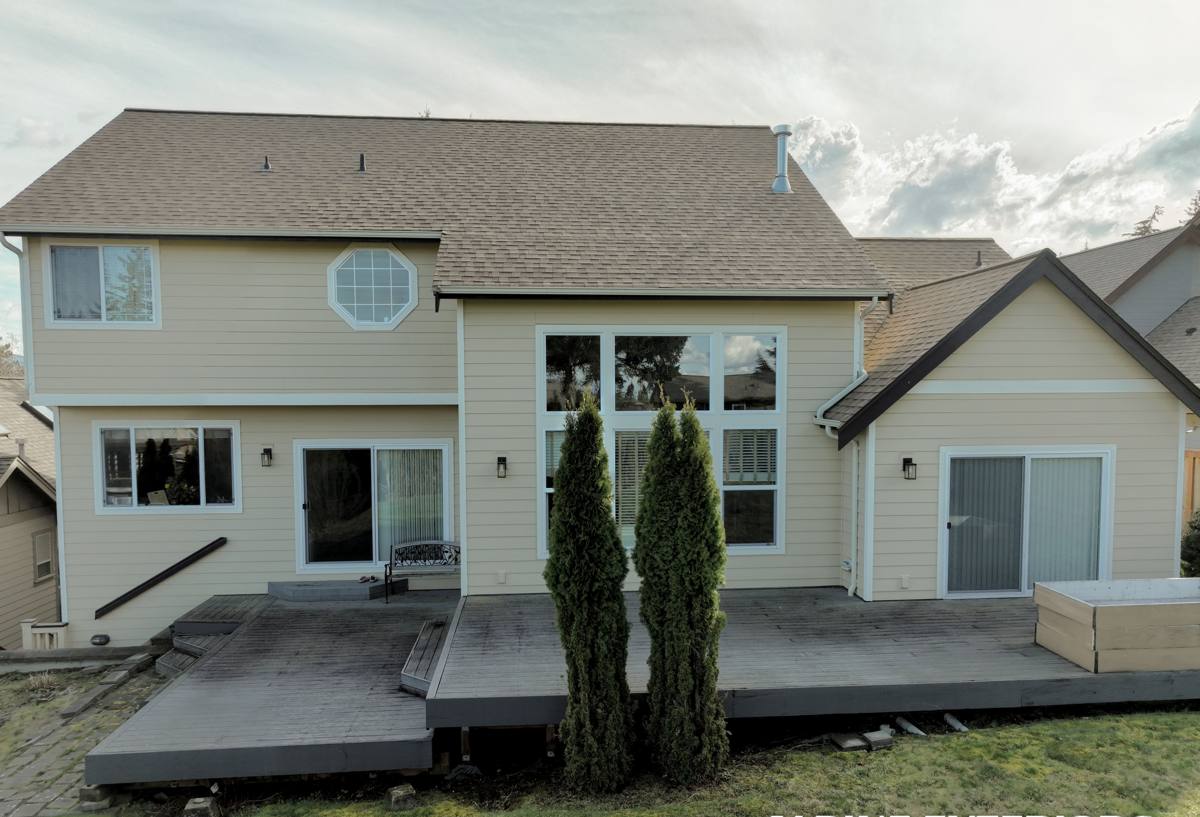
What "Composite" Actually Means, and Why It Matters Locally
Composite decking is a blend of wood fiber and plastic, typically capped with a protective polymer shell on the top and sides. That cap is the part that matters most in this climate — it's what keeps moisture, mildew spores, and organic debris from soaking into the board itself the way they would with untreated or even pressure-treated wood.
Composite doesn't need annual sealing or staining, doesn't splinter, and resists the swelling and cupping that wet-dry cycling causes in wood. That doesn't mean it's maintenance-free — moss and algae will still grow on any horizontal surface that stays damp and shaded, composite included — but it removes the rot risk that's the real long-term threat to a wood deck in this area.
Composite Is Not All the Same
There's a real range in composite quality, and it shows up specifically in wet climates. Lower-grade boards with thinner or partial caps, weak core density, or poor edge sealing will absorb moisture at the cut ends and fastener holes over time, leading to swelling, mold in the core, or surface flaking years before a well-built deck should show wear. Our standard is to use fully-capped boards from manufacturers with a track record in wet Pacific Northwest conditions, not just the cheapest composite on the shelf.
Composite vs. Wood vs. PVC for a Bellingham Deck
| Material | Moisture Behavior Here | Upkeep | Typical Lifespan (Local Conditions) |
|---|---|---|---|
| Pressure-treated wood | Absorbs water, prone to rot and splintering under constant damp/shade | Annual cleaning, periodic sealing or staining | 10-15 years before major repair or replacement |
| Capped composite | Resists moisture intrusion; surface can still grow moss/algae if shaded | Periodic wash-down, no sealing needed | 25+ years, backed by manufacturer warranty |
| PVC decking | Fully moisture-resistant, unaffected by wet-dry cycling | Low; can look more "plastic" and shows scratches differently | 25+ years |
We install both composite and PVC depending on the homeowner's priorities. Composite tends to be the right call for Bellingham homeowners who want a natural wood look without wood's maintenance burden; PVC is worth discussing for decks in especially damp, shaded yards where even composite would need more frequent cleaning.
What a Correct Installation Involves in This Climate
The board itself is only part of a deck that holds up here. Most composite deck problems we get called to fix in Whatcom County trace back to installation shortcuts, not the material.
Substructure and Framing
Joists and support framing need to be rated for ground contact where applicable, spaced correctly for the specific composite product (composite typically needs tighter joist spacing than wood, especially on diagonal or picture-frame layouts), and protected with joist tape or flashing at every cut and fastener point. Skipping joist protection is one of the most common shortcuts we see, and it's the one that causes hidden rot under a deck that looks fine on top.
Drainage and Airflow
A deck with poor airflow underneath stays damp longer after every rain, which is exactly what feeds moss and mildew growth on the surface above. We build in proper board gapping, ledger flashing that directs water away from the house band board, and clearance beneath the structure so air can actually move. On lower decks close to grade, that clearance is often the difference between a deck that dries out between storms and one that never really does.
Fasteners and Hardware
Salt air corrodes standard hardware faster than most homeowners expect. We use stainless steel or coated fasteners rated for coastal exposure, along with hidden fastener systems where the product allows, which also reduces the surface pockets where water and debris can sit.
Moss, Algae, and the Long Wet Season
Whatcom County's moss season isn't a minor annoyance — it's a multi-month reality that starts as the fall rains settle in and doesn't really let up until late spring. Composite decking resists rot, but moss and algae will still take hold on any composite surface that stays shaded and damp, the same as they would on a roof or a sidewalk.
The install choices that reduce this the most are the ones most easily skipped: correct drainage below the deck, board orientation that sheds water instead of trapping it, and, where the site allows, trimming back overhanging vegetation that keeps a deck in permanent shade. We'll flag these during the site visit rather than pretend a deck built in a damp, shaded corner of the yard will never need attention.
Our Process
- Site assessment — we look at drainage, sun exposure, existing structure condition, and how the deck ties into the house before recommending a product.
- Structural check or rebuild — ledger, footings, and framing get inspected or rebuilt to current code and rated for the composite product going on top.
- Moisture management details — joist tape, flashing, and gapping are built in, not treated as optional add-ons.
- Installation — hidden or approved fastening methods, correct board spacing, and clean transitions at stairs, railings, and the house.
- Walkthrough — we go over what maintenance the specific product actually needs and what the warranty covers.
What Homeowners Actually Need to Do After Installation
Composite is low-maintenance, not no-maintenance, especially in a climate that stays wet this much of the year. A simple seasonal routine keeps a deck looking and performing the way it should.
- Sweep off leaves, needles, and organic debris regularly, especially through fall — trapped debris holds moisture against the board.
- Wash the deck surface once or twice a year with a soft-bristle brush and a mild soap-and-water or composite-safe cleaner to keep moss and algae from establishing.
- Avoid pressure washing at close range or high PSI on capped composite — it can damage the surface texture and cap over time.
- Check that drainage paths below and around the deck stay clear, particularly after storms that wash sediment or leaf litter into gaps.
- Inspect railings, stairs, and ledger connections annually for any movement or corrosion at fastener points.
Cost Factors to Expect
Every deck is different, but a few factors drive most of the cost variation we see on Bellingham projects, and it's worth understanding them before getting quotes.
| Factor | Why It Moves the Price |
|---|---|
| Existing structure condition | A sound substructure lets us re-deck over it; rot or undersized framing means a rebuild first |
| Composite tier | Entry-level capped boards cost less than premium multi-tone or wider-plank lines |
| Deck size and layout | Diagonal patterns, picture-framing, and multi-level decks add labor and material waste |
| Railing and stair work | Composite or aluminum railing systems add cost versus reusing sound existing railing |
| Site access | Decks with tight yard access or elevation add labor time for material handling |
We'll walk through these specifics for your deck during an estimate rather than quote a number sight unseen — a rebuild-from-the-ground-up project and a re-deck over solid framing are very different jobs even at the same square footage.
Why a Crew That Already Works Bellingham Makes a Difference
Deck problems in this area are rarely about the composite product itself — they're about whether the person who installed it understood how Whatcom County weather behaves. A crew that works Bellingham and the surrounding Lynden area regularly already knows which yards run damp and shaded year-round, how much clearance a low deck actually needs to dry out between storms, and which hardware holds up under sustained salt air exposure rather than corroding within a few seasons.
That local pattern recognition shows up in the small decisions — joist spacing, flashing details, fastener grade — that don't show up on a spec sheet but determine whether a deck is still solid in fifteen years or showing hidden rot in five.
Get a Straightforward Estimate
If you're planning a new composite deck or replacing one that hasn't held up to Bellingham's weather, we're glad to take a look and give you an honest read on what your yard actually needs. Use the form below to request a free, no-pressure estimate.