 Lynden Siding
 Why Window Installation Is Different Near Bellingham
Homes close to Bellingham Bay and the surrounding Whatcom County shoreline live with a specific combination of weather that inland houses never deal with. Salt-laden air off the water accelerates corrosion on hardware, fasteners, and cheaper aluminum frames. Driving rain, pushed sideways by wind off the Strait, tests every seal and every piece of flashing far harder than a light vertical rain would. And the long, damp, low-sun season that runs from fall through spring keeps north-facing walls and shaded window bays wet enough, long enough, for moss and mildew to take hold on frames, sills, and trim. None of that is dramatic on its own, but stacked together year after year, it's exactly the kind of slow, quiet exposure that finds every weak point in a window installation — usually years after the crew that did the work is gone.
That's the real argument for taking window installation seriously in this area: it's not about buying the fanciest window on the shelf, it's about making sure the water management around that window is done right the first time, because this climate does not forgive shortcuts.
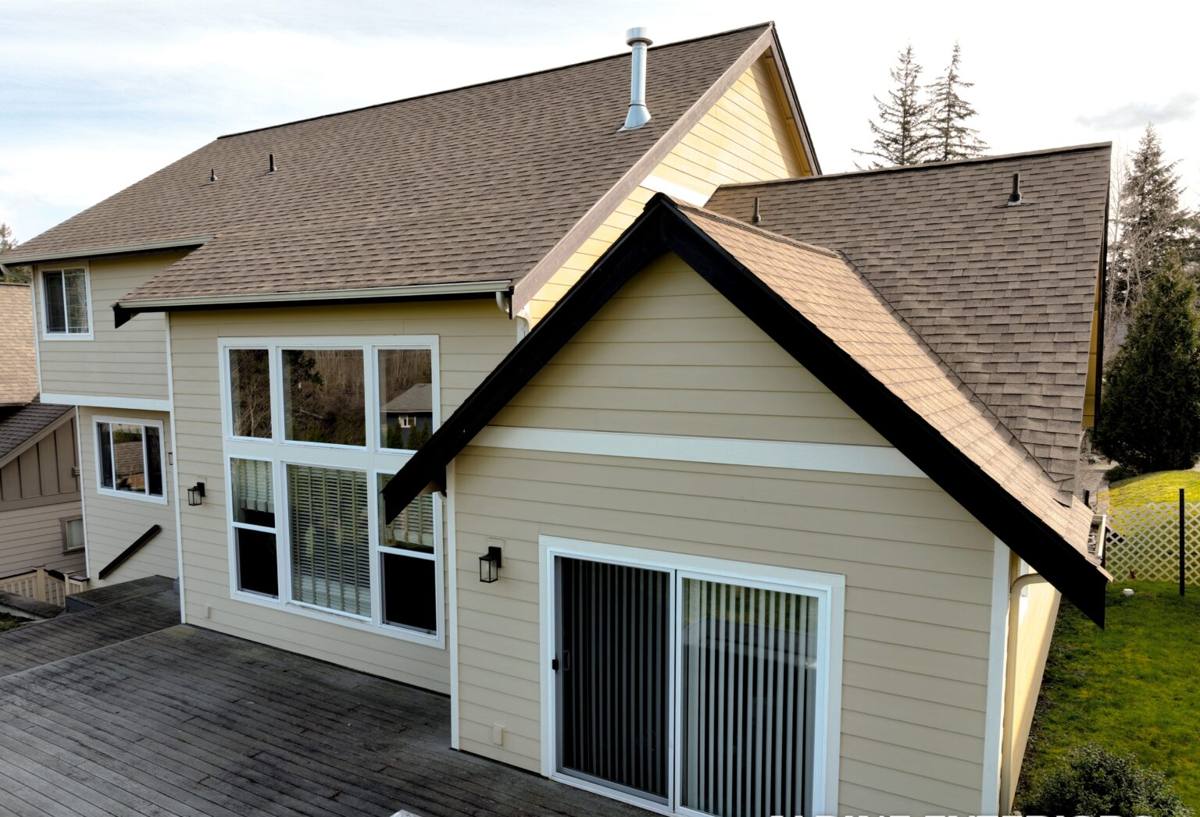
Signs a Bellingham Home Needs New Windows
Most window failures don't announce themselves with a dramatic leak. They show up as small, easy-to-ignore symptoms that get worse over a wet season or two. Worth checking for:
- Fogging or a permanent haze between panes of double-pane glass — the seal has failed and the gas fill is gone
- A noticeable draft near the frame even with the window latched shut
- Soft, dark, or crumbling wood at the sill or bottom corners of the frame — early wood rot
- Windows that stick, won't stay open, or are hard to lock — frames have swollen or warped
- Visible moss, algae, or black mildew streaking on the frame or exterior trim
- A jump in heating costs that isn't explained by anything else changing in the house
- Paint that keeps failing on the interior sill no matter how often it's redone
Any one of these on its own might just mean a caulk touch-up. Several of them together, especially wood softness at the sill, usually means the original installation is letting water in behind the trim and it's only a matter of time before that spreads to the framing.
What a Correct Window Installation Actually Involves
Flashing and Water Management
The single biggest difference between a window that lasts and one that fails early isn't the window itself — it's what's underneath the trim, where nobody ever looks. A correct installation integrates a sloped sill pan and flashing tape with the house's weather-resistive barrier so that any water that gets past the exterior finish is directed back out, not down into the wall cavity. In a climate with as much driving rain as this one sees, relying on caulk alone to keep water out is a bet that eventually loses.
Air Sealing and Insulation
The gap between the window frame and the rough opening needs to be filled with a proper low-expansion foam or backer rod and sealant — not stuffed with fiberglass, which does little for air sealing and holds moisture if it ever gets wet. Done right, this step is also what keeps cold drafts and condensation off the interior sill through the winter.
Fastening, Shimming, and Square
A window that isn't shimmed level, plumb, and square will bind, won't seal evenly, and will put stress on the frame that shows up as premature hardware failure. It's a basic step, but it's also the one that gets rushed on a job that's moving too fast.
Choosing a Window for a Coastal Whatcom County Climate
There's no single "best" window material — the right choice depends on exposure, budget, and how much maintenance a homeowner wants to take on. Here's how the common options actually hold up in this kind of climate:
| Material | Moisture / Salt Air Resistance | Maintenance | Typical Longevity |
|---|---|---|---|
| Vinyl | Very good — won't rot or corrode | Low — occasional cleaning | 20-30+ years |
| Fiberglass | Excellent — very stable in wet, temperature-swinging conditions | Low | 30-40+ years |
| Wood-clad | Good on the exterior clad face; interior wood needs protection from moisture | Moderate to high | 20-30 years with upkeep |
| Aluminum | Poor near salt air without upgraded coatings — prone to pitting and corrosion | Moderate | 15-25 years in this climate |
We tend to steer coastal Whatcom County homeowners away from bare aluminum frames specifically because of salt air corrosion, and away from all-wood exteriors in heavy-shade locations where moss and moisture sit against the frame longest. That's a maintenance and moisture-behavior judgment, not a knock on any manufacturer — wood and aluminum both have a place, just not usually on the exposed, shaded, wet-season side of a Bellingham-area house.
Our Window Installation Process
- On-site assessment — we measure openings, check the condition of existing framing and siding, and note anything the tear-out is likely to reveal, like soft sill wood.
- Careful removal — the old window and surrounding trim come out without damaging the rough opening any more than necessary.
- Framing inspection — any rot, mold, or damaged sheathing found at this point gets repaired before anything new goes in. This is the step that gets skipped on rushed jobs and causes callbacks two winters later.
- Flashing and sill pan installation — integrated with the existing weather barrier so water sheds outward, not into the wall.
- Setting the window — leveled, plumbed, squared, and shimmed before fastening.
- Insulating and air sealing — the gap around the frame is sealed properly, not just caulked over.
- Exterior trim and sealant — finished to shed water and match the home's existing look.
- Interior finish work — trim, sill, and paint or stain touch-up as needed.
- Walkthrough — we open, close, and lock every window with the homeowner before calling the job done.
Retrofit Replacement vs. Full-Frame Replacement
Not every job needs the same approach. A retrofit (pocket) replacement installs a new window inside the existing frame, which is faster and less disruptive when that original frame is still structurally sound and dry. A full-frame replacement removes everything down to the rough opening, which is the right call whenever we find rot, water staining, or soft framing during tear-out — patching a window into a compromised opening just locks the underlying problem behind new trim. On older homes in wetter, shaded spots around Bellingham, we see full-frame situations more often than homeowners expect, simply because that's where moisture has had the most time to work.
Cost Factors for Bellingham-Area Window Projects
Every project is different, but the same handful of factors drive most of the cost difference between jobs:
| Factor | Why It Matters |
|---|---|
| Number and size of windows | More openings and larger glass area mean more material and labor |
| Frame material chosen | Vinyl is typically the most budget-friendly; fiberglass and wood-clad cost more upfront |
| Condition of the framing | Rot repair discovered during tear-out adds time and material |
| Access and height | Second-story or hard-to-reach openings take longer and may need staging |
| Trim and finish work | Matching existing exterior trim profiles adds labor over a basic install |
Rather than quote a number that won't actually match a specific house, we walk the job in person and give a written estimate broken out by these factors, so there's no guessing where the cost is coming from.
Why a Crew That Already Works in Bellingham Matters
Window installation looks similar on paper everywhere, but the details that determine whether it lasts are local. A crew that regularly works homes in and around Bellingham already knows what to expect from the housing stock common in this part of Whatcom County — older single-pane and early dual-pane installations, framing details from a range of build eras, and the specific spots on a house (north walls, shaded eaves, low-slope porch roofs) that hold moisture longest through the wet season. That familiarity means fewer surprises during tear-out, and it means the flashing and sealing details are built for the rain this area actually gets, not a generic installation spec. It also means a shorter drive if a warranty question ever comes up down the road.
Caring for New Windows Through the Wet Season
A correctly installed window still benefits from basic upkeep, especially given how long the damp season runs here. A short annual routine goes a long way:
- Clear any weep holes at the bottom of the frame so water can drain out instead of pooling
- Rinse frames and sills to keep salt residue and grime from building up, especially closer to the water
- Check exterior caulking each fall before the rain sets in, and touch up any spots that have cracked or pulled away
- Keep landscaping and moss growth trimmed back from window frames and trim boards
- Wipe condensation off interior sills during cold snaps so moisture doesn't sit against the wood or paint
- Test locks and operation once a year — a window that's hard to latch may no longer be sealing correctly
None of this replaces a good installation, but it does extend the life of one, and it's usually enough to catch a small problem before it becomes a wall repair.
If any of this sounds familiar — drafts, fogged glass, soft wood at a sill, or windows that just don't shut right anymore — we're happy to take a look and give a straightforward, no-pressure estimate. Use the form below to get started.