 Lynden Siding
 Why Bellingham Siding Takes a Different Approach
Homes on the Bellingham side of Whatcom County deal with a combination of exterior stresses that a lot of siding products simply aren't built for. You've got salt-laden air rolling in off the bay, long stretches of driving rain through fall and winter, and a moss season that can stretch nine months out of the year on north-facing walls and shaded elevations. Add in the freeze-thaw swings that show up most winters, and you have a climate that punishes any siding material with weak spots in its moisture handling or finish durability.
We install James Hardie fiber cement siding throughout the Lynden and Bellingham area, and this page is about what that product needs to look like specifically for homes in this pocket of Whatcom County — not a generic overview of fiber cement in general.
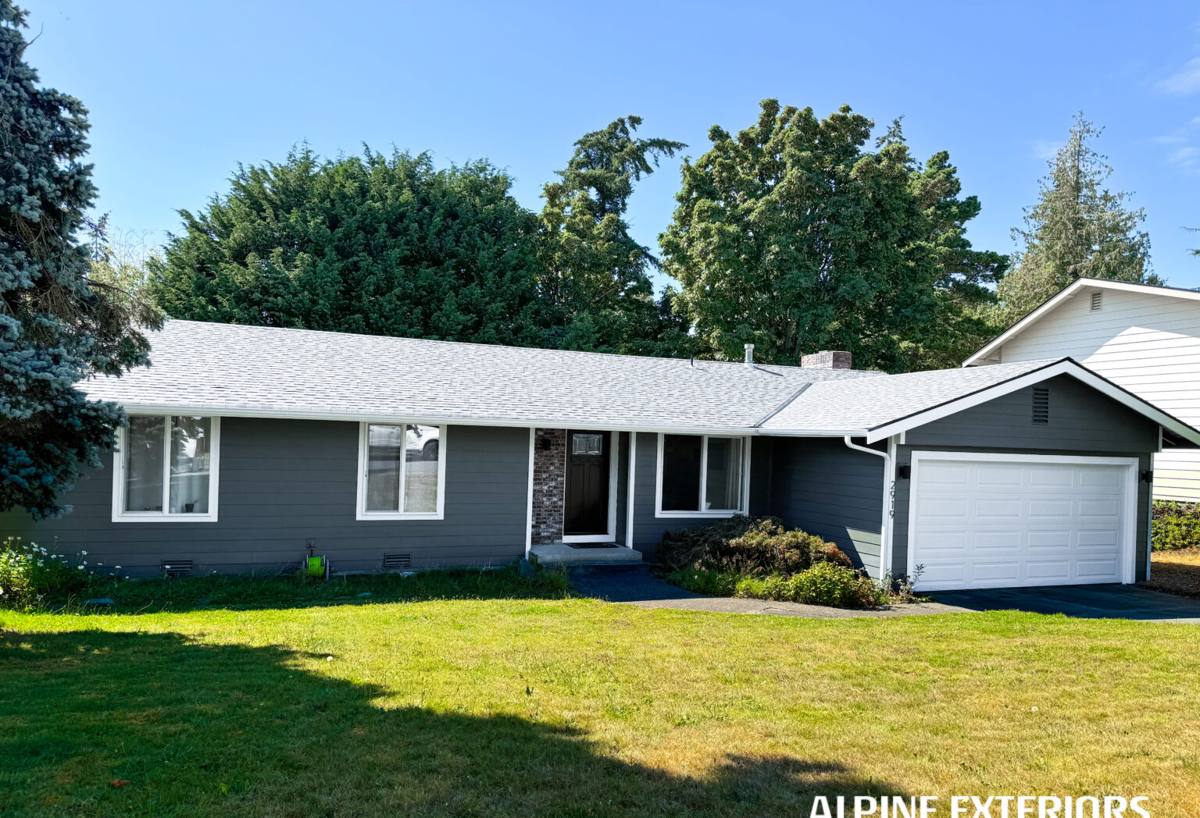
What Bellingham's Climate Actually Does to Siding
Salt Air and Coastal Moisture
Proximity to Bellingham Bay means airborne salt is a real factor, even a few miles inland. Salt-laden moisture accelerates corrosion on fasteners, flashing, and any exposed metal trim, and it can degrade weaker paint finishes faster than inland homes would experience. This is one of the reasons factory-applied, baked-on finishes matter more here than in drier climates — a finish that's marginal in Eastern Washington can fail years earlier on a home facing the water.
Driving Rain and Wind-Driven Moisture
Whatcom County storms frequently come with enough wind to drive rain sideways into wall assemblies, not just straight down onto roofs and horizontal surfaces. That means vertical siding joints, window and door flashing, and butt joints between panels are under real pressure during a heavy weather event, not just theoretical risk. Siding that isn't installed with correct clearances and flashing details will let water find its way behind the cladding.
Moss, Algae, and Prolonged Dampness
Shaded north walls, tree-covered lots, and the sheer number of damp, low-sun days in the Bellingham/Lynden area create ideal conditions for moss and algae growth on exterior surfaces. Moss holds moisture against the siding face far longer than open, sun-exposed walls dry out, which is hard on any substrate that isn't dimensionally stable or that absorbs water into its core.
Why We Only Install James Hardie Fiber Cement Here
Fiber cement as a category handles this climate well compared to wood-based or vinyl products, but not all fiber cement is engineered the same way. We standardized on James Hardie specifically because of how it performs under these three stressors:
- Non-combustible core: Hardie board is cement-based, not wood-based, so it doesn't feed a fire the way wood siding or wood-fiber composite products can.
- Factory ColorPlus finish: a baked-on finish applied under controlled conditions holds up better against salt air and UV than field-applied paint, and it comes with its own finish warranty.
- Climate-engineered HZ5 formulation: Hardie's HZ5 product line is engineered for colder, wetter climates like the Pacific Northwest, which matters directly for Whatcom County's rain totals and freeze-thaw cycling.
- Dimensional stability when sealed correctly: fiber cement doesn't swell and rot the way untreated or primed wood substrates can when moss and dampness sit against it for months.
We don't install LP SmartSide, vinyl, Cemplank, Allura, primed spruce, or cedar. That's not a knock on every homeowner who has one of those products already — it's that after years of doing this work in exactly this climate, we found the long-term maintenance burden, moisture behavior, or warranty structure of those alternatives didn't hold up to what we're willing to put our name behind here.
What a Correct Fiber Cement Installation Involves
Fiber cement siding is only as good as the installation behind it. A rushed or generic installation crew can put Hardie board on a wall and still end up with moisture problems within a few years. In this climate, the details that matter most are:
Weather-Resistive Barrier and Drainage Plane
Correct installation starts with a proper weather-resistive barrier and a drainage plane behind the siding, so any moisture that does get past the cladding has somewhere to go instead of sitting against the wall sheathing.
Flashing at Every Penetration
Windows, doors, hose bibs, vents, and any other wall penetration need correctly lapped flashing. Given how much wind-driven rain this area sees, flashing mistakes are one of the most common causes of hidden water damage behind siding that looks fine from the curb.
Fastening and Clearances
Hardie's installation specifications call for specific fastener types, spacing, and minimum clearances from grade, roofing, and decking. Skipping these clearances is a common shortcut that traps moisture and encourages the kind of moss and algae growth that's already a challenge in this climate.
Caulking and Joint Treatment
Butt joints and trim transitions need to be treated per manufacturer spec, not just caulked over generically. Done wrong, these are the first places wind-driven rain finds a way in.
Our Process for Bellingham-Area Siding Projects
| Step | What Happens |
|---|---|
| 1. On-site assessment | We look at your home's specific exposure — how much salt air, sun, shade, and moss pressure each elevation actually gets. |
| 2. Product and color selection | We walk through Hardie's plank, panel, and trim options along with ColorPlus finish choices suited to coastal exposure. |
| 3. Substrate and barrier check | We inspect what's behind the existing siding for rot, moisture damage, or barrier issues before installing anything new. |
| 4. Installation to spec | Flashing, clearances, fastening, and joint treatment are done to Hardie's published installation requirements, not shortcuts. |
| 5. Final walkthrough | We review the finished work with you and go over basic care so the siding performs the way it's designed to in this climate. |
Cost Factors for Bellingham Homeowners
Every home is different, but a few factors tend to move the price of a fiber cement project up or down in this area more than others:
| Factor | Why It Matters Locally |
|---|---|
| Substrate condition | Homes with prior moisture damage from wood or composite siding may need sheathing repair before new siding goes on. |
| Number of penetrations | More windows, doors, and fixtures mean more flashing detail work, which affects labor time. |
| Elevation exposure | Walls facing prevailing wind and rain, or heavily shaded north walls, may warrant extra attention to drainage and moss-resistant detailing. |
| Product line and trim | HZ5 panel size, trim profile, and ColorPlus color selection all factor into material cost. |
| Access and site conditions | Tree cover, tight lot lines, and multi-story walls common in this area can affect scaffolding and labor needs. |
We give straightforward, honest estimates rather than broad ballpark numbers pulled from national averages — every Bellingham-area home's exposure and condition is different enough that it's worth an actual site visit.
Signs Your Current Siding Isn't Handling This Climate Well
- Persistent moss or algae staining that returns quickly after cleaning
- Soft, spongy, or discolored spots, especially near ground level or under windows
- Peeling, chalking, or fading paint that's worse than what neighbors with newer siding show
- Visible gaps, warping, or buckling at panel joints
- Rust streaking from fasteners or trim, a common sign in salt-air-exposed areas
- Interior signs of moisture — musty smell, staining, or soft drywall near exterior walls
Any of these can indicate that moisture is getting behind the siding rather than shedding off it, which is the core problem this climate creates for the wrong product or a poor installation.
Why Local Installation Experience Matters
A crew that already works regularly in Bellingham and greater Lynden knows which elevations on a typical local home take the worst of the wind-driven rain, where moss pressure tends to be worst, and how much salt exposure to plan for depending on how close a property sits to the water. That local knowledge shapes real decisions — flashing details, product line selection, and where extra attention on drainage is worth the time. A crew installing fiber cement here for the first time is learning those lessons on your house instead of bringing them with them.
Maintenance Expectations After Installation
Correctly installed James Hardie siding with a factory ColorPlus finish is low-maintenance, but "low" isn't "none" in this climate. Plan on periodic gentle washing to keep moss and algae from taking hold, especially on shaded or north-facing walls, and keep an eye on caulking at trim joints over the years as part of normal home upkeep. None of this compares to the sanding, priming, and repainting cycles that wood-based sidings require in a climate this wet.
If you're dealing with aging or failing siding on a Bellingham-area home and want a straightforward look at what correct fiber cement installation would involve for your specific property, we're happy to come take a look. Fill out the form below for a free, no-pressure estimate.