 Lynden Siding
 Building New Near Bellingham? The Windows Are Not an Afterthought
When a home is framed and dried in, windows are one of the few components that get exactly one first chance to be installed correctly. On a new build near Bellingham and Lynden, that first install sets the tone for the next 20-30 years of how the house handles water, wind, and the damp stretches that define a Whatcom County winter. Unlike a replacement window, which drops into an opening that's already proven itself (or already failed), a new-construction window goes into a raw rough opening with no history. The flashing sequence, the weather-resistive barrier tie-in, and the fastening method all have to be right the first time, because there's no old window to compare against and no existing leak to chase later.
We install new-construction windows on homes throughout the Bellingham and Lynden area, and the details we pay closest attention to are the ones that don't show up until year three or four — after the first hard windstorm off the water, or after a few moss seasons have had time to work moisture into anything that wasn't sealed correctly.
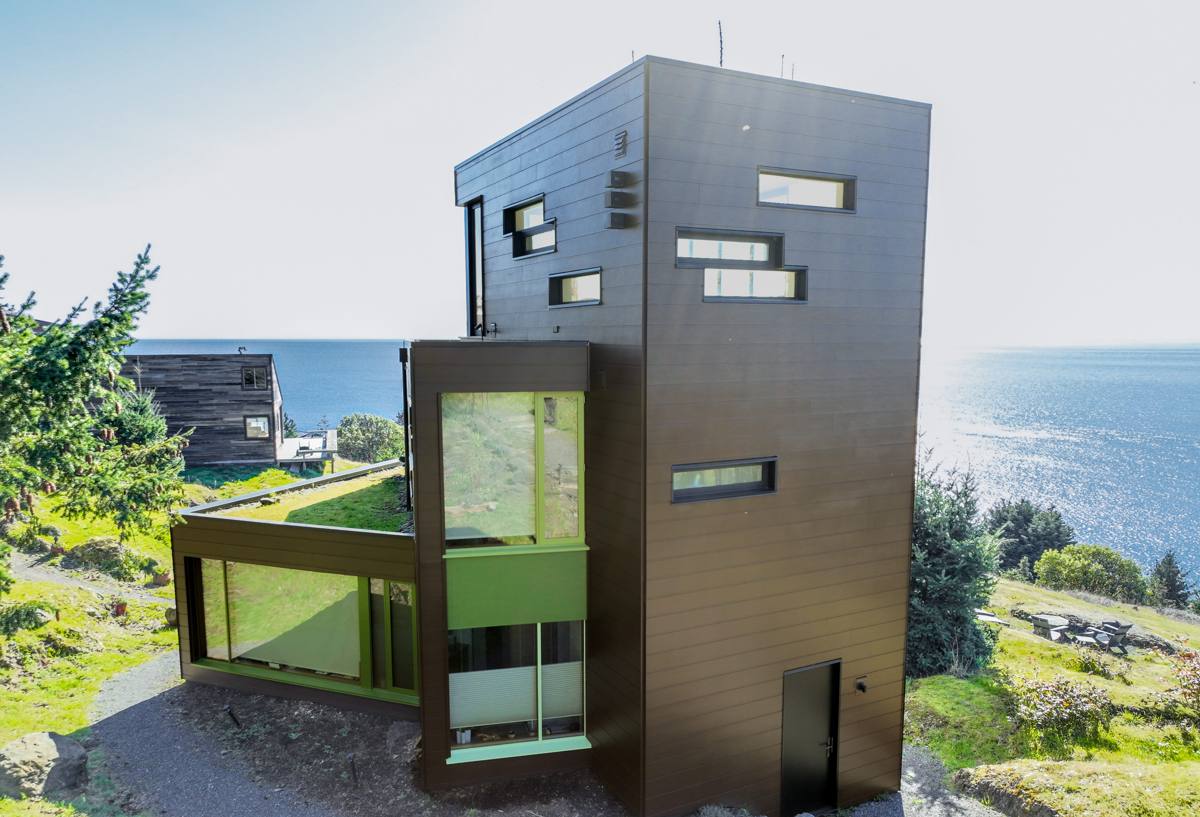
What Whatcom County's Climate Demands From a New Window Opening
Bellingham sits close enough to salt water and open exposure that homes here deal with a combination most inland new-construction crews rarely have to think about at the same time: salt-laden air, wind-driven rain, and long stretches of damp shade that keep moss and mildew active for much of the year.
Salt Air and Coastal Exposure
Homes closer to Bellingham Bay and the surrounding shoreline see more airborne salt than homes further inland in Lynden and the Nooksack Valley. Salt air accelerates corrosion on fasteners, hinges, and unprotected metal flashing. It's a slow process, but over years it can pit exposed hardware and degrade finishes that weren't rated for coastal exposure. This is one reason we're selective about which fasteners and flashing metals we use on jobs closer to the water — a fastener that's fine on an inland Lynden build isn't always the right call for a home a few miles from the Bay.
Driving Rain and Wind
Whatcom County storms don't always come straight down. Wind off the water pushes rain sideways into wall assemblies, which means a window flashing detail that would be adequate in a drier climate can fail here if it relies on gravity alone. Every horizontal flange, every head flashing lap, and every sealant joint has to assume water will hit it at an angle, not just fall past it.
Moss Season and Sustained Dampness
From fall through spring, shaded and north-facing wall sections in this area can stay damp for weeks at a stretch. That's exactly the environment moss and mildew need to establish themselves on sills, trim, and any wood surfaces around a window opening. A new-construction install that leaves end grain exposed, skips back-priming on wood trim, or doesn't manage bulk water away from the sill is setting up a moss and rot problem before the house is even a few years old.
New-Construction Installation vs. Retrofit — Why the Method Matters
A lot of homeowners assume a window is a window, but new-construction and retrofit (also called pocket or insert) installations are fundamentally different jobs. On new construction, we're building the water management system into the wall from scratch, working directly with the framing, the weather-resistive barrier, and the window's nailing fin. There's no old frame to lean on and no shortcuts available — the opening has to be prepped and flashed correctly before the window ever goes in.
Nail-Fin Installation and Flashing Sequence
New-construction windows typically use a nailing flange that gets integrated into the wall's drainage plane in a specific shingle-lap order: sill flashing first, then the window itself, then jamb flashing, and finally head flashing last, so that any water working its way down the wall is directed out and over each layer below it rather than behind it. Getting that sequence backwards is one of the most common ways a brand-new window ends up with a hidden leak that doesn't show up until there's already damage inside the wall cavity.
Working With the Weather-Resistive Barrier
The window flashing has to tie into the house wrap or building paper correctly, with laps running the right direction so water sheds outward at every seam. On a home near Bellingham where wind-driven rain is a regular occurrence, this tie-in is not a cosmetic detail — it's the difference between a wall assembly that manages water as designed and one that slowly saturates from the inside.
Choosing a Frame Material for a Bellingham-Area New Build
Frame material matters more here than in a drier, less coastal climate. The table below reflects how the common options actually perform under salt air, sustained moisture, and Whatcom County's freeze-thaw swings — not marketing claims, just practical trade-offs.
| Frame Material | Moisture & Salt Air Behavior | Maintenance | Typical Lifespan |
|---|---|---|---|
| Vinyl | Won't rot or corrode; performs well in damp, salty conditions | Low — occasional cleaning | 20-30+ years |
| Fiberglass | Very stable dimensionally; excellent moisture and corrosion resistance | Low | 30-40+ years |
| Wood-clad | Good if cladding and sealant joints are maintained; interior wood still needs protection from condensation | Moderate to high — sealant and finish upkeep | 20-30 years with upkeep |
| Aluminum (uninsulated) | Conducts cold and can corrode faster near salt air unless properly coated | Moderate | 15-25 years |
For most new builds in the Bellingham and Lynden area, we lean toward vinyl or fiberglass frames precisely because they don't give salt air or sustained moisture anything to work on. Wood-clad windows can still be the right call for a specific architectural look, but we're upfront with homeowners that they come with an ongoing maintenance commitment in this climate that vinyl and fiberglass don't.
Our New-Construction Window Installation Process
- Rough opening check: We verify the opening is square, plumb, and sized correctly before anything goes in — a slightly out-of-square opening now becomes a permanent gap or a hard-to-seal corner later.
- Sill pan installation: A sloped sill pan directs any water that gets past the window itself back out of the wall instead of letting it pool against the framing.
- Weather-resistive barrier prep: We cut and fold the house wrap into the opening so it laps correctly with the flashing that follows.
- Window set and fastening: The window is set plumb, level, and square, then fastened per the manufacturer's schedule — over- or under-fastening the nailing fin both cause problems down the road.
- Flashing tape and lap sequence: Jamb flashing, then head flashing, each lapped in the correct shingle order so water always moves outward and downward.
- Insulation and air-sealing at the frame: The gap between the window frame and rough opening gets filled with a low-expansion foam or backer rod and sealant — never packed tight enough to bow the frame.
- Exterior trim and sealant: Trim goes on with back-primed cuts and a sealant joint designed to move with the building, not crack open after one season.
- Final function and water check: Every window is opened, closed, and checked for smooth operation and a tight seal before we consider the job done.
Mistakes We See on New Builds in This Area
Most of the window problems we get called out to inspect on newer homes near Bellingham trace back to a handful of recurring issues, not bad windows themselves:
- Flashing installed in the wrong order, so laps direct water inward instead of out
- Sill pans skipped or improperly sloped, leaving water sitting against the framing
- Sealant used as the primary water barrier instead of as a backup to proper flashing
- Exposed end grain on exterior trim left unprimed, giving moss and rot an easy foothold
- Fasteners or flashing metals not suited to coastal salt exposure
None of these are exotic failures — they're the predictable result of rushing the flashing sequence or treating a new-construction window like a simple drop-in. They're also exactly the details that don't show up on a walkthrough the week the house is finished; they show up two or three wet seasons later.
Checklist: What a Correct New-Construction Install Includes
- Rough opening confirmed square, level, and correctly sized before install
- Sloped sill pan in place, directing water out and away from framing
- Weather-resistive barrier properly cut, folded, and lapped into the opening
- Flashing installed sill-first, then jambs, then head, in correct shingle-lap order
- Fasteners and flashing metals appropriate for coastal/salt-air exposure
- Frame gap insulated without bowing the window frame
- Exterior trim back-primed on all cut ends before installation
- Sealant joints designed to move with the building, not as the sole water barrier
- Every window function-tested before the crew leaves the site
Why a Crew That Already Works Bellingham and Lynden Matters
Any competent installer can read a manufacturer's instructions. What matters more on a new build in this part of Whatcom County is knowing which details to prioritize when the manufacturer's generic instructions don't say anything about salt air, moss, or sideways rain. That comes from having installed windows on enough homes in this specific area to know which corners of the county need extra attention on flashing metals, which lots hold dampness longer through moss season, and which exposures take the worst of a winter storm coming off the water.
It also means being available if a question comes up after the framing crew or general contractor has moved on to the next phase. New construction involves multiple trades touching the same wall assembly — siding, trim, and window installation all need to coordinate so nobody's work undoes somebody else's flashing. A crew that's used to working alongside other Whatcom County trades on new builds tends to catch those handoff issues before they become the homeowner's problem.
What New-Construction Windows Typically Cost
Cost on a new build depends more on the number and size of openings, frame material, and glass package than on labor alone. Rather than quote a single number that won't apply to most homes, here's what actually moves the price:
| Cost Factor | How It Affects Price |
|---|---|
| Frame material | Vinyl is typically the most affordable; fiberglass and wood-clad cost more upfront |
| Glass package | Double vs. triple pane, and low-E or gas-fill upgrades, add cost but improve comfort and efficiency |
| Window size and count | Larger openings and higher total window count increase both material and labor cost |
| Opening complexity | Bay windows, custom shapes, and multi-unit combinations take more labor than standard rectangular units |
| Site access and phasing | Coordinating install timing with framing and siding crews can affect scheduling but rarely changes price much |
Because new-construction pricing is driven by the specifics of the plan, the honest answer is that it varies house to house — which is exactly why we walk the plans or the framed structure before giving a number, rather than quoting blind.
If you're building near Bellingham or Lynden and want windows installed by a crew that treats the flashing sequence as seriously as the view, we're happy to take a look at your plans or your framed opening and put together a straightforward, no-pressure estimate. Use the form below to get started.