 Lynden Siding
 Why Bellingham Windows Take More of a Beating Than Most
Homes near Bellingham Bay deal with a combination most inland houses never have to face: salt-carrying air off the water, wind-driven rain that hits window walls sideways instead of straight down, and a moss and mildew season that can stretch from fall clear through spring. None of that is dramatic on its own, but stacked together year after year, it's exactly the combination that finds every weak point in a window installation — a gap in the flashing, a sealant bead that was never quite continuous, a sill that holds water instead of shedding it.
Older single-pane and early dual-pane windows, common in a lot of Whatcom County's housing stock, weren't built with this exposure in mind. They fog, they stick, they let cold air pool along the floor in winter, and the wood trim around them is often the first thing on the house to show rot. Replacing them isn't just a cosmetic upgrade — done right, it closes off the entry points that salt air and driving rain have been working on for years.
What "Marine Exposure" Actually Means for a Window
Being close to the water doesn't just mean more rain. It means more wind pressure pushing water into any gap, faster corrosion on unprotected hardware, and condensation cycles driven by the swings between damp, cool mornings and warmer afternoons. A window that's fine two miles inland can perform noticeably worse a few blocks from the bay if it wasn't specified and installed with that exposure in mind.
What "Custom" Means When Your Windows Aren't Standard Sizes
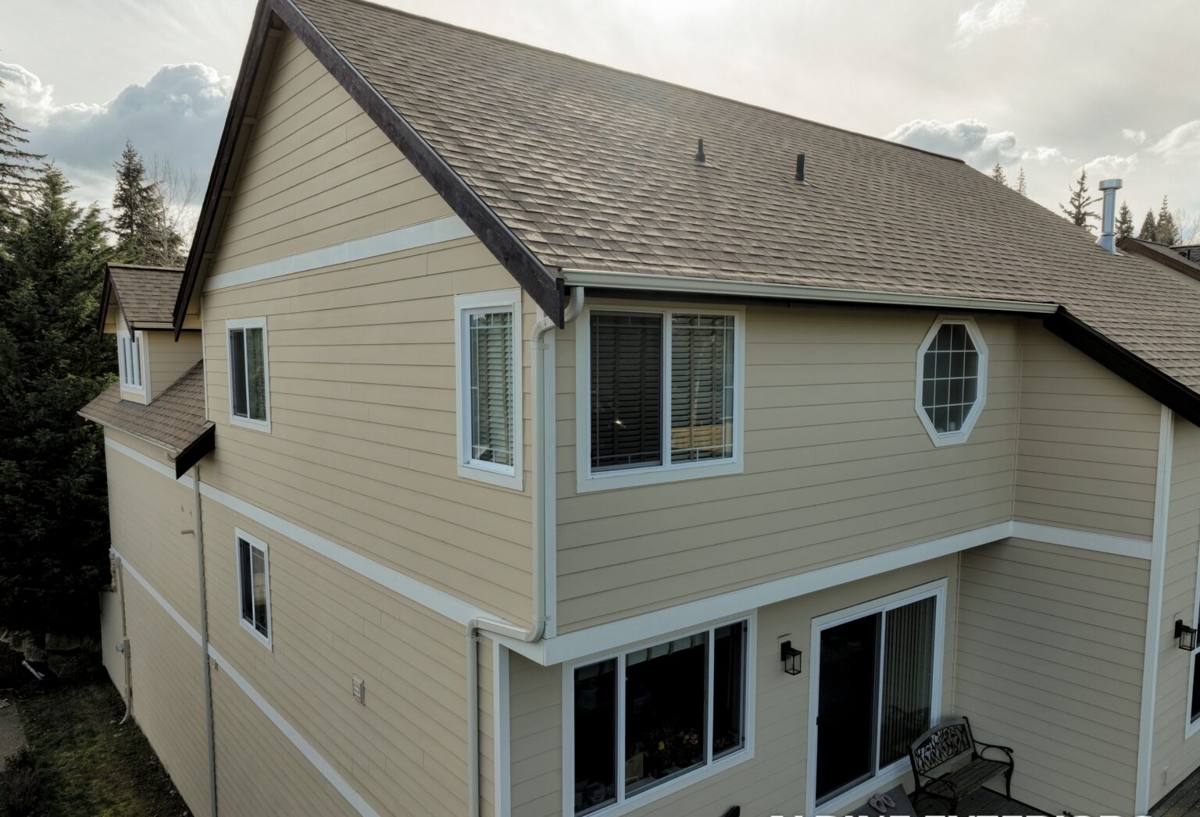
A lot of Bellingham-area homes — especially older farmhouses, converted cottages, and mid-century houses — have window openings that don't match anything on a standard size chart. Settling, additions, and decades of small repairs all shift openings out of square. Custom windows means the unit is built to the actual opening, not the other way around, so you're not left forcing a stock size into a space that's a half-inch off, or covering the gap with extra trim that just gives moisture another place to collect.
Custom also covers style: arched tops, specialty shapes, matching grid patterns across a whole elevation, or replicating a look from the original construction on an older home. If your goal is windows that actually match your house instead of just filling the holes, that's a custom job, even if the glass itself is a standard product.
Frame and Glass Choices That Hold Up Near the Water
There's no single "best" window material — each option trades off differently on moisture handling, upkeep, and cost. For a coastal Whatcom County climate, moisture performance and low maintenance usually matter more than they would somewhere drier.
| Frame Material | Moisture Performance | Maintenance | Notes |
|---|---|---|---|
| Vinyl | Good — won't rot or corrode | Low; occasional cleaning | Most cost-effective; wide color/style range now available |
| Fiberglass | Excellent — very stable in wet/dry cycling | Low | Handles temperature swings well; higher upfront cost |
| Wood, clad exterior | Good if detailed correctly; interior wood exposed to interior humidity | Moderate — exterior is protected, interior wood still needs attention | Best for matching historic or traditional interiors |
| Aluminum | Poor without thermal breaks; prone to condensation | Low | We generally steer clients away from it for this climate unless it's a specific architectural match |
Glass matters as much as the frame. In this climate we default to dual-pane with a Low-E coating and an argon fill as the baseline — it cuts heat loss and helps manage condensation on cold, damp mornings. Triple-pane is worth discussing on north-facing walls or homes right along the water where wind exposure is highest, but it adds weight and cost, so it's a case-by-case call rather than an automatic upgrade.
The Installation Details That Actually Prevent Water Problems
Most window failures we get called out to fix aren't product failures — they're installation shortcuts. In a climate that throws wind-driven rain at a wall for days at a time, the details around the window matter as much as the window itself.
- A sloped sill pan or back dam so any water that gets past the glass drains out instead of sitting against the framing
- Properly lapped flashing tape — installed so upper layers overlap lower ones, shingle-style, so water can't work its way behind them
- Continuous sealant at the right joints, not a bead run over old, failed caulk
- A weather-resistant barrier that ties into the flashing correctly rather than just being taped over the top
- Shimming and fastening that keeps the frame square without bowing it, which is what causes seals to fail early
Skip any one of these and the window can still look fine for a year or two before moisture finds the gap. That's the frustrating part of a bad install in this climate — the damage happens behind the wall long before it shows up inside.
How Our Process Works, Start to Finish
- On-site assessment. We look at each opening individually — sizing, condition of the surrounding framing and trim, and any signs of past moisture damage.
- Product selection. We walk through frame material, glass package, and style options based on your home, your budget, and how exposed that particular wall is to wind and rain.
- Precise measurement. Custom units are ordered to the actual opening, not a catalog size, which is especially important on older homes with settled or irregular framing.
- Removal and inspection. Once the old window is out, we check the framing underneath for rot or moisture damage before anything new goes in — this is often where hidden problems show up.
- Installation with full moisture detailing. Sill pan, flashing, sealant, and fastening done in the sequence that actually sheds water, not just fills the opening.
- Interior and exterior finish work. Trim, caulking, and touch-up so the new window looks like it belongs, not like a repair.
- Final walkthrough. We check operation, seal quality, and clean up before we call it done.
What Drives the Cost of a Custom Window Project
Every project is different, but the same handful of factors usually explain most of the spread between a modest quote and a higher one. We'd rather walk through these honestly than throw out a number that doesn't hold up once we're actually on site.
| Factor | Why It Moves the Price |
|---|---|
| Frame material | Vinyl, fiberglass, and clad-wood sit at different price points; fiberglass and wood typically cost more than vinyl |
| Glass package | Triple-pane, specialty coatings, and tempered or obscure glass all add cost over a standard dual-pane unit |
| Opening condition | Rotted framing found during removal adds repair work before the new window can go in |
| Size and shape | Oversized units, arches, or non-rectangular shapes cost more to manufacture and install than standard rectangles |
| Number of openings | Whole-house replacements typically have a lower per-window cost than one-off jobs due to setup efficiency |
| Access and height | Second-story or hard-to-reach windows take more time and equipment |
We give straightforward, itemized estimates rather than a single lump number, so you can see what you're actually paying for and where there's room to adjust.
Signs Your Current Windows Are Working Against You
- Condensation or fogging between the panes — a sign the seal has already failed
- Drafts you can feel even when the window is fully latched
- Wood trim that's soft, discolored, or has visible mold or moss growth around it
- Windows that are hard to open, close, or lock, especially after damp weather
- Rising heating bills without a clear other cause
- Visible daylight or gaps around the frame from outside
- Paint that's peeling or bubbling on interior trim near the window
Any one of these on its own isn't an emergency. Several together, especially on a wall that takes direct wind and rain, usually means the windows are past the point where caulk and weatherstripping will fix the underlying issue.
Why a Lynden Crew That Works Bellingham Regularly Matters
We're based in Lynden, and we work throughout Whatcom County, including homes in and around Bellingham on a regular basis. That matters for a few practical reasons beyond just proximity. We see the specific ways coastal exposure differs from the more inland conditions further out in the county, so we're not guessing at flashing details or glass packages — we're applying what actually holds up on homes closer to the water. Being local also means if something needs a follow-up look after the first hard windstorm or a stretch of driving rain, we're not a long drive away.
We stand behind our own installation work, which is the piece that matters most in this climate. A quality window with a shortcut installation will fail here faster than most places, and a properly installed window is worth very little if the product behind it is poor. We treat both halves of the job as equally important, because in Whatcom County's weather, they are.
Get a Free, No-Pressure Estimate
If your windows are fogging, drafting, or just past their prime, we're glad to come take a look and give you a straight, itemized estimate — no pressure, no sales script. Use the form below to get started.