 Lynden Siding
 Board & Batten Siding in Bellingham: What the Climate Demands
Bellingham sits close enough to the water and the foothills that homes here deal with a mix most siding products aren't built for: salt-laden air rolling in off Bellingham Bay, long stretches of driving rain pushed sideways by wind, and a moss and mildew season that can run most of the year in shaded, north-facing spots. Board and batten siding — with its vertical boards and raised battens covering the seams — is one of the most popular looks for Whatcom County homes, from craftsman remodels to modern farmhouse builds. But the same design that makes it attractive also makes it less forgiving of the wrong material or a sloppy install. Vertical seams, more trim, and more joints all mean more places for water to find a way in if the wrong product or crew is used.
We install board and batten exclusively in James Hardie fiber cement, and we've built our process around what actually holds up in Bellingham's specific mix of moisture and salt exposure — not just what looks good on install day.
Why Board & Batten Is Popular Here — and Where It Goes Wrong
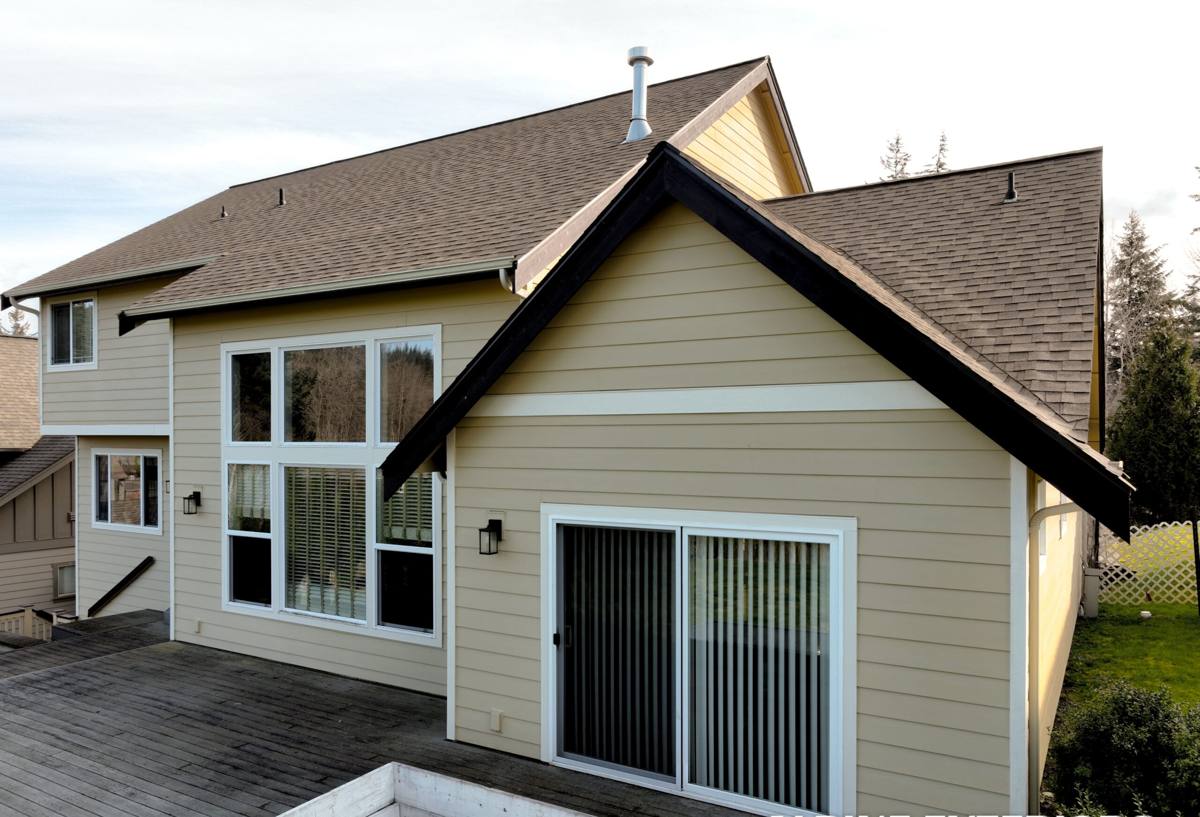
The vertical board and batten profile reads as a classic Pacific Northwest look, and it pairs well with the mix of craftsman, farmhouse, and contemporary homes going up and being remodeled around Bellingham. It also does a genuinely good job of visually breaking up larger wall sections and gables.
The problem isn't the style — it's what it's built out of and how it's flashed. Board and batten has more vertical joints than lap siding, and every one of those joints is a potential water path if it isn't backed and flashed correctly. In a climate with Bellingham's rain volume and duration, a batten system that relies on caulk alone at the seams, rather than proper board spacing and flashing behind the battens, will eventually let moisture in. That's true no matter what the boards themselves are made of.
What Salt Air and Moss Season Add to the Equation
- Salt air: Coastal proximity accelerates corrosion on fasteners and metal flashing, and it degrades paint film faster than inland climates — which matters more on a board and batten wall because of the added trim and batten surface area exposed to weather.
- Driving rain: Wind-driven rain off the bay pushes water sideways into vertical seams and under battens, not just straight down the wall face. Gapping and flashing details have to account for lateral water movement, not just gravity drainage.
- Moss and mildew: Shaded gables and north walls in Whatcom County stay damp longer through fall, winter, and spring. Any siding material that absorbs moisture will feed moss and mildew growth at those battens and seams over time.
Why We Only Install James Hardie for Board & Batten
Board and batten is one of the profiles where material choice matters most, because the vertical joints multiply the number of places moisture-sensitive materials can fail. That's a core reason we standardized on James Hardie fiber cement and don't install wood, engineered wood, or vinyl versions of this profile.
| Material | How It Handles Bellingham's Climate |
|---|---|
| Cedar / primed spruce board and batten | Real wood grain look, but absorbs moisture at end grain and seams; needs repainting and caulk maintenance on a tight cycle to keep salt air and rain out; more prone to rot at battens over time |
| Vinyl board and batten | Low upfront cost and low maintenance, but panels can warp or fade under UV and temperature swings, and seams rely on interlocking joints that aren't designed to be caulked or repaired individually |
| Engineered wood (LP-type) board and batten | Lighter and easier to install than fiber cement, but the wood-strand core is vulnerable if the factory edge seal is compromised at a cut, fastener hole, or seam — a real risk on a profile with this many joints |
| James Hardie fiber cement board and batten | Non-combustible, dimensionally stable across wet and dry cycles, holds ColorPlus factory finish without repainting, and is engineered for exactly this kind of wet, coastal-influenced climate |
Hardie's fiber cement doesn't swell, delaminate, or feed mold the way wood-based products can when moisture does get past a seam — and because it's dimensionally stable, the boards and battens stay tight and true over the long run instead of gapping or cupping. That stability matters more on board and batten than almost any other profile because of how much trim and how many joints are in play.
What a Correct Board & Batten Install Involves
The look of board and batten is simple, but a correct install has more steps than lap siding because of the layered assembly. Here's what we actually do on a Bellingham job:
1. Water-Resistive Barrier and Flashing First
Before any boards go up, we confirm the wall has a properly lapped water-resistive barrier and correct flashing at windows, doors, and penetrations. On a board and batten wall, this layer is what actually keeps the wall dry — the siding itself is the second line of defense, not the first.
2. Proper Board Spacing and Fastening
Hardie's board and batten system requires specific gaps between vertical boards to allow for expansion and to let the wall drain and dry behind the battens. Fastener placement follows Hardie's published spec, not shortcuts, because incorrect fastening is one of the most common causes of premature failure on this profile.
3. Battens Installed to Manage Water, Not Just Cover Seams
The battens aren't just decorative strips covering a joint — installed correctly, they work with the gap behind them to let any moisture that gets past the surface drain and evaporate rather than sit against the wall. Getting this detail right is the difference between board and batten that lasts decades and board and batten that traps moisture at every seam.
4. Factory-Finished ColorPlus Where Possible
We install Hardie's ColorPlus prefinished boards and battens wherever the color selection fits the project, because a factory-baked finish holds up to salt air and UV exposure far better than field-applied paint, and it removes an entire maintenance cycle for the homeowner.
Our Process for Bellingham Board & Batten Projects
- On-site assessment: We look at wall orientation, shade patterns, existing moisture or moss issues, and how the home is currently flashed before recommending anything.
- Material and color selection: We walk through Hardie board and batten options and ColorPlus color choices suited to the home and its exposure.
- Prep and flashing correction: Any existing water-resistive barrier or flashing issues get addressed before new siding goes up — not covered over.
- Installation to Hardie spec: Board spacing, fastening, and batten placement follow manufacturer requirements, not shortcuts.
- Final walkthrough: We review the completed work with the homeowner and go over care and warranty registration.
Signs Your Current Board & Batten Siding Is Failing
- Soft or spongy boards, especially near the bottom of walls or around windows
- Paint peeling or bubbling at the battens before the rest of the wall
- Visible gaps or cupping where battens have pulled away from the wall
- Persistent moss or dark staining concentrated along seams rather than spread evenly
- Caulk that's cracked or missing at multiple batten joints
Any of these on a Bellingham home is worth a closer look sooner rather than later — the vertical seams on board and batten mean small problems at one joint don't usually stay isolated for long once moisture gets behind the wall.
Cost Factors for Bellingham Board & Batten Projects
| Factor | Why It Matters Locally |
|---|---|
| Wall prep and flashing repair | Homes with existing moisture damage from wood or vinyl siding often need sheathing or flashing work before new siding goes on |
| Board and batten vs. lap siding labor | More trim pieces and joints mean more labor time compared to standard lap siding on the same square footage |
| ColorPlus vs. field-painted | Factory-finished boards cost more upfront but remove a repainting cycle that salt air and UV would otherwise force sooner |
| Gable and dormer complexity | Whatcom County's mix of craftsman and farmhouse-style rooflines often adds cutting and fitting time around gables |
We give exact numbers only after seeing the home in person — broad ranges without an on-site look aren't useful to a homeowner trying to plan a real project.
Why Hire a Crew That Already Works in Bellingham
Board and batten siding done wrong doesn't usually fail in year one — it fails in year five or six, after moisture has had time to work behind the battens. A crew that installs this profile regularly in Whatcom County's climate knows where the trouble spots typically show up on local homes: north-facing gables that stay shaded and damp, walls exposed to wind off the bay, and trim details that need extra attention because of the area's rain volume. That local pattern recognition is worth more than a lower bid from a crew unfamiliar with how board and batten actually behaves here.
If you're considering board and batten siding for a home in Bellingham, we're happy to take a look and give you a straightforward, no-pressure estimate — just fill out the form below.