 Lynden Siding
 Asphalt Shingle Roofing Built for Bellingham's Marine Climate
Bellingham sits right on the water, and that changes what a roof has to deal with compared to homes further inland in Whatcom County. Salt-laden air off Bellingham Bay, wind-driven rain that gets pushed sideways under poorly flashed edges, and a moss season that can run most of the year on shaded, north-facing slopes all put steady stress on asphalt shingle roofs. A shingle roof installed the same way you'd install one in a dry inland climate will wear faster here. One installed correctly for this specific environment can go the distance.
This page covers what an asphalt shingle roof actually needs to hold up in Bellingham, what a correct installation or repair looks like, and how our process works from the first inspection to final cleanup.
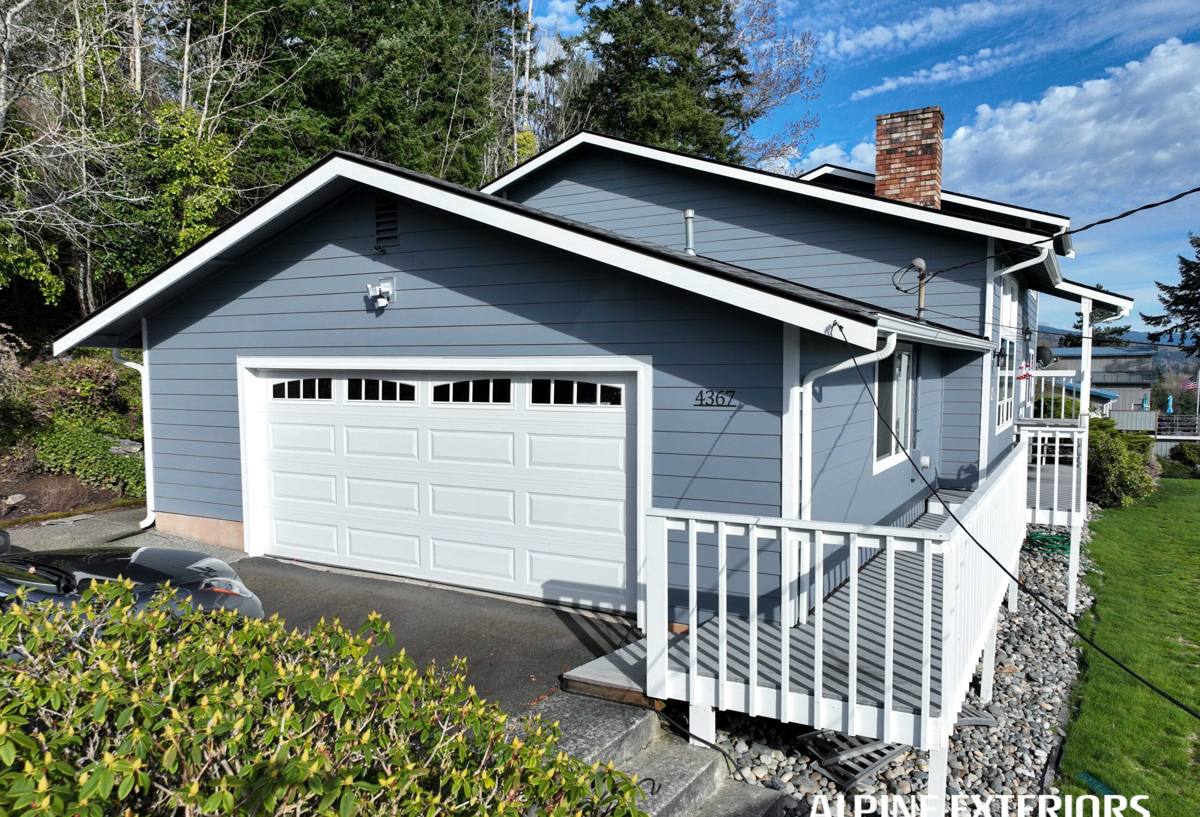
Why the Coastal Climate Is Hard on Shingle Roofs
Salt Air and Coastal Exposure
Homes closer to the bay deal with airborne salt that settles on roofing materials and accelerates corrosion of exposed metal — nail heads, flashing, vent stacks, and gutter hardware. Asphalt shingles themselves aren't rusting, but a shingle roof is only as good as the metal components tying it together. When flashing or fasteners corrode faster than the shingles wear out, you end up with leaks around chimneys, skylights, and roof-to-wall transitions well before the shingles are actually due for replacement.
Driving Rain and Wind
Storms coming off the water don't just drop rain straight down — they push it sideways and upward under shingle tabs, at ridge caps, and around any penetration in the roof. That means underlayment, ice-and-water barrier placement, and proper shingle nailing patterns matter more here than in calmer inland areas. A roof that would perform fine in a low-wind climate can leak in Bellingham if it was installed to a minimum standard instead of a climate-appropriate one.
Moss, Algae, and Shade
Damp, mild winters and shaded tree cover give moss and algae a long growing season on Bellingham roofs. Moss holds moisture against the shingle surface, lifts tabs as it grows, and works its way under the roofing over time, which shortens the life of the roof and creates entry points for water. North-facing slopes and roofs under tree canopy are the areas we watch closest during inspections.
What a Correct Asphalt Shingle Roof Needs Here
Underlayment and Ice-and-Water Barrier
A synthetic underlayment rated for the whole roof deck, with self-adhering ice-and-water barrier at eaves, valleys, and around every penetration, gives the roof a second line of defense when wind-driven rain gets past the shingles. This is not optional in our climate — it's the difference between a nuisance leak and a dry attic during a real coastal storm.
Ventilation That Actually Works
Balanced intake and exhaust ventilation keeps the attic close to outdoor temperature and lets moisture escape instead of condensing on the underside of the roof deck. In a wet climate, poor ventilation doesn't just shorten shingle life from the top — it can rot the deck from underneath, which is a much more expensive problem to fix later.
Flashing Details
Step flashing at walls, counter-flashing at chimneys, and properly lapped flashing in valleys are where most roof leaks actually start, not in the open field of shingles. Given the salt exposure near the bay, we pay close attention to flashing material and fastener choice so these details hold up rather than corroding out early.
Choosing the Right Shingle for a Bellingham Roof
Not every asphalt shingle product is a good fit for a coastal, moss-prone climate. Here's how the common tiers compare for a home in this area:
| Shingle Type | Typical Lifespan Here | Best For | Trade-Offs |
|---|---|---|---|
| 3-tab (economy) | Shorter end of the range in this climate | Budget-driven projects, rentals | Less wind resistance, thinner profile wears faster under driving rain |
| Architectural / laminate | Mid-to-long range, our most common recommendation | Most Bellingham homes | Higher upfront cost than 3-tab, but far better wind and weather performance |
| Algae-resistant architectural | Similar to standard architectural, stays cleaner longer | Shaded lots, north-facing roofs, homes near mature trees | Slight cost premium; the copper-infused granules that resist algae streaking do wear down gradually over decades |
| Impact-rated / heavier laminate | Longer end of the range | Homeowners wanting maximum durability | Highest material cost of the asphalt options |
For most homes in and around Bellingham, we steer people toward architectural shingles with algae resistance built in. The upfront cost difference over economy 3-tab shingles is modest, and the payoff is a roof that sheds wind-driven rain better and stays cleaner longer in a climate where moss and algae growth is a constant, not an occasional problem.
Signs Your Bellingham Roof Needs Attention
Because coastal weather works on a roof from several directions at once, it helps to know what to look for before a small issue becomes a ceiling stain. Walk your property periodically and watch for:
- Granules collecting in gutters or at downspout outlets, which signals shingle surface wear
- Moss growth on north-facing or shaded slopes, especially where it's thick enough to lift shingle edges
- Curling, cupping, or cracked shingle tabs, particularly on the sides facing prevailing storms
- Dark streaking that keeps returning after cleaning, which points to algae rather than surface dirt
- Rust staining or visible corrosion around vent stacks, flashing, or exposed fasteners
- Soft spots or sagging when walking the roof, which can indicate deck moisture damage
- Daylight or water stains in the attic near chimneys, skylights, or wall intersections
Any one of these on its own may just need monitoring. Several at once, or anything involving the attic or deck, is worth a professional look before the next storm season.
Our Asphalt Shingle Roofing Process
Inspection and Honest Estimate
We start by walking the roof and attic, not just looking from the ground. We check shingle condition, flashing, ventilation, and deck integrity, then give you a straight answer about whether the roof needs a repair, a partial re-roof, or a full replacement — along with what's driving that recommendation.
Tear-Off and Deck Preparation
For full replacements, we remove the old roofing down to the deck so we can actually inspect and repair the wood underneath rather than covering up problems. Any soft or damaged decking gets replaced before a single new shingle goes down.
Underlayment, Flashing, and Shingle Installation
We install ice-and-water barrier at the vulnerable areas, synthetic underlayment across the field, new flashing where needed, and shingles per the manufacturer's nailing and exposure specifications — not a shortcut pattern. Ventilation components are checked and corrected as part of the same job, not treated as a separate add-on.
Cleanup and Final Walkthrough
We clear the job site of old materials and debris, run a magnetic sweep for stray nails, and walk the finished roof with you so you know exactly what was done and what to watch for going forward.
Repair or Replace: What Actually Drives the Decision
Not every roofing problem in Bellingham means a full replacement. The right call usually comes down to a few honest factors:
- Age of the roof relative to its shingle type's typical lifespan in this climate
- Whether the damage is isolated (one flashing detail, one section) or spread across the whole roof
- Condition of the deck underneath — cosmetic shingle wear versus underlying moisture damage
- How much of the roof has already been repaired or patched over the years
- Whether ventilation issues are contributing to the damage, which a patch alone won't fix
We'll tell you plainly if a repair is the more sensible option — a roof that still has useful life left doesn't need to be replaced early just because it's convenient for us to sell a bigger job.
Why It Matters to Hire a Crew That Already Works in Bellingham
A roofing crew that mostly works drier, inland climates can do fine work and still install a roof that underperforms near the water — not from lack of skill, but from not weighting flashing, underlayment, and ventilation decisions the way this specific climate demands. Working regularly in Bellingham and the surrounding Whatcom County coastline means we see the same failure points repeatedly: corroded flashing near the bay, moss damage on shaded roofs, and wind-driven leaks at valleys and walls. That pattern recognition shapes how we build every roof, not just the ones that have already had a problem.
Maintenance That Extends Roof Life in a Wet Climate
Even a well-installed shingle roof benefits from basic upkeep in this environment. Keep gutters clear so water isn't backing up under the eaves. Trim back tree limbs that shade the roof and drop debris, since less shade and less debris means less moss. Have moss treated or gently removed before it thickens rather than after, and keep an eye on flashing and vent stacks for early signs of corrosion given the salt exposure near the coast. None of this requires a major investment, but it does add real years to a roof's service life.
If you're seeing early signs of wear, planning ahead for a replacement, or just want a straight opinion on where your roof actually stands, we're glad to take a look. Reach out for a free, no-pressure estimate using the form below.