 Lynden Siding
 Why Bellingham Roofs Take More Punishment Than Most
A roof in Bellingham works harder than a roof almost anywhere inland. The city sits close to Bellingham Bay and the Salish Sea, which means a steady drift of salt-laden air moves across rooftops year-round. That salt exposure speeds up corrosion on exposed fasteners, flashing, and metal roof accessories faster than a manufacturer's general lifespan estimate assumes. Add in the long stretch of driving, wind-pushed rain that defines a Pacific Northwest fall and winter, and you have water actively testing every seam, lap, and penetration on the roof, not just sitting and draining off a dry surface.
Then there's moss. Whatcom County's mix of shade, moisture, and mild temperatures gives moss and algae a growing season that runs far longer than in drier parts of the state. Once moss gets a foothold on a roof, it holds water against the shingle surface long after the rain stops, which is exactly the condition that shortens a roof's life. None of this means Bellingham roofs are doomed to fail early — it means they need to be built and maintained with this specific climate in mind, not installed the same way a roof would be in a dry, low-shade region.
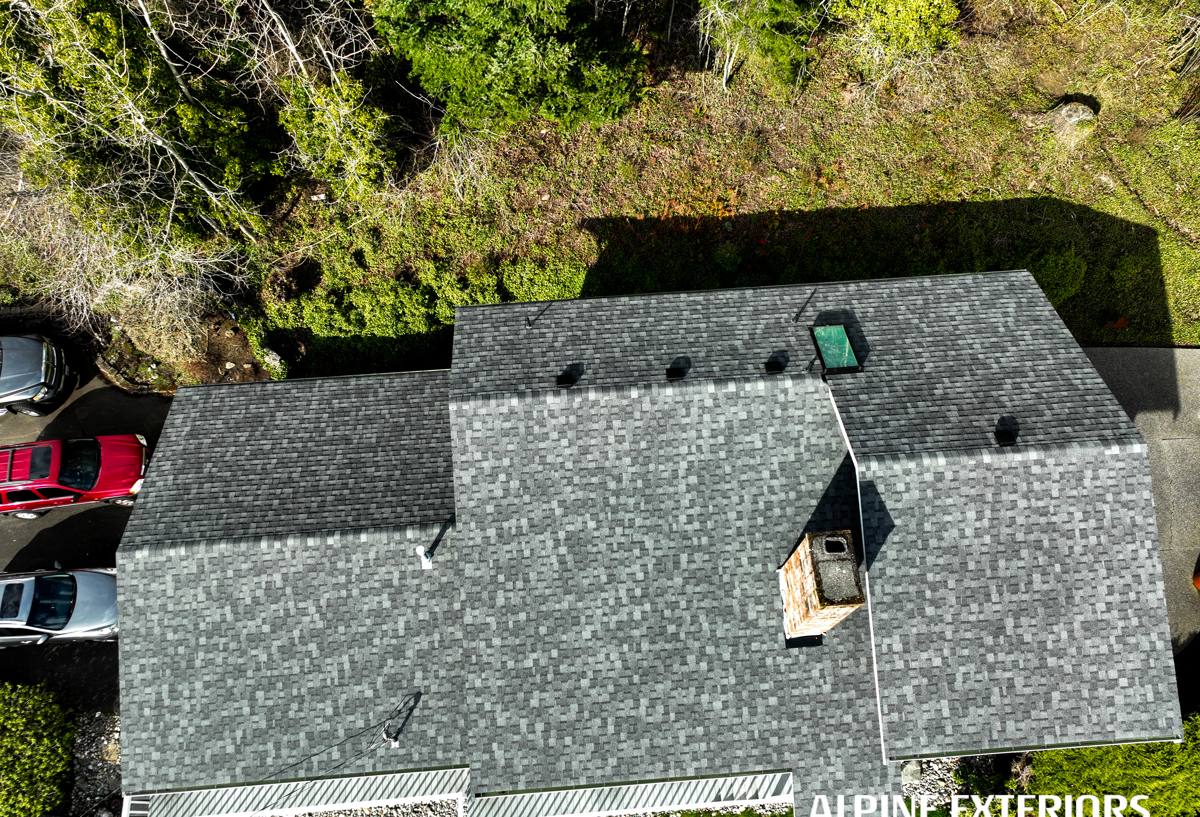
Signs Your Roof Is Telling You It's Time
Most roofs don't fail all at once. They give warning signs first, and catching them early is what separates a planned replacement from an emergency one.
- Granule loss showing up in gutters or downspouts, or bald patches visible on the shingle surface
- Shingles that are curling, cupping, or lifting at the edges
- Cracked, torn, or missing shingles after a windstorm
- Thick moss mats, especially on north-facing or shaded slopes
- Dark streaking or staining across the roof plane
- Daylight visible through the roof deck when viewed from inside the attic
- Water stains or discoloration on interior ceilings or in the attic insulation
- A roof that's 20 to 25 years old and original asphalt shingles that have never been replaced
- A pattern of repeated small repairs in the same areas year after year
- Soft, spongy, or bouncy decking underfoot when walked on
Any one of these on its own might just need a repair. Several together, or a roof that's already at or past its expected service life, is usually a sign that replacement is the more honest recommendation, both for your budget and for what's protecting the inside of your home.
What a Correct Roof Replacement Actually Involves
A roof replacement is more than laying new shingles over what's already there. Done correctly, it's a sequence of decisions, each one addressing a specific way water, wind, or moisture tries to get into the structure.
Tear-Off and Deck Inspection
We remove the existing roofing down to the deck rather than layering over old material. That's the only way to actually see the plywood or OSB sheathing underneath, check for soft or rotted spots, and confirm the deck is sound before anything new goes down. Any damaged decking gets replaced before the new system is installed — covering over a weak deck just hides a problem that will resurface later, usually as a sag or a soft spot in the roof plane.
Underlayment and Protection at Vulnerable Areas
Underlayment is the roof's backup layer if wind ever drives rain up under a shingle tab, which happens more in this climate than in calmer regions. We use synthetic underlayment across the field of the roof and add self-adhered ice-and-water membrane at the eaves, valleys, and around penetrations like plumbing vents and chimneys — the spots where water concentrates and where wind-driven rain is most likely to find a way in.
Flashing Where Water Actually Gets In
Most roof leaks don't come from the open field of shingles — they come from flashing that was reused, undersized, or installed carelessly around chimneys, skylights, dormers, walls, and valleys. We install new step flashing, valley flashing, and counterflashing rather than reusing old pieces, since flashing is inexpensive compared to the cost of chasing a leak later.
Ventilation That Keeps the Attic and Shingles Healthy
A roof needs balanced intake and exhaust airflow — typically soffit vents pulling air in and a ridge vent letting it out — to keep the attic from trapping heat and moisture. Without it, moisture can condense on the underside of the deck, and shingles can bake from beneath as well as above, shortening their life from both directions. We check existing ventilation on every replacement and correct it when it's inadequate, rather than leaving a known problem in place.
Moss and Algae Defense Built Into the Installation
We install roofing designed to resist algae staining and, where the roof design allows it, zinc or copper strips near the ridge that release trace metal ions with every rain to inhibit moss regrowth on the slopes below. It won't make a shaded roof moss-proof forever, but it meaningfully slows regrowth compared to a roof with no defense built in at all.
Choosing a Roofing Material for This Climate
Material choice matters more here than in a dry climate, because moisture exposure and moss pressure vary a lot by roofing type. Here's how the common options compare for a Bellingham home.
| Material | Typical Lifespan | Handling Moisture & Moss | Maintenance Needs |
|---|---|---|---|
| Architectural (laminate) asphalt shingle | 25–30 years | Good with algae-resistant granules and proper ventilation | Low; periodic moss/debris clearing |
| 3-tab asphalt shingle | 15–20 years | More prone to curling and moss buildup over time | Low, but shorter service life in this climate |
| Standing seam metal panel | 40–50+ years | Sheds water and moss very well; salt air requires quality coatings | Low; occasional coating/fastener check |
| Cedar shake | 20–30 years with upkeep | Attractive, but higher moisture sensitivity requires diligent upkeep in a wet, shaded climate | Higher; regular treatment and moss control |
We install and stand behind architectural asphalt shingles and metal roofing for most Bellingham homes because both hold up well against the combination of salt air, driving rain, and moss pressure without demanding constant upkeep. Cedar shake can still be the right call for a homeowner who wants that look and is committed to the maintenance it requires — we'll walk through the honest trade-offs for your specific roof rather than pushing one option.
What Drives the Cost of a Roof Replacement
Every roof is priced individually, but the same handful of factors move the number up or down on almost every job.
| Factor | Why It Matters |
|---|---|
| Roof pitch and steepness | Steeper roofs take longer to work safely and require more fall-protection setup |
| Number of existing layers | More layers to tear off means more labor and disposal weight |
| Decking condition | Rotted or soft sheathing found during tear-off has to be replaced before installation continues |
| Roof complexity | Valleys, dormers, skylights, and multiple chimneys each add flashing work and time |
| Material selection | Asphalt, metal, and cedar carry different material and installation costs |
| Accessibility | Tight lots, steep driveways, or limited staging space can affect crew and equipment logistics |
| Ventilation upgrades | Adding or correcting soffit and ridge venting is worth doing during a tear-off rather than later |
We walk every roof in person before quoting, because two roofs of the same size and material can price out very differently once pitch, layers, and decking condition are accounted for. A written estimate should spell out exactly what's included — material, labor, disposal, and any decking replacement allowance — so there are no surprises mid-project.
Our Process, Start to Finish
- Free on-site inspection to assess the current roof, attic ventilation, and any problem areas
- A written estimate covering material, scope of work, and estimated timeline
- Scheduling, material ordering, and site prep, including protecting landscaping and siding near the roofline
- Full tear-off with a deck inspection before any new material goes down
- Installation of underlayment, ice-and-water protection, new flashing, ventilation, and the chosen roofing material
- Jobsite cleanup, including a magnetic sweep for stray nails and full debris haul-away
- Final walk-through with you and warranty paperwork for both materials and workmanship
We photograph the deck and flashing details before they're covered, so you have a record of what's actually under your new roof, not just a description of it after the fact.
Permits and Local Considerations in Whatcom County
A full roof replacement typically requires a building permit in Whatcom County and within Bellingham city limits, and we handle that process as part of the job rather than leaving it to the homeowner. Homes closer to the water tend to see stronger, more sustained wind exposure, which affects the recommended fastening schedule and nailing pattern for shingles — a detail that's easy to overlook if a crew is following a generic install rather than adjusting for the site. Snow load is rarely the driving factor for roofs in this part of Whatcom County, but wind uplift and sustained wind-driven rain are, and the installation details above are built around those realities rather than around a one-size-fits-all approach.
Why Hiring a Crew That Already Works Bellingham Matters
A roofing crew that works this area regularly knows that a home a few blocks from the water can need different flashing and fastening attention than one further inland, even within the same neighborhood. That kind of judgment comes from doing the work here repeatedly, not from a checklist. Local crews are also easier to hold accountable — we're not a storm-chasing outfit that shows up after a windstorm and moves on to the next region. If a question comes up during the workmanship warranty period, you're calling a business with a permanent presence in Whatcom County, not tracking down a crew that's already left the area.
Caring for Your New Roof After Installation
A well-installed roof still benefits from basic upkeep, especially in a climate this wet and shaded.
- Keep gutters and valleys clear of needles, leaves, and debris so water can actually drain
- Trim overhanging tree limbs where practical to improve airflow and sunlight, which slows moss regrowth
- Have the roof looked at after any major windstorm, even if nothing looks obviously wrong from the ground
- Avoid pressure washing shingles directly — it can strip protective granules; moss and debris removal should be done gently
- Watch for the early warning signs covered above so small issues get caught before they become deck damage
If your roof is showing its age, has recurring moss problems, or you just want an honest opinion on whether repair or replacement makes more sense for your home, we're glad to come take a look. Reach out for a free, no-pressure estimate using the form below.