 Lynden Siding
 Storm Damage Roof Repair Built for Bellingham's Weather
Bellingham sits close enough to the water that homes take a different kind of beating than roofs further inland. Winter storms roll in off the Strait of Georgia and Bellingham Bay with sideways rain and gusty wind, and the wet season here doesn't really end in a month or two — it settles in and stays. A roof that would hold up fine in a drier climate can develop real problems in Whatcom County if storm damage isn't caught and repaired the right way. This page covers what storm damage actually looks like on Bellingham roofs, what a correct repair involves, and how our process works for homeowners in this area.
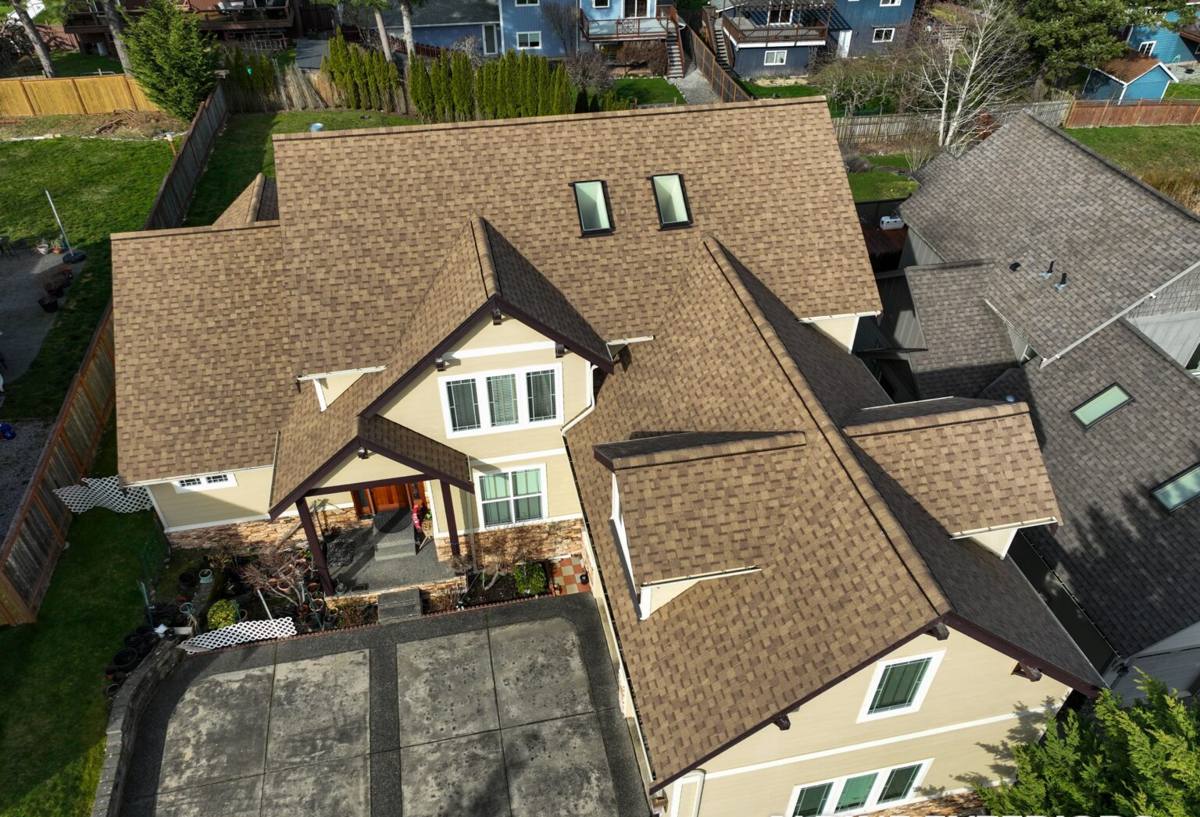
What Bellingham's Climate Does to a Roof Over Time
Storm damage repair isn't just about patching whatever broke in the last windstorm. The local climate shapes how a roof ages and how it fails, and a repair that ignores that context tends to fail again.
Salt Air and Metal Fasteners
Homes closer to the water deal with salt-laden air that speeds up corrosion on exposed metal — nail heads, flashing, gutter fasteners, and vent caps. A storm can knock loose a flashing seam that was already weakened by years of salt exposure, which is why we check the condition of the metal, not just whether it's still attached, when we look at storm damage.
Driving Rain and Wind-Driven Water
Rain that falls straight down is easy for a roof to shed. Rain that's being pushed sideways by wind off the bay is a different problem — it finds its way under shingle edges, around chimney flashing, and into any gap that a calmer climate would never expose. A lot of the "leaks after a storm" calls we get in Bellingham aren't from a single dramatic failure; they're from wind-driven water finding a small weak point that had been fine under normal rainfall.
The Long Moss Season
Whatcom County's wet, shaded, mild winters are close to ideal growing conditions for moss, and moss doesn't just sit on top of shingles — it holds moisture against the roof surface and works its way under shingle tabs over time. A storm that strips off a moss mat can pull granules and even shingle material with it, and a roof with existing moss damage is more vulnerable to wind lift in the first place.
Common Storm Damage We See on Bellingham Roofs
Not every storm-damaged roof looks dramatic from the ground. Some of the most common issues we find during storm inspections include:
- Wind-lifted or creased shingle tabs, especially on roof edges and ridges where wind pressure is highest
- Flashing that's been pried loose or bent around chimneys, skylights, and roof-wall intersections
- Broken or clogged gutters and downspouts from wind-driven debris, causing water to back up under the roof edge
- Punctures or bruising from fallen branches, common with mature fir and cedar trees near the property line
- Moss mats torn loose during high wind, taking granules or shingle fragments with them
- Soft or discolored roof decking discovered once shingles are pulled back, usually from a slow leak that predates the storm
What a Correct Storm Damage Repair Actually Involves
A quick patch job can stop a leak for a while, but storm repair done right starts with understanding why the damage happened, not just where. That means:
A Full Roof Inspection, Not Just the Damaged Spot
Wind and rain rarely damage just one isolated area. We check the whole roof plane, the flashing details, and the attic (where accessible) for water staining that points to a problem bigger than what's visible from outside.
Matching Materials Correctly
Replacement shingles need to match the existing roof's type, weight, and profile as closely as possible — mismatched shingles stand out and can create uneven wear patterns. If your roof is older, an exact match isn't always available, and we'll be upfront with you about that before starting work rather than after.
Rebuilding Flashing Properly, Not Just Resealing It
Caulk over a flashing gap is a temporary fix, not a repair. Correct flashing work means removing the damaged section, checking the decking underneath for rot, and reinstalling flashing with proper overlap and fastening so wind-driven rain has nowhere to get in.
Checking the Decking Underneath
If shingles were torn off in the storm, we check the exposed decking for soft spots or moisture damage before covering it back up. Repairing shingles over compromised decking just hides a problem that will resurface.
Repair or Replace? How We Make That Call
Not every storm-damaged roof needs a full replacement, and not every roof is worth repairing again. We walk through this honestly with every homeowner rather than defaulting to the bigger job.
| Factor | Repair Usually Makes Sense | Replacement Should Be Considered |
|---|---|---|
| Roof age | Under roughly 12-15 years, in otherwise good condition | Nearing or past the manufacturer's expected service life |
| Extent of damage | Localized to one or two areas | Widespread across multiple roof planes |
| Decking condition | Solid, dry decking under the damaged area | Soft, rotted, or repeatedly wet decking |
| Moss history | Light, surface-level moss with no shingle damage | Long-term moss growth that's degraded granule coverage broadly |
| Prior repairs | First or second repair on this roof | Roof has a history of repeated patch repairs |
The right answer depends on the specific roof, and we'll tell you plainly if a repair is a short-term fix that's likely to need more work soon — that's more useful to you than a repair that just delays a bigger conversation.
Our Process, From Call to Completed Repair
- You describe what happened and what you're seeing — a leak, missing shingles, visible damage after a storm
- We schedule an inspection to assess the roof, the flashing, and any signs of water intrusion inside
- We give you a clear written explanation of what's damaged, what caused it, and what the repair involves
- We provide an honest estimate, including whether repair or replacement is the better long-term call
- Once approved, we complete the repair with materials matched to your existing roof wherever possible
- We walk the finished work with you before we consider the job done
Storm Damage and Insurance Claims
Many storm-related roof repairs in Whatcom County are covered in part by homeowners insurance, depending on your policy and the cause of damage. We're glad to document what we find — photos, notes on cause and extent — so you have accurate information for your claim. We won't inflate a scope of work to pad a claim; our job is to give you an honest assessment you can bring to your insurer, not to tell you what you want to hear.
Why Hire a Crew That Already Works Bellingham
A roofer who works this area regularly already knows what Bellingham's wind patterns, tree cover, and rain do to roofs, and that shows up in how they diagnose damage. It also matters for basic logistics — availability after a widespread storm event, familiarity with local permitting when a repair rises to that level, and knowing which failure points show up again and again on roofs in this specific climate versus a drier region.
Before hiring anyone for storm damage repair, it's worth asking a few direct questions:
- Are you licensed and insured to do roofing work in Washington State?
- Will you inspect the whole roof, or just the area I'm asking about?
- Will you check the decking before covering it back up?
- Can you match the existing shingle type, or will there be a visible difference?
- Will I get a written estimate before any work starts?
- Do you provide documentation I can use for an insurance claim if needed?
A contractor who answers these plainly, without hedging, is generally a safer bet than one who wants to start work before explaining the scope.
Protecting Your Roof Between Storms
Storm damage repair fixes the immediate problem, but a few habits reduce how much damage the next storm does. Keeping gutters clear so wind-driven rain has somewhere to go, trimming back branches that overhang the roofline, and addressing moss before it spreads across a slope all reduce the odds of an emergency call after the next front moves through. None of this eliminates storm risk in a climate like ours, but it narrows the gap between a minor repair and a major one.
If you've got storm damage on your roof, or you just want an honest opinion on what a recent windstorm may have done, we're happy to come take a look. Use the form below to request a free, no-pressure estimate.